
An inner pack is an intermediate container grouping consumer units inside a master shipping case.
Adding an inner pack introduces extra paperboard, converting dies, and packing labor. However, it can significantly accelerate distribution center picking, prevent inventory miscounts, and protect premium primary packaging from freight scuffing. The fundamental commercial decision is straightforward: Does introducing an intermediate packaging level create enough operational handling savings downstream to justify the added material and cartoning cost?
Specifying inner packs reflexively without evaluating replenishment cadence creates unnecessary packaging expense and backroom waste. Conversely, omitting an inner pack when distribution centers regularly split master cases leads to manual picking errors, damaged cartons, and retail compliance fines. PM Packaging designs packaging hierarchies from the individual retail unit outward to balance material costs against logistics efficiency.
“An inner pack is not merely a smaller shipping box. Its sole justification is creating a more efficient handling quantity between freight logistics and retail shelf replenishment.”
Where an Inner Pack Fits in the Packaging Hierarchy
Supply chain logistics relies on standardized packaging tiers recognized by GS1 standards. An inner pack sits directly between consumer units and shipping containers:
| Packaging Level | Typical Structure | Primary Objective | Shopper-Facing |
|---|---|---|---|
| Each / Retail Unit | Folding carton, blister card, pouch | Consumer branding & product protection | Yes (on display shelf) |
| Inner Pack | Paperboard sleeve, tuck box, poly bundle | Intermediate handling, allocation & counting | Usually No (backroom only) |
| Master Case (Shipper) | Corrugated RSC or HSC box | Freight containment & stacking compression | No (recycled in stockroom) |
| Shelf-Ready Tray (SRP) | Perforated corrugated tray & hood | Transit protection + direct shelf stocking | Yes (tray lip visible) |
| Retail Display (DRP/POP) | Counter PDQ, floor stand, pallet pack | Promotional merchandising & brand impact | Yes (prominent fixture) |
| Pallet Tier | Unitized stretch-wrapped wooden pallet | Bulk transport & warehouse racking | No (industrial handling) |
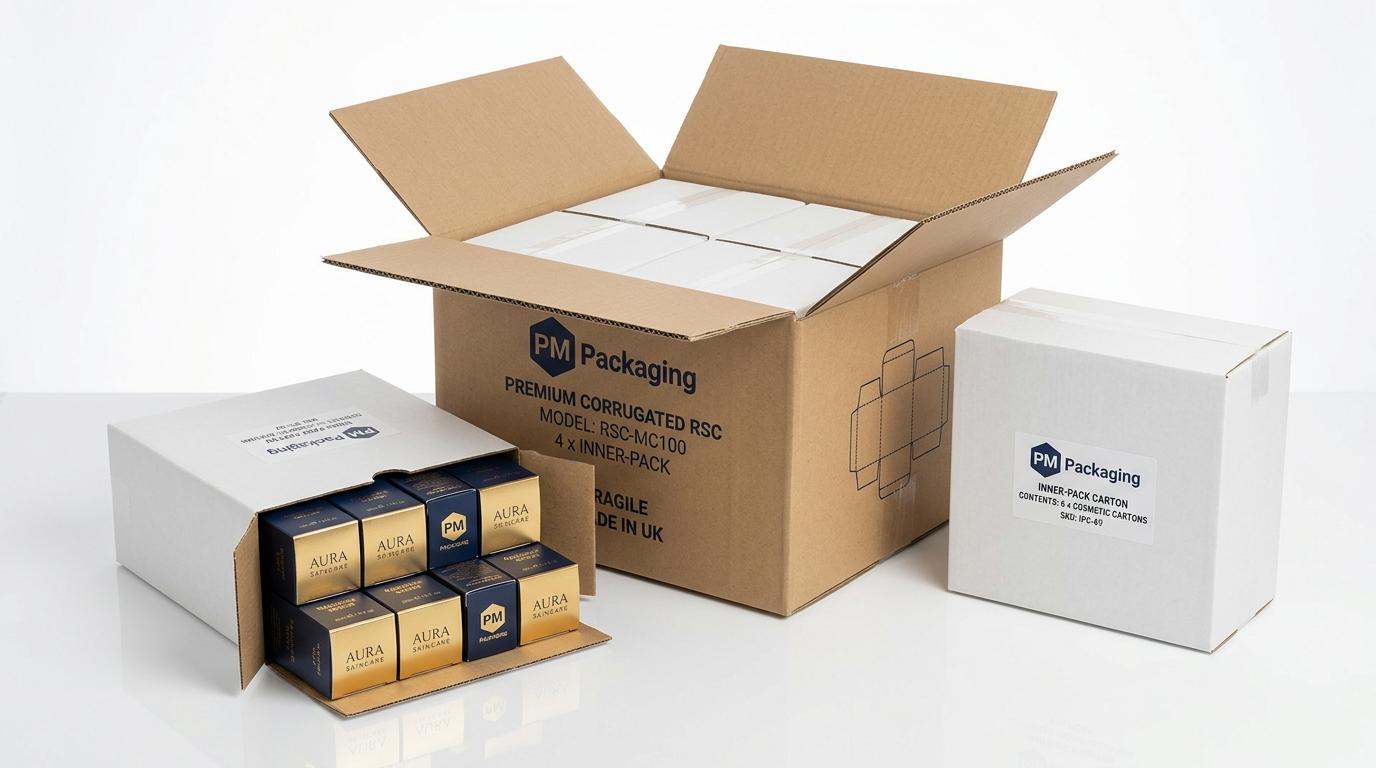
Inner Pack vs. Case Pack vs. Shelf-Ready Tray
Sourcing and packaging discussions often conflate three distinct packaging concepts:
Case Pack vs. Inner Pack
Case pack refers to the total number of retail units packed inside the shipping container. An inner pack is the subgrouping within that container. For example, a 24-unit case pack configured as four inner packs of six has a case pack of 24 and an inner pack of 6.
Inner Pack vs. Shelf-Ready Tray (SRP)
An inner pack is engineered for intermediate handling, grouping, and backroom counting—shoppers rarely see it. In contrast, a shelf-ready tray (SRP) is explicitly engineered to sit on the retail shelf, featuring high-resolution graphics, low front lips, and clean tear-away hoods that display products directly to consumers.
When Does a Retail Program Need an Inner Pack?
An inner pack is justified when downstream handlers manage or restock products in quantities smaller than the master case. Four operational scenarios warrant specifying an inner pack:
1. Distribution Centers Splitting Master Cases
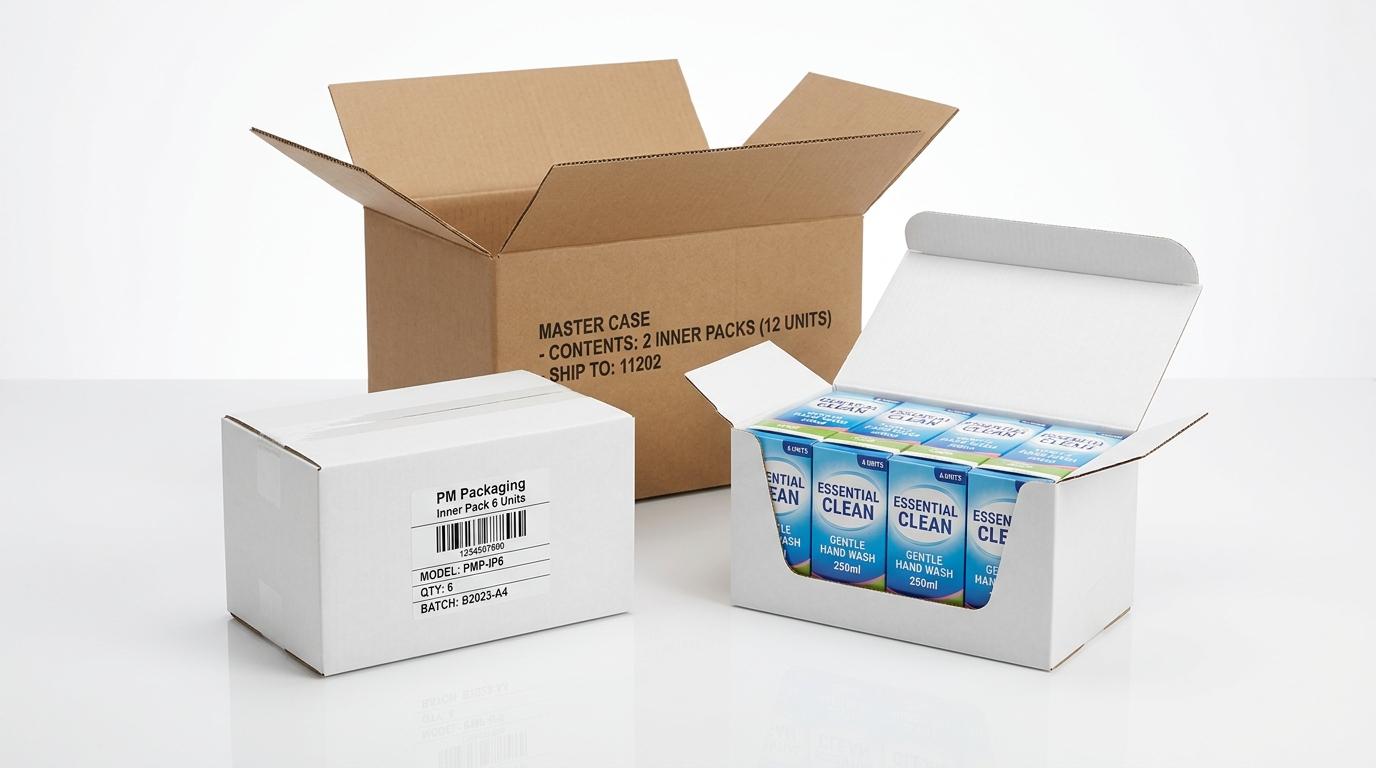
In retail distribution networks, central distribution centers (DCs) receive full master cases from manufacturers and allocate smaller quantities to regional retail stores. If a national DC receives 48-unit master cases, but Store A needs 12 units, Store B needs 12 units, and Store C needs 24 units, pre-grouped 12-count inner packs allow warehouse pickers to fulfill orders in seconds. Without inner packs, workers must count loose cartons into mixed totes, slowing pick lines and causing shrinkage.
2. Multi-SKU and Variant Separation in Mixed Cases
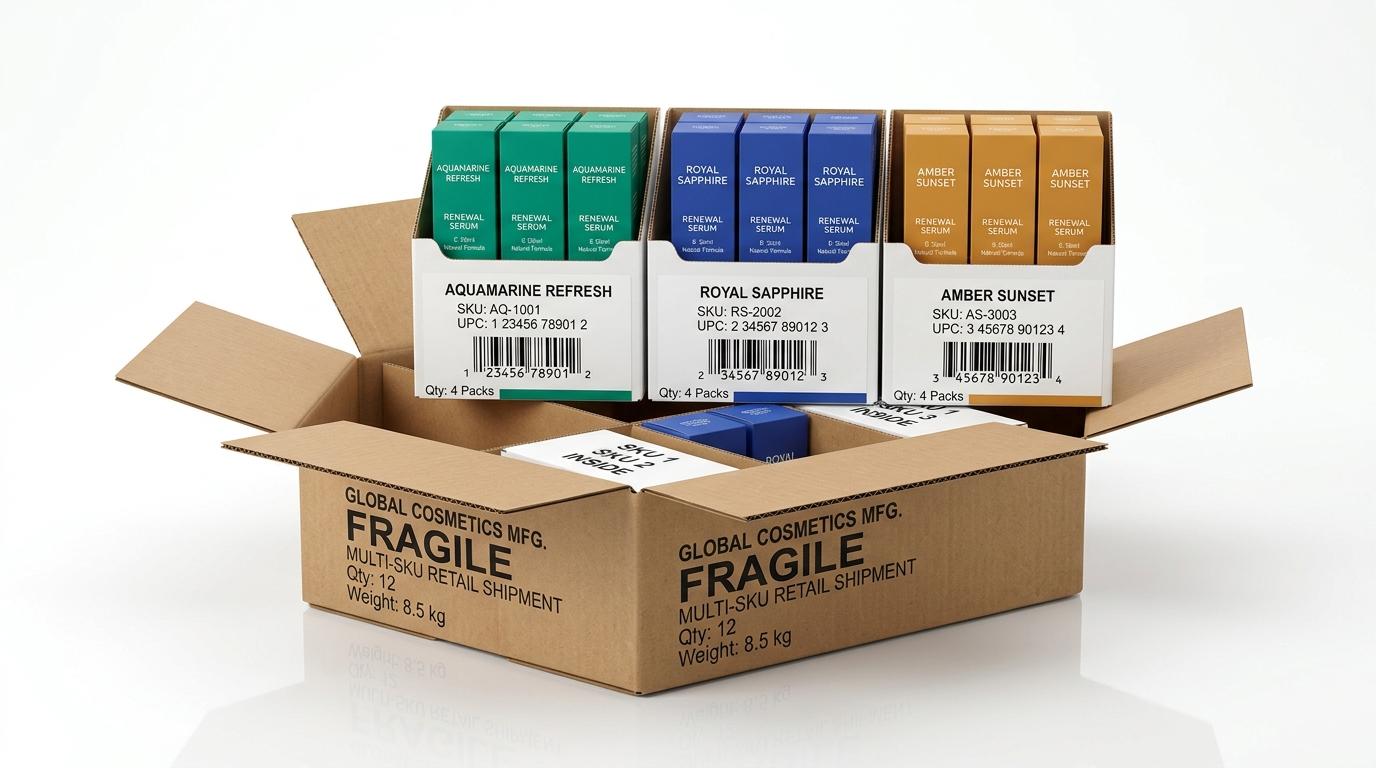
Many retail programs ship mixed master cases containing multiple product variants—such as foundation shades, apparel sizes, or flavor varieties. When primary packages share identical exterior carton dimensions and artwork, store stockers easily misplace variants on shelves. Grouping variants into labeled inner packs (e.g., 6 units of Shade A, 6 units of Shade B) keeps SKUs organized and prevents restocking mix-ups.
3. Surface Protection for Premium Packaging Finishes
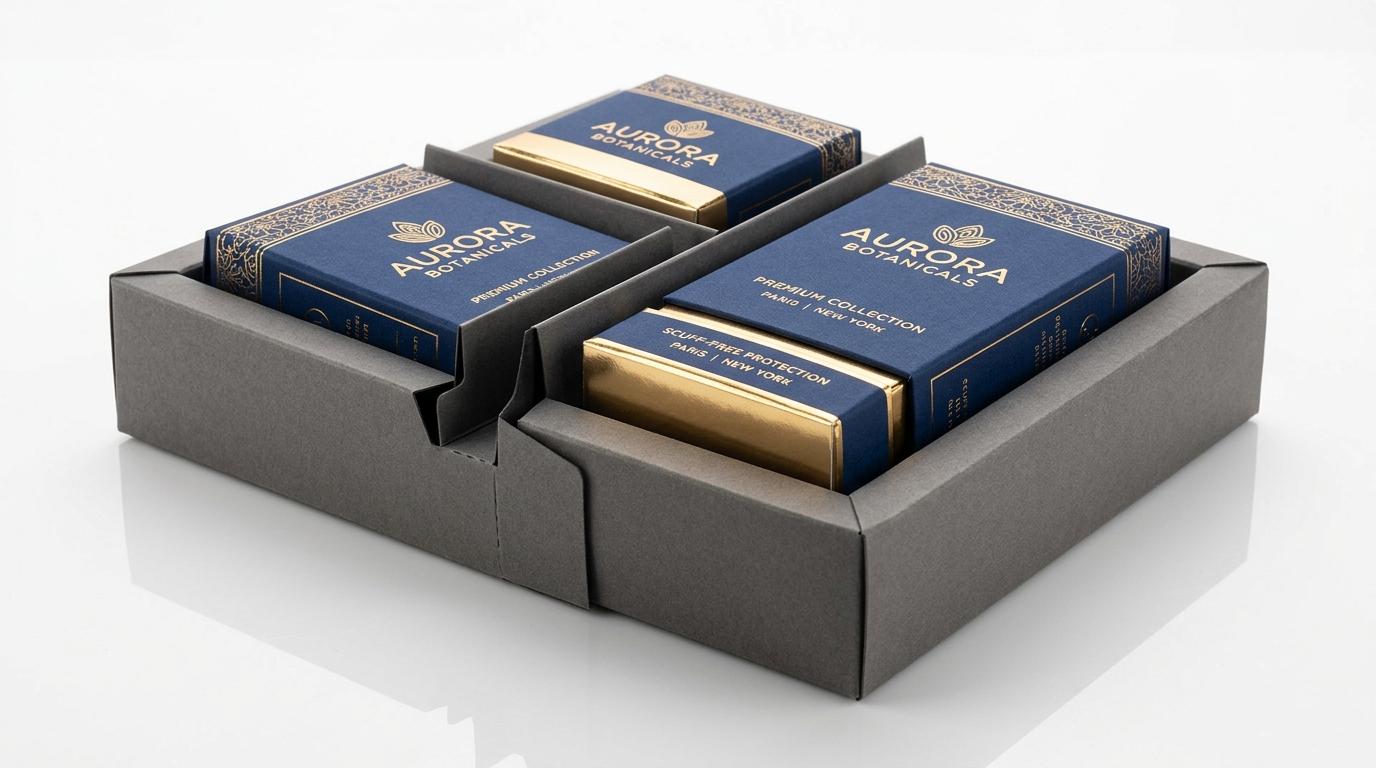
During long-haul freight transit, trailer vibration causes loose cartons inside master cases to rub against one another. For luxury folding cartons with hot foil stamping, soft-touch matte coatings, or dark inks, carton-on-carton friction creates visible scuffing. Snug paperboard inner packs isolate finished surfaces and preserve visual presentation. To learn how barrier coatings protect print, see our guide on Why Printed Packaging Scuffs and Which Coatings Help.
4. Matching Slower-Velocity Shelf Replenishment
For specialty items with lower retail velocity, shelf capacity may hold only four to six units. Shipping a loose 36-count master case forces associates to restock six units and store the remaining 30 units as taped-up partial cases. Supplying six-unit inner packs keeps extra inventory clean, sealed, and organized until the shelf empties.
Barcoding & Identification: Debunking the Mandatory GTIN Myth
A common misconception among brand managers is that every inner pack automatically requires an independent GS1 GTIN barcode. In reality, barcode requirements depend strictly on commercial transaction status.
According to GS1 guidelines, an inner pack only requires a unique GTIN (such as an ITF-14 barcode) if it is ordered, invoiced, or tracked as an independent trade item. If the inner pack functions solely as an internal handling grouping inside a master shipper, standard human-readable labels and SKU text are sufficient, avoiding unnecessary barcode registration fees.
When Should You Eliminate the Inner Pack?
Every inner pack adds paperboard material, die-cutting, assembly, and store unpacking labor. Brands should eliminate inner packs when:
- Stores Consume Full Master Cases: High-velocity goods where associates restock entire 24- or 48-unit cases in one touch.
- DCs Ship Full Cases: Supply chains moving full pallet loads directly to club stores or large supermarkets.
- Products Are Structurally Durable: Rugged primary packaging with scuff-resistant coatings that safely stacks loose.
- Freight Cube Is Severely Constrained: Multiple inner-pack carton walls add cumulative thickness, reducing container pallet fill.
The Economics: Evaluating the Inner Pack Volume Multiplier
Adding an inner pack introduces a significant component multiplier. Consider a retail program producing 240,000 retail folding cartons annually:
Annual Retail Units
240,000
Master Cases (24-pk)
10,000
Inner Packs (6-pk)
40,000
Introducing a 6-pack inner carton adds 40,000 individual paperboard containers into the supply chain. Procurement teams must verify that the picking and inventory savings gained by DC pickers outweigh the manufacturing and cartoning costs of those 40,000 components.
Structural Engineering: Designing from the Retail Unit Outward
Packaging hierarchies are structurally interdependent: altering primary carton dimensions by just 1/8 inch shifts inner-pack dimensions, expands master cases, alters pallet layer patterns (Ti/Hi), and degrades truckload efficiency.
PM Packaging engineers folding cartons, inner sleeves, and master corrugated cases simultaneously to prevent dimensional cascading errors. For an architectural analysis of supply chain integration, read our companion guide on How Case Packs, Inner Packs, and Retail Displays Work Together.
What to Provide When Designing an Inner-Pack Program
To evaluate whether your product line requires an inner pack, provide these seven parameters when requesting a design review:
| Parameter | Engineering Rationale |
|---|---|
| Primary Unit Dimensions (L x W x D) | Determines inner-pack cell geometry, partition clearances, and board caliper. |
| Unit Weight & Structure | Calculates paperboard strength to prevent carton crushing during handling. |
| Target Master Case Quantity | Establishes ratio between inner-pack groupings and master shipper capacity. |
| Store Replenishment Velocity | Aligns inner-pack counts with shelf lane capacity to prevent backroom clutter. |
| DC Picking & Splitting Model | Determines whether distribution centers fulfill orders in full cases or split picks. |
| Multi-SKU Assortment Rules | Defines label requirements, color coding, and variant separation within mixed cases. |
| Pallet Stacking & Cube Limits | Calculates master case footprint to maximize pallet Ti/Hi and container fill. |
Does Your Retail Program Actually Need an Inner Pack?
“The best packaging hierarchy is the simplest one that safely transports the product and eliminates unnecessary handling in the supply chain.”
PM Packaging reviews your retail unit dimensions, master shipper quantities, distribution channels, and store replenishment requirements. We help brands determine whether an inner pack creates measurable supply chain efficiency or simply introduces an unnecessary carton into production.
Connect with our structural packaging engineers to evaluate your packaging hierarchy, review dielines, and request custom physical prototypes.