
Retail secondary packaging terminology often overlaps because logistics teams, retailers, merchandisers, and co-packers describe packages based on different stages of the supply chain.
A retailer may mandate retail-ready packaging (RRP), warehouse operations requests master shippers, marketing specifies display-ready packaging (DRP), and store merchandisers ask for shelf-ready packaging (SRP). Instead of beginning with terminology alone, secondary packaging formats are best classified by answering four practical questions: Where does the package end up? Does the product remain inside it at retail? Does it create its own merchandising space? And is its primary job transportation or selling?
When secondary packaging is misaligned with retail operations, brands face unnecessary warehouse rejections, excessive restock labor, damaged primary cartons, or chaotic shelf presentation.
This guide provides a clear classification framework to help brands navigate secondary retail packaging categories and select the correct functional format for their products.
Why Retail Packaging Terminology Overlaps
Secondary packaging terms are frequently used interchangeably across commercial retail channels:
- Retail-Ready Packaging (RRP) vs. Shelf-Ready Packaging (SRP): In mass retail, these terms are largely functional equivalents. Both refer to secondary packaging engineered to transition from transit to store shelves with minimal handling.
- Display-Ready Packaging (DRP): Often conflated with shelf-ready packaging, but DRP specifically creates an independent merchandising fixture rather than simply replenishing an existing shelf lane.
- Shipper-Ready: An informal term often applied to any package constructed to survive shipping without requiring an overwrap box.
For this guide, it is useful to separate the formats by their physical function and retail destination.
Four Functional Secondary Packaging Categories
To establish clarity across supply chain partners, secondary packaging can be organized into four core functional categories:
1. Shelf-Ready / Retail-Ready
Primary Function: Move product efficiently from shipping case to existing retail shelving, keeping units organized in dedicated shelf lanes while reducing restocking touches.
2. Display-Ready Packaging
Primary Function: Create a standalone merchandising fixture or promotional selling space (such as counter PDQs, sidekicks, or floor towers).
3. Standard Master Shipper
Primary Function: Protect and contain products during bulk transit and warehouse stacking; removed and recycled in the backroom prior to merchandising.
4. Display Shipper
Primary Function: Combine transportation containment and retail merchandising in a single convertible structure that unfolds directly on the sales floor.
Master Comparison of the Four Formats
The following master comparison highlights how the four secondary packaging categories function across operational criteria:
| Format | Primary Purpose | Final Location | Product Inside? | Creates Space? | Typical Store Action |
|---|---|---|---|---|---|
| Shelf-Ready / Retail-Ready | Fast replenishment | Existing shelf | Yes | No | Open hood and place tray |
| Display-Ready | Merchandising impact | Counter, floor, endcap | Yes | Yes | Position and assemble fixture |
| Master Shipper | Transit containment | Backroom / stockroom | No | No | Open and unpack loose units |
| Display Shipper | Transit + merchandising | Retail floor/counter/shelf | Yes | Yes | Convert shipper into display |

Shelf-Ready / Retail-Ready Packaging
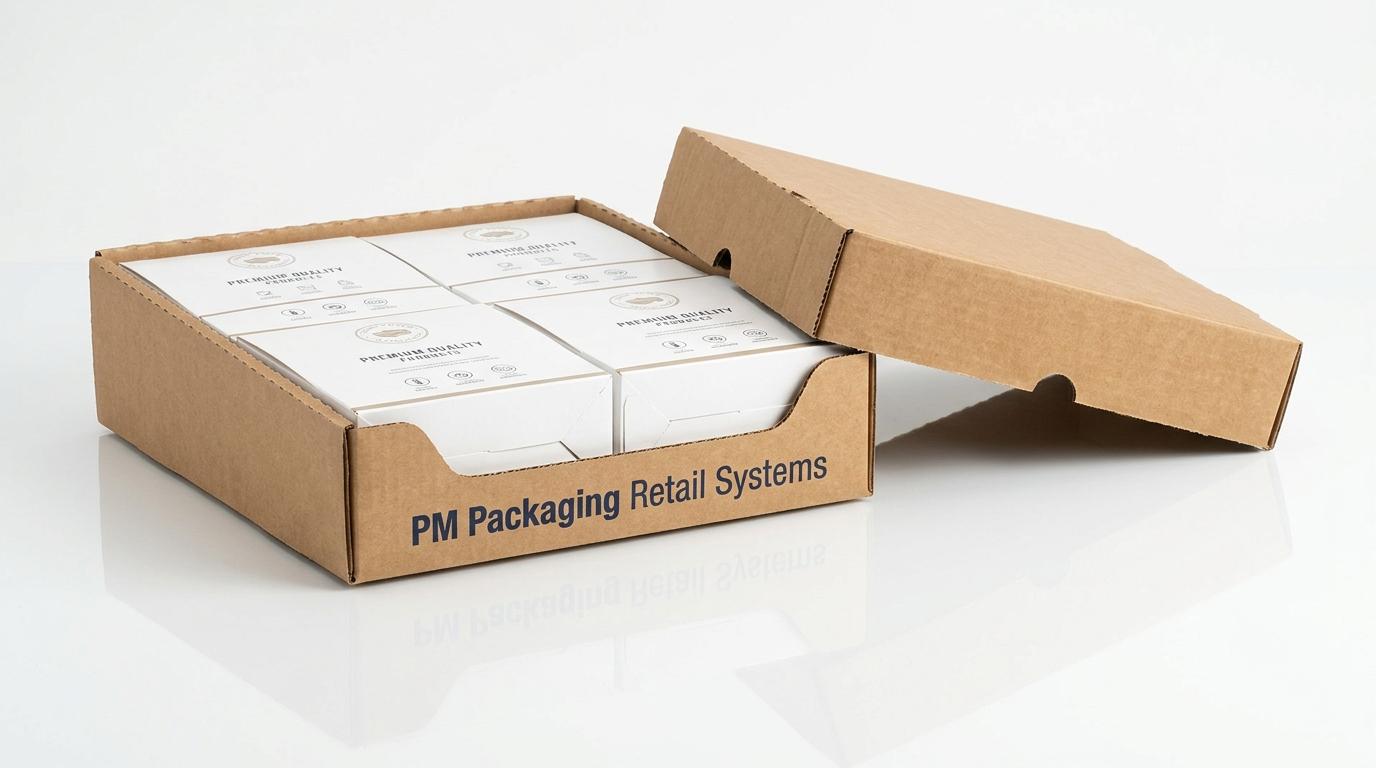
Shelf-Ready Packaging (SRP) is designed to streamline grocery, mass-merchant, and pharmacy replenishment. Instead of store staff handling individual bottles, cartons, or pouches one by one, an entire case is loaded onto the shelf in a single motion.
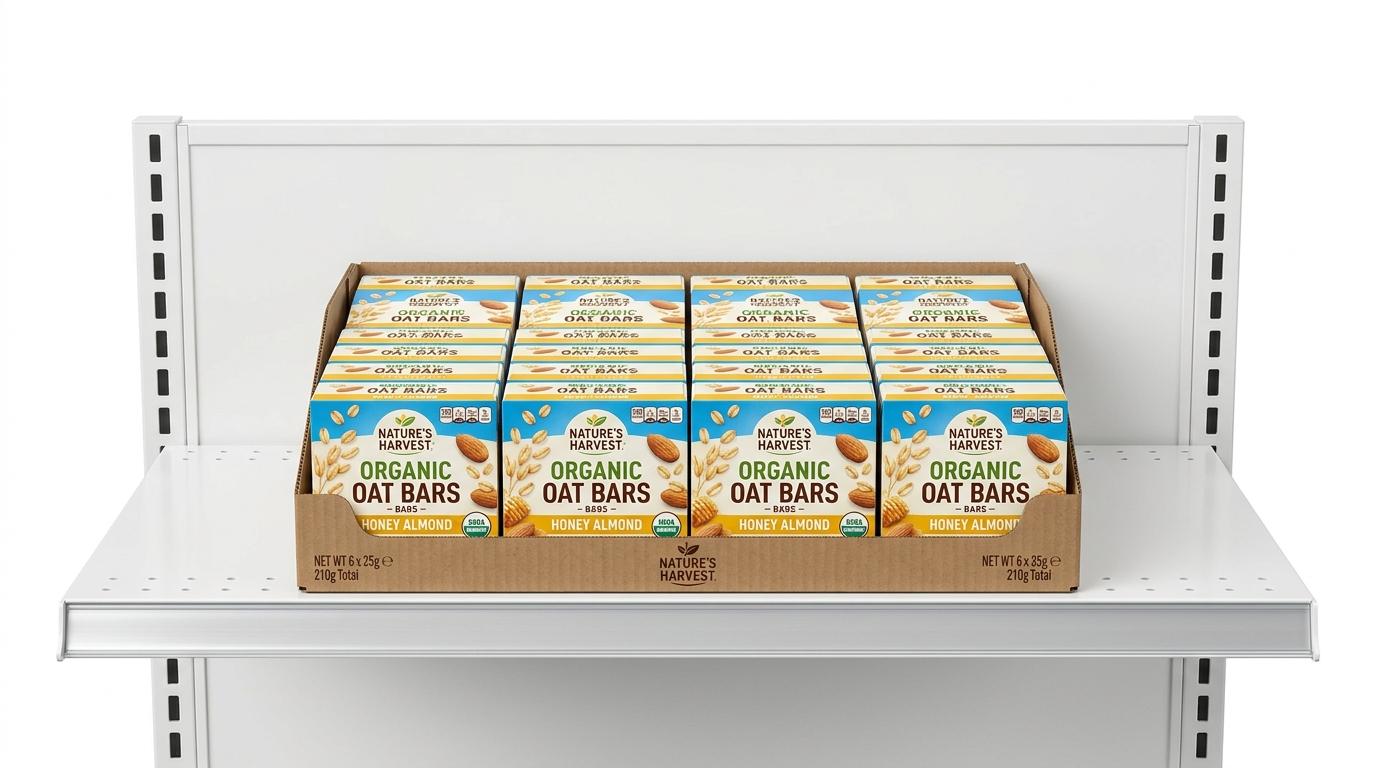
Common SRP formats include two-piece tray-and-hood assemblies and perforated one-piece wrap shippers. The base tray remains on the shelf with a low front retaining lip that displays brand typography and barcode labels while preventing products from tumbling forward.
Display-Ready Packaging
Display-Ready Packaging (DRP) refers to temporary or semi-permanent merchandising fixtures engineered to establish their own selling space. DRP formats command dedicated retail floor, counter, or endcap real estate:
- Countertop PDQ Displays: Compact point-of-purchase trays positioned at register checkouts for impulse items.
- Freestanding Floor Displays: Multi-shelf towers that showcase promotional campaigns or new product launches in main aisle traffic paths.
- Sidekick & Power Wing Displays: Hanging wire or corrugated units hung on endcap uprights to capture secondary category shoppers.
- Club Store Pallet Displays: Full-pallet and half-pallet corrugated merchandising trays engineered for fork-truck placement in wholesale clubs.
Standard Master Shippers
Standard master shippers—most commonly Regular Slotted Containers (RSC)—are engineered strictly for warehouse stacking, pallet containment, and transportation durability.
Because standard master shippers never enter the retail sales floor, exterior graphics are limited to simple one- or two-color flexographic printing for barcodes, part numbers, and handling instructions. Once delivered to the retail stockroom, cases are opened, primary products are unloaded onto shelves, and the empty corrugated case is baled and recycled.
Display Shippers
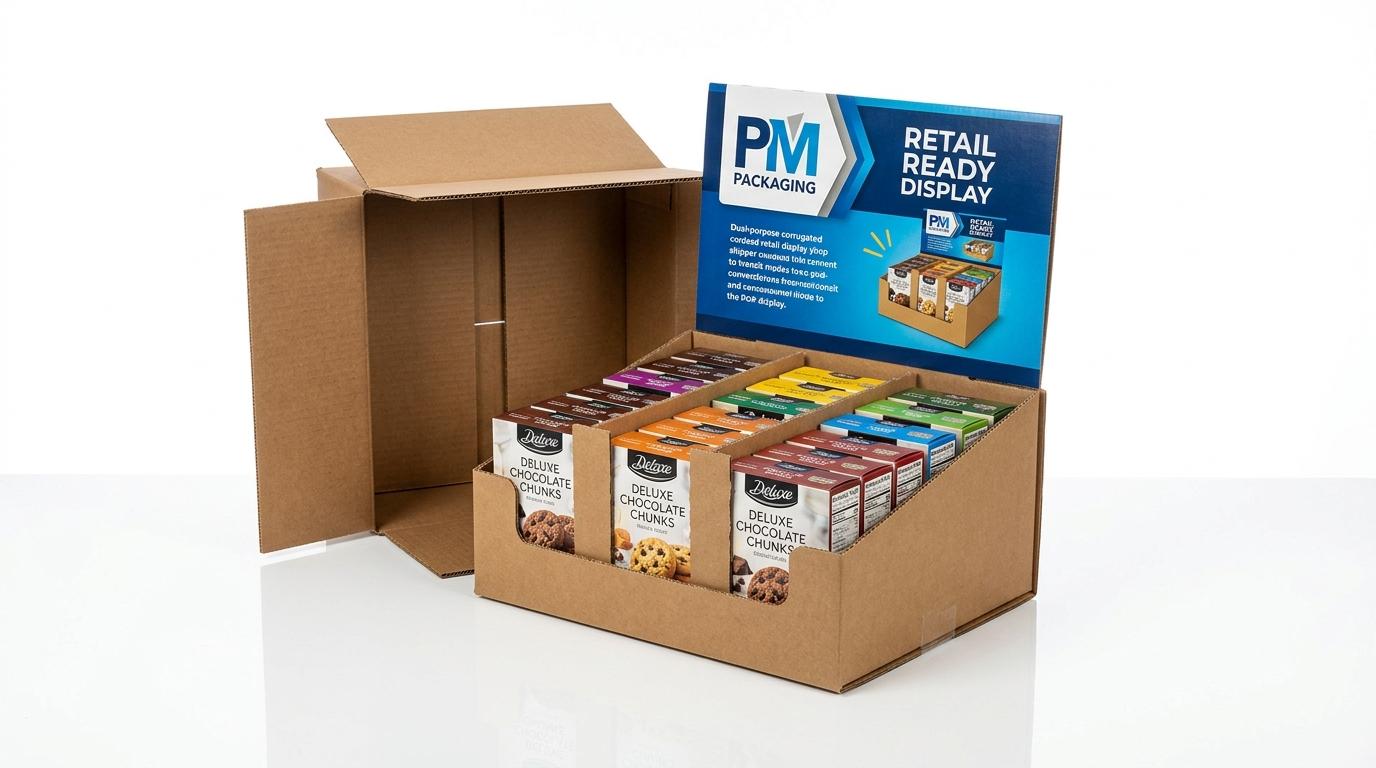
A display shipper bridges the gap between freight containment and retail merchandising. It travels through distribution as a sealed, durable corrugated box, then converts on the sales floor into a branded counter or floor merchandiser via perforated tear lines or fold-back flaps.
For a direct comparison with shelf-ready trays, see our dedicated guide on display shipper vs. shelf-ready tray.
A Simple Format Decision Tree
When scoping secondary packaging requirements for a retail program, follow this functional decision hierarchy:
Question 1
Does the package remain on an existing shelf?
If YES, specify Shelf-Ready / Retail-Ready Packaging (SRP/RRP). Match shelf lane depth, width, and lip height.
Question 2
Does it create its own selling space?
If YES, engineer Display-Ready Packaging (DRP) such as counter PDQs, floor stands, or endcaps.
Question 3
Does the shipping carton itself convert into the display?
If YES, design a Display Shipper balancing shipping compression with clean tear panels.
Question 4
Is the outer package removed before merchandising?
If YES, a Standard Master Shipper provides optimal freight cube and stacking economics.
The Same Retail Program Can Use More Than One Format
Secondary packaging categories are not mutually exclusive across an enterprise brand. A comprehensive retail program frequently utilizes multiple formats simultaneously:
- Master Shippers: Delivering bulk inventory from manufacturing facilities to regional distribution centers.
- Shelf-Ready Trays: Supporting weekly ongoing replenishment in grocery and mass-market home aisles.
- Display Shippers: Powering short-term promotional launches or quarterly seasonal rotations.
- Display-Ready Pallets: Fulfilling high-volume promotional inventory for warehouse club chains.
Planograms Matter Most for Shelf-Facing Formats
For shelf-ready packaging, case pack counts must align with planogram dimensions. If a retail planogram allocates two facings six units deep, a 12-count tray fits seamlessly. Shipping a 24-count case forces store associates to leave half the units in backroom storage, causing split-pack inventory discrepancies.
Transit Requirements Differ by Format
Physical distribution demands vary widely depending on whether the outer packaging is shopper-facing:
- Master Shippers: Focus entirely on stacking compression, puncture resistance, and pallet cube density.
- Display Shippers: Must balance top-to-bottom compression with exterior graphic protection and clean-tearing perforations.
- Shelf-Ready Packaging: Requires perforation strength that prevents in-transit bursting while tearing smoothly by hand.
- Display-Ready Packaging: Freestanding floor stands often require separate master shipping overpacks to protect pre-assembled structures.
Store Labor Also Differs by Format
Retail labor models directly influence format selection:
- Master Shippers: Highest in-store touch time; store staff must slice open cases and place individual cartons on shelves.
- Shelf-Ready Trays: Minimal shelf touch; hood is removed and the entire tray slides into place in seconds.
- Display Shippers: Moderate touch; requires tearing away transit panels and folding upright the header before placement.
Related Decisions That Deserve Their Own Guides
Once you have identified your functional secondary packaging category, explore our dedicated guides to address specific operational and fulfillment decisions:
Display Shipper vs. Shelf-Ready Tray
Detailed head-to-head comparison between standalone convertible shippers and permanent shelf trays.
Read Format Comparison →Pre-Packed vs. Store-Filled Displays
Analyzing the trade-offs between co-packer fulfillment and flat-shipped store assembly.
Read Fulfillment Guide →Case Packs & Retail Displays
Coordinating inner packs, master case counts, and retail display capacities.
Read Case Pack Guide →National Launch Display Fulfillment
Executing nationwide retail rollouts across multi-tier display assortments.
Read Launch Guide →Choosing the Correct Secondary Retail Packaging Category
When scoping secondary packaging requirements with your packaging manufacturer, define the following program criteria:
- Target retail channel & specific retailer compliance guidelines
- Final sales-floor merchandising location (shelf vs. display fixture)
- Primary product dimensions, weight, & packaging format
- Target case pack quantity (units per secondary container)
- In-store restocking labor requirements & handling limits
- Shelf planogram dimensions (width, depth, & vertical clearance)
- Promotional duration (permanent replenishment vs. campaign drop)
- Pallet stacking configuration & distribution transit hazards
PM Packaging engineers secondary retail packaging across all four functional categories—from custom shelf-ready trays and master shippers to high-impact display shippers and promotional floor displays. Learn more on our In-Store Displays solution page.
Engineer Secondary Packaging for Distribution and Retail Impact
Secondary retail packaging is the critical operational link connecting freight transit, warehouse logistics, store labor efficiency, and consumer purchasing decisions.
By selecting the appropriate functional category—whether standard master shipper, shelf-ready tray, display-ready fixture, or hybrid display shipper—brands eliminate supply chain friction and maximize sales-floor presentation.
Planning a retail packaging rollout? Contact PM Packaging to audit your retailer compliance requirements and review custom CAD samples. Our structural engineering team can help select and manufacture the ideal secondary packaging format for your program.