
A perforation is a controlled fracture.
Every easy-open feature fulfills two contradictory mandates: remain 100% structurally sound through automated packing, pallet compression, and distribution; then fail predictably and cleanly when intentionally activated by manual human force.
Easy-Open Packaging Features at a Glance
Easy-open mechanisms vary in mechanical function, tooling cost, and structural role:
| Feature | Operating Mechanism | Common Application | Primary Design Risk |
|---|---|---|---|
| Perforated Tear-Away Panel | Cut/tie dieline guides full panel removal | Shelf-ready packaging, display shippers | Premature transit burst or ragged tear |
| Zipper Perforation | Dual parallel tracks peel away a center strip | Corrugated shippers, ecommerce boxes | Strip snaps midway leaving seam stuck |
| Paperboard Tear Strip | Die-cut section of board pulls linearly | Retail cartons, envelope mailers | Tear wanders off dieline into graphics |
| Reinforced Tear Tape | High-tensile synthetic filament tape | Heavy corrugated shippers, mailers | Tape debonding or liner delamination |
| Pull Tab | Die-cut starting flap for finger purchase | Cartons, display trays, mailers | Tab shears off before opening seam |
| Thumb Notch | Semicircular cutout for finger access | Folding cartons, slipcases, trays | Insufficient finger leverage / weak edge |
| Tear-Away Hood | Removes upper shipping cowl from base | Retail-ready packaging (RRP) | Tear migration damages display tray |
| Friction Locking Tab | Mechanical flap disengages without tearing | Reclosable retail cartons, storage | Accidental pop-open or tight fit |
Design Around the Person Opening the Package
An easy-open feature must align with the specific operational context of the user:
- Retail Store Associates: Require tool-free opening to eliminate box cutters that slice inner merchandise. Needs clear starting cues and a clean fracture that keeps the lower display tray rigid, following FEFCO shelf-ready guidelines.
- Consumers / Shoppers: Expect intuitive unboxing, comfortable grip, reasonable opening force, no paperboard splinters, and an attractive unboxing reveal.
- Ecommerce Recipients: Value clean tear-strip separation that prevents internal goods from being punctured, preserving the box structure for customer returns.
- Packing-Line Operators: Require opening features to lie flush, preventing jams in automated cartoners, case erectors, and folder-gluers.
Which Easy-Open Feature Should You Use?
Selecting the proper opening mechanism depends on the required interaction:
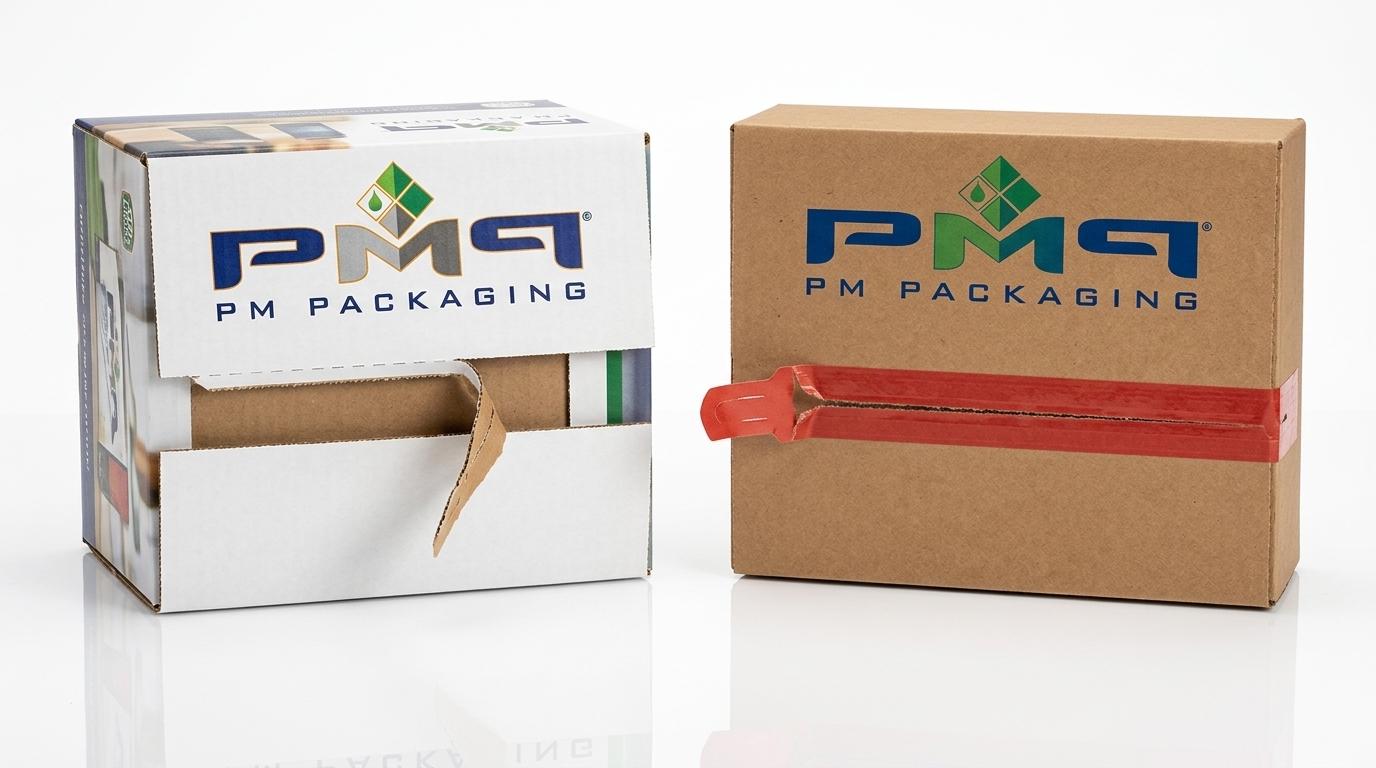
Mechanism Selection: Zipper perforations cleanly separate corrugated walls without added components, while reinforced tear tapes provide high tensile strength for linear unboxing.
- Choose a Perforation when: An entire panel separates, a shipper converts into a display tray, the tear follows a curved path, or the remaining tray serves as retail merchandising.
- Choose a Tear Strip when: The user needs a clean, linear opening without removing an entire panel, standard on mailers and courier cartons.
- Choose a Pull Tab or Thumb Notch when: Initiating the opening is the friction point, rather than controlling a long tear path.
Features are frequently combined into composite architectures: a Thumb-Start Notch → Zipper Perforation → Removable Hood provides an intuitive sequence for retail associates.
Does the Package Need to Close Again? Easy-Open vs. Reclosable
Easy-open and reclosable are not synonymous. Perforations and tear strips are destructive, single-use features that permanently break the container seal. If a package must reclose, structural designers deploy alternative architectures:
- Friction Locking Tabs: Die-cut tuck flaps that disengage cleanly and tuck back into place for multi-use consumer storage.
- Dual-Adhesive Ecommerce Strips: Featured on roll-end tuck-top boxes, where an initial tear strip opens the shipment, and a second peel-and-seal strip enables customer returns in the original box.
Perforation Geometry and Cut-to-Tie Mechanics
Perforations consist of alternating cuts and uncut paperboard segments ("ties"). The ratio of cut length to tie length controls fracture mechanics:
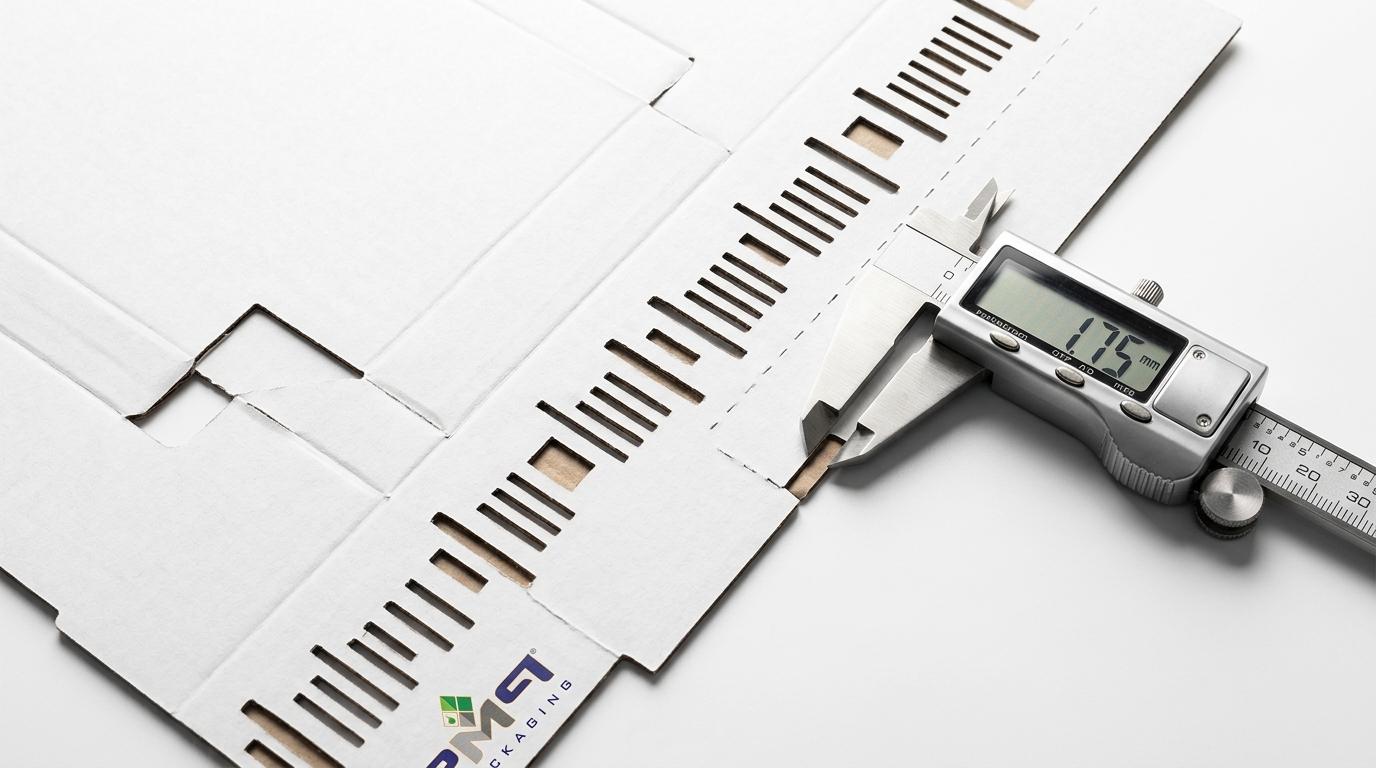
Cut-to-Tie Geometry: Balancing cut length and tie width dictates the manual puncture force required without sacrificing pallet compression strength.
Longer Cuts / Smaller Ties: Lower opening force and ensure smooth initiation, but reduce board stiffness and increase risk of transit rupture.
Shorter Cuts / Larger Ties: Maximize compression resistance, but require higher opening force and increase the likelihood of tears wandering off track.
There is no universal "golden ratio." Optimal cut-to-tie geometry must be engineered specifically for board caliper, flute profile, fiber grain, and product mass.
Balance Easy Opening Against Structural Strength
Because perforations sever fiber networks, they inevitably impact local Edge Crush Test (ECT) and Box Compression Test (BCT) ratings:
- Corner Clearance: Vertical carton corners carry the majority of pallet stacking weight. Perforations must never cut through vertical corner creases; maintaining solid corner posts preserves compression strength.
- Flute & Grain Orientation: Perforations running perpendicular to flutes or paperboard grain require different cut-to-tie ratios than those running parallel to fibers.
- Glue Margin Isolation: Adhesive beads from automated case sealers must never migrate across a perforated line, which welds the tear seam shut.
Easy-Open Features for Shelf-Ready Packaging (SRP)
The most demanding commercial application for perforations is Shelf-Ready Packaging (SRP). The carton must withstand freight distribution, then open on the retail sales floor in seconds without utility knives, leaving an undamaged display tray.
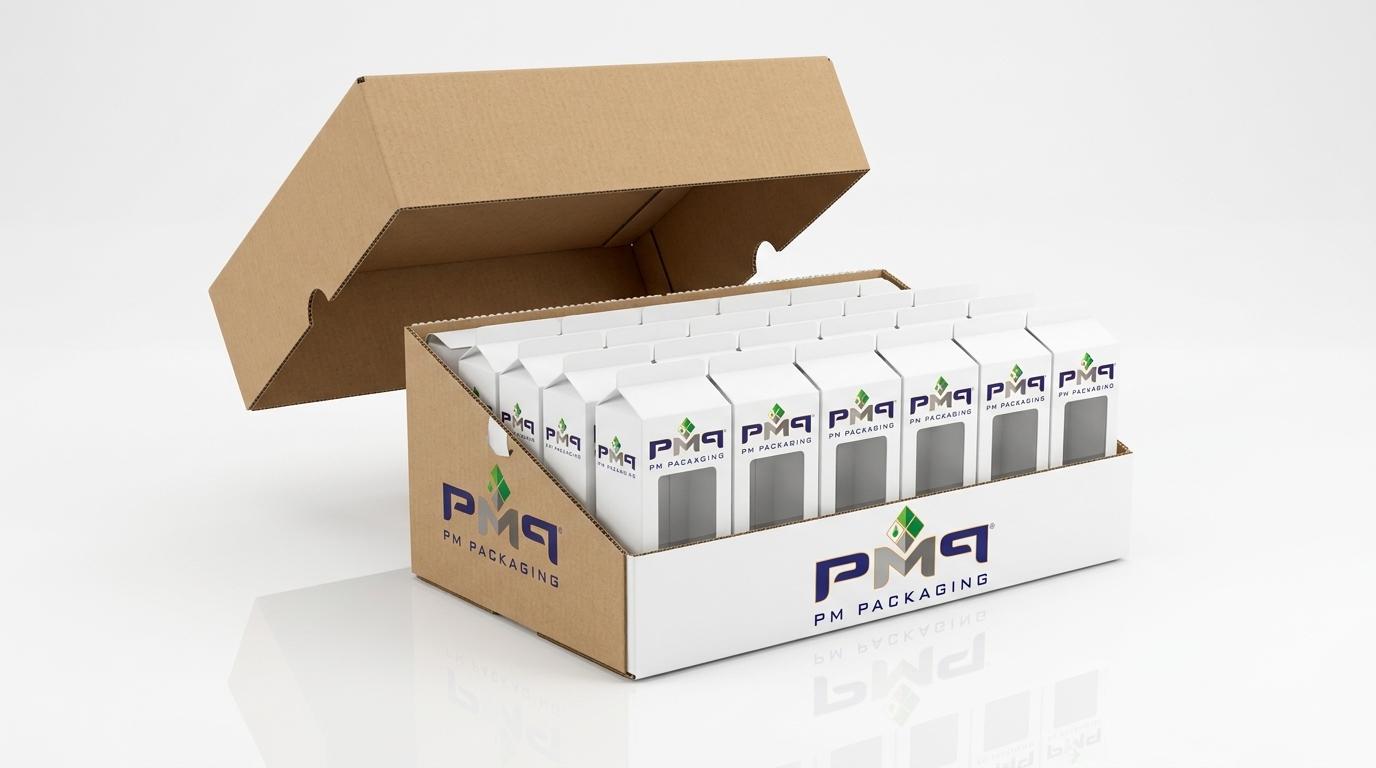
Retail-Ready Conversion: An engineered hood perforation separates cleanly without box cutters, preserving a pristine merchandising tray on the shelf.
Under FEFCO shelf-ready guidelines, packages must satisfy the "Five Easies": Easy to Identify, Easy to Open, Easy to Fit, Easy to Shop, and Easy to Recycle. To explore secondary retail formats, review our comparison of shelf-ready vs. display-ready packaging or explore our dedicated in-store display packaging solutions.
Substrate and Finish Effects: Why White Samples Lie
Approving an easy-open feature solely on unprinted, unvarnished CAD plotter samples is a costly trap. Surface finishes drastically alter fiber tear mechanics:
- Film Laminations: Polypropylene or PET laminates stretch under tension rather than tearing cleanly, requiring micro-perforations through film and board.
- UV Gloss & Varnishes: Alter surface fiber cohesion, occasionally causing tears to wander outside dieline tracks.
- Ink Saturation & Humidity: Heavy ink coverage and storage humidity influence fiber embrittlement and tear resistance.
Production prototypes must always be validated using the exact production substrate, coatings, and filled product weight.
The Two-Part Validation Framework
Packaging engineering teams must validate easy-open features against two distinct operational tests:
Test 1: Does It Stay Closed in Transit?
- Automated erecting and case packing
- Pallet stacking compression loads
- Vibration table transit simulations
- Standardized drop and impact tests
Test 2: Does It Open Cleanly on Demand?
- Manual initiation puncture force
- Smooth, continuous tear propagation
- Clean edge finish without splinters
- Preservation of retail tray geometry
When a Perforation May Not Be the Right Solution
Reconsider perforations when:
- The panel carries critical top-to-bottom pallet stacking loads.
- The package requires airtight barrier protection or moisture resistance.
- The product demands tamper-evident security or specialized child-resistant protocols.
- A non-destructive friction locking tab better serves a reclosable consumer product.
8 Common Easy-Open Packaging Failures
- Premature Transit Burst: Perforations fracture during case packing or vibration.
- Tear Strip Snapping: The strip breaks midway, leaving the user with an obstructed seam.
- Tear Wandering: The fracture veers off the dieline and rips through primary brand artwork.
- Ambiguous Starting Cue: Lack of graphic indicators forces users to pry open sealed edges.
- Display Tray Collapse: Removing the perforated hood leaves the lower tray compromised.
- Graphic Laceration: Tear lines slice through primary logos, UPC barcodes, or compliance text.
- Adhesive Migration: Case sealer glue extends over the perforation, welding the tear shut.
- Excessive Opening Force: Heavy ties require excessive manual force, failing accessibility standards.
Frequently Asked Questions: Easy-Open Packaging
What is the difference between a perforation and a tear strip?
A perforation is an engineered cut/tie pattern in the board; a tear strip is a linear band pulled to slice a seam.
What is a zipper perforation?
Two parallel perforated lines with angled teeth that peel away a narrow central strip of board without separate tape.
Do perforations weaken box stacking strength?
Yes, but placement dictates impact. Perforations cutting through corners hurt compression; those isolated to front panels preserve strength.
What is a cut-to-tie ratio and is there a universal standard?
The ratio of cut slit length to uncut board width. There is no universal standard; it is calibrated to board caliper, flute, and weight.
How do coatings and laminations affect tear performance?
Laminates and UV gloss increase surface tensile strength, which can cause tears to wander or delaminate if not micro-perforated.
Can an easy-open box also be reclosable?
Yes. Boxes can combine an initial tear strip with friction tuck tabs or a secondary peel-and-seal adhesive strip for returns.
What makes a perforation shelf-ready compliant?
It must open without box cutters in under 5 seconds, leave clean edges, and preserve the structural rigidity of the retail display tray.
Why must easy-open packaging be tested on finished board?
Plain white plotter samples lack production coatings, inks, and humidity conditioning, all of which alter fiber tear resistance.
Are easy-open packages automatically senior-friendly or CPSC-compliant?
No. CPSC senior-friendly rules govern child-resistant packaging under 16 CFR Part 1700. Standard accessible packaging aligns with ISO 17480.
When should a brand choose reinforced tear tape over paperboard strips?
For heavy corrugated shippers and high-value ecommerce boxes where integrated paperboard strips risk snapping under thick linerboard.
Partner with PM Packaging for Engineered Easy-Open Solutions
Designing high-performance easy-open packaging requires balancing structural compression, dieline tooling precision, and intuitive user ergonomics. At PM Packaging, our structural engineering team develops turnkey solutions across custom folding cartons, retail-ready displays, and ecommerce mailers.
Ready to Engineer Your Easy-Open Packaging?
Connect with our packaging structural specialists to calculate cut-to-tie ratios, test physical production prototypes, and optimize retail-ready opening features.