
The exterior box creates the initial visual impression, but internal packaging mechanics determine whether a product arrives intact, unblemished, and ready to impress.
A product free to shift inside its carton risks scuffed labels, cracked caps, and disorganized presentation. Internal retention balances two forces: securing products against transit vibration while ensuring effortless customer retrieval. For packaging buyers, the engineering question is clear: what movement must you control, is a separate insert required, and how do you achieve retention without inflating pack-out labor?
Insert vs. Divider vs. Partition vs. Integrated Retention
Packaging buyers and structural designers often use these terms interchangeably, but they represent distinct mechanical structures:
1. Packaging Insert
A custom three-dimensional structure engineered around product contours to elevate, immobilize, and frame the item.
2. Packaging Divider
A planar or folded sheet that subdivides the interior box volume into separate zones, preventing accessory collisions.
3. Box Partition
An interlocking slotted grid that collapses flat for freight and expands into rigid cells, preventing glass-to-glass contact.
4. Integrated Retention
Die-cut tabs, friction collars, or roll-over panels cut directly into the primary carton blank, eliminating separate pieces.
Packaging Insert & Retention Styles At a Glance
Match your product geometry and protective requirements against these primary retention structures:
| Style | Primary Function | Typical Applications | Main Design Consideration |
|---|---|---|---|
| Die-Cut Platform | Centers, elevates, and frames products | Cosmetic jars, dropper bottles, vials | Aperture tolerances and roll-over leg height |
| Folded Cradle | Supports horizontal items from multiple facets | Tubes, cylindrical devices, pens | Contact points and finger retrieval clearances |
| Neck & Base Retainer | Prevents head wobble and pump actuation | Dispensers, spray bottles, dropper vials | Restricting vertical bounce and cap tilt |
| Wraparound Insert | Encapsulates product as a single pre-folded unit | Consumer electronics, accessories | Assembly sequence and drop-in loading speed |
| Multi-Level Insert | Staggers presentation heights across items | Gift sets, multi-step skincare kits | Visual hierarchy and internal void control |
| Paperboard Divider | Separates lighter components into zones | Sample assortments, cables, cosmetics | Scored fold retention and board caliper stiffness |
| Corrugated Partition | Cushions heavy items; adds stacking strength | Glass beverage bottles, transit masters | Flute caliper and vertical compression load |
| Integrated Retention Tab | Immobilizes product without separate components | Folding cartons, retail hardware | Carton geometry, sheet yield, and die complexity |
Does Every Product Need a Packaging Insert?
Efficient packaging avoids internal pieces when the primary carton can perform the job alone. Adding an insert introduces extra board material, die tooling, and assembly hand motions that must be justified by clear physical requirements:
When an Insert Is Justified
- Fragile finishes vulnerable to carton wall scuffing.
- Multiple components that could collide and crack.
- Bottles that must remain upright to prevent leaks.
- Products that must align behind a carton window.
- Kits requiring an organized reveal.
- Dense items concentrating load against box panels.
When an Insert Is Unnecessary
- Outer carton dimensions closely fit the product.
- Item is durable and unmarred by wall contact.
- Retention tabs can be integrated into the carton.
- Extra parts add assembly labor without protection.
- Products are packed on automated cartoning lines.
What Movement Are You Trying to Control?
Structural packaging engineers begin insert development by identifying which physical movement vectors threaten product integrity or unboxing presentation:
- •Vertical Movement: Shock pulses during courier handling lift bottles. Top collars or neck-locking flaps hold items down.
- •Lateral Shifting: Side-to-side travel causes printed labels to rub against paperboard walls. Die-cut cavities eliminate lateral play.
- •Axial Rotation: Cylindrical bottles spin in transit, turning logos backward. Friction tabs or custom aperture flats keep labels front-facing.
- •Product-to-Product Contact: In multi-item kits, glass bottles can collide and fracture. Partitions establish mandatory air gaps.
- •Accessory Migration: Small droppers or cords slide beneath heavy containers. Subdivided compartments isolate accessories.
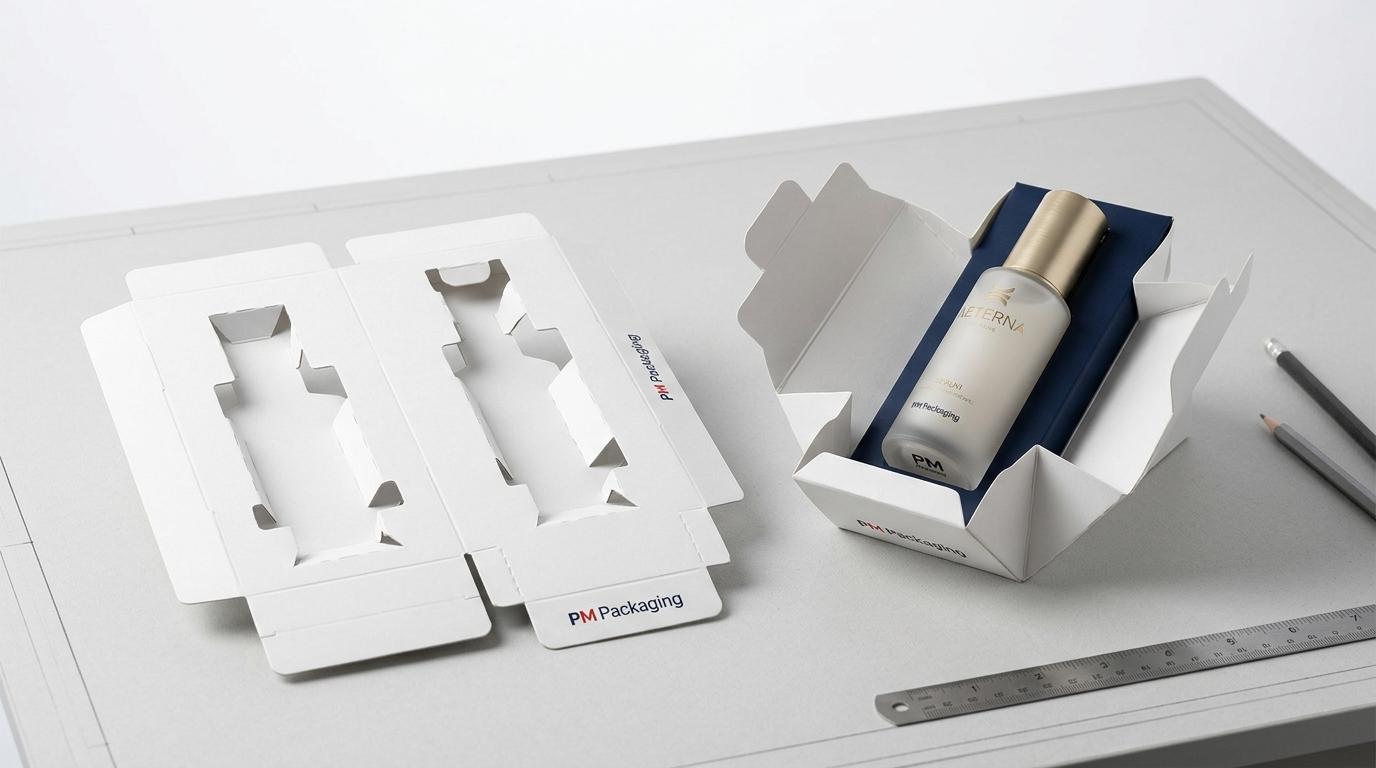
Paperboard Platforms, Folded Cradles, and Retainers
Solid bleached sulfate (SBS) paperboard (16pt to 24pt caliper) is the primary substrate for consumer retail inserts, supporting vibrant printing while maintaining high folding endurance across creased edges:
Die-Cut Platforms & Cradles: Elevated platforms feature roll-over perimeter legs that suspend products above the bottom panel, while precision aperture cutouts grip containers. For horizontal products like cosmetic tubes or pens, folded cradles support the item along multiple facets with integrated finger access.
Neck and Base Retainers: For tall pump bottles, a lower platform stabilizes the container foot while an upper collar locks the dispenser neck, preventing head sway from striking carton panels during drop impacts.
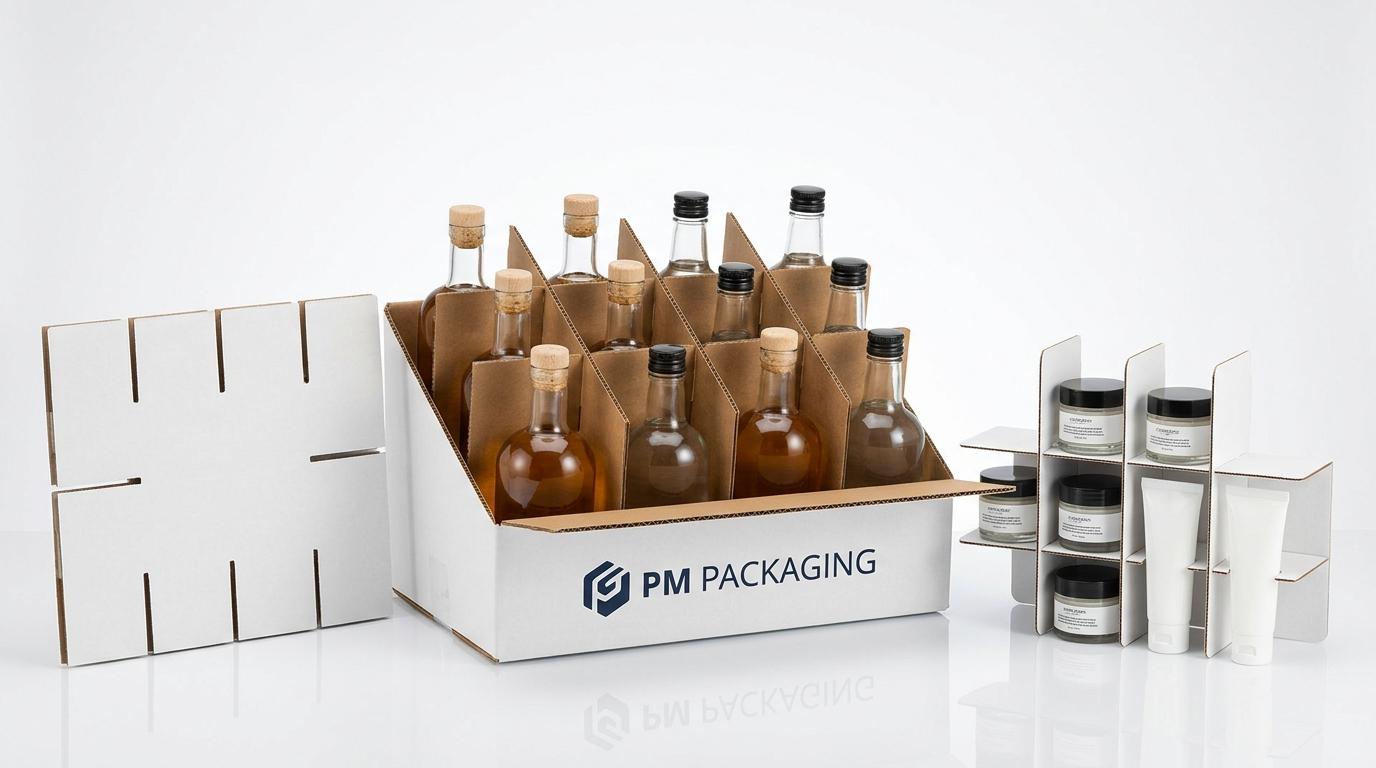
Dividers and Corrugated Partitions
Where platforms cradle single items, dividers and partitions organize multi-unit assortments. Lightweight paperboard dividers create clean compartments inside retail gift boxes, separating cosmetic jars from applicators. For heavier items, slotted corrugated partitions (E-flute or B-flute) form rigid cell grids that prevent glass contact while adding vertical compression strength to master shipping cases.
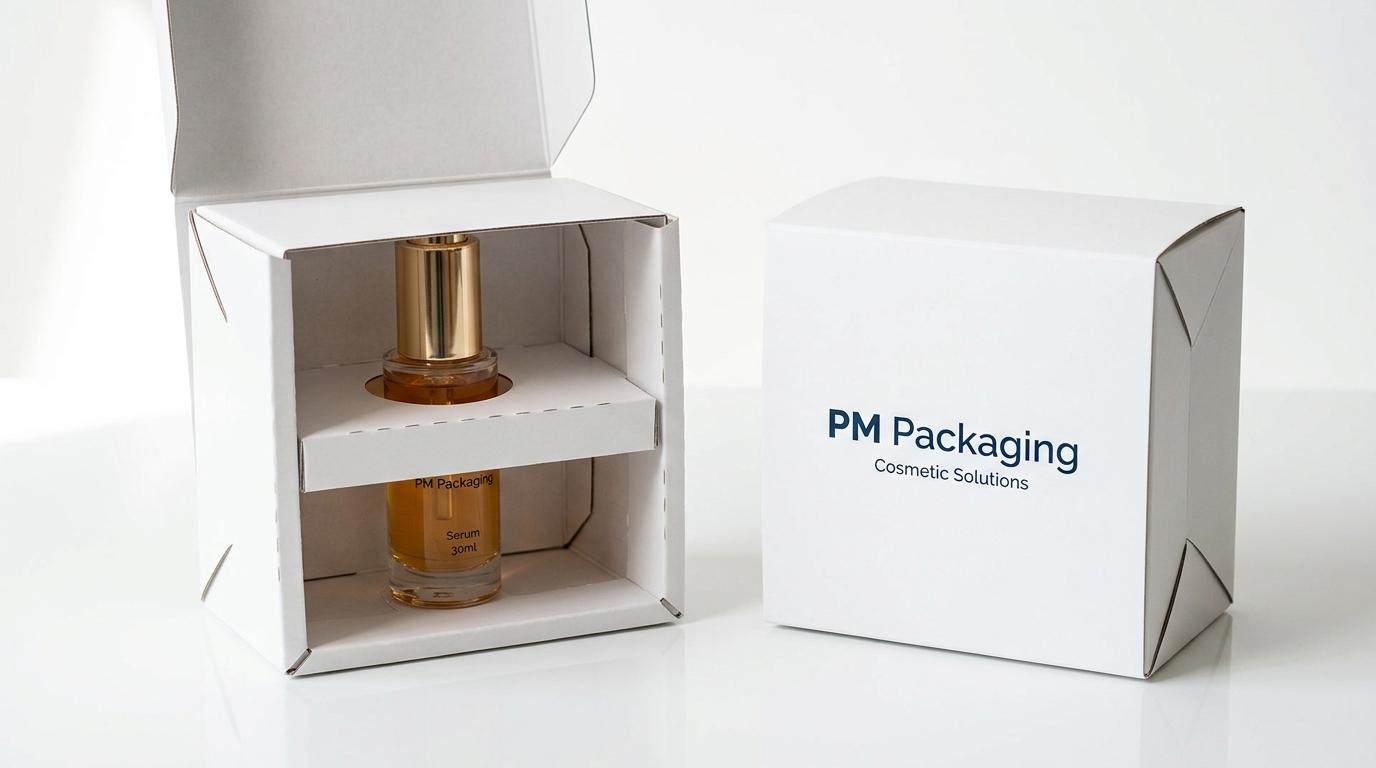
Separate Inserts vs. Retention Built Into the Carton
Integrated Retention: Extending the carton blank with interior roll-over panels or die-cut collars allows a single piece of board to provide exterior branding and internal retention, eliminating a secondary SKU and reducing packing-line assembly steps.
Separate Inserts: Separate platforms are superior when product shapes are complex, require multi-tiered elevation, or when a brand standardizes a single master outer box while swapping insert configurations across different product lines. To learn how to standardize outer packaging while varying interior structures, read our guide on scaling premium packaging across different insert requirements.
Secure Fit vs. Easy Product Retrieval
In structural design, secure does not mean extremely tight. Glass bottles and molded containers carry manufacturing tolerances of ±0.5mm to ±1.0mm. If a cavity is cut exactly to nominal CAD dimensions without tolerance buffers, oversized production bottles will jam, slowing fulfillment and frustrating consumers who must shake the box to retrieve items.
Finger Notches & Thumb Cutouts
Provide grasping clearance beneath containers so customers can lift items without prying.
Ribbon Pulls & Hinge Flex
Woven ribbon tabs or scored flex relief panels release tightly nested products smoothly.
How Insert Design Dictates Pack-Out Labor Costs
Packaging procurement teams often evaluate inserts based solely on sheet yield, overlooking assembly labor. An insert that saves $0.03 in paperboard but requires 5 complex folds and 6 seconds of extra hand assembly will add thousands of dollars in packing labor across a 50,000-unit rollout.
Optimize for Throughput: Pre-glued auto-erect platforms pop open in one motion, dropping directly into cartons. Asymmetrical or keyed geometry ensures operators cannot load inserts backward, keeping packing lines operating at peak velocity.
Controlling Product Position Behind Windows
A die-cut window only works visually if the product remains centered. Without retention, containers rotate or sag below the aperture in transit. Internal platforms lock items forward against the window film, keeping brand marks aligned. To explore dieline specifications, review our guide on when to use a die-cut window in product packaging.
When Paperboard Isn't the Right Insert Material
While paperboard is versatile, specific applications require alternative materials: fabricated EVA/EPE foam for delicate optics, thermoformed plastic for complex undercuts, or molded pulp for heavy geometry. Replacing plastic with paperboard increases fiber content, but recyclability must be evaluated across the complete packaging system.
Distribution Testing: Validating the Complete System
Testing an insert in isolation is ineffective; performance depends on the integrated interaction between product, insert, and outer carton. International Safe Transit Association (ISTA) protocols—including drop, vibration, and compression tests—simulate shipping hazards to verify that retention holds, bottles do not collide, and score lines remain intact.
What PM Packaging Needs to Engineer Your Insert
To engineer a custom insert for your product, our structural team evaluates the following program parameters:
| Parameter | Engineering Significance |
|---|---|
| Product Dimensions & Samples | Establishes precise aperture cutouts and clearance buffers. |
| Total Product Weight | Determines board caliper (18pt–28pt SBS vs. E/B microflute). |
| Fragile & Contact Zones | Identifies where support must occur and contact avoided. |
| Component Count & Layout | Defines visual unboxing hierarchy and compartmentation. |
| Pack-Out Method (Manual vs. Auto) | Dictates self-locking tabs, auto-erect bases, and loading speed. |
| Distribution Channel (Retail vs. D2C) | Establishes required shock, vibration, and drop protection. |
| Target Production Volume | Influences integrated tooling vs. separate insert dies. |
Frequently Asked Questions: Packaging Inserts
What does a packaging insert do?
A packaging insert is a custom internal structure that positions, supports, separates, and protects products inside a box, ensuring items survive transit and arrive neatly presented.
What is the difference between an insert and a divider?
An insert is customized around 3D product geometry to lock it in place, while a divider is a planar or slotted partition separating multiple items into uniform cells.
Does every product need a packaging insert?
No. Durable single items in tight-fitting cartons or cartons with integrated retention tabs need no separate insert, saving material and pack-out labor.
Can retention tabs be built directly into a folding carton?
Yes. Many folding carton dielines incorporate die-cut tabs, roll-over side panels, or friction collars directly into the single sheet blank, eliminating separate insert assembly.
How tight should a packaging insert fit around a product?
Inserts should fit securely without being overly tight. Cavities must account for manufacturing variations in glass, plastic, and paperboard to prevent jammed pack-out.
When can paperboard inserts replace foam or plastic thermoforms?
Paperboard inserts replace foam and plastic when products have moderate weights and require geometric positioning and scuff resistance rather than deep deceleration cushioning.
How does insert design affect packing-line speed?
Inserts requiring complex manual folding slow packing lines. Pre-glued auto-erect platforms, self-locking tabs, and foolproof directional geometry maximize packing throughput.
Should the insert and outer carton be designed together?
Yes. Developing the outer carton and internal retention components simultaneously coordinates board calipers, dimensional tolerances, stacking strength, and unboxing ergonomics.
Engineer the Insert and Outer Package Together
PM Packaging develops custom folding cartons, rigid presentation boxes, and SFL microflute packaging together with precision internal paperboard retention components. Evaluating the complete system coordinates fit, board caliper, loading speed, and transit durability.
Need an insert designed around your product?
Send our structural engineering team your CAD dielines, product samples, and volume goals.