
How Single Face Lamination Solves the Parcel Packaging Dilemma
Single Face Lamination can be useful for branded products that need more structural rigidity than a conventional folding carton but still require high-quality printed graphics and an intentional unboxing presentation. For parcel delivery, however, SFL alone does not prevent damage automatically. Performance depends on the complete package: flute, board combination, dieline, closure, product retention, void space, coatings, product weight and the distribution environment. Loaded prototypes should be evaluated before a high-volume program is released.
Why Parcel Distribution Is Different From Palletized Freight
When consumer packaging moves through full-pallet truckload (FTL) distribution to a retail distribution center, the physical stresses are largely predictable: static vertical stacking, shrink-wrap tension, and controlled forklift handling. The individual retail carton rarely encounters severe point impacts or tumbling.
Direct-to-consumer parcel networks (such as UPS, FedEx, and national postal services) present a fundamentally harsher environment. In a parcel hub, individual packages travel through high-speed automated sortation systems where they experience:
Conveyor Transitions & Drops
Packages drop 3 to 4 feet from diverter belts into bulk consolidation hoppers, transferring dynamic shock directly to carton corners and edges.
Stacking & Compression Loads
Inside delivery vans and bulk trailers, small parcels can sit beneath dense, heavy shipments, subjecting side panels to dynamic top-load compressive stress.
Continuous Vehicle Vibration
Hours of road vibration agitate contents, causing internal components to rub against packaging walls and generating surface scuffing or seam fatigue.
Repeated Manual Handling
Every parcel is lifted, tossed, and repositioned multiple times across hubs, putting intense pressure on closures, dust flaps, and score lines.
"Parcel packaging has to be designed around the loaded product and actual distribution channel—not simply around the appearance of the empty carton on a CAD screen."
Does the Product Need a Retail Carton, a Branded Shipper, or Both?
Packaging buyers evaluating parcel delivery typically confront one of three real-world structural scenarios:
Scenario 1: Retail Carton Inside a Corrugated Shipper
Conventional 2-Box SetupThe product sits inside a lightweight folding carton, which is placed into a brown corrugated box with void-fill kraft paper or air pillows.
Scenario 2: Branded SFL Package Ships Directly (SIOC)
Direct-Ship / 1-Box SetupA single Single Face Litho-laminated box acts as both the customer-facing presentation piece and the exterior parcel shipping container.
Scenario 3: SFL Retail Package Inside an Outer Shipper
Hybrid SetupAn SFL carton is chosen for retail display or stacking rigidity, but a separate brown shipper is still used for fulfillment protection.
Understanding these three pathways prevents packaging teams from assuming that SFL automatically eliminates an outer box in every instance. For an in-depth review of single-package consolidation, see our guide on How SFL Can Help Manufacturers Consolidate Retail and Shipping Packaging.
Why SFL Can Perform Differently From a Folding Carton
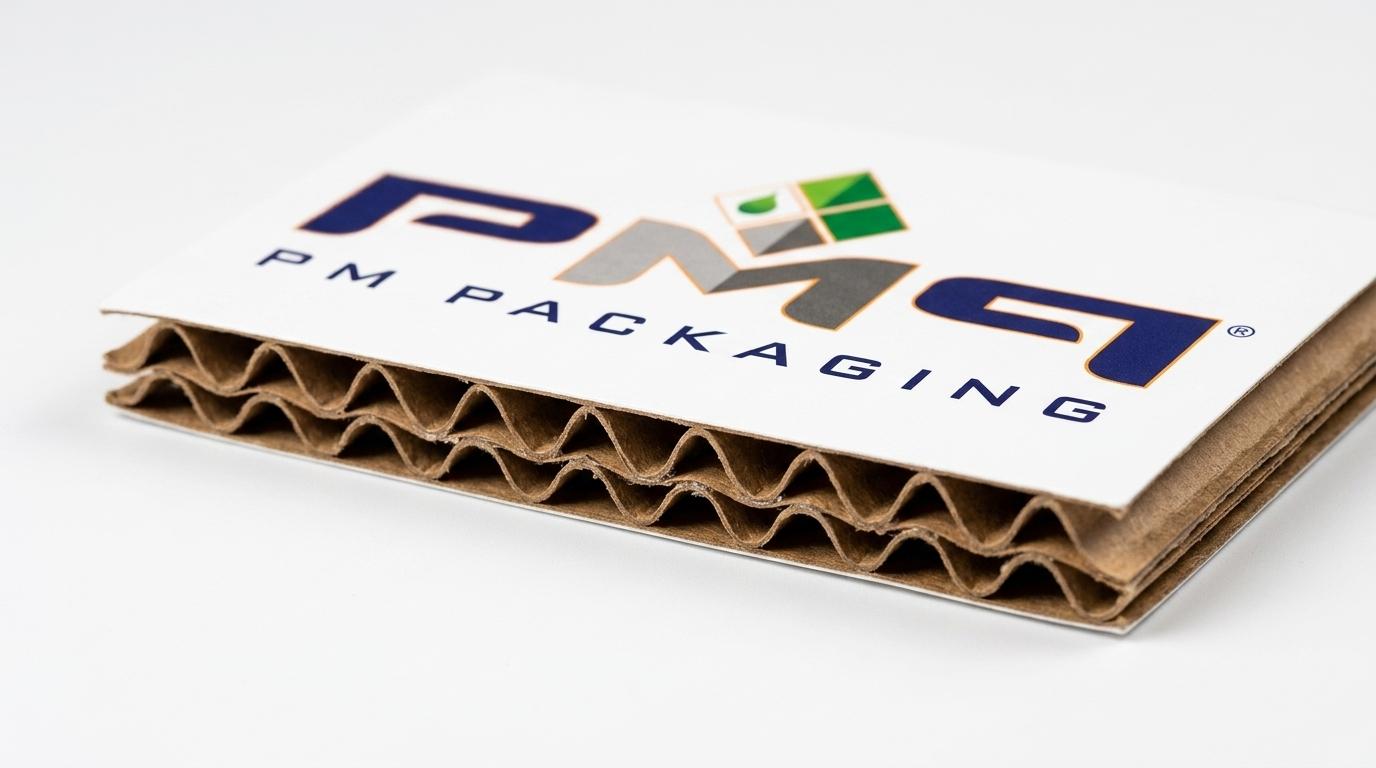
Single Face Litho-lamination combines two distinct converting processes: high-resolution sheetfed offset litho printing and corrugated single-face laminating. A smooth paperboard face sheet is printed with photographic fidelity and then laminated to an exposed fluted corrugated medium with an interior liner.
In parcel transit, this hybrid architecture provides three distinct mechanical advantages:
- Panel Rigidity: The arched flutes act as a miniature structural truss, spacing the inner and outer liners apart. This caliper separation significantly increases beam stiffness, preventing broad carton panels from bowing or dishing under stacking loads.
- Cushioning & Energy Management: When a package impacts a sorting chute or conveyor diverter, the fluted corrugated geometry deforms slightly to absorb and dissipate kinetic energy rather than transmitting the full shock wave directly into the product.
- Refined Graphic Surface: Because the face sheet is printed flat on high-speed offset presses before lamination, there is zero "washboarding" (the fluting lines visible on direct-print flexographic corrugated boxes). Brands achieve mirror-smooth, luxury retail printing with full protective caliper.
It is important to emphasize: SFL does not magically prevent crushing on its own. Rather, SFL gives the structural designer additional material thickness, beam stiffness, and energy-absorption capacity to work with. The final performance comes from the converted structure—the geometry of the dieline, corner folds, and internal retention—not the acronym SFL.
Folding Carton vs. SFL vs. Corrugated for Parcel Delivery
Selecting the correct packaging format for individual parcel shipment requires matching material characteristics with transit exposure and customer presentation goals:
| Packaging Structure | Parcel Delivery Role & Fit | Primary Limitations in Transit |
|---|---|---|
| Folding Carton (Paperboard) | Appropriate for lightweight, non-fragile items that travel inside an outer shipping container. Exceptional graphic detail at low unit cost. | Cannot withstand parcel drops or sorting chutes as a standalone container; prone to corner crushing and creasing under point loads. |
| Single Face Litho-Laminate (SFL) | Worth evaluating when premium graphics, structural rigidity, and intentional unboxing need to coexist in a standalone direct-ship mailer or heavy carton. | Requires deliberate closure, edge, and coating engineering to protect the printed exterior from direct transit abrasion. |
| Standard Corrugated (Direct-Print) | Often the strongest economic choice when transportation protection is the dominant requirement and refined brand presentation is secondary. | Flexographic printing suffers from coarse halftone resolution, washboard flute lines, and an industrial utility appearance. |
For a comprehensive master comparison across all product categories, explore our detailed analysis on Folding Carton vs. SFL vs. Corrugated: How to Select the Right Structure.
When to Upgrade From a Folding Carton to SFL
The decision to transition from a paperboard folding carton to an SFL structure is typically driven by observable operational failures in the distribution chain. Evaluating an upgrade is justified when:
- Broad Panels Bow or Dish: Customer-facing carton faces flex inward or belly outward during transit or when stacked, creating a worn, damaged appearance at unboxing.
- Corners and Edges Deform: Sorting conveyor drops crush paperboard corners, breaking die-cut seams and tearing carton score lines.
- Bottom Panels Sag Under Weight: The product mass stretches paperboard tuck flaps or auto-lock bottoms, risking product drop-through during handling.
- Secondary Overboxing Inflates Costs: The retail carton is so fragile that fulfillment teams must wrap it in layers of bubble wrap and place it into an oversized outer shipper, incurring steep dimensional weight (DIM) surcharges.
- Dual-Channel Complexity: The brand is expanding from retail shelves into direct-to-consumer ecommerce and needs a single structural package that thrives in both environments.
For deeper insights into structural thresholds, consult our transition guide on When Can SFL Replace a Heavy Folding Carton?.
When Traditional Corrugated May Still Be the Better Choice
SFL is not the right choice for every application. A packaging engineer should recommend traditional direct-print corrugated when:
- The Container Is Purely Transit-Oriented: The box will be discarded immediately in a backroom or warehouse where consumer-facing aesthetics deliver zero commercial value.
- An Adequate Branded Carton Already Exists: The product already features an established retail carton, and the secondary shipper is simply a utilitarian transport shell.
- Severe Weight Demands Heavy C-Flute or Double-Wall Corrugated: Industrial machinery, bulk fluids, or heavy hardware exceeding 30–40 pounds require heavy kraft corrugated liners where microflute SFL would be structurally under-specified.
- Unit Economics Cannot Support Litho Lamination: Commodity goods with razor-thin margins where utility flexo printing satisfies baseline carrier labeling requirements.
Which SFL Flute Should Be Considered for Parcel Packaging?
Flute selection for parcel packaging should never be based on product weight alone. It must be calculated around panel surface area, box dimensions, internal void space, closure style, pack-out ergonomics, and distribution exposure.
F-Flute
Approx. 1/32" Caliper | ~125 Flutes/ft
Ultra-thin profile with tight folding radiuses and a remarkably smooth print surface. Excellent for compact luxury packaging, cosmetics, jewelry, and lightweight personal electronics where refined presentation is paramount.
E-Flute
Approx. 1/16" Caliper | ~90 Flutes/ft
The industry benchmark for ecommerce mailers. Delivers a superb balance of structural beam rigidity, crush resistance, and smooth offset print quality without washboarding across medium-sized parcel shippers.
B-Flute
Approx. 1/8" Caliper | ~47 Flutes/ft
Thicker corrugated fluting offering superior cushioning and stacking strength. Ideal for larger mailers, heavier items, multi-component kits, bottled liquids, or packages subject to rough multi-stop transit routes.
For detailed guidance on matching fluting calipers with specific mass thresholds, see our technical article on How Product Weight Influences the Choice of SFL Flute.
A Strong Outer Box Cannot Compensate for Poor Product Retention
A fundamental law of parcel packaging engineering is that exterior box strength is only half the transit equation. A package can arrive on a customer's doorstep with pristine, undamaged exterior panels while the merchandise inside is completely broken.
When a parcel encounters a 3-foot drop or sorting deceleration, an unconstrained product slides inside the box. Upon collision with an interior wall, the sudden deceleration concentrates destructive g-forces on delicate product components. Conversely, a heavy item moving violently inside can punch through exterior corners from the inside out.
Effective transit retention requires engineering the interior as meticulously as the exterior:
Custom Die-Cut Fluted Cradles
Precision paperboard or SFL inserts that suspend fragile items in the geometric center of the box, creating protective clearance voids away from exterior walls.
Component Separation Partitions
Fluted dividers preventing glass bottles, metal tools, or accessories from colliding and abrading one another during vehicle vibration.
Engineered Retention Tabs
Folding tabs that mechanically clamp cords, chargers, or secondary components securely in place without requiring plastic tape or foam.
Controlled Wall Clearance
Calibrated air gaps between the product perimeter and the outer carton wall, ensuring exterior crushing forces dissipate before reaching the item.
Explore how to evaluate interior requirements in our companion guide on How to Decide Whether an SFL Package Needs an Insert.
Right-Size the Package Around Protection, Not Just Material Reduction
In modern ecommerce, "right-sizing" is frequently misinterpreted as an aggressive race to manufacture the absolute smallest possible box. While eliminating unnecessary packaging air is essential, over-compressing dimensions introduces severe transit risks:
Consequences of Undersizing
- • Leaves inadequate product-to-wall clearance, transferring drops directly to the item.
- • Eliminates room for shock-absorbing internal inserts or partition cradles.
- • Causes product protrusions to press against box corners, accelerating transit punctures.
- • Creates assembly friction for packing operators, slowing fulfillment cycle times.
Consequences of Oversizing
- • Creates large unsupported panel spans that bow and dish under compressive loads.
- • Allows internal product movement, generating destructive kinetic shock during drops.
- • Requires costly plastic void fill or paper dunnage to stabilize the shipment.
- • Incurs steep dimensional weight (DIM) freight surcharges from parcel carriers.
The engineering objective is not the smallest possible box, but the smallest practical finished package that provides the required product clearance, retention, and structural performance.
Corners and Edges Usually See Different Loads Than Broad Panels
In parcel transit, mechanical forces do not distribute evenly across a carton. When a package tumbles down a sortation chute or strikes a conveyor transition, impact energy concentrates at the box's corners and folded edges.
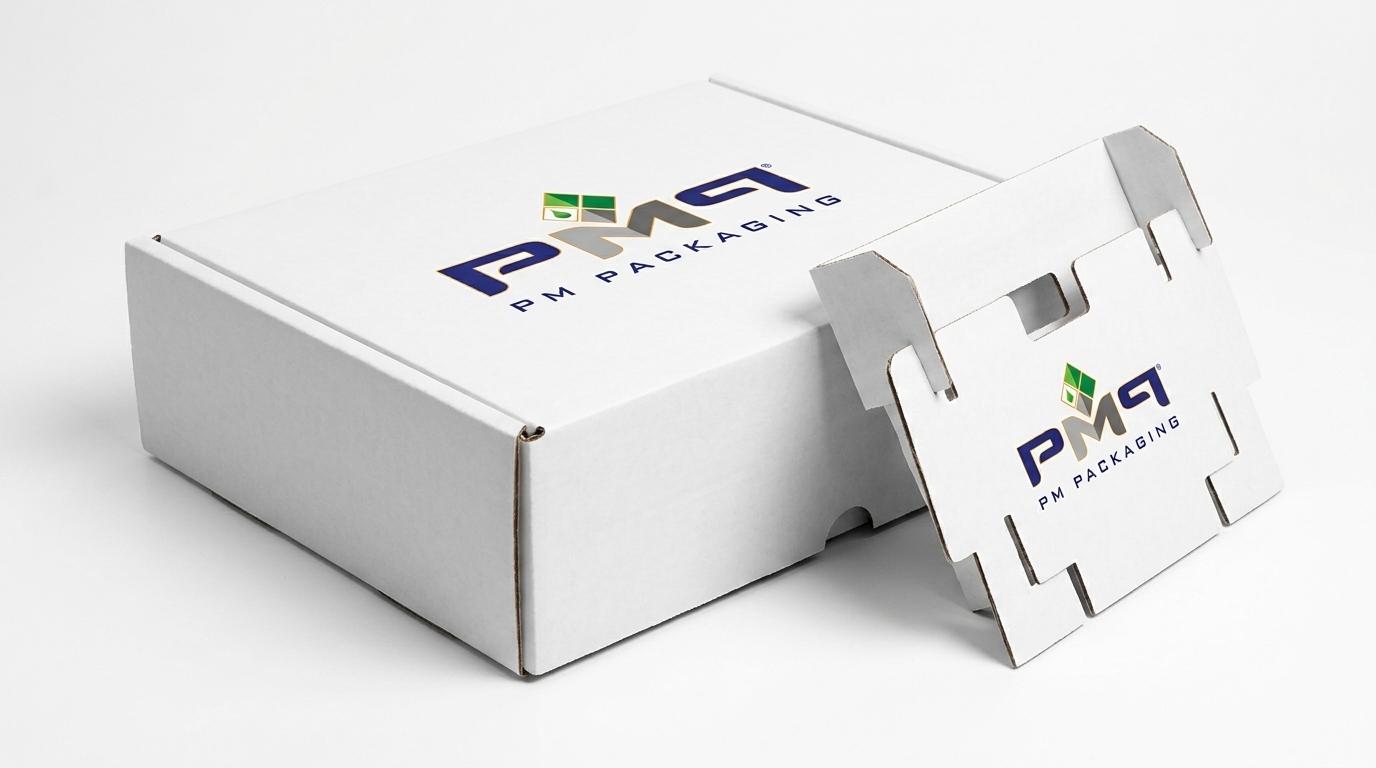
Standard packaging styles (such as simple reverse-tuck cartons) have single-ply corners that easily crumple upon impact. In contrast, an engineered SFL Roll-End Tuck-Top (RETT) mailer manages load paths through strategic structural folding:
- Double-Wall Rolled Sidewalls: As the RETT mailer is erected, the side panels fold over on themselves, creating a continuous double-wall of fluted corrugated board along both lateral edges.
- Integrated Dust Flaps: Extended dust flaps tuck inside the front corners, locking the vertical score lines and creating an interlocking truss that resists diagonal corner deformation during corner drops.
- Roll-Over Front Locking Panel: The front flap folds down into interlocking base slots, providing three layers of fluted board along the primary impact edge.
Protecting the Printed Surface During Parcel Handling
This article focuses on protecting branded packaging—not merely preventing physical breakage of the product inside. In direct-ship ecommerce, arriving with an intact product is table stakes; if the exterior box arrives marred by scuffs, scratched ink, and smudged graphics, the luxury brand perception is compromised.
Standard ink films are vulnerable to friction when packages rub against conveyor belts, guide rails, and adjacent corrugated cartons. Dark, heavy-ink coverages (such as rich blacks, navy blues, or deep jewel tones) are particularly prone to burnishing and chalking.
Preserving printed graphics requires calibrated coating engineering:
Inline High-Rub Aqueous Coatings
Specialized water-based coatings formulated with polymer slip additives that lower surface friction coefficients, allowing adjacent cartons to slide across one another without transferring ink.
Anti-Scuff Matte Films & Varnishes
Micro-etched barrier coatings that resist fingernail scratches and abrasive conveyor scuffs while delivering a luxurious, non-reflective tactical feel.
Strategic Artwork Layout
Positioning delicate typography, key brand badges, and critical messaging away from perimeter edges and bottom panels where contact friction is highest.
Interior Flood Printing
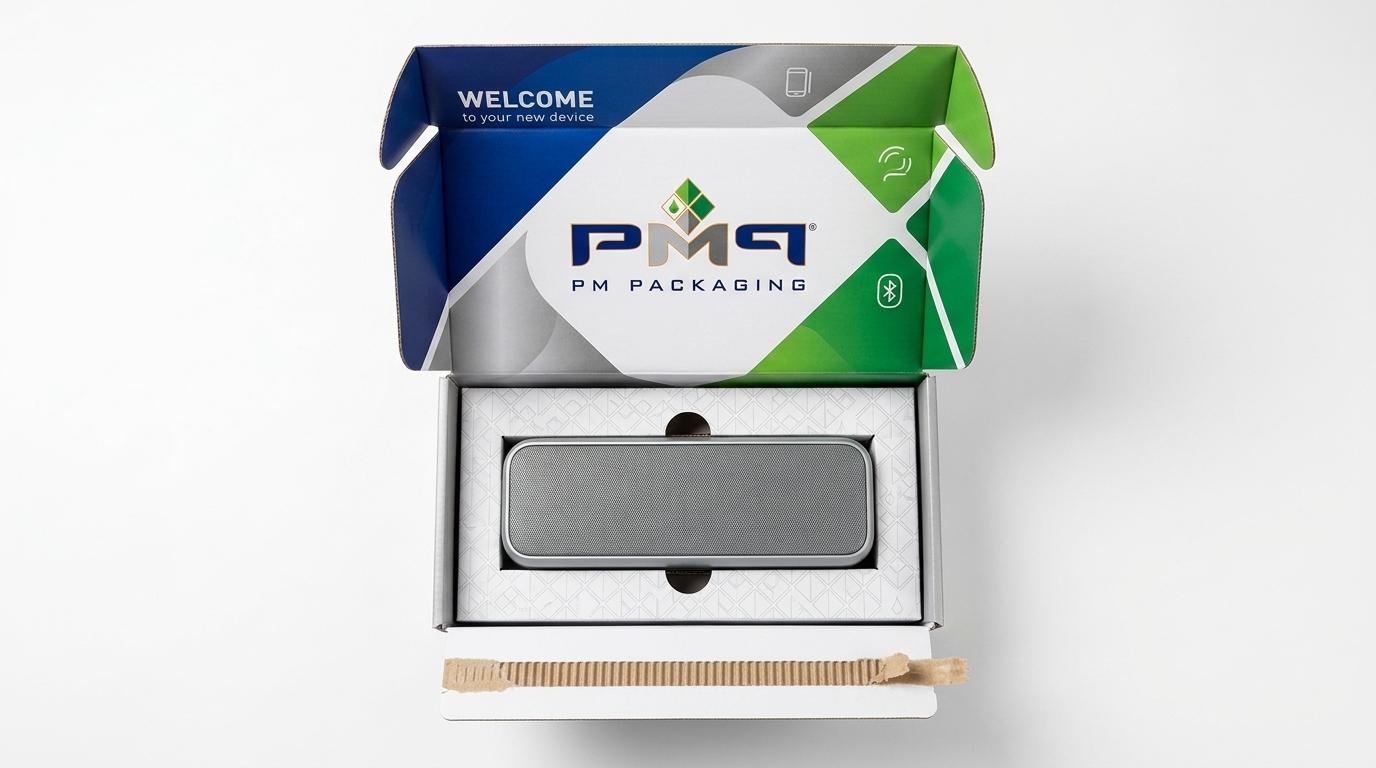
Applying full-bleed vibrant graphics to the inside lid and panels. While the exterior endures transit exposure, the interior unboxing reveal remains completely pristine.
For an exhaustive technical review of rub resistance and coating chemistry, see our guide on Why Printed Packaging Scuffs and Which Coatings Help.
Design a Dedicated Shipping-Label Zone
Nothing undermines high-end packaging design faster than an automated fulfillment label slapped indiscriminately across a hero brand logo or product title. When designing a branded direct-ship SFL container, packaging artwork must anticipate logistical realities:
- Dedicated 4 × 6-Inch Clear Zone: Allocate an unprinted or subtly screened rectangular area on the exterior base or secondary panel specifically sized for carrier shipping labels, ensuring optical barcode contrast.
- Sealing Tape & Banding Clearances: Plan tape tracks so automated case tape or tamper-evident paper tape does not cut across critical branding or instructions.
- Tear-Strip & Return Label Paths: Position the opening pull tab so pulling the tear strip leaves return shipping labels or customer service instructions intact.
Learn how to plan dielines that facilitate secondary customer use in our analysis on Designing an SFL Mailer That Customers Can Reuse.
Closure Design Is Part of Transit Performance
A package closure must fulfill two opposing requirements: it must remain rigidly sealed through violent sorting conveyor tumbles, yet open effortlessly without frustration when the customer receives it.
Depending on fulfillment speed and security requirements, structural engineers evaluate:
- Friction-Locking Tabs: Mechanical tuck tabs that hold roll-end lids closed for lightweight or kit assemblies, often paired with a discreet exterior wafer seal.
- Peel-and-Seal Hot-Melt Adhesive Strips: High-tack adhesive bands applied to closure flaps for rapid, tape-free fulfillment line pack-out.
- Integrated Tear Strips: Die-cut rippa-tape or perforated pull tabs that allow customers to open the box cleanly without knives, protecting interior contents from accidental blade punctures.
- Dual-Tape Reclosure Features: A second adhesive strip protected by release liner, allowing consumers to securely reseal the identical SFL container for returns without hunting for packing tape.
Can SFL Eliminate a Secondary Shipping Carton?
The proposition of eliminating an outer corrugated shipper is one of the primary commercial drivers for evaluating SFL. However, this decision requires objective operational analysis rather than blanket assumptions.
The Secondary Shipper Decision Framework
For many consumer goods, personal electronics, premium apparel, and specialty food products, a properly engineered SFL structure can successfully perform both presentation and shipping functions.
However, for ultra-fragile items (such as thin glass stemware), heavy industrial components, or luxury white-glove unboxings where the exterior carton must arrive 100% spotless without carrier routing marks, maintaining a separate sacrificial brown shipping container remains the responsible engineering choice.
Explore when single-box elimination is viable in our focused analysis on When Can SFL Packaging Eliminate a Secondary Shipping Carton?.
Evaluate Total Damage Cost, Not Just Box Cost
When procurement managers compare packaging invoices solely on individual unit piece-price, paperboard folding cartons or commodity brown boxes appear cheaper than custom SFL mailers. However, experienced supply chain directors calculate total system cost:
A packaging structure that saves $0.35 per unit on paperboard becomes an enormous financial liability if it generates a 2.5% return rate on a $120 item, requires $0.40 in bubble wrap, and adds $1.85 in carrier dimensional freight.
Conversely, upgrading to SFL is not economically justified if a simpler, less expensive structure already performs reliably in your distribution network. Upgrading to SFL should be an intentional investment driven by damage reduction, freight optimization, or customer retention.
Common Transit Failure Modes and What to Investigate
When a branded parcel package exhibits damage in the field, packaging teams can diagnose root causes using the following structural evaluation matrix:
| Observed Transit Failure | Possible Packaging Issue to Investigate |
|---|---|
| Crushed Corners | Corner and edge structure lacking double-wall fold reinforcement; inadequate product-to-corner clearance; severe sortation chute drop exposure. |
| Bowed Broad Panels | Excessive unsupported panel span; insufficient fluting caliper (e.g., F-flute used where E-flute is needed); top-load stacking compression in transit vans. |
| Product Moves Inside Package | Loose internal insert tolerances; lack of positive product locking detents; excess internal void space without mechanical retention. |
| Printed Surface Arrives Scuffed | Absence of inline high-rub aqueous coating; heavy ink coverage placed in high-friction perimeter zones; box-to-box friction on conveyor belts. |
| Closure Opens in Transit | Friction tuck tabs under-specified for product weight; inadequate adhesive tack; improper release liner removal during manual pack-out. |
| Product Contacts Outer Wall | Insufficient interior standoff clearance; lack of perimeter fluted buffer zones; insert shifting under horizontal deceleration. |
| Package Oversized / High Freight | Excess void space inflating dimensional weight (DIM); failure to right-size dieline around actual component geometry. |
| Outer Package Survives but Product Breaks | Severe internal shock transmission; lack of energy-absorbing cushioning inserts; rigid contact between brittle parts. |
| Product Survives but Box Looks Damaged | Paperboard grade lacking sufficient edge-crush resistance (ECT); non-reinforced single-wall dieline; absence of anti-scuff varnish. |
| Shipping Labels Obscure Branding | Failure to engineer a designated 4×6" label footprint on secondary exterior panels; graphics running unchecked across all outer planes. |
Prototype and Transit-Testing Considerations
Computer CAD models and empty structural mockups cannot predict how a filled package will react under dynamic transit stresses. A package must always be evaluated loaded with actual production goods (or calibrated weight-equivalent physical models).
Loaded prototypes can be evaluated through appropriate transit-testing protocols when testing is included in the project scope. PM Packaging can perform or coordinate testing depending on program requirements:
- Drop & Impact Testing: Assessing free-fall corner, edge, and flat face impacts from realistic conveyor and vehicle tailgate heights.
- Rotational Shock & Vibration: Simulating hours of highway transport and distribution vehicle resonance to evaluate internal screw retention and surface scuffing.
- Stacking Compression: Verifying edge-crush resistance (ECT) under simulated top-load weight during transit consolidation.
- Environmental Conditioning: Evaluating paperboard and adhesive bond strength under elevated temperature and humidity shifts.
Signs Your Branded Parcel Package Needs Reevaluation
Packaging systems should adapt as fulfillment channels scale. The following 12 operational triggers signal that an existing branded parcel package is overdue for an engineering redesign:
PM Packaging's SFL Capabilities for Parcel Programs
PM Packaging engineers and manufactures high-performance Single Face Litho-laminated packaging for national consumer brands, direct-to-consumer enterprises, and commercial distributors:
Inline SFL Manufacturing
Advanced single-face corrugating and laminating lines producing rigid microflute structures with exceptional bond consistency.
Versatile Fluting Profiles (N, F, E, B)
Full structural spectrum from ultra-thin F-flute to heavy-duty B-flute, tailored to your exact product weight and distribution exposure.
High-Definition Sheetfed Offset Printing
G7-certified multi-color printing on premium coated linerboards, delivering flawless photographic imagery with zero fluting washboarding.
Custom Mailers & Specialty Dielines
Specialized converting for roll-end tuck-top mailers, auto-bottom cartons, and integrated easy-open tear-strip closures.
Structural CAD Samples & Printed Prototypes
Rapid sample cutting and physical prototyping for real-world fit, pack-out evaluation, and loaded transit testing.
North American Production (U.S. & Mexico)
Dual-facility manufacturing and distribution footprint supporting domestic and nearshore supply chain programs.
Learn more about our complete litho-lamination capabilities on our dedicated overview for Single Face Lamination Solutions.
What to Provide for an SFL Parcel-Packaging Review
If you are redesigning an existing parcel package to reduce damage or developing a new direct-to-consumer program, providing the following project parameters helps our engineering team develop an optimized structural recommendation:
Pre-RFQ Parcel Engineering Checklist
Frequently Asked Questions: SFL Packaging for Parcel Delivery
Is SFL suitable for shipping directly through parcel carriers?
Yes. For many consumer goods, personal electronics, premium apparel, and specialty food items, a properly engineered SFL roll-end tuck-top mailer can perform both presentation and shipping functions directly (SIOC). However, the structure must be engineered with appropriate fluting, edge reinforcement, anti-scuff coatings, and secure closures to withstand parcel sortation.
How is SFL different from a standard corrugated shipping box?
Standard corrugated boxes are flexo-printed directly onto fluted board, often producing washboard flute lines, coarse halftones, and an industrial look. SFL prints the outer linerboard on high-resolution sheetfed offset presses before laminating to the fluted medium, delivering luxury retail graphics with the structural beam stiffness of corrugated board.
Can SFL replace a folding carton and outer shipping box?
In many direct-to-consumer programs, yes. By combining high-definition branding on the outside with structural fluting on the inside, a single SFL mailer can replace the traditional two-box setup (retail carton + outer kraft shipper), reducing packaging unit overhead, pack-out labor, and shipping cube volume.
Which flute is best for an SFL ecommerce mailer?
E-flute is the industry standard for most ecommerce mailers because it offers an ideal balance of smooth printing, crush resistance, and structural rigidity. F-flute is chosen for compact luxury items requiring tight folding radiuses, while B-flute is selected for larger or heavier shipments requiring deeper cushioning.
Do SFL parcel boxes require inserts?
If the product does not fill the box completely or contains fragile, loose, or multi-piece components, an internal insert or partition cradle is essential. A rigid outer box cannot prevent damage if the product is free to slide and collide with interior walls during transit drops.
How can printed SFL packaging resist scuffing during shipping?
By applying inline high-rub aqueous coatings, matte barrier varnishes, or soft-touch laminates during printing. Structural designers also position critical typography and logos away from high-friction perimeter edges and design dedicated clear zones for carrier shipping labels.
Can an SFL mailer be designed for returns?
Yes. SFL mailers can be engineered with dual peel-and-seal adhesive strips separated by an integrated tear strip. The customer pulls the tear strip to open the box cleanly, and can use the second adhesive strip to securely reseal the box if a return is necessary.
Should an SFL package be transit tested before production?
Yes. Testing loaded prototypes under representative drops, vibration, and compression ensures that dieline dimensions, closures, and internal retention perform reliably before committing to large-scale production tooling.