
Choose a folding carton when the product is relatively light and the priority is compact paperboard packaging with strong graphics and efficient converting. Choose SFL when the package needs more rigidity and shipping strength while preserving high-quality printed presentation. Choose traditional corrugated when protection, stacking strength, distribution durability, or larger package dimensions matter more than a premium retail surface. The final decision should account for product weight, dimensions, sales channel, shipping exposure, pack-out method, and required shelf presentation.
Solid single-ply paperboard. Best for compact retail goods requiring sleek folds, high-definition offset printing, and efficient flat shipping.
Litho-laminated top sheet + fluting. Best when packages need enhanced panel rigidity and structural protection while preserving retail-quality graphics.
Outer liner + fluted medium + inner liner. The benchmark for master shippers, palletized distribution, and heavy transit packaging.
Selecting a packaging structure is not simply a binary choice between paperboard and corrugated board.
The goal is not to select the heaviest or most complex container. It is to specify the simplest structure that performs reliably, protects the product through its distribution environment, presents the brand appropriately, and operates efficiently on your packing line.
Understanding the Three Packaging Structures
To evaluate which structure fits your product program, packaging buyers must first understand how each material is physically manufactured and converted. The three formats represent fundamentally different structural architectures:
1. What Is a Folding Carton?
A custom folding carton is converted from a single sheet of solid converting paperboard. The manufacturing sequence flows from high-definition offset printing directly onto the coated paperboard surface, followed by optional specialty coatings (such as soft-touch, UV gloss, or foil stamping), high-speed die-cutting and creasing, and precision folding and side-seam gluing.
Folding cartons ship flat in high-density cases to fulfillment centers, where they pop open manually or feed seamlessly through high-speed automated cartoning equipment. Their primary advantage is aesthetic finesse: tight folding radii, crisp 90-degree corners, and an immaculate, smooth print surface. Their limitation is purely physical: as panel spans widen or product mass increases, solid paperboard has limited beam strength and will bow or crease under stress.
2. What Is Single Face Lamination (SFL)?
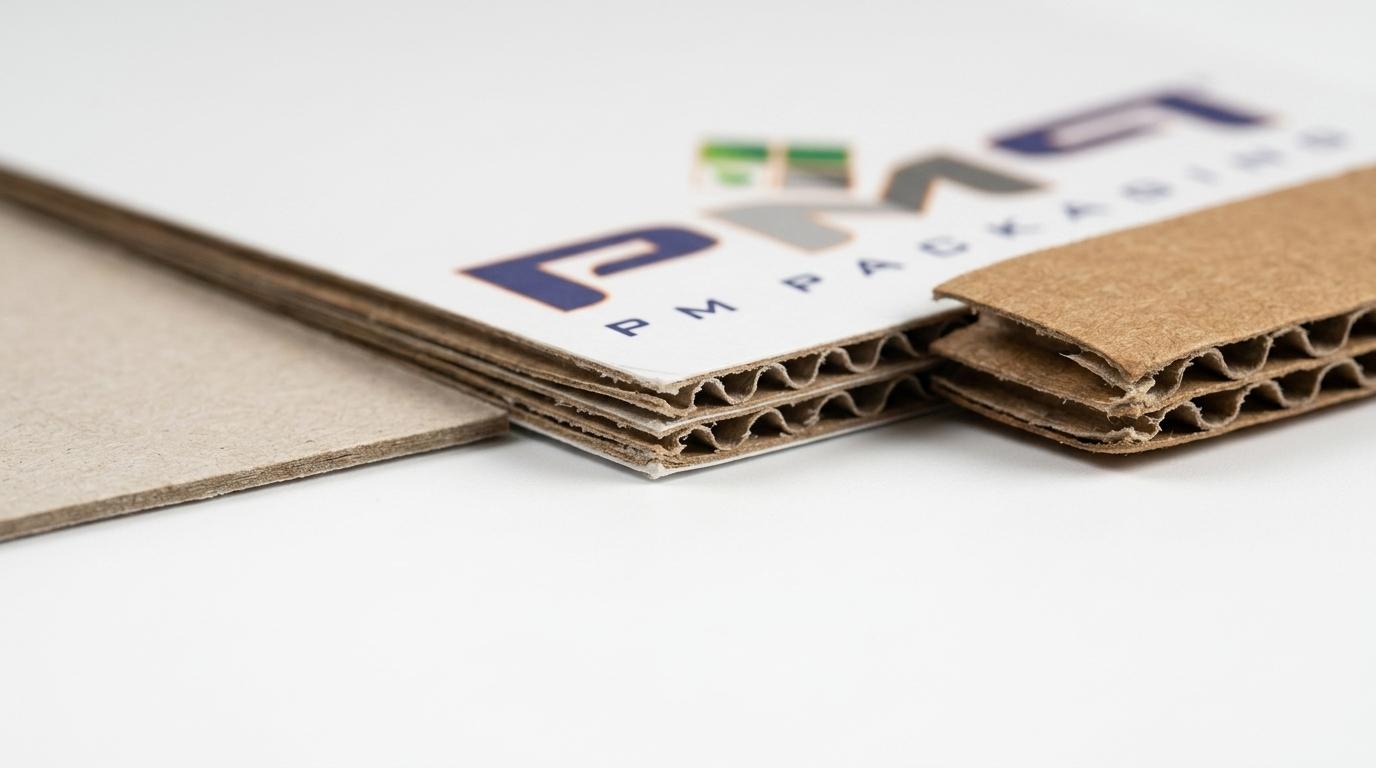
Single Face Lamination packaging is a hybrid paper-based structure engineered to bridge the gap between folding cartons and corrugated containers. SFL combines two distinct substrates into a single high-performance board:
- The Litho-Printed Top Sheet: A smooth paperboard liner is printed on large-format sheetfed offset presses, achieving photographic G7 Master color reproduction, fine typography, and premium coatings.
- The Single-Face Fluted Base: In an inline lamination process, this printed top sheet is married to single-face corrugated board (composed of an exposed fluted medium bonded to an inner kraft or white liner).
The result is a 3-ply structural material that delivers the high-definition graphics of a folding carton combined with the crush resistance, beam stiffness, and vertical stacking performance of corrugated board—all while completely eliminating the visible "flute washboarding" lines typical of direct-printed corrugated boxes.
3. What Is Traditional Corrugated Packaging?
Traditional corrugated packaging consists of a fluted corrugated medium sandwiched between an inner and outer paper linerboard. Engineered primarily around logistics, pallet stacking, and distribution protection, corrugated board is selected when a package must absorb impact, survive parcel sorting chutes, or withstand high humidity and compression in warehouse supply chains.
It is important to distinguish between production methods. Direct-printed corrugated uses flexographic or direct digital printing directly onto the outer liner of pre-combined corrugated board. While highly economical for master shipping cases, direct flexo printing can compress flutes and produce visible "washboarding." Conventional litho-laminated corrugated, by contrast, mounts pre-printed sheets onto heavier double-faced corrugated board for large retail floor displays.
Master 16-Point Comparative Decision Matrix
Sourcing teams must balance structural physics with graphic presentation and pack-out handling. The following matrix compares all three formats across core procurement criteria:
| Decision Factor | Folding Carton | Single Face Lamination (SFL) | Traditional Corrugated |
|---|---|---|---|
| Basic Construction | Solid single-ply paperboard | Printed top sheet + single-face fluting | Outer liner + fluted medium + inner liner |
| Lightweight Products | Excellent fit | Often unnecessary / overbuilt | Usually overbuilt |
| Moderate to Heavy Products | Structure-dependent (limited) | Strong candidate | Strong candidate |
| Large Panel Rigidity | Limited as dimensions increase (bowing) | Strong (fluting provides beam strength) | Strong (fluting provides beam strength) |
| Premium Offset Graphics | Excellent (printed directly on coated board) | Excellent (printed on top sheet before lamination) | Process-dependent (flexo or direct digital) |
| Fine Type & Photography | Excellent (crisp dot reproduction) | Excellent (G7 Master offset lithography) | Process-dependent (coarser screen rulings) |
| Flute Washboarding | None (solid smooth sheet) | None (flutes insulated by laminated top sheet) | Common on direct-printed single-wall board |
| Retail Shelf Presentation | Excellent (compact, sleek folds) | Excellent (refined structural retail presence) | Structure/print dependent (often utilitarian) |
| Shipping & Transit Protection | Limited without outer shipping carton | Moderate to strong depending on design (SIOC capable) | Strong (engineered for distribution transit) |
| Pallet Stacking (BCT) | Limited by paperboard structure | Structure-dependent (high vertical compression) | Strong when engineered to compression load |
| E-Commerce Parcel Shipment | Usually requires secondary shipping box | Can potentially serve both retail and shipping roles | Standard format for parcel logistics |
| Flat-Storage Efficiency | Excellent (highest pallet density) | Good (slight flute profile thickness) | Good to moderate (bulkier flutes) |
| Automated Pack-Out | Excellent for tuck and auto-bottom styles | Application-dependent (tuck-top and tray formers) | Case-equipment dependent (erectors and tapers) |
| Inserts & Partitions | Paperboard dividers and platforms | Microflute die-cut platforms and cavities | Heavy corrugated or foam blocks |
| Large Display Structures | Limited (lacks structural mass) | Excellent (countertop PDQ and retail-ready displays) | Excellent (floor displays and pallet shippers) |
| Typical Commercial Role | Unit retail box (cosmetics, OTC, confections) | Branded structural retail / multi-pack / distribution box | Master transport case, industrial shipper, utility box |
Product Weight Is Only One Part of the Structural Decision
Packaging buyers often assume that material selection is dictated strictly by product weight—presuming lightweight goods default to paperboard and heavier items require corrugated board. However, packaging engineers evaluate a complete multi-variable equation. Weight alone cannot determine whether a package will maintain its form on retail shelves or survive distribution.
Consider a moderate-weight product. If an item is dense and compact—such as a concentrated cosmetic bottle, glass dropper, or small hardware component—a properly engineered paperboard carton with a reinforced bottom closure may hold it securely. But if that same weight is distributed across a wide, broad-panel format—such as a computer keyboard, shallow electronics device, or multipack accessory kit—the broad unsupported panel span can cause solid paperboard to flex and sag under handling or stacking pressure. In that scenario, the package dimensions and panel area—not just the weight alone—call for the beam strength and rigidity of SFL microcorrugation.
When Folding Cartons Begin Reaching Their Structural Limits
Folding cartons remain the undisputed champion of compact consumer packaging. But as product lines expand, brands encounter distinct physical warning signs that indicate a product has outgrown solid paperboard:
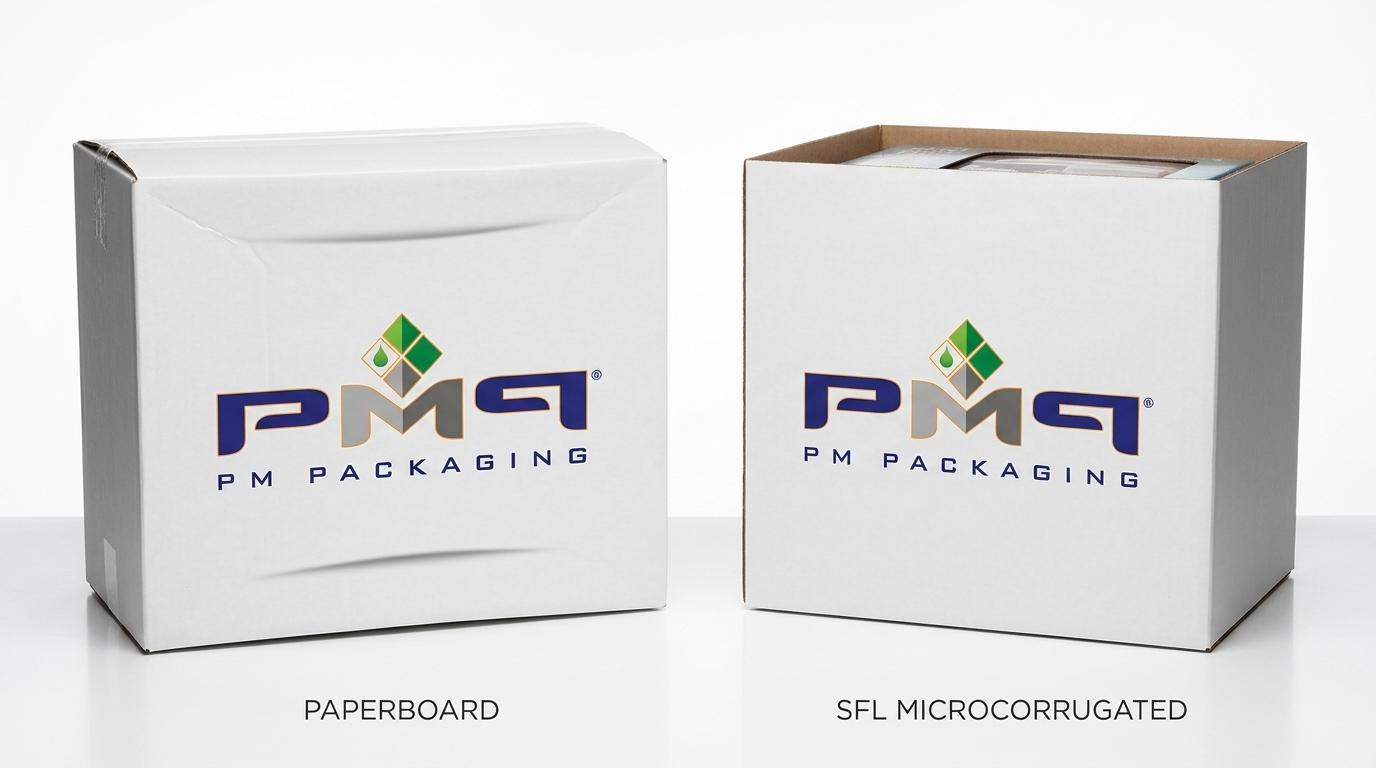
Signal 1: Broad Panels Begin Bowing ("The Belly Bulge")
When a carton face features wide unsupported dimensions, solid paperboard can lack sufficient cross-directional beam stiffness. The panel deflects outward under internal product pressure, transit vibration, or ambient humidity, creating an unsightly convex bulge on retail shelves that weakens brand perception.
Signal 2: Dense or Heavier Contents Stress Bottom Closures
When dense items sit inside standard tuck or snap-lock cartons, gravity and handling concentrate downward force on the bottom flaps. Over time or during transit vibration, closure tabs can strain or disengage, risking product drop damage unless reinforced or upgraded to a microflute structure.
Signal 3: Pallet Stacking Compresses the Corners
In palletized supply chains, vertical compression loads can transfer from master shippers down to primary retail packaging if shippers settle. Solid paperboard offers limited vertical compression resistance (BCT) compared to fluted boards, increasing the risk of corner creasing or panel crushing under heavy stacking tiers.
When you encounter these failure modes, increasing paperboard thickness yields diminishing returns. That is the exact threshold where brands should evaluate replacing a heavy folding carton with SFL.
Don't Overengineer: When SFL Is Unnecessary
Authentic packaging engineering is about right-sizing, not over-packaging. Specifying SFL when a standard folding carton already performs reliably adds unnecessary friction:
- Unnecessary Package Thickness: For compact cosmetics, blister cards, or OTC pharmaceuticals, adding microflutes increases overall package cube without improving protection.
- Higher Inbound Freight & Warehousing: While SFL ships flat, its fluted profile thickness occupies roughly twice the pallet volume of solid paperboard blanks, increasing inbound shipping costs for lightweight goods.
- Converting Complexity: Microcorrugated board requires specific creasing rules and folding dynamics that are overkill for simple retail tuck boxes.
- Brown Master Shippers: If you are manufacturing a secondary corrugated transit shipper that end-consumers will never see, investing in SFL offset lithography provides zero commercial return. Direct-printed kraft corrugated is the correct, economical choice.
Can One SFL Package Replace Both a Retail Carton and a Shipping Box?
Perhaps the most compelling commercial opportunity in modern packaging procurement is consolidating packaging layers. Traditional retail supply chains require three distinct packaging tiers:
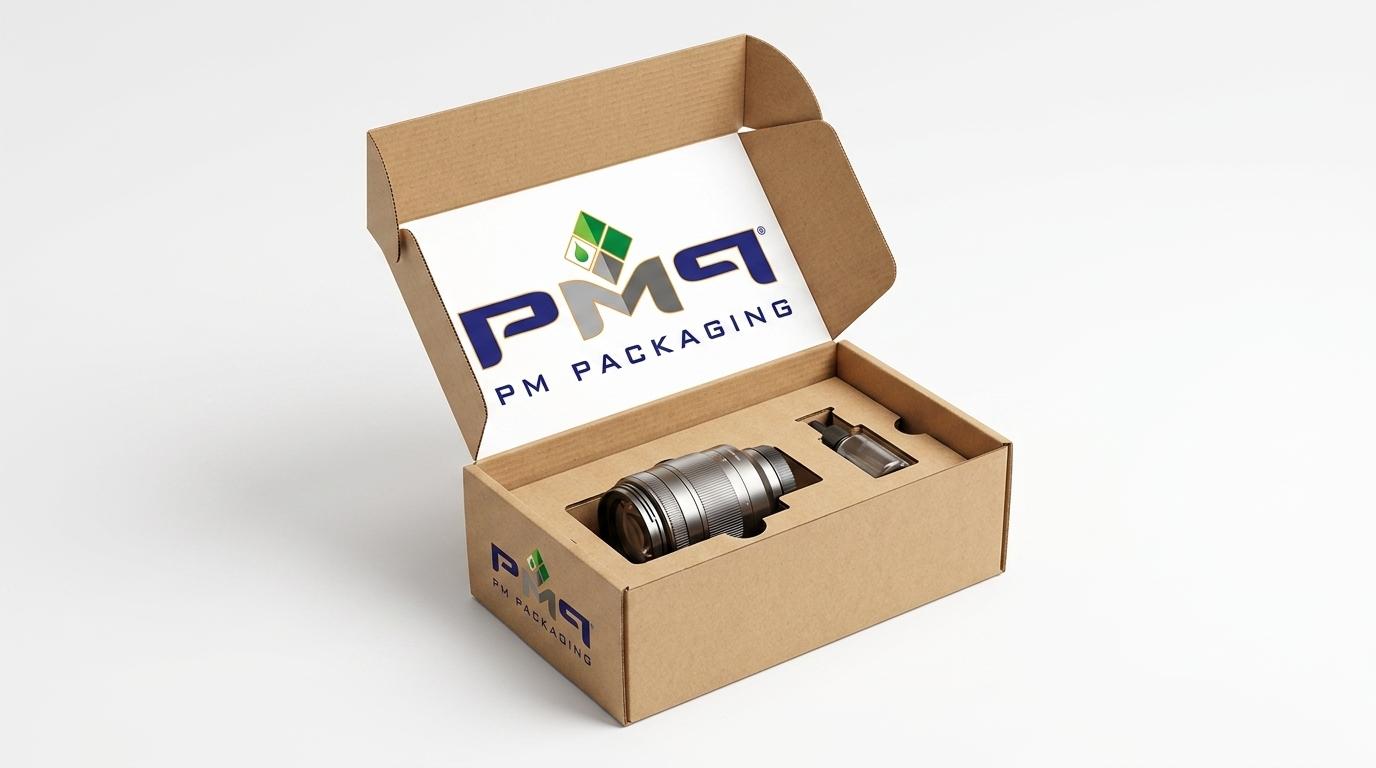
Because Single Face Lamination combines high-resolution retail graphics on the exterior with corrugated crush resistance throughout the walls, brands can frequently engineer an SFL structure to function as a Ship-In-Own-Container (SIOC) package.
By designing an SFL roll-end tuck-top (RETT) mailer or reinforced carton, the package can sit on a retail shelf, look stunning in a customer unboxing video, and survive direct-to-consumer parcel transit without requiring an outer brown box. Learn more in our guide on when SFL can eliminate a secondary shipping carton and when SFL can replace traditional corrugated boxes.
Print Quality & Branding: Nuanced Truths
A common misconception in packaging procurement is that folding cartons equal good printing and corrugated equals poor printing. In reality, print fidelity depends entirely on the converting process:
Folding Cartons: Direct Paperboard Offset
Offset lithography directly onto clay-coated solid paperboard delivers flawless 175–200 LPI screen rulings, ultra-crisp micro-type, and flawless registration. Spot varnishes, foil stamping, and embossing apply cleanly.
SFL Packaging: Litho-Laminated Top Sheet
Because the top liner is printed as a flat sheet on sheetfed offset presses before being married to the fluting, SFL achieves the exact same photographic print quality, color density, and specialty finishes as folding cartons—with zero flute washboarding lines.
Direct-Printed Corrugated: Flexographic & Digital
Printing directly onto corrugated board using flexographic photopolymer plates or digital inkjet heads is highly efficient for shipping graphics and bold retail packaging. However, the uneven profile of flutes beneath the liner can create subtle washboarding across large ink solids.
If SFL Is the Right Family, Which Flute Comes Next?
Once an engineering review determines that Single Face Lamination is the appropriate material system, the next specification is selecting the microflute profile (for an in-depth guide on choosing between profiles, see our comparison of F-flute vs. E-flute vs. B-flute for branded packaging):
Extremely compact profile that folds almost like paperboard while offering enhanced panel rigidity. Ideal for high-end cosmetics and small gift cartons.
Smooth exterior surface, tight folding radius, and clean creases. Perfect for premium consumer electronics accessories and boutique retail boxes.
The industry benchmark balancing crush resistance, stacking strength, surface smoothness, and folding efficiency. Ideal for hardware tools, small appliances, and e-commerce mailers.
Thicker fluting providing maximum cushioning, puncture resistance, and load-bearing capacity. Excellent for craft beverage multipacks, club-store trays, and heavy retail boxes.
How Pack-Out Method Affects the Material Decision
A package that is structurally sound but inefficient on the packing line quickly erodes operating margins. Sourcing decisions must align with fulfillment realities:
- High-Speed Automated Cartoning: Paperboard folding cartons with straight-tuck or reverse-tuck closures run on automated cartoning machinery reaching 100 to 300+ units per minute. SFL microflute can also run on automated lines, but requires equipment adjusted for board stiffness and scoring depth.
- Manual Hand-Assembly & Co-Packing: When fulfillment involves manual loading, pre-glued auto-bottom folding cartons or self-locking SFL roll-end tuck-top boxes pop open instantly without tape, substantially reducing assembly steps and labor handling compared to manual taped RSC corrugated cartons.
- Flat-Pack Inbound Logistics: Folding cartons occupy the least flat-storage space, maximizing warehouse density. SFL delivers strong flat-pack efficiency, while traditional corrugated shippers require significantly more pallet positions.
Total Packaging Program Cost: Beyond the Unit Price
In commercial procurement, the lowest unit-price container is rarely the lowest-cost packaging system. Sourcing managers should evaluate the complete landed program cost:
Procurement Equation: Raw Material + Tooling Dies + Print Plates + Interior Inserts + Fulfillment Labor + Pallet Warehousing Footprint + Freight Density + Transit Damage Deductions + Retailer Non-Compliance Fines.
For example, an SFL box may carry a higher unit material cost than a lightweight folding carton. However, if the structural rigidity of the SFL package eliminates the need for an outer shipping carton or secondary protective mailer, prevents retail transit damage, and avoids secondary pack-out touchpoints, the total landed system cost can be lower overall.
Common Product Examples & Structural Starting Points
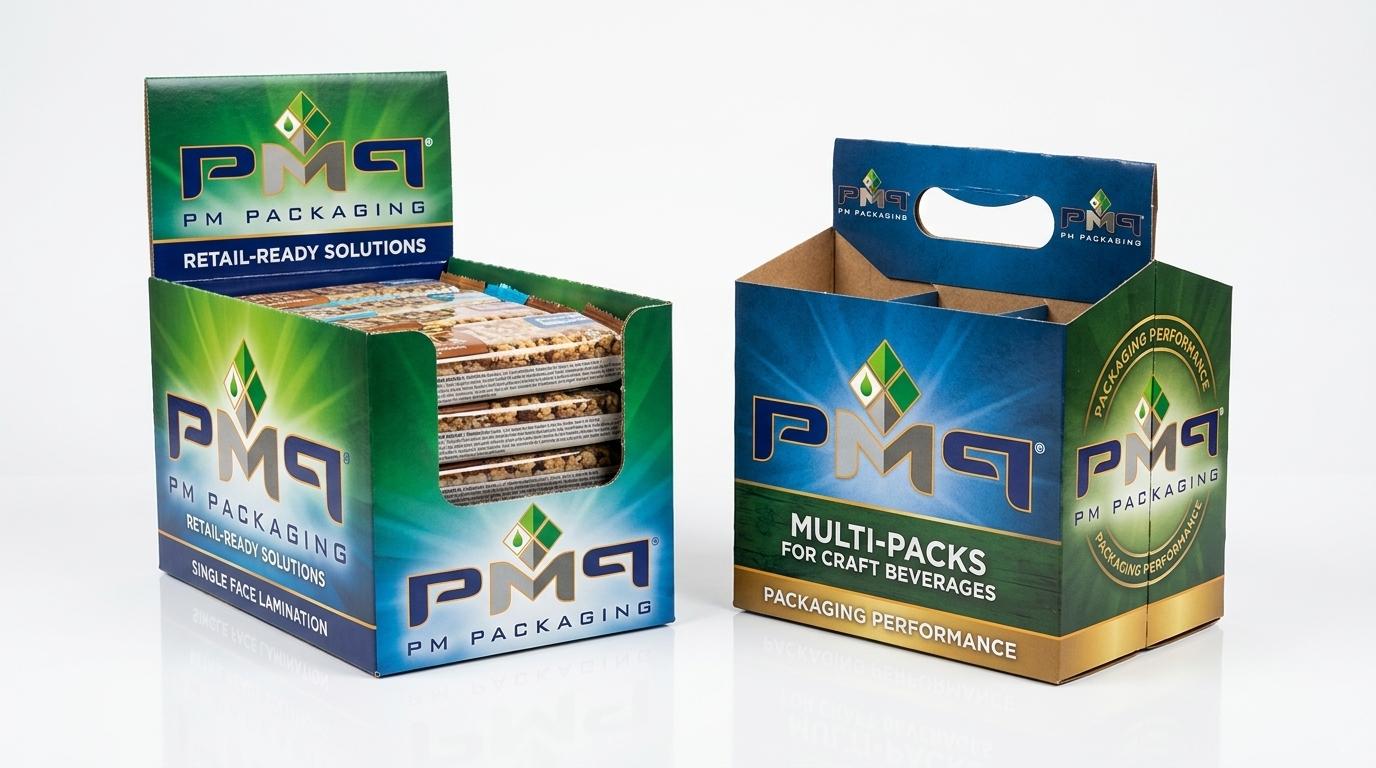
While every packaging program requires custom structural engineering, the following table illustrates typical material starting points across major commercial sectors:
| Product / Application | Format Usually Worth Evaluating First | Primary Structural Rationale |
|---|---|---|
| Cosmetics & Skincare Carton | Folding Carton | Lightweight, compact footprint, demands ultra-sleek folds and luxury finishes. |
| Supplement Bottle Carton | Folding Carton | Runs on high-speed automated cartoning lines with minimal shipping tare weight. |
| Small Electronics Accessory | Folding Carton | High-definition retail graphics with compact hanging tab or shelf profile. |
| Heavy Hand Tool Kit | Single Face Lamination (SFL) | Product weight causes paperboard to bow; SFL provides beam rigidity and graphics. |
| Craft Beverage Multipack | Single Face Lamination (SFL) | Glass bottles require wet-strength microflute and reinforced carry handles. |
| Large Retail Product Box with Broad Panels | Single Face Lamination (SFL) | Wide unsupported spans bow in solid paperboard; SFL provides beam rigidity across broad faces. |
| Shelf-Ready Display Tray (PDQ) | SFL or Corrugated | SFL provides clean tear-away perforations and offset club-store branding. |
| Master Shipping Case (RSC) | Traditional Corrugated | Transportation protection dominates; consumer visual presentation is secondary. |
| Industrial Replacement Parts | Corrugated or SFL | Depends on retail vs. trade-counter role; corrugated supports heavy metal mass. |
| Direct-to-Consumer Mailer | SFL or Corrugated | SFL provides luxury unboxing (SIOC); corrugated provides utilitarian protection. |
*Note: These recommendations represent initial engineering evaluation benchmarks, not rigid procurement specifications.
Why Sourcing All Three Structures From One Packaging Partner Matters
In multi-SKU brand portfolios, packaging needs rarely fit a single material. A brand might require:
- A compact folding carton for individual retail accessories,
- A rigid Single Face Lamination (SFL) box for heavy multi-packs and retail gift sets, and
- Heavy-duty traditional corrugated master shippers for warehouse distribution.
Working with PM Packaging gives commercial buyers a distinct advantage: we manufacture folding cartons, inline Single Face Lamination microcorrugation, and corrugated shipping structures. Rather than forcing your product into a substrate based on machine limitations, our structural engineers evaluate your entire packaging architecture objectively.
Furthermore, G7 Master Certified offset printing across our facilities guarantees exact Pantone and CMYK color consistency whether your graphics are printed on solid paperboard folding cartons or SFL top sheets. Structural testing, compression evaluation, and transit trials can be performed or coordinated when included in the project scope.
Frequently Asked Questions
What is the difference between a folding carton and a corrugated box?
A folding carton is made from a single sheet of solid converting paperboard, making it lightweight, compact, and ideal for high-definition retail printing and tight folding creases. A corrugated box consists of an arched fluted medium glued between paper liners, engineered specifically for impact cushioning, vertical compression, and shipping protection.
What is the difference between SFL and traditional corrugated packaging?
Single Face Lamination (SFL) prints a flat paperboard top sheet on high-resolution offset presses before laminating it to single-face fluting, resulting in photographic print quality with zero flute washboarding. Traditional corrugated packaging is typically printed directly via flexography or digital print onto pre-combined corrugated board, which is functional for shipping but can show subtle flute lines across large ink solids.
When should a folding carton be upgraded to SFL?
A brand should consider evaluating SFL when wide carton panels begin bowing under their own span or internal load, when heavier product mass stresses bottom closures and fold creases, when pallet stacking causes corner deflection, or when a retail carton needs enough structural integrity to ship without secondary protective packaging.
Is SFL stronger than a folding carton?
In most structural performance metrics, yes. Because SFL incorporates an arched fluted medium between liners, it acts as a lightweight structural truss. This provides substantially greater beam stiffness, panel flatness, and vertical compression resistance than solid single-ply paperboard at equivalent calipers.
Can SFL be used as both retail and shipping packaging?
Yes. For many e-commerce and retail goods, an SFL roll-end tuck-top or reinforced box can be certified as Ship-In-Own-Container (SIOC), eliminating the need for a secondary brown shipping box while maintaining a premium unboxing reveal.
Is SFL the same as litho-laminated corrugated?
SFL is a specific, inline litho-lamination process where the printed sheet is bonded directly to single-face fluting (medium + inner liner). Conventional litho-lamination often refers to mounting a printed label onto double-faced corrugated board, frequently used for larger floor display stands.
Which packaging format is best for heavy retail products?
For heavier consumer and retail products—such as power tools, beverage multipacks, hardware sets, or club-store multi-packs—Single Face Lamination (SFL) is frequently the ideal choice. It delivers the structural rigidity and carry strength needed for heavy contents while preserving the photographic offset print quality and finish options expected on retail shelves. For purely industrial or master distribution handling where retail presentation is not required, traditional corrugated remains the standard.
Summary: Aligning Material Structure with Program Strategy
Every packaging format serves an essential operational purpose. Folding cartons provide unbeatable compactness and speed for lightweight retail items. Traditional corrugated containers ensure structural durability across demanding supply chains. And Single Face Lamination provides the vital bridge when your product demands both high-end litho graphics and structural integrity.
PM Packaging can help evaluate whether a folding carton, SFL structure, or traditional corrugated package best fits the product, presentation requirements, and distribution environment.