
Products sold online and in stores should begin with a shared packaging architecture, but that does not mean forcing an identical finished package into both channels.
When commercial brands expand across physical retail and ecommerce, packaging teams often assume they face a rigid choice: print two separate packaging suites or force a single compromised carton across conflicting distribution environments. True omnichannel efficiency standardizes structural engineering, tooling, and materials upstream while configuring channel-specific variations downstream.
Single Face Lamination (SFL) mounts offset litho paperboard onto microcorrugated fluting, delivering folding carton print clarity with corrugated crush resistance. By evaluating channel friction points before cutting production tooling, packaging engineers capture manufacturing scale without sacrificing retail presence or parcel survival.
The Four Omnichannel Packaging Architectures
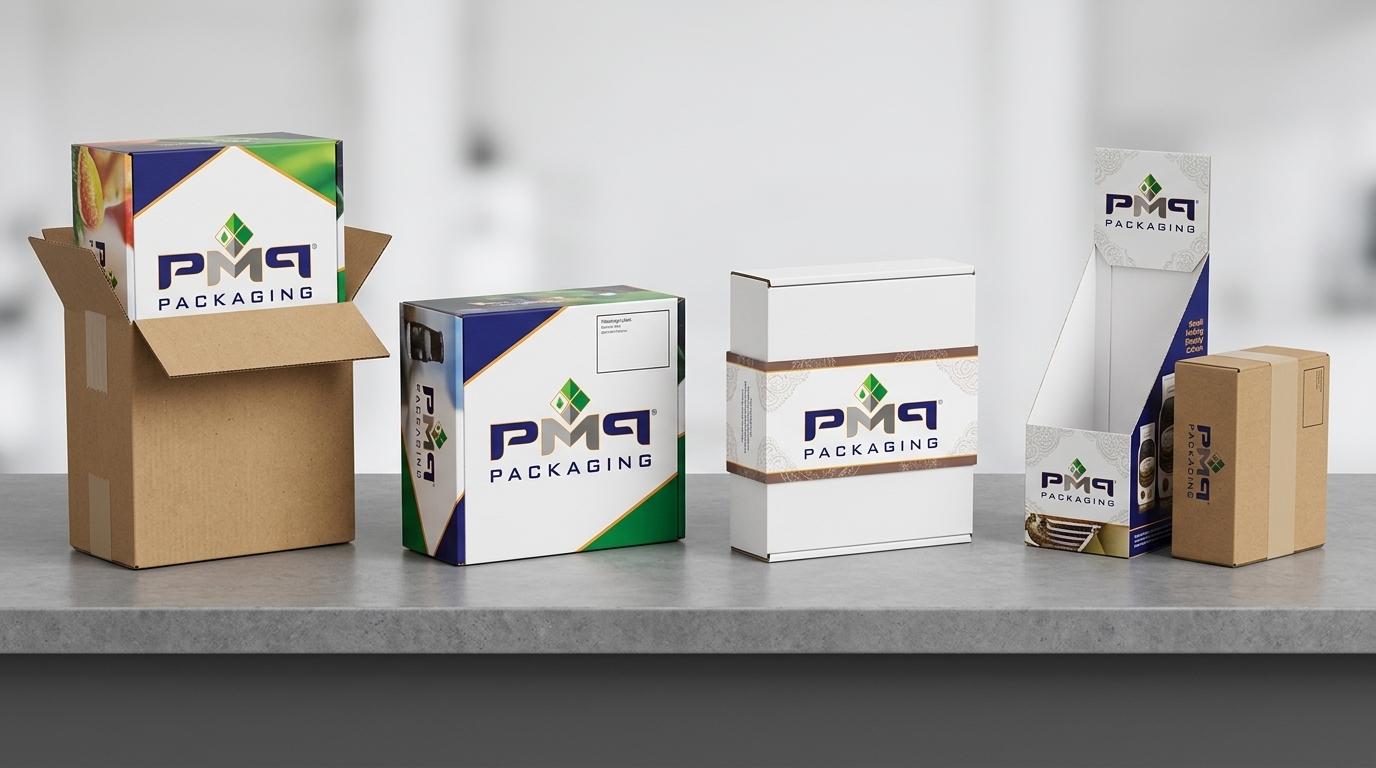
Packaging a product across dual channels requires selecting one of four foundational structural models. Each balances material cost, fulfillment labor, and customer presentation:
| Architecture Model | Retail Execution | E-Commerce Execution | Best-Fit Criteria |
|---|---|---|---|
| 1. Retail SFL Carton + Outer Shipper | Pristine branded carton displayed on retail shelves. | Same carton packed inside secondary corrugated shipper. | Luxury goods, cosmetics, and electronics requiring flawless unboxing. |
| 2. Single Direct-Ship SFL Package | Merchandised directly on store shelves. | Ships directly via parcel courier with applied label. | Durable consumer goods with high scuff tolerance and zero overboxing waste. |
| 3. Shared Chassis with Channel Features | Standard friction tuck closure or decorative paperboard sleeve. | Same chassis run with tear strip, return tape, or label zone. | High-volume programs where shared cutting dies amortize production costs. |
| 4. Separate Formats | Retail-optimized folding carton or display tray. | Dedicated direct-ship SFL mailer engineered for parcel sorting. | Programs where retail dimensions conflict severely with parcel DIM limits. |
Rather than viewing these architectures as competing philosophies, consumer brands deploy them across SKU portfolios based on margin structure, product fragility, and sales volume.
The 10 Operational Requirement Conflicts
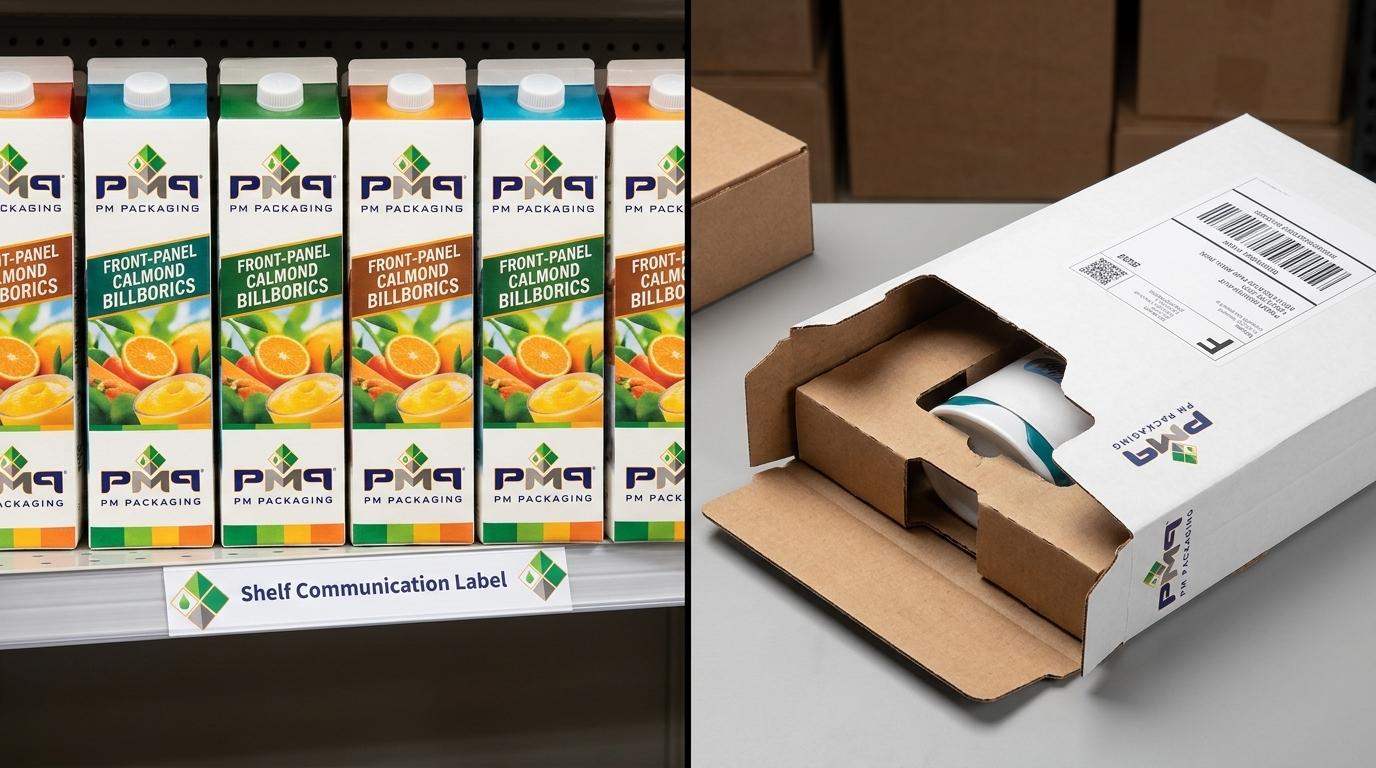
Retail stores and ecommerce sortation hubs subject packaging to opposing physical forces and visual priorities. The table below highlights the ten critical operational conflicts:
| Parameter | Retail Store Demand | E-Commerce Parcel Demand | Structural Engineering Focus |
|---|---|---|---|
| 1. Presentation | Competitive shelf facings and planograms. | Doorstep unboxing reveal. | Directs graphics from external billboards to internal reveal lithography. |
| 2. Distribution Handling | Master corrugated cases on stretch-wrapped pallets. | Automated sortation belts, chutes, and delivery vans. | Requires multi-axis edge crush fluting rather than master case stacking. |
| 3. Graphic Strategy | Billboard brand blocking and feature callouts. | Subtle exterior to prevent theft; elevated interior. | Utilizes two-sided SFL printing or exterior fluting with interior litho liners. |
| 4. Footprint & Geometry | Wider front panels to maximize linear shelf space. | Compact cube to minimize carrier dimensional weight. | Optimizes volumetric cube to prevent air-shipping surcharges. |
| 5. Surface Condition | Must arrive immaculate and scuff-free at checkout. | Endures conveyor abrasion and handling grime. | Requires rub-resistant aqueous varnishes or outer poly-bagging. |
| 6. Closure Mechanism | Friction tuck flaps or clear wafer seals. | Tamper-evident closure, tear strip, and return tape. | Applies high-shear hot-melt adhesive and perforated tear strips. |
| 7. Internal Retention | Gravity-based staging facing forward toward shoppers. | Rigid 3-axis containment against drop impacts. | Locks heavy components securely across rotational shock vectors. |
| 8. Logistics Labeling | Small retail UPC barcode on lower base panel. | Large 4x6 thermal courier tracking label. | Reserves clear surface zones free from critical branding or copy. |
| 9. Internal Cushioning | Lightweight paperboard risers or staging cards. | Kinetic shock dampening and void buffers. | Integrates multi-flute corrugated partitions or fold-over cells. |
| 10. Testing Protocols | Static pallet compression (ASTM D642). | Dynamic parcel drop simulations (ISTA 3A / Amazon SIOC). | Testing can be performed or coordinated when included in project scope. |
Reviewing these conflicts reveals why an unadapted retail box underperforms in courier logistics. For deep technical details on transit protection, see our guide on how SFL protects branded packaging during parcel delivery.
What Can Be Standardized Across Both Channels?
While finished packages require channel-specific features, brand owners standardize major upstream assets to capture manufacturing scale:
1. Core Outer Dimensional Footprint
Matching length, width, and depth dimensions across channels standardizes secondary master shippers, case counts, and pallet patterns across manufacturing facilities.
2. Single Face Lamination Flute Profile
Standardizing on microcorrugated E-flute or F-flute enables procurement teams to aggregate corrugating medium and linerboard orders to reach favorable volume tiers.
3. Steel Rule Die Tooling & Cutting Dies
Using a shared perimeter die footprint preserves tooling. Secondary converting passes selectively add tear perforations or tape without new primary cutting dies.
4. G7 Certified Color & Print Calibrations
Calibrating offset presses to certified G7 master standards guarantees brand color targets and halftone densities match across cartons, mailers, and sleeves.
5. Internal Product Cavity Geometry
The structural pocket holding the product remains uniform. For partition mechanics, consult our guide on packaging inserts, dividers, and product retention.
When One Shared Package Creates a Bad Compromise
Forcing a single, identical package into both channels without structural adaptation introduces four common operational pitfalls:
- Excessive Dimensional Weight (DIM) Penalties: Wide front panels designed for shelf presence cause parcel carriers to bill shipments based on dimensional volume rather than scale weight, creating ongoing freight penalties.
- Exterior Surface Scuffing: High-gloss UV varnishes and soft-touch laminations arrive abraded and obscured by 4x6 courier tracking labels when shipped unboxed.
- Unnecessary Converting Costs: Adding high-shear hot-melt tape, tear strips, and return features to inventory destined for store shelves inflates retail packaging expense.
- Fragile Product Shock Failure: Delicate glass containers survive palletized retail cases but crack during parcel sortation drops. To evaluate overbox elimination, consult our guide on when SFL can eliminate a secondary shipping carton.
The Omnichannel Structural Decision Tree
Packaging engineers navigate omnichannel format selection through a four-stage sequential decision process:
Gate 1: Can the product withstand direct parcel drops?
If fragile or vulnerable to leakage, maintain an outer corrugated shipper (Architecture 1) or engineer a dedicated heavy-duty parcel mailer (Architecture 4).
Gate 2: Are carrier routing labels and surface scuffs acceptable?
If the package serves as a luxury gift keepsake, protect the branded carton in a secondary box (Architecture 1). If prioritizing sustainability, transition to direct-ship SFL (Architecture 2).
Gate 3: Does ecommerce fulfillment require specialized closure?
When customer return rates or tamper security require resealability, deploy a shared SFL chassis with channel-specific converting features (Architecture 3).
Gate 4: What is the sales volume split across channels?
If 90% of sales occur in physical stores, optimize for retail shelves and use standard outer shippers online. If sales are balanced 50/50, a shared chassis delivers maximum ROI.
Total System Cost Economics: Tooling, Inventory, and Labor
Evaluating packaging strictly on unit purchase price distorts financial assessments. True total cost of ownership balances procurement savings against fulfillment labor and working capital:
- Tooling Amortization: A shared SFL dieline cuts cutting die investments in half, freeing capital for specialty decorative finishes.
- Inventory Working Capital: Maintaining separate packaging lines fragments order volume, risking minimum order quantity (MOQ) fees and obsolete inventory during revisions.
- Fulfillment Pack-Out Labor: Eliminating a secondary outer carton saves fifteen to forty seconds of manual packing per order, reducing 3PL fulfillment costs.
Omnichannel Packaging Specification Checklist
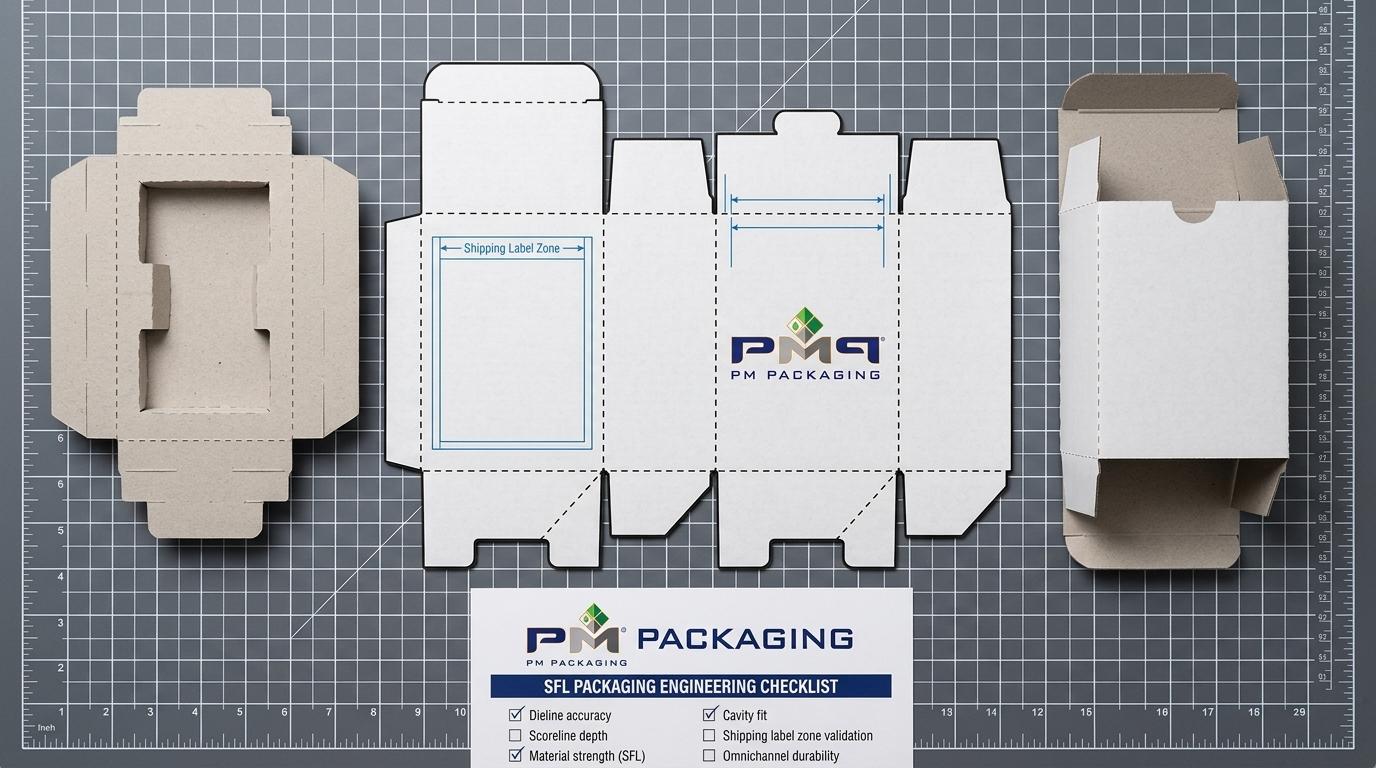
Packaging development teams should verify these six critical engineering metrics before issuing structural requests for proposals:
| Engineering Metric | Specification Focus | Retail Channel Baseline | E-Commerce Channel Baseline |
|---|---|---|---|
| Dimensional Envelope | Shelf facings vs parcel DIM cubic volume. | Optimized for linear shelf planograms. | Calculated below regional carrier DIM thresholds. |
| Protective Coating | Surface abrasion and gloss retention. | High-gloss or soft-touch visual appeal. | Scuff-resistant aqueous or rub-resistant UV overprint. |
| Closure & Security | Tamper sealing and opening ease. | Friction tuck flap or wafer seal. | High-shear adhesive strip with perforated zipper. |
| Logistics Clear Zone | Space for 4x6 courier tracking labels. | Standard retail UPC barcode area. | Dedicated 4x6 clear zone on carton top or base. |
| Internal Fitment | Inserts and component staging. | Showcases primary item forward. | Locks items securely against vibration and drop shock. |
| Tooling Compatibility | Shared dies and folder-gluer setups. | High-speed folding and gluing layout. | Selective inline tape application on shared die blank. |
Frequently Asked Questions
Can one SFL carton really serve both physical retail shelves and direct ecommerce delivery?
Yes, provided the product has structural rigidity, exterior graphics use rub-resistant varnishes, and the brand permits carrier labels on designated panels. If retail requires pristine gloss finishes or products are delicate, pairing a shared SFL carton with a parcel shipper is recommended.
When does an ecommerce direct-ship SFL package still require an outer shipping carton?
An outer shipper is required when primary retail branding must remain immaculate for gifting, when items contain fragile glass or sensitive pumps vulnerable to drops, or when retail carton geometry incurs excessive carrier dimensional weight fees.
How does Single Face Lamination compare to standard corrugated boxes for omnichannel programs?
SFL laminates high-resolution offset paperboard onto microcorrugate (E-flute or F-flute). This provides vibrant retail shelf presence and crisp folds that rival folding cartons while supplying the edge crush resistance required for parcel sortation.
What is the most cost-effective way to differentiate retail and ecommerce versions of a shared SFL box?
Standardize the upstream dieline, board caliper, and outer footprint, then differentiate downstream using modular cavity inserts, decorative paperboard sleeves, or selective inline adhesive tear strips.
How should omnichannel packaging be validated and tested?
Omnichannel packaging should undergo ASTM D642 warehouse compression testing for palletized retail distribution alongside ISTA 3A or ISTA 6-Amazon testing for single-parcel drops and vibration. Testing can be performed or coordinated when included in project scope.
Engineering Your Omnichannel Packaging Platform
A successful omnichannel packaging strategy harmonizes structural strength, visual unboxing appeal, and channel fulfillment realities. PM Packaging collaborates with consumer brands to engineer custom Single Face Lamination dielines, multi-cavity inserts, and high-speed converting solutions that excel across retail aisles and parcel networks.
Consult with PM Packaging’s structural packaging engineers to evaluate your dual-channel distribution requirements and develop a unified SFL architecture.