
Qualifying for Complete Program Execution, Not Just Unit Price
Choose a packaging supplier for a national retail rollout based on its ability to execute the entire approved program—not simply its unit price or list of equipment. Verify production capacity, material availability, structural and print capability, multi-SKU version control, retailer compliance, quality systems, tooling ownership, pack-out line compatibility, replenishment planning, and distribution responsibilities before awarding the program. The supplier should be qualified against your actual specifications, order quantities, launch deadlines, and fulfillment network.
Define the Program Before Comparing Suppliers
Sourcing a national retail rollout often begins under extreme time pressure. A major retailer accepts a product line, sets a firm merchandising reset date, and issues an exhaustive compliance routing guide. When procurement teams rush out requests for quotation (RFQs) without a fully defined program scope, they receive bids that cannot be meaningfully compared. One converter quotes automated flat blanks assuming in-house gluing; another quotes hand-assembled cartons; a third omits tooling amortization entirely.
Before evaluating prospective manufacturing partners, brand and operations teams must establish a standardized specification packet. When all participating converters bid against identical parameters, price variations reveal genuine manufacturing efficiencies rather than hidden scope gaps.
The 15-Point National Rollout Scope Checklist
Normalize RFQ submissions by documenting every operational variable prior to vendor bidding:
National Retail Packaging Supplier Evaluation Scorecard
Evaluating a high-volume packaging converter requires looking far beyond pressroom machinery. A supplier may operate state-of-the-art multi-color offset presses, but if their internal revision tracking allows obsolete artwork to slip onto an automated cartoning line, the entire national campaign faces store-level chargebacks or product recalls.
Use this comprehensive 17-point evaluation framework to score prospective packaging suppliers across technical capabilities, risk mitigation, and commercial execution:
| Qualification Category | What Procurement Must Verify | Rollout Impact & Risk |
|---|---|---|
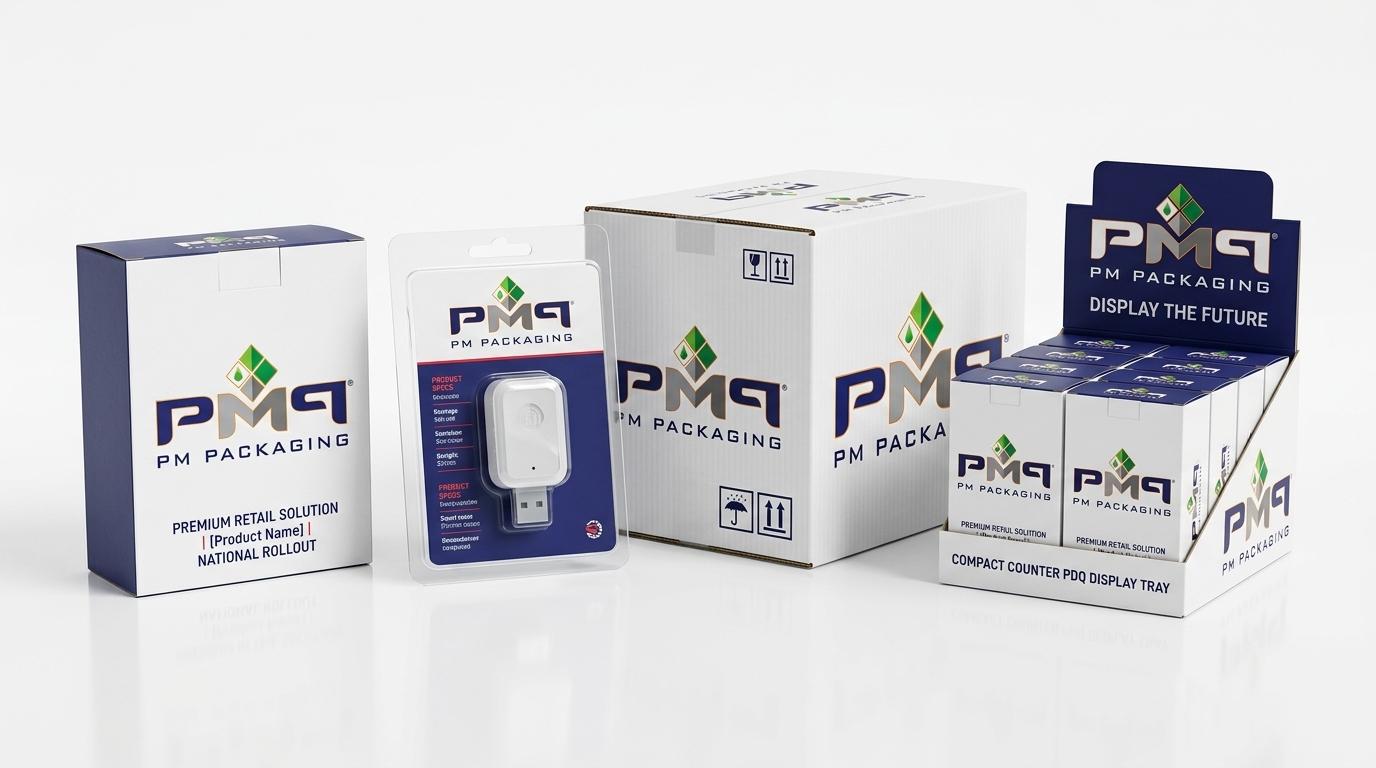
| 1. Format Capability | Demonstrated manufacturing scale across SBS folding cartons, thermoform blister cards, SFL microflute, and corrugated displays. | High: Fragmenting formats across multiple disparate vendors creates finger-pointing during assembly and visual misalignment. |
| 2. Dedicated Capacity | Firmly reserved equipment run-time and press availability for your specific launch dates, not just theoretical annual plant capacity. | Critical: Missed retailer reset dates trigger catastrophic supplier fines, cancellation of shelf space, and lost seasonal revenue. |
| 3. Surge Flexibility | Capacity to absorb a 25–40% immediate re-order surge if launch sell-through outperforms baseline merchandising projections. | High: Out-of-stock conditions in weeks 2–4 terminate promotional momentum and surrender shelf placement to competitors. |
| 4. Material Sourcing | Contracted mill allocations and guaranteed raw substrate inventory (SBS board, kraft fluting, thermoform rollstock). | High: Paperboard mill backlogs can extend lead times by 8–12 weeks if base substrates are not actively secured in advance. |
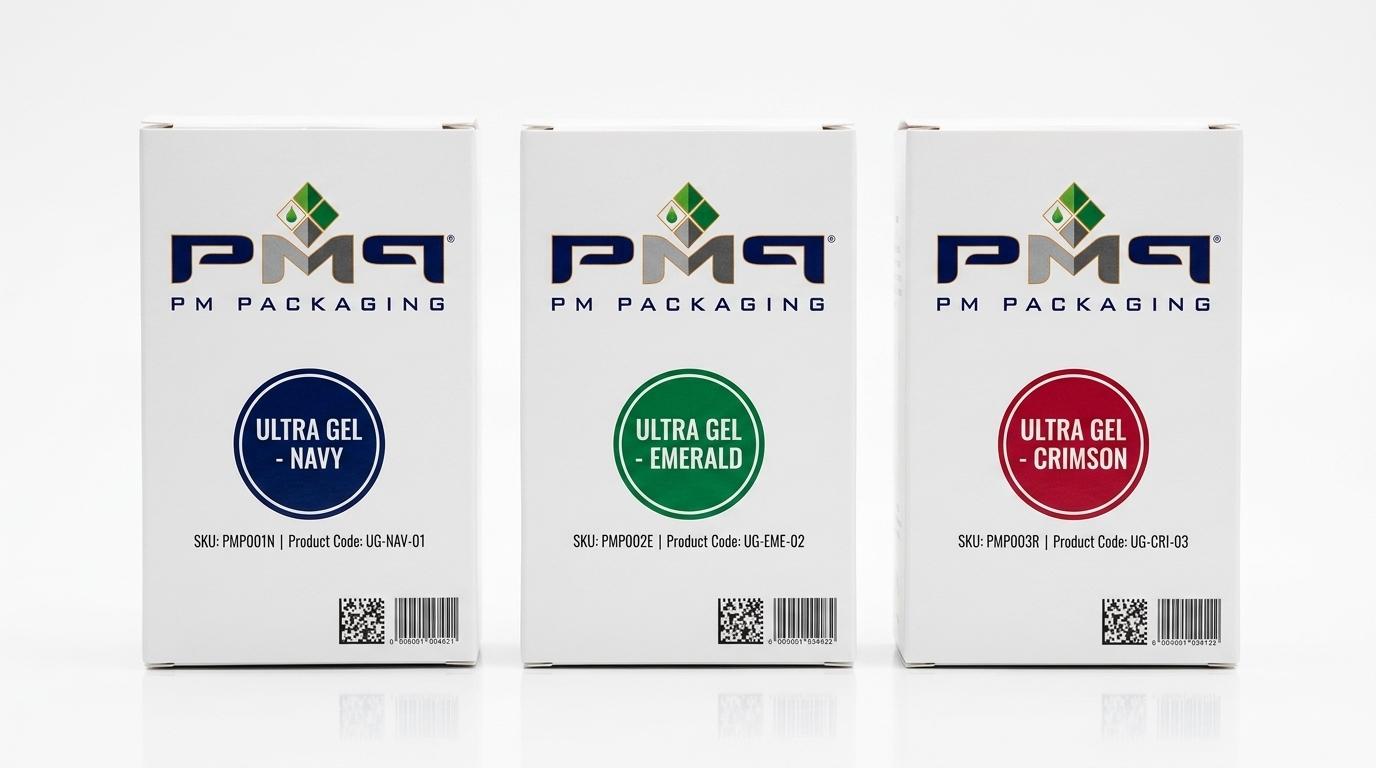
| 5. Multi-SKU Controls | Formal item numbering systems, electronic proof signoffs, barcode verification, and automated line-clearance protocols. | Critical: Cross-SKU packaging mix-ups result in incorrect product unboxing, retailer distribution refusal, and mandatory recalls. |
| 6. Cross-Substrate Color | G7 Master Qualified facility status with documented spectrophotometer tolerances across paperboard, blister cards, and microflute. | Moderate: Visual brand disharmony on retail shelves where cartons and display trays appear in conflicting hues. |
| 7. Tooling Management | Clear legal customer ownership of steel-rule dies and emboss tooling, plus defined preventative maintenance and storage schedules. | High: Unmaintained cutting dies cause nicked carton edges, score cracking, and slow cartoning machine jams. |
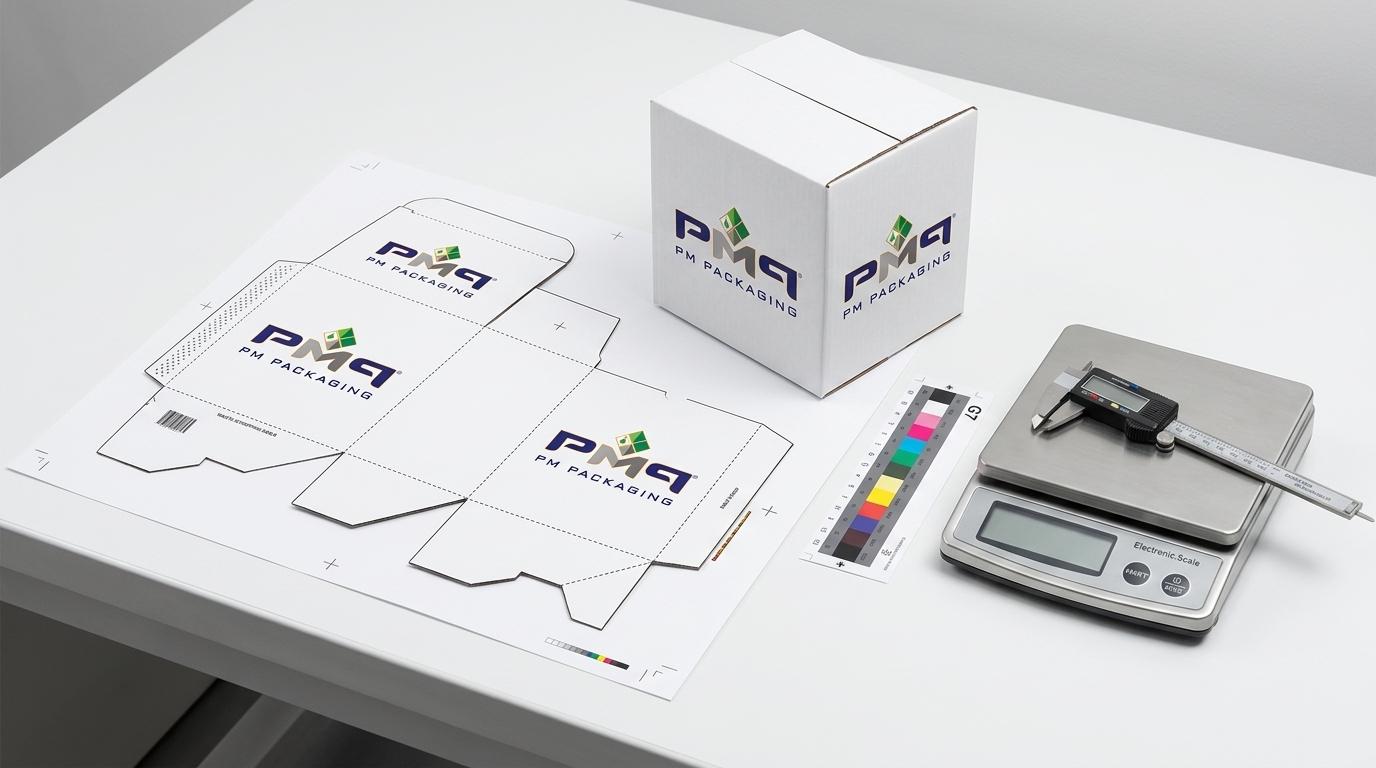
| 8. Production Samples | Physical CAD cutting table structural samples on specified production-grade calipers, followed by press-proof drawdowns. | High: Virtual 3D renderings fail to expose grain direction warping, peg-hook sag, or blister heat-seal failures. |
| 9. Documented QA | Written defect classification tolerances for dimensional variance, score cracking, delamination, and adhesive bond strength. | High: Vague quality standards leave brands without contractual recourse when cartons fail automated erection. |
| 10. Pack-Out Synergy | Engineering collaboration with your contract packager to test auto-bottom setups, tuck resistance, and blister seal cycles. | High: Rigid or out-of-square packaging slows co-packing lines, creating crippling secondary packaging labor surcharges. |
| 11. POP Display Design | In-house structural engineering for PDQ counter trays, sidekicks, and pallet displays with physical weight-load testing. | High: Inadequate display fluting buckles under dynamic customer handling and shelf restock dead loads. |
| 12. Fulfillment Support | Kitting capabilities, display assembly, pallet pack-out, or strategic alignment with regional co-pack partners. | Moderate: Managing separate converting, fulfillment, and transportation vendors increases logistics friction. |
| 13. Multi-DC Logistics | Experience delivering into major retail distribution centers (Walmart, Target, Home Depot) adhering to strict ASN routing guides. | High: Packaging pallet overhangs, non-compliant stretch wrap, or missing GS1-128 labels generate steep chargebacks. |
| 14. Replenishment Strategy | Structured safety stock release programs, Kanban replenishment models, and short-run digital or agile offset capabilities. | High: Ordering massive MOQs for slow-moving regional SKUs leads to expensive inventory write-offs and obsolete stock. |
| 15. Revision Control | Documented engineering change orders (ECO) for regulatory updates, ingredient list revisions, and promotional badge drops. | High: Failure to purge superseded packaging creates legal compliance liabilities and retail distribution rejections. |
| 16. Corrective Action | Formal 8D or 5-Why root-cause containment procedures, quarantined inventory protocols, and guaranteed re-make turnaround SLAs. | Critical: When packaging defects stall a national rollout, unstructured problem-solving compounds downtime. |
| 17. Geographic Footprint | Manufacturing facility proximity to your contract packagers, product assembly hubs, or primary retailer distribution nodes. | Moderate: Long-distance freight across transcontinental lanes inflates carbon footprint and leaves schedules vulnerable to weather. |
Ask Whether Capacity Is Available When You Need It
When visiting a packaging converter’s sales presentation, procurement teams are frequently shown equipment lists detailing high-speed 6-color offset presses, high-capacity die-cutters, and automated folder-gluers. However, there is a fundamental commercial distinction between theoretical plant capacity and contractually committed machine availability.
A facility operating eight printing presses may have seven of them fully booked with multi-million-unit consumer packaged goods (CPG) contracts from September through November. If your national holiday retail rollout requires 750,000 cartons during that exact window, that plant cannot serve your timeline unless they run overtime shifts, outsource die-cutting, or bump other orders.
Questions to Determine Actual Production Availability:
- What percentage of your pressroom and die-cutting capacity is currently uncommitted for our targeted run window?
- What seasonal surge programs (e.g., back-to-school, Q4 holiday) run through your plant during those months?
- Which manufacturing stages (coating, lamination, window patching, die-cutting) are completed in-house vs. outsourced to trade finishers?
- What is the lead time for securing mill rolls of our specified caliper paperboard before press setup?
For an in-depth audit framework on factory infrastructure, read our detailed companion guide: What Makes a Packaging Supplier Ready for National-Scale Production?
National Retail Has Two Different Demand Profiles: Initial Fill vs. Replenishment
A common sourcing error is treating a national retail launch as a single packaging transaction. In reality, every successful retail rollout encompasses two completely distinct manufacturing cycles with opposite operational demands:
Massive Volume & Fixed Deadlines
This phase requires manufacturing 100% of pipeline inventory across all retail doors simultaneously. Hundreds of thousands of units must be converted, packed, palletized, and delivered to regional retailer distribution centers by a fixed calendar date. Failure here risks shelf forfeiture and severe vendor chargebacks.
Agility, Versioning & Small Runs
Once the initial inventory reaches store shelves, demand fractures by SKU performance and geographic region. Re-orders arrive in smaller, erratic batches with compressed 2-to-3 week fulfillment windows. Suppliers must support agile re-runs without imposing massive minimum order quantities (MOQs).
A packaging converter optimized solely for million-unit continuous runs will excel during Phase 1, but struggle or penalize you with exorbitant short-run setup surcharges during Phase 2. Conversely, a boutique printer can handle small re-orders but will drown during initial pipeline fill. Look for a partner equipped to navigate both phases seamlessly.
Work Backward From the Retail Set Date
The golden rule of retail packaging procurement is backward scheduling. The retail set date—when planograms reset and products must appear on physical shelves—is non-negotiable. Missing it by three days often means waiting six months for the next scheduled category review.
Constructing an ironclad backward timeline requires mapping every critical dependency, from the retailer’s receiving dock back to raw material purchasing:
The Critical Path: Retail Launch Dependency Sequence
Verify Planogram and Merchandising Compliance Early
Retailer routing and merchandising guidelines are not friendly suggestions; they are contractually binding operational requirements enforced by automated scanners, sorters, and warehouse audits. A package that violates physical dimension limits or barcode quiet zones will be rejected at the distribution center dock or penalized with substantial chargebacks.
When qualifying a packaging partner, confirm their practical experience with your specific retailer’s compliance documentation (e.g., Walmart’s Supply Chain Standards, Target’s Vendor Packaging Guides, or Home Depot’s Merchandising Specifications):
- Facings & Depth Limits: Ensure carton dimensions adhere to allocated shelf facings. An extra 1/8-inch width from paperboard bulge can cause adjacent SKU cartons to overlap, preventing shelf stocking.
- Peg-Hook Clearances: Blister cards and hang-tab cartons must balance vertically without leaning forward or twisting sideways on retail peg hooks. Learn more in our guide on How Card Size Affects Blister Packaging Performance.
- Display & Tray Geometry: Shelf-ready PDQ trays and counter displays must meet strict dimensional thresholds, tear-away clean perforation requirements, and maximum weight limits. For structural insights, explore How SFL Retail Displays Maintain Shape Under Product Load.
- Barcode Quiet Zones: UPC barcodes must have strict minimum clearance margins around the printed bars to guarantee first-pass omnidirectional scanning at retail checkout registers.
Coordinate the Entire Packaging System, Not Just the Primary Box
Retail packaging does not exist in isolation. A national rollout succeeds only when every tier of the packaging architecture functions as a unified structural and logistic system:
The Five Layers of an Integrated Packaging System
- 1. Primary Package: Folding carton or thermoformed blister card protecting and showcasing the individual product.
- 2. Internal Partitions & Inserts: Custom thermoformed trays, molded pulp, or die-cut chipboard cushions stabilizing components inside the primary box.
- 3. In-Store Merchandising Unit: Shelf-ready PDQ display tray, sidekick wing, or endcap shipper presenting the product on the retail floor.
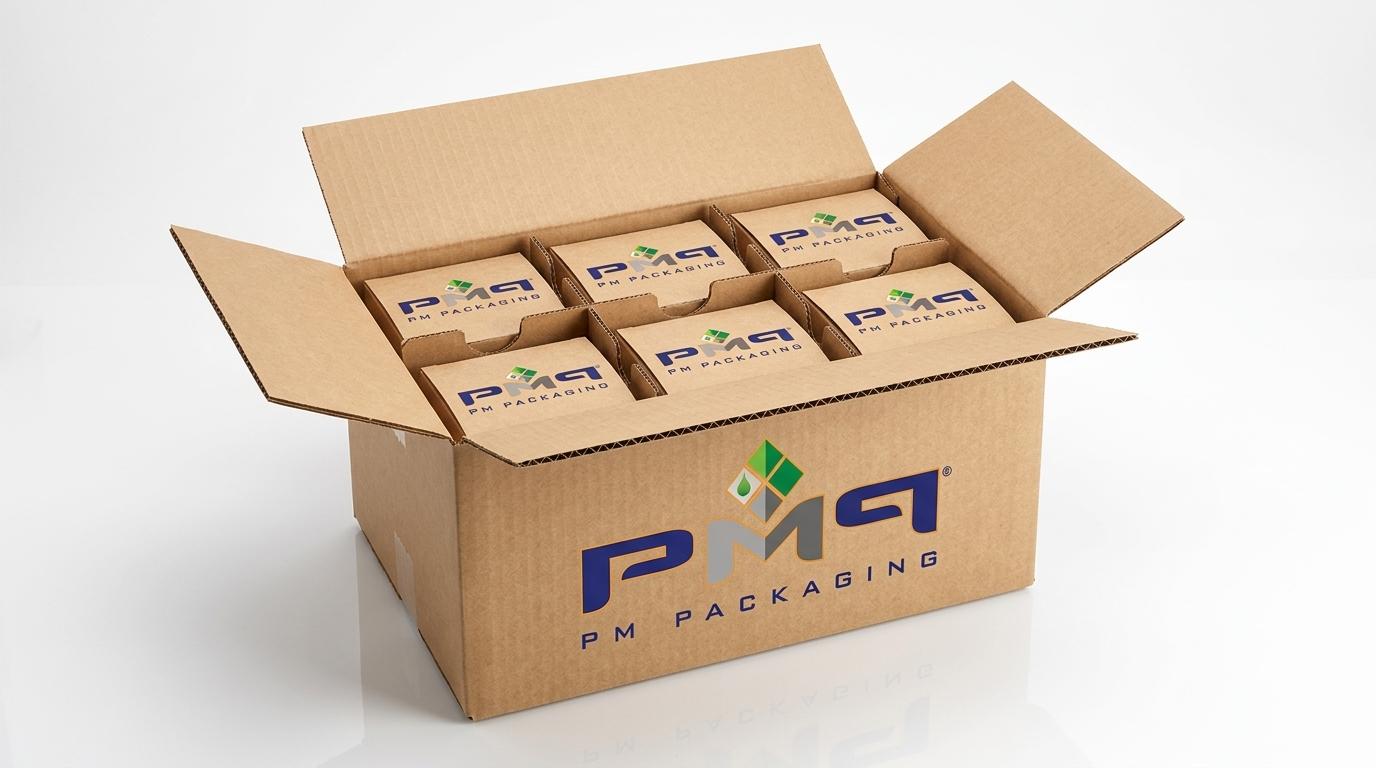
- 4. Corrugated Master Shipper: Heavy-duty RSC or die-cut shipper box engineered with exact inner dimensions to eliminate void space and carton scuffing.
- 5. Pallet Pattern & Transport: Optimized TI/HI cube configuration maximizing truckload utilization and preventing pallet overhang.
When separate vendors manufacture primary cartons and corrugated shippers independently, dimensional discrepancies routinely occur. If primary cartons are just 1/16-inch oversized due to humidity expansion, a 24-count master shipper will bow outwardly, reducing top-to-bottom compression strength by up to 30% and leading to collapsed pallet corners in transit. Working with an integrated manufacturer eliminates handoff friction.
Multi-SKU Version Control and Pack-Out Discipline
Most national retail programs encompass multiple product variations: colorways, fragrance notes, accessory sizes, club-store bonus packs, and retailer-exclusive bundles. On high-speed contract packaging lines processing tens of thousands of units daily, packaging for similar SKUs can easily be interchanged if structural markings and versioning controls are inadequate.
During supplier qualification, inspect how the converter manages artwork revisions and segregates physical inventory:
- Dedicated Packaging Item Codes: Every artwork variation and dieline modification must receive a unique internal item number printed on glue tabs or hidden carton flaps, distinct from marketing SKU codes.
- Revision Numbering (ECO Tracking): Ensure superseded artwork files are electronically archived and purged from prepress RIP servers to prevent obsolete dielines from re-running.
- Differentiated Visual Cues: Implementing distinct color-coded glue-flap bars or thumb-notch identifiers allows packaging line operators to instantly spot an incorrect SKU blank mixed into a cartoner feed hopper.
Barcode Quality: Data Validation vs. Print Verification
A critical point of failure in retail packaging is assuming that a barcode is production-ready simply because someone scanned it with an iPhone in a conference room. Data validation only confirms that numbers are encoded; it says nothing about optical readability under automated warehouse scanners.
National retailers mandate strict ANSI/ISO barcode verification standards (typically requiring an overall ISO Grade 'A' or 'B' / ANSI 3.0+). Your packaging supplier must conduct formal verification evaluating:
Symbol Edge Contrast & Reflectance
Ensuring sufficient optical contrast between dark barcode bars and light substrate backgrounds, avoiding low-contrast ink combinations or reflective metallic foils.
Quiet Zone Preservation
Maintaining unobstructed white margins on both sides of the barcode. Text, fold lines, and bleed artwork invading quiet zones will cause high-speed scanner read failures.
Ink Gain & Bar Width Modulation
Calibrating prepress bar-width reduction (BWR) to compensate for press ink spread on porous corrugated fluting or uncoated paperboard liners.
Omnidirectional Decodability
Confirming that automated high-speed conveyor scanners can decode the symbol regardless of package orientation during distribution center sorting.
Color Management Across Different Substrates
In a multi-format national rollout, brand colors must appear unified across diverse materials: bright white Solid Bleached Sulfate (SBS) folding cartons, coated blister card paperboards, clay-coated kraft Single Face Litho-laminate (SFL) shippers, and brown corrugated master cases.
Because each substrate features different base whiteness, surface absorbency, and ink holdout properties, expecting absolute numerical color identity across disparate paperboards is technically impractical. Instead, procurement teams should require their packaging partner to maintain a G7 Master Qualified production environment with documented spectrophotometer tolerances:
- Agreed Delta-E (\(\Delta E\)) Tolerances: Establishing formal color variation thresholds (e.g., \(\Delta E < 2.0\) for primary carton brand colors and \(\Delta E < 3.0\) across microflute displays).
- Substrate-Specific Ink Formulations: Adjusting ink pigment density and custom spot color formulations to compensate for varying substrate brightness and porosity.
- Production-Board Drawdowns: Approving physical ink drawdowns on actual production board stock rather than viewing RGB digital PDFs on calibrated monitors.
Tooling Ownership, Maintenance, and Transferability
Tooling—cutting dies, embossing plates, foil stamping dies, and thermoform blister molds—represents a significant capital investment. Vague contractual language regarding tooling ownership and care can result in severe operational bottlenecks later.
During RFQ negotiations, clarify the following tooling governance points in writing:
Clear Client Asset Ownership
Once tooling invoices are paid, all cutting dies and custom molds are 100% the intellectual and physical property of the brand, transferable upon request without exit fees.
Preventative Maintenance & Wear Replacement
Steel-rule dies suffer blade dulling and ejection rubber degradation after hundreds of thousands of impressions. The supplier should specify die re-knifing schedules and whether maintenance is covered in unit piece pricing.
Risk-Mitigated Duplicate Tooling
For flagship SKUs driving over 500,000 units, evaluate whether backup cutting dies or redundant press plates are warranted to eliminate single-point mechanical failure risk during peak surge runs.
Production-Intent Sampling Before Rollout Sign-Off
Never approve a high-volume retail rollout based on a hand-cut prototype made from office cardstock or a 3D computer rendering. True production qualification demands production-intent physical samples:
- Exact Substrate Caliper & Grain Direction: Structural samples must be cut from the specified production board stock (e.g., 18pt SBS or E-flute kraft) with correct grain alignment to test rigidity and folding memory.
- Live Contract Packager Testing: Send physical carton samples to your kitting facility to run through automated cartoning equipment, folder-gluers, or blister sealing platens at production speeds.
- Full Load Distribution Drop Testing: Assemble complete master cases filled with actual weighted product samples to evaluate compression strength under ISTA transit simulation.
Establish Defined Quality Acceptance Criteria
Disagreements between brands and converters almost always trace back to undefined quality standards. When specifications state only “industry standard quality,” both parties have different definitions of acceptable variation.
Protect your rollout by incorporating documented acceptance criteria into the master manufacturing agreement:
| Inspection Parameter | Acceptable Production Tolerance | Verification Method |
|---|---|---|
| Dimensional Die-Cut Tolerance | ± 1/32 in (0.8 mm) on perimeter dimensions | Digital caliper / steel overlay template |
| Print-to-Cut Registration | ± 1/64 in (0.4 mm) variation | Crosshair registration loupe verification |
| Score Folding & Creasing | Zero fiber cracking on printed surface folds | 180-degree manual fold inspection |
| Adhesive Joint Tear Strength | 100% substrate fiber tear along glue seams | Destructive pull test after 24-hour cure |
| Blister Heat-Seal Adhesion | Continuous 360° fiber tear on card coating | Flange peel test under production dwell |
Subcontracting Transparency: In-House vs. Outsourced
Many packaging brokers and regional converters present themselves as full-service manufacturers while secretly subcontracting critical conversion steps—such as UV coating, hot foil stamping, window patching, or die-cutting—to third-party trade finishers.
While selective outsourcing is common in the printing trade, it introduces unmonitored transit legs, schedule vulnerability, and quality opacity during a tight retail launch. Demand full transparency regarding which operations occur under the supplier's direct roof and which involve outside vendors. A manufacturer controlling the entire workflow in-house offers significantly superior schedule accountability.
Total Program Cost vs. Piece Price
The lowest unit piece price on an RFQ spreadsheet is rarely the lowest total cost to the business. Experienced procurement professionals evaluate retail packaging programs through the lens of Total Cost of Ownership (TCO):
Total Program Cost = (Unit Purchase Price × Qty) + Tooling & Prepress Setup + Pack-Out Labor Cost + Freight to Pack-Out / DCs + Warehousing & Inventory Carrying Cost + Quality Defects & Retail Chargebacks + Obsolete Packaging Scrap
Saving $0.03 on a carton piece price is instantly erased if cartons arrive warped, slowing co-pack assembly from 45 units/minute down to 20 units/minute or causing retail pallet rejections.
Corrective-Action Process and Non-Conformance Escalation
In high-volume manufacturing, unexpected anomalies will eventually occur—a paperboard moisture variation, an ink viscosity shift, or a carton glue malfunction. The measure of a world-class packaging partner is not whether problems ever arise, but how swiftly and systematically they are resolved.
Require prospective suppliers to provide their standard Non-Conformance and Corrective Action protocol, ensuring it includes:
Within 24 Hours
Quarantining suspected production lots at both the converter plant and receiving pack-out facilities to halt further contamination.
Within 48 Hours
Submitting an 8D or 5-Why root-cause investigation determining the exact failure point (die wear, glue temperature, substrate porosity).
Emergency SLAs
Clear contractual commitments for emergency re-printing and expedited air/ground freight to protect retail reset dates.
10 Red Flags When Evaluating a Retail Packaging Supplier
Watch for these ten critical warning signs during vendor site visits and proposal reviews:
No Retail Compliance Experience
Unfamiliarity with major retail routing guides, pallet requirements, or ASN electronic data interchange (EDI) systems.
Vague Capacity Commitments
Refusal to lock in dedicated press time or provide concrete turnaround lead times in master service agreements.
Unclear Tooling Ownership
Proposals that retain legal ownership of custom cutting dies or levy punitive transfer fees if you relocate tooling.
Outsourced Die-Cutting or Finishing
Converters that print sheets in-house but ship them to third parties for lamination, stamping, or die-cutting.
No Production-Grade Sampling
Offering only digital PDF renders or hand-cut mock-ups rather than CAD-plotted samples on actual production board.
Lack of Spectrophotometer Color Control
Relying on press operator 'visual matching' rather than certified G7 color measurement devices.
Weak Multi-SKU Segregation
No documented system for physical line clearance, revision labeling, or inventory staging between variant runs.
High Minimum Re-Order Quantities
Demanding 100,000-unit minimums for Phase 2 replenishment orders, risking massive finished goods obsolescence.
Zero Pack-Out Line Coordination
Unwillingness to interface directly with your contract packagers to confirm carton opening force and packing speeds.
No Documented Corrective Action Protocol
Absence of formalized root-cause analysis procedures or emergency replacement turnaround commitments.
12 Questions to Ask During Packaging Supplier Evaluation
Use these targeted interview questions during RFQ supplier meetings to gauge true operational competence:
Why Multi-Format Manufacturing Simplifies National Rollouts
Awarding primary folding cartons to Converter A, blister cards to Converter B, POP counter displays to Converter C, and master shipping boxes to Converter D creates immense administrative and operational overhead. Managing multiple vendors requires juggling disparate prepress schedules, reconciling conflicting color profiles, and coordinating unaligned delivery timelines.
Consolidating your retail packaging program with a multi-format manufacturing partner provides substantial strategic advantages:
Unified Brand Color
A single prepress team aligns ink drawdowns across SBS cartons, thermoform cards, and SFL microflute displays under unified G7 calibration.
Synchronized Schedules
Primary packaging, display trays, and master shipping cartons arrive at co-packing facilities simultaneously on consolidated freight.
Single Accountability
One dedicated packaging engineering team takes full contractual ownership for fit, transit protection, and retail compliance.
Discover how PM Packaging engineers integrated packaging programs for procurement and supply chain teams, supporting high-volume launches with end-to-end manufacturing continuity.
National Retail Sourcing Readiness Checklist
Frequently Asked Questions: Retail Packaging Sourcing
How far in advance should we select a packaging partner for a national retail rollout?
Ideally, select your packaging partner 16 to 22 weeks before your required retail DC delivery date. This timeframe allows 2–3 weeks for structural dieline engineering and CAD sampling, 2–3 weeks for tooling fabrication, 2 weeks for prepress and color approvals, 3–4 weeks for volume manufacturing, 2 weeks for packaging transit to pack-out sites, and 4 weeks for product kitting, assembly, and outbound distribution.
What is the difference between an packaging converter and a broker?
A converter owns and operates the physical manufacturing equipment—printing presses, laminators, die-cutters, and folder-gluers. A broker or distributor outsources manufacturing to third-party plants. Working directly with an established converter gives brands full control over production scheduling, direct quality accountability, uncompromised tooling ownership, and significant cost savings by eliminating broker markups.
Why is production-grade board sampling so critical before tooling sign-off?
Paperboard thickness, fiber stiffness, and folding memory behave completely differently than plotter paper or digital mock-ups. Cutting production-grade samples on a CAD table allows you to test actual box closure resistance, auto-bottom setup speeds, carton squareness on cartoning machines, and blister flange heat-seal integrity before investing thousands of dollars in permanent steel cutting dies.
How can we achieve brand color consistency between folding cartons and retail displays?
Partner with a G7 Master Qualified manufacturer. Because SBS paperboard, thermoform cards, and corrugated microflute possess different base whiteness and ink absorption characteristics, a certified facility uses spectrophotometer measurement to formulate substrate-specific ink profiles, aligning visual color appearance within strict Delta-E tolerances across every format.
What causes barcode scan failures at major retail distribution centers?
Common culprits include printed text or graphic bleeds invading barcode quiet zones, low optical contrast between ink bars and substrates, ink spread narrowing narrow bars, and physical carton damage along fold scores. Professional packaging manufacturers perform optical ANSI/ISO grade verification to guarantee consistent omnidirectional scanning.
Who should own the cutting dies and tooling for a retail packaging program?
The brand should always retain 100% legal ownership of custom cutting dies, embossing plates, and thermoform molds once tooling invoices are paid. Ensure your vendor agreement clearly confirms tooling ownership and permits tooling transfer to another facility without penalty.
How should we handle packaging replenishment orders after the initial retail launch?
Establish a paired replenishment strategy during RFQ negotiations. Discuss whether your converter offers structured safety stock release programs—manufacturing in cost-effective batch runs and holding finished blanks for scheduled release—or has the agile press capacity to produce smaller replenishment orders within 2 to 3 weeks without punitive MOQ surcharges.
What should be included in a packaging supplier's corrective action procedure?
A comprehensive corrective action protocol must specify immediate 24-hour quarantine containment of non-conforming packaging, a 48-hour 8D or 5-Why root-cause investigation, supplier-funded replacement remakes, and priority press rescheduling to protect the brand's retail launch set date.
Awarding Your National Retail Packaging Program
Winning national retail shelf placement is an extraordinary commercial milestone. Protecting that achievement requires a packaging manufacturing partner that views your rollout not as an isolated print order, but as a complex, time-critical supply chain commitment.
At PM Packaging, we engineer and manufacture custom folding cartons, blister cards, Single Face Litho-laminate (SFL) structures, and retail POP displays for high-volume brand rollouts. Our packaging engineering team is ready to review your dielines, evaluate retailer routing specs, and deliver production-intent prototypes.