
Engineering Retail Displays for Dynamic In-Store Conditions
A retail display should not be engineered only for its maximum initial load. It must remain stable as products are removed, restocked, handled by shoppers, and redistributed across shelves during the promotion. SFL can provide additional panel rigidity and high-quality graphics, but long-term display performance also depends on shelf span, product weight, flute and board specification, support geometry, connection design, base footprint and assembly method. Loaded prototypes should be evaluated before a large retail rollout.
Why Promotional Displays Change During the Campaign
A temporary retail display is not a static packaging box sitting safely on a warehouse pallet; it is an active, load-bearing furniture piece situated directly on the retail sales floor. When brand teams approve a display based on an empty 3D rendering or an unloaded cardboard mock-up in a conference room, they often overlook the relentless physical stresses of real-world retail environments:
Sustained Gravitational Dead Load
Dozens of pounds of merchandise exert continuous downward deflection pressure on unsupported paperboard shelves 24 hours a day.
Dynamic Shopper Handling
Shoppers pull items forward, push products backward, lean against side wings, and bump shopping carts against display bases.
Store Associate Restocking
Retail clerks drop replenishment cases onto partially filled shelves, applying sudden impact shock to die-cut connection tabs and slots.
Fluctuating Store Atmosphere
High relative humidity near store entrances or grocery produce coolers softens paperboard cellulose fibers, accelerating panel creep.
When a promotional display fails in-store—shelves sagging, header cards listing to the side, or base plinths crumpling—the commercial consequences are immediate. Products tumble into chaotic disarray, brand prestige evaporates, and store managers frequently tear down leaning displays weeks ahead of schedule, killing campaign sell-through and wasting the brand's merchandising investment.
Start With the Loaded Display, Not the Empty Structure
Effective structural engineering begins by calculating the precise mechanical load the display must bear over its planned promotional lifecycle. Calculating gross weight requires an exact formula:
Calculating total weight is only the initial step. Two displays bearing an identical 45-pound payload behave in fundamentally different ways depending on product geometry and packaging density.
Consider the structural differences between diverse retail categories:
- Lightweight Cosmetics (24 units per shelf): Low total mass, but wide shelf spans can bow under cumulative point contacts if individual partition dividers are missing.
- Glass Jars & Specialty Foods (12 units per shelf): Dense concentrated point loads that place intense localized shear stress directly on the center of the shelf board.
- Beverage & Sauce Bottles (8 units per shelf): Heavy liquid mass with high centers of gravity that exert outward tipping leverage when shoppers pull a front bottle out.
- Packaged Hardware & Hand Tools (20 units per shelf): Dense metal components that produce extreme static load, requiring reinforced double-flute internal shelf supports.
Where the Weight Sits Matters as Much as Total Weight
Total payload is a deceptive metric because mass is rarely distributed evenly across a retail display. Where weight is concentrated governs whether a display stands straight or develops a permanent list:
Center Load vs. Sidewall Load
Weight placed directly against the vertical side uprights transfers load downward in pure vertical compression. Weight placed in the exact center of a shelf generates maximum bending moment, forcing the horizontal panel to flex downward.
The Asymmetrical Depletion Problem
Shoppers naturally select merchandise from the right side or front rows first. As one half of a shelf empties, the remaining products exert uneven, single-sided torque that twists the entire display column.
This dynamic explains why retail displays often become less stable as products sell through, even though the total weight on the display is decreasing. The resulting torsional imbalance can pull locking tabs out of slots and cause side uprights to lean.
Shelf Span Drives Sag Risk (The Deflection Equation)
In structural packaging mechanics, horizontal shelf deflection does not scale linearly with width—it scales cubically with unsupported span length. A 16-inch wide shelf carrying 15 pounds experiences minimal deflection, whereas a 32-inch wide shelf carrying the exact same 15 pounds is under exponentially higher bending stress.
Preventing shelf sag across wider promotional spans requires strategic dieline engineering:
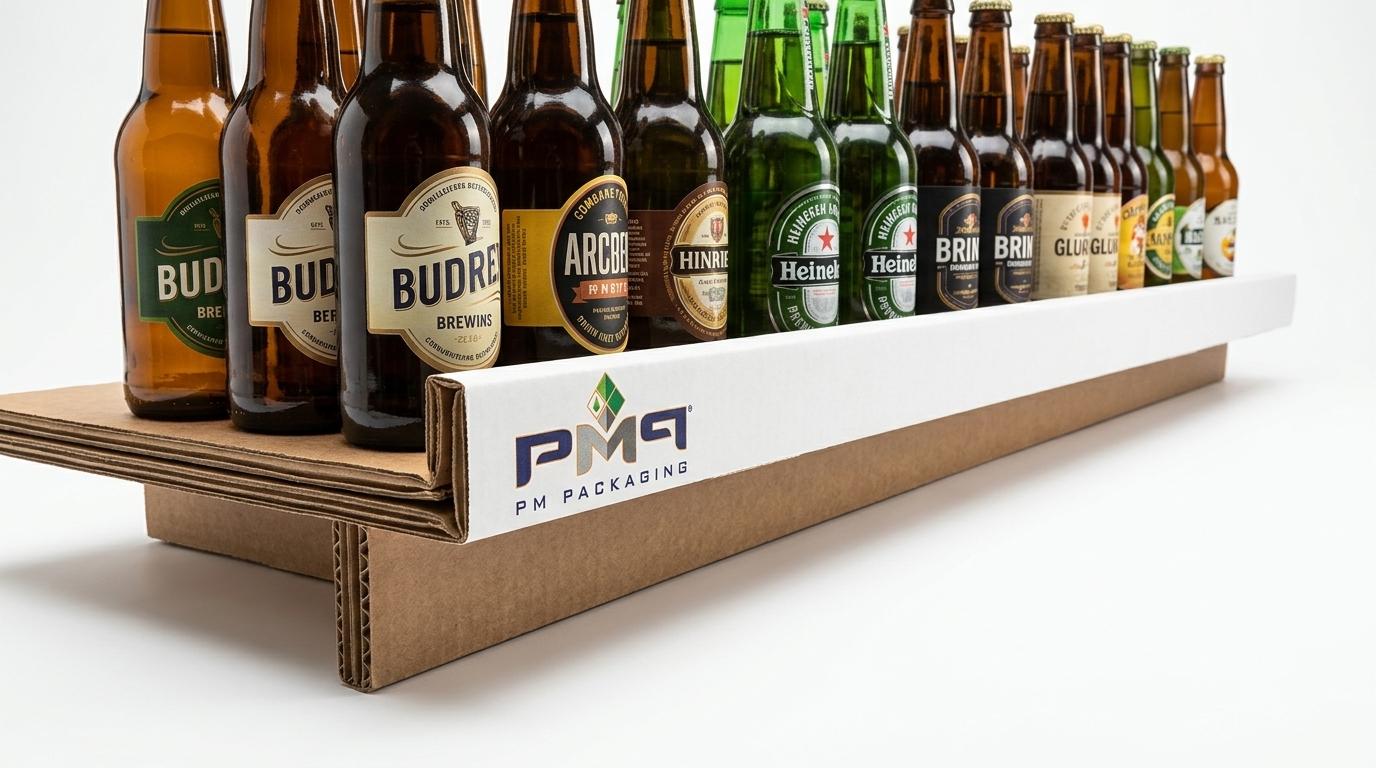
- Double-Rolled Front Retaining Lips: Rolling the front edge of the shelf panel over 180 degrees creates a rigid double-wall structural beam along the primary viewing face, elevating front bending resistance.
- Underlying Fluted Support Struts: Integrating a vertical die-cut SFL strut directly beneath the shelf center transfers downward gravitational load directly into the display base or back wall.
- Rear Locking Spines: Anchoring the back edge of each shelf into interlocking slots along the rear graphic panel prevents the shelf from dipping backward.
- Center Product Partitions: Vertical fluted dividers that separate product facings while acting as internal vertical load-bearing columns between shelf tiers.
Panel Bowing and Tall Graphic Headers
Promotional displays rely on expansive top header cards and broad side wings to attract shoppers from down the retail aisle. However, broad, unsupported paperboard panels are notorious for curling forward, drooping, or bowing over time.
A common misconception is that simply orienting flutes horizontally solves header curling. In practice, the optimal material orientation depends on panel geometry, score placements, support direction, and expected bending loads:
- Integrated Side Return Wings: Folding 2- to 3-inch return wings along the vertical edges of a header card creates an L-beam or U-channel profile that mechanically locks the panel flat.
- Fluted Structural Rear Braces: Die-cutting folding triangular easel struts behind the header provides rigid back support without adding visible clutter to the front billboard.
- SFL Litho Lamination Flatness: Bonding a solid bleached sulfate (SBS) printed liner to fluted corrugated medium balances surface tension on both sides of the board, dramatically reducing moisture-induced curl compared to single-ply paperboard.
Connection Points Often Deserve More Attention Than Broad Panels
In post-campaign teardown audits, retail displays rarely fail in the center of an SFL side panel. Instead, structural failure almost universally concentrates at connection points: interlocking tabs, die-cut insertion slots, and folded score lines.
These critical connection zones experience dynamic multi-axial stresses throughout the promotion: initial in-store assembly friction, sustained downward shelf shear, outward shopper pulling, and repeated restocking impacts.
Wider Friction-Fit Locking Tabs
Narrow tabs tear easily under lateral shear. Engineering broad, barbed tabs distributes load across a wider paperboard surface.
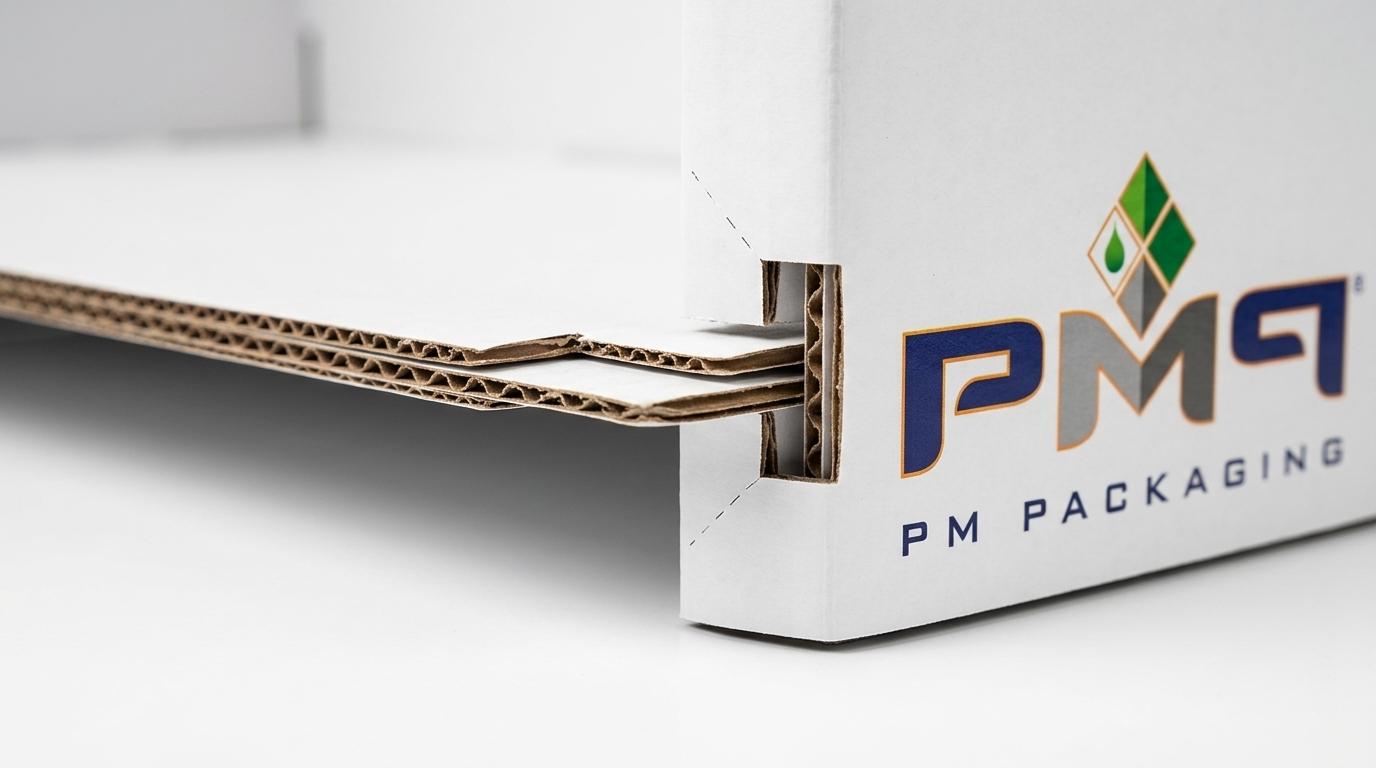
Rolled Double-Wall Upright Slots
Routing insertion slots through two plies of fluted board doubles slot bearing surface, preventing slot wall tearing when shelves are loaded.
Gusseted Corner Folds
Incorporating diagonal gusset scores at high-stress shelf corners reinforces 90-degree joints against downward rotation.
Crush-Resistant Score Lines
Precision female channel creasing ensures crisp 90-degree bends without rupturing outer paperboard face fibers during store setup.
The Base Must Support Both Weight and Shopper Interaction
A freestanding floor display (FSDU) is only as stable as its ground-level foundation. As height increases relative to base footprint, displays become susceptible to forward listing, wobble, and accidental tipping.
Sound base architecture accounts for store-level physical realities:
- Footprint Proportions: Maintaining a minimum depth-to-height ratio (typically 1:3 or 1:3.5) prevents top-heavy displays from swaying when shoppers browse.
- Low Center of Gravity (COG) Merchandising: Merchandising heavier inventory on lower shelves naturally anchors the display base, stabilizing the entire structure.
- Integrated Kickplates & Floor Buffer Protection: Store cleaning crews regularly operate heavy floor buffers and mop buckets. Incorporating a 3- to 4-inch recessed plinth or moisture-resistant kickplate prevents wet mops and shopping carts from crushing lower graphic panels.
- Floor Irregularity Compensation: Retail tile floors are rarely flat. Engineering folded perimeter feet or a continuous perimeter base ring accommodates subtle floor dips without rocking.
Test the Display in Three Conditions
The most critical structural testing methodology for promotional displays is evaluating performance across the three stages of the sales cycle:
Condition 1: Fully Loaded
Day 1 Maximum LoadVerifies maximum shelf span deflection, vertical column compression on side uprights, base plinth stability, and overall structural plumb when packed to 100% capacity.
Condition 2: Partially Loaded
Mid-Campaign Sell-ThroughSimulates realistic shopper depletion where products are removed from one side or top shelves first. Evaluates torsional racking, asymmetrical center-of-gravity shifts, and shelf twist under unbalanced loading.
Condition 3: Nearly Empty
End-of-Promotion StabilityVerifies that the display does not rock, sway, or tip over when a customer pulls the final product from a top shelf, and ensures the structure maintains a clean, upright visual silhouette until removed.
Repeated Restocking Changes the Structural Requirement
In high-velocity retail categories (such as seasonal candy, holiday personal care, or promotional hardware), successful displays are restocked multiple times per week. This repeated replenishment cycle subjects the structure to dynamic loads that a one-time setup never experiences.
Store associates working quickly will slide loaded cases across shelf lips and drop merchandise abruptly into display compartments. A connection tab that survived initial assembly can gradually loosen, slots can widen, and shelf edges can delaminate after repeated impacts. Engineering displays with rolled front edges and reinforced tab locks ensures that the structure withstands ongoing store execution without degrading.
A Display Can Deform Gradually Even if It Does Not Fail Immediately
A fundamental principle of materials science is viscoelastic creep—the tendency of paper-based packaging materials to slowly deform under sustained mechanical stress over time. A display that appears completely rigid during initial setup on day 1 may show visible shelf sag by week 3 and severe bowing by week 8.
For this reason, display engineering must be calibrated to the expected promotion duration:
- Short-Term Flash Promotions (1–2 Weeks): Lower risk of viscoelastic creep; lightweight fluting or reinforced paperboard may suffice for moderate payloads.
- Multi-Week Seasonal Promotions (4–8 Weeks): Significant risk of shelf sag and tab loosening; requires SFL microflute with reinforced front shelf beams and underlying support struts.
- Quarterly & Semi-Permanent Programs (12+ Weeks): Severe creep exposure; demands heavy B-flute internal structural components, double-wall side uprights, and scuff-resistant protective coatings.
Environment Matters During Long Promotions
Paperboard is hygroscopic—it absorbs and desorbs moisture based on ambient relative humidity. In retail stores located in high-humidity climates, or displays placed near automatic entrance doors, moisture absorption weakens the hydrogen bonds holding paperboard fibers together, cutting compressive strength by up to 30–50%.
Where humidity or environmental exposure is material to the program, loaded prototypes and material specifications should be evaluated under representative atmospheric conditions to ensure fluting integrity remains intact.
Which SFL Flute Fits a Retail Display?
SFL offers a spectrum of fluting profiles that allow structural designers to balance aesthetic refinement with load-bearing capacity:
F-Flute
Approx. 1/32" Caliper | ~125 Flutes/ft
Ultra-smooth surface for compact countertop displays, small sidekicks, and premium cosmetic trays where tight folding radiuses and high-end graphic fidelity are essential.
E-Flute
Approx. 1/16" Caliper | ~90 Flutes/ft
The industry benchmark for retail POP displays. Delivers high beam stiffness and excellent crush resistance while preserving razor-sharp offset litho print quality across large header billboards.
B-Flute
Approx. 1/8" Caliper | ~47 Flutes/ft
Deeper fluting caliper providing superior stacking strength and beam stiffness for large freestanding floor displays, loaded beverage racks, and heavy hardware endcaps.
For detailed guidance on matching fluting profiles with specific weight thresholds, explore our technical breakdown on How Product Weight Influences the Choice of SFL Flute.
Display Formats: Structural Requirements by Format
Different retail display formats encounter distinct mechanical load paths and operational challenges:
| Display Format | Primary Structural Concern | SFL Engineering Solution |
|---|---|---|
| Countertop PDQ Tray | Front retaining lip bowing under product pressure; register counter space constraints. | Double-rolled front containment lip; high-rub aqueous coating to resist checkout friction. |
| Shelf-Ready Tray | Sidewall flexing during shelf slide-in; tearing along transit perforation lines. | Clean-tearing microperforations; rigid fluted side walls that maintain box alignment on gondolas. |
| Freestanding Floor Unit (FSDU) | Shelf center sag, column leaning under uneven depletion, mop buffer impact at base. | Underlying shelf support struts, rolled double-wall side panels, reinforced recessed kickplate. |
| Sidekick / Power Wing | Torsional sag from eccentric hanging load; wire hook attachment point tear-out. | Multi-ply reinforced hang-tab headers, stiff rear backboard resisting forward rotation. |
| Promotional Dump Bin | Outward sidewall bulging under bulk product mass; bottom panel blow-out. | Internal false-bottom platform with cross-bracing to elevate products and support lateral loads. |
| Club Store Pallet Display | Severe vertical pallet stacking compression; forklift transit vibration. | Heavy B-flute or double-wall SFL construction aligned to 40×48 GMA footprint. |
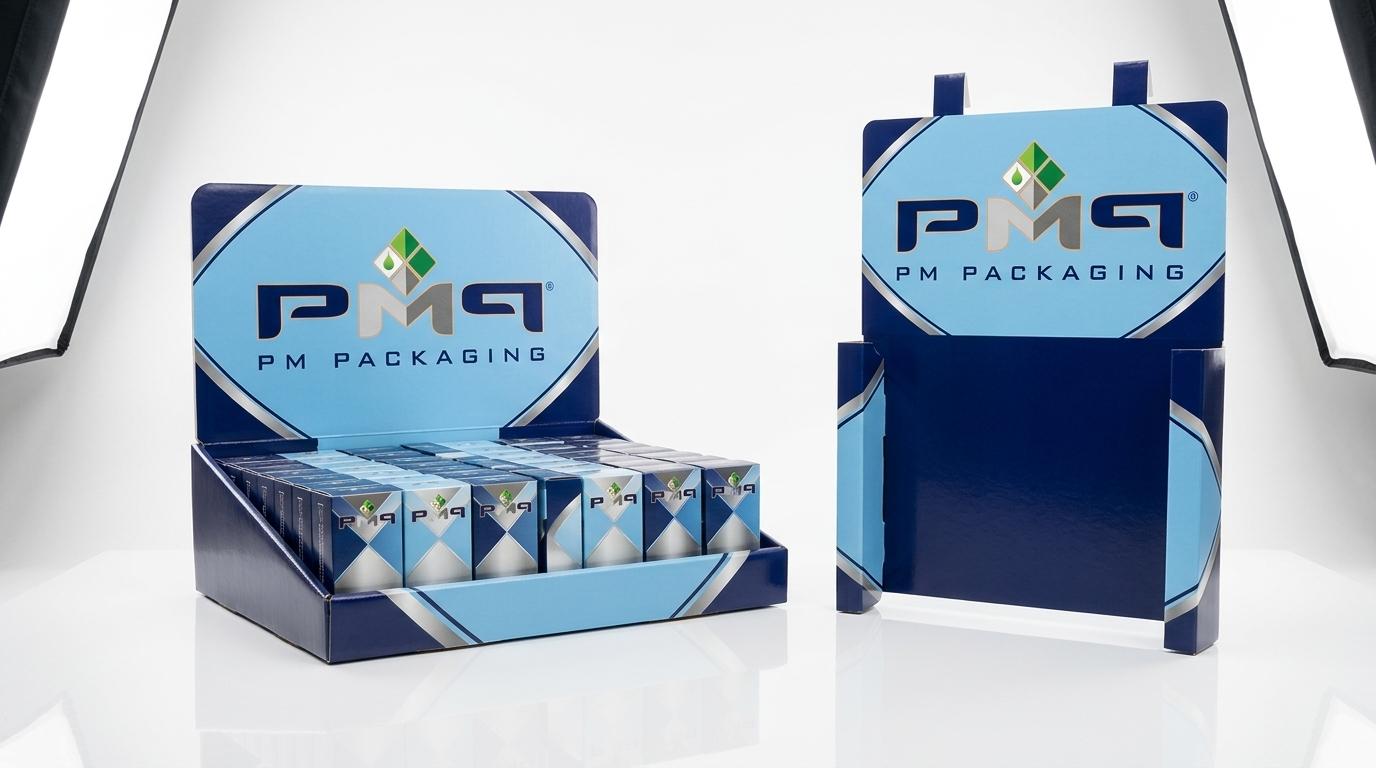
Explore our complete range of in-store merchandising display formats on our dedicated solutions page for In-Store Displays Solutions.
Flat-Packed vs. Preassembled / Prepacked Display Requirements
How a display is assembled and distributed significantly influences its structural dieline requirements:
Flat-Packed (Knockdown Flat - KDF)
Shipped flat to retail stores for assembly by store personnel.
- • Requires intuitive, tool-free setup with minimal steps.
- • Connection tabs must tolerate slight assembly misalignment without tearing.
- • Clear visual instructions printed directly onto hidden tab flaps.
Preassembled / Pre-Packed
Filled with merchandise at a contract packaging facility and shipped fully loaded.
- • Requires robust transit covers and outer shipping shrouds to resist highway vibration.
- • Shelves need internal transit retention blocks to keep products upright in transit.
- • Arrives ready to roll directly onto the retail floor in pristine condition.
For a detailed evaluation of assembly logistics, read our comparison on Pre-Packed Retail Displays vs. Displays Filled at the Store.
The Display Must Reach the Sales Floor in Usable Condition
A retail display cannot perform on the sales floor if it suffers damage during upstream distribution. Palletization, transit covers, and inner packaging must work as a synchronized system to protect the display before it ever encounters a customer.
Discover how shipping shippers and displays integrate in our guides on How Case Packs, Inner Packs, and Retail Displays Work Together and Retail Display Fulfillment: From Print to Store Rollout.
Common Display Failure Modes and What to Investigate
If an existing retail display exhibits sagging, leaning, or connection fatigue in the field, packaging engineers can diagnose root causes using the following structural evaluation matrix:
| Observed Display Problem | What to Investigate |
|---|---|
| Header Leans Forward or Drops | Panel height-to-thickness ratio; board caliper; absence of side return wings or rear triangular easel supports. |
| Shelf Center Sags Downward | Excessive unsupported horizontal span; lack of underlying vertical fluted support strut; insufficient shelf board caliper. |
| Front Retaining Lip Bows Outward | Single-wall lip construction; product forward pressure; absence of double-rolled 180° hem fold. |
| Connection Tabs Pull Out of Slots | Tab width too narrow; insufficient friction-fit barb depth; single-ply slot walls tearing under shear. |
| Slots Enlarge and Widen Over Time | Repeated restocking impacts; single-wall slot edges; lack of double-wall rolled upright reinforcement. |
| Sidewalls Lean or Belly Outward | Shelf reaction forces pushing walls apart; lack of rear locking spine; insufficient vertical column fluting. |
| Display Base Tilts or Crumbles | Footprint depth too shallow; moisture damage from floor mopping; absence of recessed kickplate. |
| Display Rocks When Partially Empty | Asymmetrical center of gravity shift; uneven product depletion; base perimeter lacking continuous support ring. |
| Product Shelves Twist or Rack | Single-sided product removal; unbalanced SKU weight distribution; lack of rigid rear cross-bracing. |
| Display Deforms Over Several Weeks | Viscoelastic paperboard creep; store entrance relative humidity exposure; under-specified fluting profile. |
When SFL Is Worth Evaluating vs. When Simpler Structures Are Enough
SFL is a premium converting technology and should be selected where its specific combination of rigidity and print fidelity delivers a measurable return. It is not necessary for every retail display:
- Standard Corrugated May Be Sufficient When: The display is purely utilitarian (such as a backroom replenishment tray), flexographic direct-print quality meets brand guidelines, or the display is discarded after a single weekend flash sale.
- Solid Paperboard May Be Sufficient When: The display is a compact countertop PDQ carrying very light merchandise (lip balms, trial packets), shelf spans are short, and the campaign duration is brief.
- SFL Is Strongly Recommended When: The display must support substantial product weight, maintain crisp geometry across a 4- to 12-week promotion, and present luxury G7-certified offset litho graphics across large brand headers and side panels without corrugated washboarding.
For an in-depth review of high-load shelf performance, see our technical article on SFL for Heavy Products Displayed on a Retail Shelf.
Signs a Retail Display May Need an SFL Structure
The following 8 operational triggers indicate that an existing retail promotional display structure should be upgraded to an engineered SFL construction:
Test the Loaded Display Before Full Production
At PM Packaging, we believe structural integrity should be verified physically before cutting production tooling. Reviewing physical display prototypes under true-to-life retail conditions ensures that every joint, shelf, and header performs as engineered:
- Weight-Load Verification: Testing the display fully loaded with actual production merchandise (or calibrated weight models) to measure shelf deflection over time.
- Shelf-Height & Product Spacing Checks: Confirming that shoppers can easily reach into shelves and remove items without catching on upper retaining lips.
- Header-Angle Sightline Evaluation: Reviewing the top billboard from standing and approaching sightlines to confirm visibility and brand impact.
- Retailer Footprint Compliance: Verifying that base dimensions conform strictly to big-box and grocery retail planogram guidelines.
PM Packaging's Retail Display Engineering Capabilities
PM Packaging provides end-to-end manufacturing for high-impact retail point-of-purchase displays:
Custom Structural CAD Engineering
Precision dieline development engineering shelves, bases, headers, and interlocking tabs around your exact product load.
SFL & Corrugated Converting
Inline laminating across N, F, E, and B fluting profiles to match structural stiffness with graphic smoothness.
Full-Scale 3D Physical Prototyping
Rapid sample cutting and loaded display mockups for weight verification and retailer buyer presentation.
G7-Certified Sheetfed Offset Printing
Vibrant large-format litho printing with flawless photographic brand fidelity and zero corrugated washboarding.
Inline High-Rub Protective Coatings
Aqueous coatings, UV varnishes, and anti-scuff films that keep display surfaces pristine under shopper handling.
Pre-Pack Kitting & Fulfillment Support
Turnkey coordination for pre-assembled and merchandise-filled displays with protective transit shrouds.
Learn more about our comprehensive converting capabilities on our overview for Single Face Lamination Solutions.
What to Provide for a Retail Display Load Review
To evaluate an existing display redesign or quote a new promotional retail program, providing the following project parameters enables our structural design team to prepare an optimized dieline recommendation:
Pre-RFQ Display Engineering Intake Checklist
Frequently Asked Questions: Retail Displays Under Load
Why do retail display shelves sag over time?
Shelves sag due to a combination of excessive unsupported span length, sustained downward gravitational load, and viscoelastic creep in paperboard fibers. Over multi-week promotions, humidity cycles weaken the substrate, causing shelves without underlying support struts or double-rolled front lips to flex downward permanently.
When should a promotional display use SFL instead of standard corrugated?
SFL is recommended when the display must present photographic offset litho graphics across large headers and side wings without corrugated washboarding, while carrying moderate-to-heavy product loads that would cause solid paperboard displays to collapse.
Which SFL flute is best for a heavy retail display?
B-flute is generally preferred for heavy floor displays, loaded beverage racks, and hardware endcaps because of its deeper fluting caliper and superior beam stiffness. E-flute is ideal for countertop PDQ trays and lightweight floor displays where tight folds and graphic smoothness are primary.
How should retail displays be tested under product load?
Displays should be evaluated loaded with actual merchandise across three conditions: fully loaded (maximum dead load), partially loaded (evaluating asymmetrical center-of-gravity shifts as products deplete), and nearly empty (ensuring base stability when the final item is removed).
Does a display need to be tested when partially empty?
Yes. In real retail settings, shoppers deplete front rows or one side first. Asymmetrical loading induces rotational torque and racking across side uprights that never appears when a display is uniformly 100% full.
How does shelf width affect display sag?
Bending deflection scales cubically with unsupported span width. Doubling a shelf span without adding underlying vertical struts or center dividers increases deflection exponentially under the exact same product weight.
How do repeated restocking cycles affect corrugated display tabs?
Store associates dropping heavy replenishment cases onto shelves apply dynamic impact shear to connection tabs and die-cut slots. Over several weeks, narrow tabs tear and slots enlarge. Engineering wider friction-fit tabs and double-wall rolled slot edges prevents tab failure.
Can PM Packaging test a loaded retail display prototype?
Yes. PM Packaging cuts full-scale physical prototypes on structural CAD cutting tables and conducts weight-load verification, shelf-height checks, and structural stability testing under maximum loaded conditions before production tooling is cut.