
A national luxury retail launch requires more than scaling the quantity of a premium box.
The primary package, inserts, decorative finishes, master cases, retail displays, pack-out schedule and initial SKU allocation must all be ready for the same fixed commercial launch window. Premium surfaces also have to arrive at retail without scuffing or cosmetic damage. The packaging program should therefore be planned backward from the required retail availability date, with structural approvals, finishing, pack-out, display production and distribution treated as connected parts of one launch system.
The primary commercial question is: "How should premium or luxury packaging be planned and coordinated for a fixed-date national retail rollout?" In buyer shorthand: we have a premium product going into national retail, and the packaging launch must execute flawlessly.
This guide examines how luxury brands select suitable packaging formats, synchronize pack-out schedules with co-packers, protect decorative foils and coatings during freight, integrate in-store POP merchandising, and separate initial launch volumes from ongoing replenishment.
Why a National Retail Launch Changes the Packaging Problem
Managing packaging for a national retail launch introduces operational constraints that do not exist in direct-to-consumer drops or steady-state replenishment. In an ongoing program, replenishment orders absorb minor supplier delays. In a national rollout, missing a retail shelf-set date can lead to lost promotional placement, distribution penalties, or delayed commercial revenue.
A national rollout requires simultaneous synchronization across several operational vectors:
- Multi-SKU Assortments: Delivering coordinated initial quantities across core products, specialty shades, travel sizes, and retail-exclusive bundles.
- Contract Pack-Out Coordination: Aligning delivery of primary boxes, thermoformed or paperboard inserts, and display shippers to contract packaging facilities.
- Retail Channel Variations: Managing differing master case quantities, barcode requirements, or merchandising formats across department stores, specialty beauty chains, and club stores.
- Cosmetic Transit Protection: Ensuring high-gloss coatings, hot foil stamping, and pristine box edges survive long-distance distribution without scuffing.
Start With the Launch Requirements Before Finalizing the Package
Before locking in box dielines and finishing techniques, brand teams should compile the full commercial launch parameters:
| Launch Input | Packaging Decision | Team / Stage Affected |
|---|---|---|
| Target Retail Date | Back-scheduled production milestones, converting timelines, and freight staging. | Operations & Logistics |
| SKU Assortment | Number of artwork versions, unique print plates, and initial production batch sizes. | Brand Management & Prepress |
| Retail Presentation | Luxury rigid box vs. premium folding carton; shelf facing vs. counter display. | Creative Design & Merchandising |
| Packing Location | Flat vs. rigid box delivery, manual assembly labor, co-packer dock receiving dates. | Contract Packager / Co-Packer |
| Display Program | Countertop PDQ trays, floor displays, pre-packed vs. store-assembled merchandising. | Retail Operations |
| Distribution Method | Master shipper dimensions, internal partition inserts, pallet stacking criteria. | Distribution Centers |
| Premium Finishes | Foil stamping, embossing, coatings, and specialized abrasion-resistant barriers. | Packaging Engineering |
Build the Packaging Schedule Backward From the Required Retail Date
Instead of scheduling forward from design initiation, national retail launches must be scheduled backward from the in-store shelf availability milestone:
- Required In-Store Date: The fixed commercial date when products must be merchandising-ready on retail shelves.
- Retailer DC Inbound Appointment: The mandatory dock receiving date established by participating retailers, accounting for transit and inbound pallet processing.
- Pack-Out Completion: When the contract packager or manufacturing plant must finish inserting products, sealing cartons, and packing master shippers.
- Packaging Delivery to Pack-Out: When primary boxes, inserts, and shippers must arrive at the filling facility to begin pack-out trials and production assembly.
- Packaging Converting & Finishing: Printing, curing, die-cutting, foil stamping, embossing, and box construction.
- Prepress & Contract Proof Approval: Final sign-off on digital proofs, structural CAD dielines, and foil tooling.
Establishing this dependency sequence ensures each participant understands how an artwork delay or structural revision directly affects downstream pack-out and delivery deadlines.
Decide Which Luxury Packaging Format Fits the National Launch
Choosing between rigid boxes and premium folding cartons is a core strategic decision. Brands can explore specialized formats across custom luxury packaging:
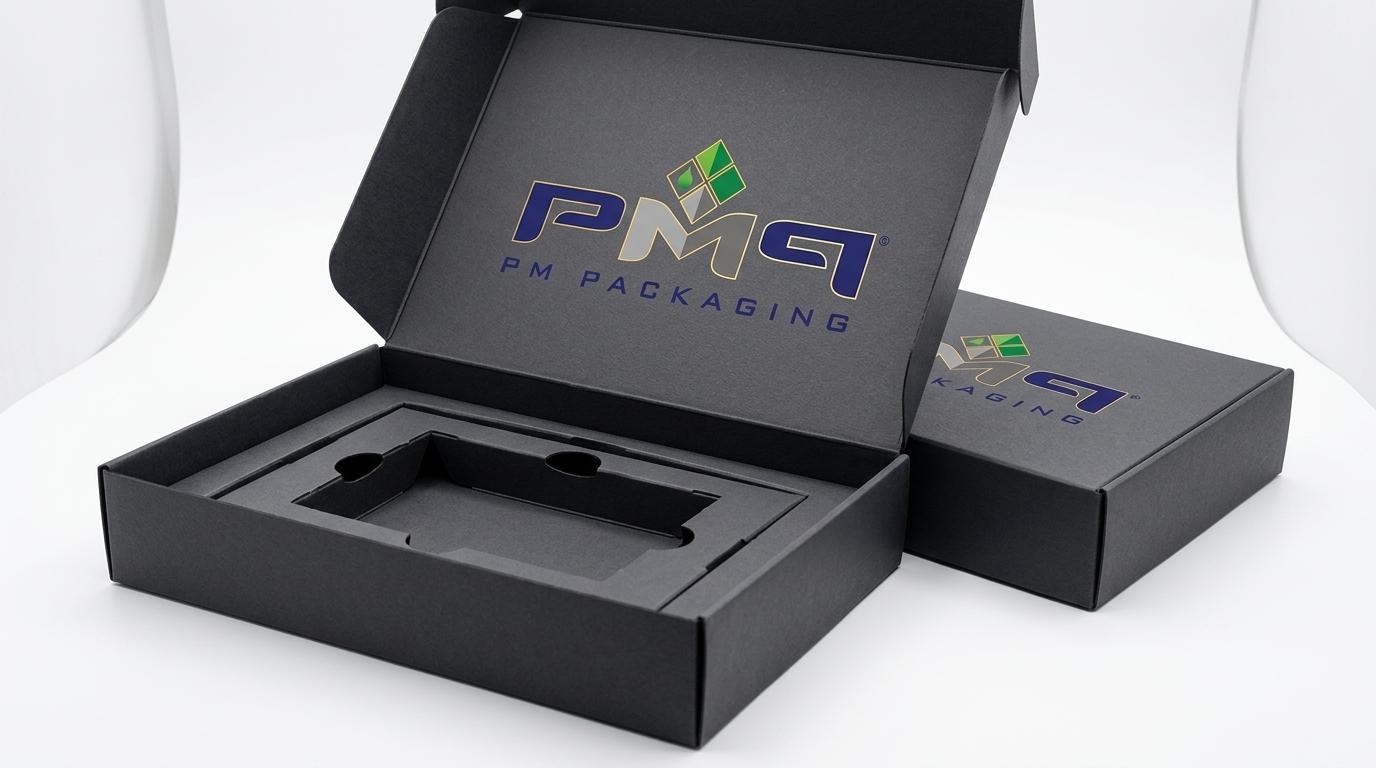
Luxury Rigid Setup Boxes
Constructed from heavy chipboard (40pt–100pt) wrapped in litho-printed art paper, soft-touch sheets, or textured book cloth. Styles include magnetic closure boxes, lift-off lids, slide-open matchbox styles, and shoulder-and-neck boxes.
Best for: High-value gift sets, luxury fragrances, prestige skincare, and high-ticket consumer electronics.
Premium Folding Cartons
Engineered from high-grade virgin paperboards (18pt–24pt SBS C1S/C2S) enhanced with cold foil, multi-level embossing, Spot UV, and interior brand printing. Ships flat to the pack-out facility.
Best for: Large-door retail distribution, fast-turning cosmetics, and programs where shipping cube and pallet efficiency are paramount.
For large-scale national launches, premium folding cartons often provide the ideal balance of luxury aesthetics and high-speed pack-out efficiency, while rigid boxes remain the gold standard for hero gift sets and limited-edition flagship drops.
Standardize the Core Package Before Adding Retailer or Channel Variations
When rolling out across multiple national retailers, marketing teams often want distinct packaging for different retail partners. To avoid operational fragmentation, brands should implement a Core and Variable structural strategy:
- Standard Core Packaging: Keep the primary box structure, paperboard grade, internal insert cavity, and primary brand typography uniform across all launch volume.
- Variable Channel Elements: Accommodate retailer-specific requirements, exclusive gift offers, or club-pack messaging via custom belly bands, printed outer sleeves, or customized display shippers.
This modular approach allows the primary packaging to run in one unified production wave, isolating channel differentiation to secondary components that are easier and faster to convert.
Keep Launch SKUs Easy to Distinguish During Pack-Out
Luxury packaging often embraces minimalist design aesthetics, with subtle shade names and understated typography. On a fast-moving contract pack-out line, however, visual subtlety can lead to pack-out and inventory errors:
- Clear Flap & Glue Tab Markings: Print distinct internal part numbers, SKU codes, and color-coded dots on interior glue tabs or concealed dust flaps to help line workers verify variant match during carton assembly.
- External Master Carton Labeling: Clearly mark outer master cases with bold SKU descriptions, piece counts, and certified GS1-128 shipping labels to ensure regional distribution centers route pallets accurately.
Coordinate Luxury Packaging With Retail Displays
In national retail environments, luxury products are rarely placed loose on standard shelving. They are merchandised through branded point-of-purchase (POP) displays, countertop PDQ trays, or endcap side-wings. Explore display integration across custom in-store displays and PDQ packaging:
- Physical Fit & Removal Clearance: Display trays must provide sufficient pocket clearance so shoppers can remove luxury cartons without catching corners or binding against display walls.
- Pre-Packed vs. Store-Assembled Displays: Determine whether displays will ship to stores pre-packed with products in secure display shippers, or ship flat to be assembled and loaded by retail store staff.
- Unified Brand Aesthetics: Printing primary cartons and secondary corrugated displays under common G7 color management ensures that corporate brand hues match precisely under retail store lighting.
Protect Premium Finishes Through Pack-Out and Distribution
A luxury package can be structurally intact upon store arrival, but if visible foil stamping is scratched or matte black surfaces are marred by burnishing, the retail presentation is compromised.
Sourcing teams must engineer surface protection into the packaging specification:
- Protective Coatings: Utilizing scuff-resistant matte or gloss aqueous coatings over deep solid inks prevents micro-abrasions caused by transit vibration.
- Foil Stamping Registration: Sinking metallic foil into debossed cavities shields reflective surfaces from direct frictional contact against adjacent cartons.
- Protective Sleeves & Interleaving: For high-value rigid setup boxes, adding tissue interleaving or clear protective poly wraps prevents rub wear during pack-out handling.
Coordinate the Primary Package With Its Master Case
In a luxury launch, the corrugated master shipping case is not just a transit box—it is the primary protective barrier for high-end decorative surfaces. Master shippers must be tailored to the exact dimensions of the finished packages:
- Eliminating Internal Shifting: Loose case packing allows cartons to slide against each other during trucking, creating edge wear. Snug internal tolerances prevent movement.
- Internal Partitions & Dividers: For premium rigid boxes or fragile glass perfume bottles, corrugated or solid-fiber chipboard partitions isolate individual cartons, preventing carton-to-carton contact entirely.
- Pallet Stacking Alignment: Design master case dimensions to align with actual retailer pallet criteria, ensuring vertical box corners align to resist pallet top-load pressure.
Align Packaging Production With the Launch Pack-Out Schedule
Delivery of packaging to contract packagers must be sequenced to match filling line capacity. Delivering 500,000 cartons all at once can overwhelm co-packer staging space, while staggered releases ensure steady flow:
Furthermore, the brand and contract packager should agree upon an appropriate setup allowance to account for line makeready, test fills, quality sampling, and normal manual assembly handling. Coordinated delivery schedules ensure contract packagers maintain full production momentum leading up to retail shipping dates.
Separate the Initial Launch Quantity From Replenishment
Planning initial launch packaging differs substantially from managing ongoing replenishment:
| Planning Issue | Initial Launch | Ongoing Replenishment |
|---|---|---|
| Demand Basis | Pre-determined retail pipeline fill and initial store door allocations. | Actual consumer sell-through velocity and POS reorder triggers. |
| Timing Constraints | Strict, non-negotiable target retail shelf-set window. | Flexible recurring production cycles based on warehouse lead times. |
| Merchandising | High focus on promotional POP displays, counter units, and gift sets. | Shift toward standard shelf cartons and shelf-ready secondary trays. |
| Inventory Posture | Produce complete launch wave plus defined assembly contingency. | Safety stock, scheduled releases, and demand-driven production runs. |
Control Retailer-Specific or Promotional Packaging Obsolescence
National launches frequently incorporate time-sensitive marketing: limited-edition badges, holiday graphics, launch-event sweepstakes codes, or co-branded retail logos. Packaging printed with these elements cannot be reused once the launch window closes.
To mitigate obsolescence write-offs:
- Conservative Promotional Batching: Print only confirmed initial door allocations for promotional-specific graphics, reserving unprinted core packaging for ongoing sales.
- Modular Packaging Components: Place promotional messaging on removable sleeves, foil hang tags, or display headers rather than directly on the primary luxury box.
Build Launch Contingency Around the Real Critical Risks
Launch contingency should be engineered around specific critical-path vulnerabilities rather than relying on arbitrary timing buffers:
- Specialty Finish Lead Times: Multi-level embossing dies, specialized foil tooling, or windowing dies require dedicated fabrication lead times that must be initiated early.
- Insert-to-Product Clearance Validation: Validate physical product prototypes inside actual paperboard or thermoformed inserts before converting launch quantities.
- Co-Packer Staging Capacity: Ensure receiving docks and staging floors at assembly plants are scheduled to receive primary boxes and secondary shippers concurrently.
Example: Premium Beauty Collection Entering National Retail
Consider a hypothetical commercial scenario: a prestige skincare brand introduces a four-product anti-aging regimen rolling out to specialty beauty retailers nationwide. The line includes a serum, eye cream, facial oil, and restorative night cream.
The brand executes its national retail launch through a synchronized packaging plan:
- Unified Structural Architecture: All four products utilize 20pt SBS folding cartons with soft-touch matte aqueous coating, gold hot-foil stamping, and crisp reverse-tuck closures.
- Engineered Internal Collars: Custom paperboard collar inserts prevent glass dropper and pump movement within the cartons during transit.
- Countertop PDQ Coordination: Participating flagship doors receive pre-packed countertop display trays holding a balanced assortment of all four SKUs, while remaining doors receive standard partitioned master shippers.
- Synchronized Co-Packer Delivery: Cartons, inserts, and master shippers arrive at the brand's contract packaging facility on a coordinated schedule, enabling full pack-out completion ahead of retail distribution center delivery appointments.
Questions to Resolve Before a National Luxury Retail Launch
Sourcing and marketing teams should resolve the following commercial questions before committing packaging production:
- ✓What is the non-negotiable in-store retail availability date?
- ✓Which luxury format best balances presentation and pack-out speed (rigid box vs. premium folding carton)?
- ✓How many distinct launch SKUs are included, and what are the initial quantities per variant?
- ✓Are internal inserts, partitions, or collars required to secure primary glass or pump containers?
- ✓Will retail stores display products on standard shelves, in countertop PDQ trays, or in floor shippers?
- ✓What specific routing guide requirements (pallet dimensions, labeling, case counts) do participating retailers mandate?
- ✓How will delicate decorative foils and soft-touch coatings be protected from transit abrasion?
- ✓Where will contract pack-out occur, and what is the required packaging delivery date?
When the Main Challenge Is an Ongoing High-Volume Folding Carton Program
If the product is no longer in a launch phase and the main problem is engineering cartons for repeat production, packing-line performance, paperboard efficiency and ongoing distribution, that is a different packaging problem.
For products requiring year-round high-volume production, automated cartoning compatibility, and supply chain continuity, read our comprehensive guide to engineering folding cartons for a high-volume consumer product program.
Planning Luxury Packaging for National Retail Scale
Executing luxury packaging for national retail distribution requires aligning premium structural engineering, decorative finishing, contract pack-out schedules, and retail merchandising displays into a unified launch system.
Connect with PM Packaging to review your target launch date, packaging formats, SKU assortment, initial quantities, decorative finishes, in-store displays, and contract fulfillment requirements.
Plan Your National Retail Launch Packaging
Partner with PM Packaging to coordinate luxury boxes, retail POP displays, surface finish protection, and co-packer distribution for your upcoming retail launch.