
A luxury package can perform beautifully when a prototype is assembled, adjusted, and inspected one unit at a time.
The challenge shifts fundamentally when that same structure must be manufactured 25,000 times, 100,000 times, or across ongoing multi-batch reorders. The objective is not merely placing a larger purchase order; it is transforming a delicate, bespoke concept into a durable, repeatable production system.
When luxury packaging moves from an artisan studio or short-run trial to commercial converting presses, every nuance of design is magnified. Small structural eccentricities that a packaging designer can hand-trim on a sample cutting table become severe production bottlenecks on high-speed folder-gluers. Premium finishes that register cleanly across a single sheet can drift, scuff, or crack across long press runs if they are not engineered around manufacturing tolerances.
Successful high-volume luxury packaging requires answering practical engineering questions early:
- Material availability: Can the chosen paperboard, core stock, and foil be procured consistently across large tonnage without lot-to-lot shade shifts?
- Finishing repeatability: Can multi-stage processes like hot foil stamping, deep blind embossing, and soft-touch coatings run without blistering, flaking, or misregistration?
- Pack-out ergonomics: Can assembly line operators erect, insert, load, and close the carton in seconds without manual fighting or adhesive rework?
- Scalable quality standards: Have objective boundary samples been set so quality control teams evaluate pieces consistently across shifts?
This guide details how luxury brands and packaging engineers simplify structures, standardize components, and control converting variables to scale premium packaging from initial sample to flawless mass production.
Why a Luxury Prototype Does Not Automatically Scale
A packaging prototype is created under ideal conditions. A sample maker cuts single sheets on a flatbed CAD plotter, folds scores manually, applies specialized double-sided tape by hand, and meticulously aligns inserts using tweezers or alignment jigs. Every component is inspected individually before being presented to brand stakeholders.
In commercial manufacturing, however, packages move through high-speed mechanical converting systems:
- Die-cutting and scoring: Steel rule dies strike thousands of sheets per hour. Caliper variations across paperboard sheets alter crease depth and folding resistance.
- Folder-gluers and automated erecting: High-speed belts propel cartons through folding hooks and glue guns at hundreds of feet per minute, requiring clean friction surfaces and precise tab geometry.
- Environmental ambient shifts: Humidity and temperature changes on the plant floor affect board moisture content, ink drying times, and adhesive cure speeds.
- Operator variability: Hand pack-out at high volume involves multiple shifts and varying operator touch, requiring intuitive geometry that resists incorrect assembly.
The Scaling Principle: A prototype proves that a structural packaging design is aesthetically pleasing. A production trial proves whether that structure can be converted, decorated, assembled, and packed at commercial scale with zero degradation in customer experience.
Define the Luxury Features That Actually Matter
Luxury packaging does not require maximum mechanical complexity. In fact, many of the most iconic luxury packages in cosmetics, spirits, and consumer electronics utilize clean, restrained geometries executed with extraordinary precision.
When preparing to scale, engineering teams should audit the package to separate essential brand elements from optional production complexity:
| Design Element | Essential Brand Value (Keep & Control) | Optional Production Complexity (Simplify) |
|---|---|---|
| Carton Closure | Crisp, positive friction closure or integrated magnetic snap with smooth resistance. | Multi-point manual ribbon ties or delicate tucks requiring double-handed alignment. |
| Internal Inserts | Precise product nesting, upright presentation, and immaculate face framing. | Four separate loose insert pieces requiring hand-gluing or foam pad taping. |
| Embossing & Foil | Sharp, tactile brand mark with clean edge definition and high foil opacity. | Foil stamped across deep score lines where mechanical bending causes micro-flaking. |
| Board Feel | Substantial caliper, rigid corners, and soft-touch or fine-textured tactile surface. | Exotic handmade paper stocks with high thickness variance and long mill backorders. |
By stripping away complexity that the consumer never notices, brands preserve manufacturing budget for the elements that truly communicate premium value: tactile coatings, crisp registration, dense substrates, and structural rigidity.
Simplify the Structure Before Increasing Volume
The golden rule of high-volume luxury converting is to simplify production without simplifying the brand experience. Structural simplification eliminates friction points on the factory floor while retaining the unboxing reveal.
Common high-yield structural simplifications include:
- Consolidating Multi-Piece Inserts: Replace multi-piece insert assemblies (such as a separate riser, collar, and bottom cavity) with a single engineered paperboard or microflute dieline that folds into a rigid multi-tier platform in one motion.
- Self-Locking Geometry vs. Taped Components: Replace peel-and-stick adhesive strips or hand-applied hot melt with mechanical rollover locks, friction-fit tabs, and tuck flaps that lock securely upon folding.
- Eliminating Alignment Steps: Design asymmetric notches or chamfered corners into inserts so components can only seat in the correct orientation, eliminating operator hesitation during pack-out.
- Optimizing Sheet Yield: Re-engineer blank dimensions by fractions of an inch to nest efficiently across large press sheets, drastically reducing raw material waste across a 100,000-unit run.
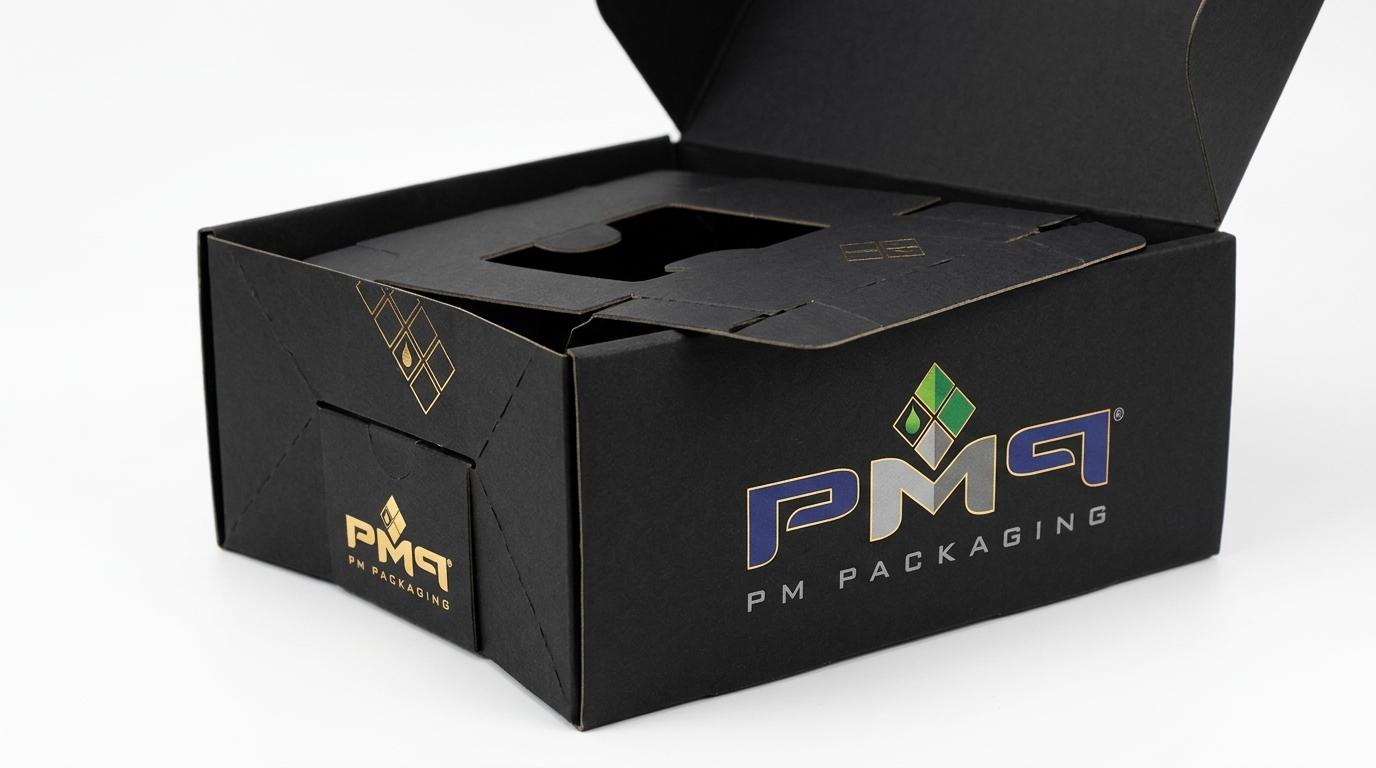
Industrial Converting Scale: Scaling luxury packaging requires engineering structural folds, score profiles, and embellishment dies to run reliably on high-speed press and converting equipment.
Standardize Components Across SKU Families
One of the most effective strategies for scaling luxury packaging is component standardization. Brands frequently create bespoke packaging footprints for every individual product variant, resulting in fragmented tooling investments, multiple board orders, and chaotic warehouse management.
A modular packaging architecture consolidates these variables:
The Modular Platform Strategy
Consider a luxury skincare brand with 12 distinct product formulations (serums, creams, toners, oils). Instead of ordering 12 independent custom box sizes:
- 1.Outer Cartons: Standardize on 3 universal exterior carton sizes (Small, Medium, Tall) sharing identical paperboard calipers, foil stamp dielines, and coating setups.
- 2.Variable Artwork: Differentiate products entirely through CMYK + Pantone press plates, typography, and ingredient callouts.
- 3.Modular Inserts: Utilize standardized outer insert footprints with customized internal cavity cutouts tailored to each primary bottle or jar.
This platforming approach reduces die-tooling expenditures, enables combined gang printing runs on identical stock, streamlines master case sizing, and simplifies future line extensions.
Select Materials for Repeatable Availability
A specialty paper stock that looks stunning for 500 hand-crafted launch kits may create severe operational risk when ordering 100,000 cartons. Boutique paper mills often operate with long lead times, variable production minimums, and significant lot-to-lot shade shifts.
When selecting substrates for large-scale production, evaluate:
- Commercial Board Grades: Focus on high-performance commercial grades such as Solid Bleached Sulfate (SBS), Cast-Coated Paperboard, or Single Face Lamination (SFL) microflutes (SFL solutions) that offer high tensile strength, consistent caliper, and continuous mill availability.
- Grain Direction: Ensure the paperboard grain direction aligns parallel to main crease lines. Folding across the grain at high speed causes ragged fold lines, fractured coatings, and bowing side panels.
- Surface Holdout: Coated paperboards provide superior ink holdout and crisp foil stamp release, whereas uncoated boutique stocks absorb varnishes unevenly and require specialized foil release chemistries.
- Secondary Qualified Substrates: Always qualify an approved secondary paperboard source during pre-production. If primary mill allocations tighten, having a pre-tested alternative prevents program shutdowns.
Use Specialty Finishes Strategically at Scale
Specialty embellishments—hot foil stamping, multi-level embossing, debossing, spot UV, soft-touch coatings, and pearlescent varnishes—are the visual hallmark of luxury packaging. However, running these finishes across tens of thousands of sheets requires careful technical planning.
Engineering guidelines for high-volume decorative finishing include:
- Foil Placement and Score Relief: Avoid positioning foil stamps across primary score lines or hinge points. The mechanical stress of die-scoring and 180-degree folding fractures foil bonds, leading to unsightly flaking and ragged edges. Maintain at least 1/16-inch clearance from fold lines.
- Coating Chemistry Compatibility: Soft-touch coatings create a velvety tactile feel but can inhibit foil adhesion if applied before stamping. Formulating the coating and foil release chemistry to work in harmony prevents lifting during rub testing.
- Embossing Tooling Selection: While magnesium dies are economical for short prototype runs, large production runs require durable brass or copper CNC-engraved tooling. Brass dies maintain crisp bevels, resist thermal deformation under heat, and deliver identical embossing depth across 100,000+ impressions.
- Multi-Pass Pass Through Efficiency: Combining print and embellishment steps—such as running inline spot coatings or utilizing combination foil/emboss dies—reduces press passes, cutting production cycle times and registration drift.
Establish Production Color and Appearance Standards
Color and finish drift across multiple production shifts is one of the quickest ways for a luxury program to lose its cohesion. High-volume programs require clear, objective physical references established prior to full production release.
Best practices for establishing production color consistency include:
- Signed Drawdowns on Production Substrates: Digital proofs and inkjet mockups cannot replicate the way ink absorbs into specific paperboards or reflects through matte varnishes. Always review physical ink drawdowns pulled on the exact production stock.
- Agreed Boundary Samples (Light/Standard/Dark): In high-volume lithographic printing, subtle density shifts occur. Establishing agreed "target," "light limit," and "dark limit" boundary samples sets clear operational thresholds for press operators and QC inspectors.
- Standardized Lighting Evaluation: Evaluate all printed cartons, foil swatches, and assemblies inside calibrated D50 or D65 light booths. Metamerism—where colors match under incandescent retail lights but clash under daylight or warehouse LEDs—must be identified and resolved during pre-press.
- Multi-Component Visual Harmonization: When a package incorporates an exterior folding carton, an internal foil-stamped insert, and an outer sleeve, all components must be evaluated side-by-side under the same light source to verify visual harmony across different substrates.
Engineer Inserts for Repeatable Pack-Out
In luxury packaging, the interior insert is just as critical as the exterior box. It holds the product securely, frames it upon opening, and absorbs transit shocks. At scale, however, an poorly engineered insert becomes an assembly line bottleneck.
Designing inserts for repeatable, high-speed pack-out requires:
- Friction Tabs & Positive Nesting: Engineer precision paperboard cavity cutouts with friction tabs that grip the primary container firmly without requiring manual adhesive or foam wedges.
- Ergonomic Finger Access: Provide clean finger wells or curved relief notches so the end consumer can remove the product effortlessly without tearing the insert paperboard.
- Single-Piece Folded Geometry: Utilize folded paperboard or litho-laminated microflute (folding carton solutions) engineered from a single blank that erects with intuitive folds, eliminating multi-part gluing or tape application.
- Toleranced Cavities: Account for container manufacturing tolerances. Glass bottles and ceramic jars have subtle dimensional variance across lots; insert cavities must accommodate these ranges without pinching or rattling.
Design Around the Actual Assembly Process
Whether the packaging will be erected by hand at a contract packaging facility or processed through automated cartoning lines, the structure must match the assembly workflow.
Assembly Efficiency Considerations
Manual Pack-Out Lines
Focus on intuitive geometry, auto-locking bottom structures (crash-lock bottoms), pre-broken crease lines, and self-locating insert trays that pop into shape with a single squeeze. Minimizing hand motions directly translates to lower contract packaging costs.
Automated & Semi-Automated Lines
Ensure vacuum cup friendly surface finishes, consistent opening force, precisely controlled friction coefficients, and standardized glue flap dimensions that prevent jams in mechanical feeding hoppers.
Use Automation Where the Structure Supports It
Depending on the structural design and the contract packaging environment, certain repetitive packaging operations can be automated to improve throughput and reduce handling marks.
Operations that lend themselves well to automation include:
- Pre-gluing on folder-gluers: Converting complex side-seam, crash-lock bottom, and multi-compartment cartons inline during manufacturing.
- Automated carton erecting: Machine-forming rigid trays or sleeve wraps from flat blanks at consistent cycle times.
- In-line vision inspection: Camera systems that verify barcode print quality, foil registration, and label placement at production line speeds.
- Automated case packing: Robotic or mechanical case packers that load finished cartons into master shippers without scuffing delicate outer coatings.
Create Quality Standards Before the Large Run
Subjective quality standards like "must look high-end" or "luxury feel" lead to friction, rejected lots, and costly disputes. Quality criteria must be codified into measurable, objective standards before the production press begins running.
Establish written acceptance standards covering:
| Quality Category | Objective Inspection Standard | Critical Boundary Focus |
|---|---|---|
| Emboss / Deboss | Crisp relief depth matched to signed production proof; clean perimeter definition. | Zero board surface rupture or internal fiber blowout on deep impressions. |
| Hot Foil Stamping | Pin-sharp lettering edges; complete foil fill without voids, pinholes, or halos. | No flaking along score lines; clean tape pull test adhesion. |
| Glued Seams & Joints | Continuous 100% fiber-tearing bond along specified glue flaps. | Zero adhesive squeeze-out or transfer to decorative viewing panels. |
| Squareness & Fit | Carton closes flush; lid gaps uniform; corners stand precisely 90 degrees. | No skewing, racking, or protruding interior flaps upon final closure. |
Use a Production-Representative Pilot Before Full Scale
Jumping directly from an initial CAD table prototype into a 100,000-unit commercial run creates substantial financial exposure. A disciplined, phased scale-up process isolates variables and verifies manufacturability before large volumes of raw materials are committed.
- 1Structural Prototype: Unprinted white CAD cuts tested with actual primary bottles, jars, or components to confirm fit, clearances, friction, and ergonomics.
- 2Material & Finishes Drawdown: Proof sheets printed and embellished on the exact production board stock to verify color targets, foil release, and coating texture.
- 3Production Pilot Run: A short trial run on commercial production tooling and folder-gluers to test machine conversion speeds, crease behavior, and adhesive performance.
- 4Pack-Out Trial: Supplying pilot cartons to the assembly line to measure real-world loading cycle times, operator ergonomics, and master shipper packing.
- 5Full Commercial Run: Scaled high-volume production executed against approved signed pilot boundary standards.
Plan Packaging Inventory for Repeat Orders
High-volume luxury packaging programs must be planned for multi-batch continuity. Paperboard mills operate with standard production cycles, and specialty stamping foils can take weeks to replenish if inventory drops below reorder thresholds.
Sustainable inventory architecture involves:
- Decoupled Component Planning: Maintain safety stock of shared common components (such as unprinted outer shells, standard inserts, or master cases) while converting SKU-specific printed sheets to demand.
- Raw Board Reservation: Securing mill allocations for approved virgin paperboard grades in advance of scheduled production surges.
- Minimizing Obsolescence Risk: Avoid pre-printing regulatory copy or time-sensitive claims directly onto large inventories of high-finish outer boxes; use modular labels or inner leaflets where appropriate.
Evaluate Total Production Cost, Not Just Unit Box Cost
A common mistake when scaling luxury packaging is focusing solely on the per-unit invoice cost of the empty box. The true cost of packaging is a total system metric that includes converting, pack-out labor, freight, and quality loss.
The Total Landed Cost Equation
Spending slightly more on an engineered folding carton that ships flat and snaps together in 4 seconds often yields massive net savings compared to a cheaper multi-piece carton that requires 45 seconds of complex manual folding on the packaging line.
Illustrative Example: Scaling a Premium Beauty Line
Illustrative Case Study
Transitioning from 5,000 Handmade Kits to 100,000 Production Cartons
A luxury skincare brand had successfully launched a boutique line using hand-assembled rigid boxes containing a ceramic jar, dropper bottle, and application spatula. Each prototype unit required 3 separate glued platform inserts, manual satin ribbon placement, and hand-applied foil-stamped labels. Total pack-out time was nearly 2 minutes per box.
When commercial orders expanded the program to 100,000 units, the original structure proved impossible to scale economically. PM Packaging collaborated with the brand to re-engineer the system:
- Converted to Premium Folding Paperboard: Shifted from rigid board to high-caliper 24pt SBS with soft-touch coating, delivering equivalent structural rigidity while shipping 100% flat to the pack-out facility.
- Single-Blank Insert Platform: Consolidated the 3-piece insert assembly into a single pre-scored folding paperboard platform that erected in a single motion with integrated friction cavities.
- Direct In-Line Foil Stamping: Replaced hand-applied labels with high-speed brass-die hot foil stamping applied directly during press converting.
The outcome: Assembly cycle time dropped from 110 seconds to 14 seconds per unit, pallet shipping density increased by over 400%, and the finished package retained 100% of its luxurious tactile presentation and unboxing drama.
*Note: Figures and timeline are illustrative of structural engineering principles and do not represent contractual performance guarantees.
Build a Luxury Packaging Platform That Can Grow
Scaling luxury packaging is not a one-time exercise. Successful brands design scalable packaging architectures that readily accommodate product line extensions, limited editions, seasonal promotions, and global regulatory updates without requiring complete structural redesigns.
By establishing standardized dielines, universal insert footprints, and calibrated color profiles, brands can launch future SKUs rapidly, ordering incremental printed sheets against proven structural tooling.
When the Challenge Is a Fixed National Retail Launch
Scaling the package itself is only one challenge. When the program must meet retailer specifications, display requirements, and a fixed national rollout date, launch execution becomes a separate planning problem.
See our guide to luxury packaging for national retail product launches to learn how brands coordinate multi-SKU retail compliance, distribution center routing, and in-store displays under strict launch deadlines.
Planning a Scalable Luxury Packaging Program
Transitioning an intricate luxury design into an efficient, repeatable manufacturing program requires collaboration between brand designers, structural engineers, and converting specialists.
When preparing to scale a luxury packaging program, gather the following key inputs:
- Target production run volume & forecast
- Primary container dimensions & weights
- Current prototype structure or dieline
- Required embellishments (foil, emboss, spot UV)
- Target paperboard grade & tactile finish
- Assembly method (manual vs. automated)
- Insert nesting & product retention needs
- Master shipper & pallet density targets
- Color standards & critical brand targets
- Production timeline & reorder cadence
PM Packaging works directly with premium brands to evaluate structural geometry, optimize sheet layout, engineer high-speed inserts, and establish production-ready quality standards. Explore our full capabilities in luxury packaging, folding cartons, and single face lamination.
Build a Premium Package That Can Be Repeated
Luxury packaging succeeds at scale when quality is designed directly into the production process.
The package must provide an exquisite customer experience, but it must also be practical to manufacture, assemble, inspect, ship, and reorder. Every material, finish, and structural feature should support the brand's aesthetic without generating unnecessary production friction.
By defining essential luxury elements, simplifying structural complexity, standardizing modular components, testing production-representative pilots, and planning around total system economics, brands can scale luxury packaging reliably across large production runs.
Contact PM Packaging to discuss your product specifications, projected run volumes, finishing requirements, and assembly workflows. Our structural engineering team can help develop a scalable luxury packaging program that balances presentation, performance, and manufacturing efficiency.