
Cycling catalogs present a packaging paradox: radical physical diversity coupled with intense mechanical precision.
A single brand may market featherlight grips, tiny valve adapters, high-output LED headlights, dense steel U-locks, and paired alloy pedals with razor-sharp traction pins. Rather than forcing diverse items into identical boxes, enterprise cycling brands engineer a coherent packaging architecture rooted in technical fitment clarity, component weight management, and modular structural platforms.
Why Cycling Catalogs Create Packaging Complexity
The foundational divide within cycling retail is the structural difference between accessories and replacement parts:
- Accessory Packaging: Governed by feature presentation, aesthetic appeal, ergonomic shape, and rider use cases (e.g., lights, saddlebags, phone mounts).
- Replacement Part Packaging: Governed strictly by mechanical fitment: "Will this exact component fit my bicycle frame, handlebar, or drivetrain?"
When replacement components bury critical interface dimensions under lifestyle graphics, cyclists experience selection confusion, buy incorrect parts, and drive up retail return rates.
Match the Packaging Format to the Cycling Product
Comprehensive cycling programs match packaging formats to product mass, geometry, and merchandising requirements:
| Product Characteristic | Format Worth Evaluating | Primary Commercial Benefit |
|---|---|---|
| Small visible replacement component | Blister card / hanging format | Visual check of shape, threads, and cleats. |
| Lightweight accessory needing technical copy | Folding carton / hang-tab carton | Panel space for wiring, mounting, and battery data. |
| Product where finish & styling matter | Windowed folding carton | Reveals anodized colors while sealing out dust. |
| Dense steel lock, pedal set, or large kit | Single Face Lamination (SFL) | Rigid crush resistance against transit drops. |
| Multi-component repair or bleed kit | Carton or SFL with internal retention | Isolates fittings and tools in organized pockets. |
| Seasonal accessory or checkout assortment | PDQ counter or shelf-ready display | Instant placement; boosts impulse checkout sales. |
Build Replacement Packaging Around the Rider's Fitment Decision
Mechanics and riders choose replacement parts based on physical dimensions. Packaging graphics must prioritize these mechanical variables:
| Product Family | Critical Fitment Data Required on Package Face |
|---|---|
| Grips & Cockpit Accessories | Clamp diameter (22.2mm, 31.8mm, 35mm), length, lock-on vs slide-on. |
| Pedals & Cleat Systems | Spindle thread (9/16" vs 1/2"), interface (SPD, Look, platform), float angle. |
| Repair Hardware & Small Parts | OEM part number, thread pitch, bolt length, piece count. |
| Lights & Electronics | Mounting standard (handlebar, seatpost, GoPro), lumens, runtime, USB-C. |
| Pumps & Inflators | Valve type (Presta vs Schrader auto-select), max PSI, frame bracket. |
| Drivetrain Components | Speed count (9/10/11/12-speed), chain width, cassette cog range. |
| Bicycle Locks | Internal shackle clearance, mounting bracket style, security rating. |
| Multi-Tools | Function count, bit sizes (hex 2–8mm, Torx T25), chain tool presence. |
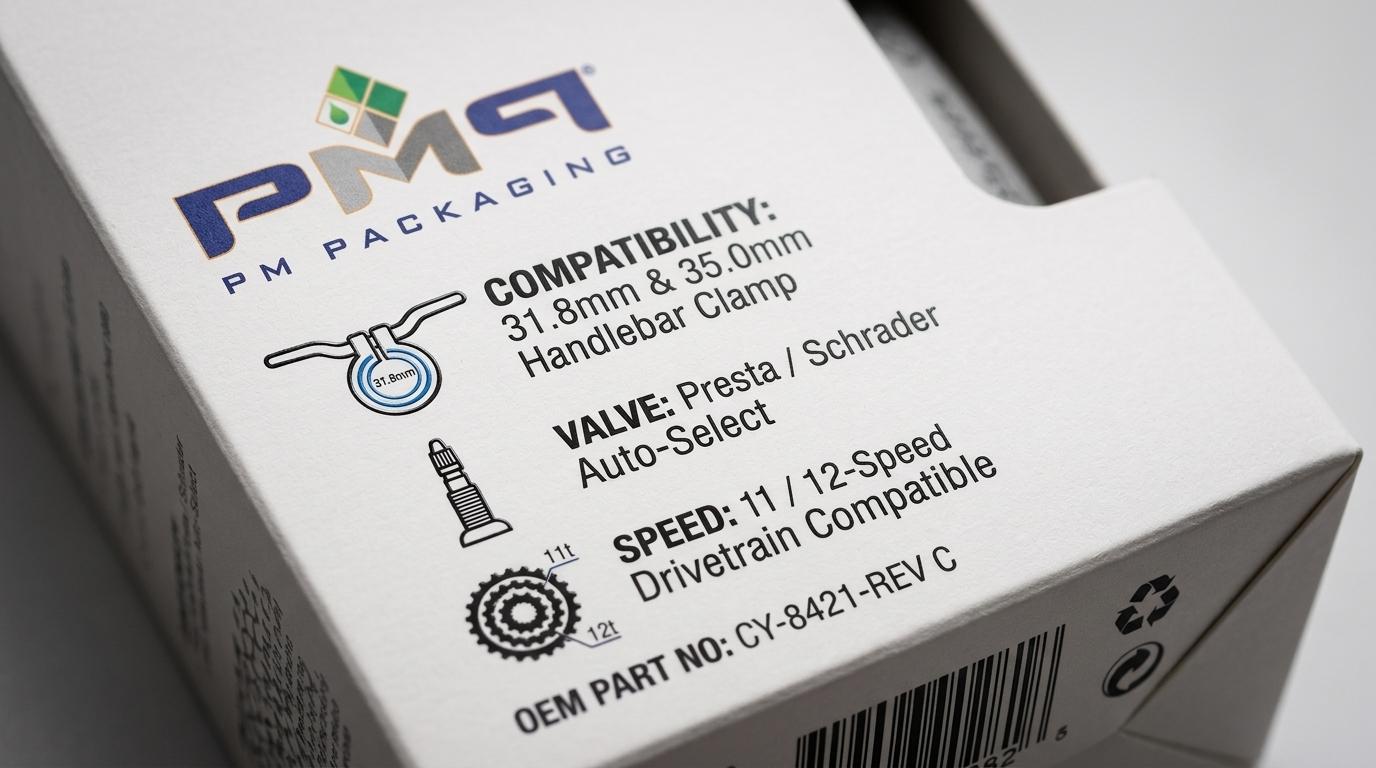
Reduce Selection Ambiguity to Slash Retail Returns
Unclear compatibility is a leading cause of retail returns. Purchasing a 31.8mm mount for a 35mm handlebar creates unnecessary return costs and frustration.
Front panels must answer five questions immediately:
- What is this part? Immediate category naming.
- What interface does it fit? Dominant dimensional callout.
- What pieces are inside? Clear hardware count.
- What OEM part does it replace? Cross-reference number.
- Are other tools needed? Installation prerequisite icons.
When Blister Cards Make Sense for Cycling Replacement Parts
For small mechanical components, custom blister cards deliver unmatched clarity. Brake pads, cleats, derailleur pulleys, and valve adapters benefit from direct visual inspection, allowing shoppers to match worn parts through the transparent cavity.
Blister cards also maximize pegboard density, hanging dozens of SKUs per linear foot while backing cards provide dedicated surface area for compatibility charts.
When Folding Cartons Work Better for Cycling Accessories
Products requiring extensive diagrams, battery ratings, or regulatory copy benefit from custom folding paperboard cartons. Headlights, GPS mounts, and mini-pumps utilize multiple carton panels for lumen charts and wiring schematics.
Reinforced Euro-hang tabs and auto-lock bottoms allow these cartons to hang cleanly on peg hooks or stack securely on shelves.
Structural Reinforcement for Heavy & Dense Cycling Products
Heavy cycling items present distinct failure modes. A solid steel U-lock concentrates heavy mass over a small footprint, risking transit drop blowouts, while floor pumps act as long levers stressing end flaps.
Items over two pounds require Single Face Lamination (SFL) packaging. Flute selection depends on panel spans, component weight, and internal support. For detailed engineering data, review our guides on F-flute vs. E-flute vs. B-flute and product weight on flute selection.
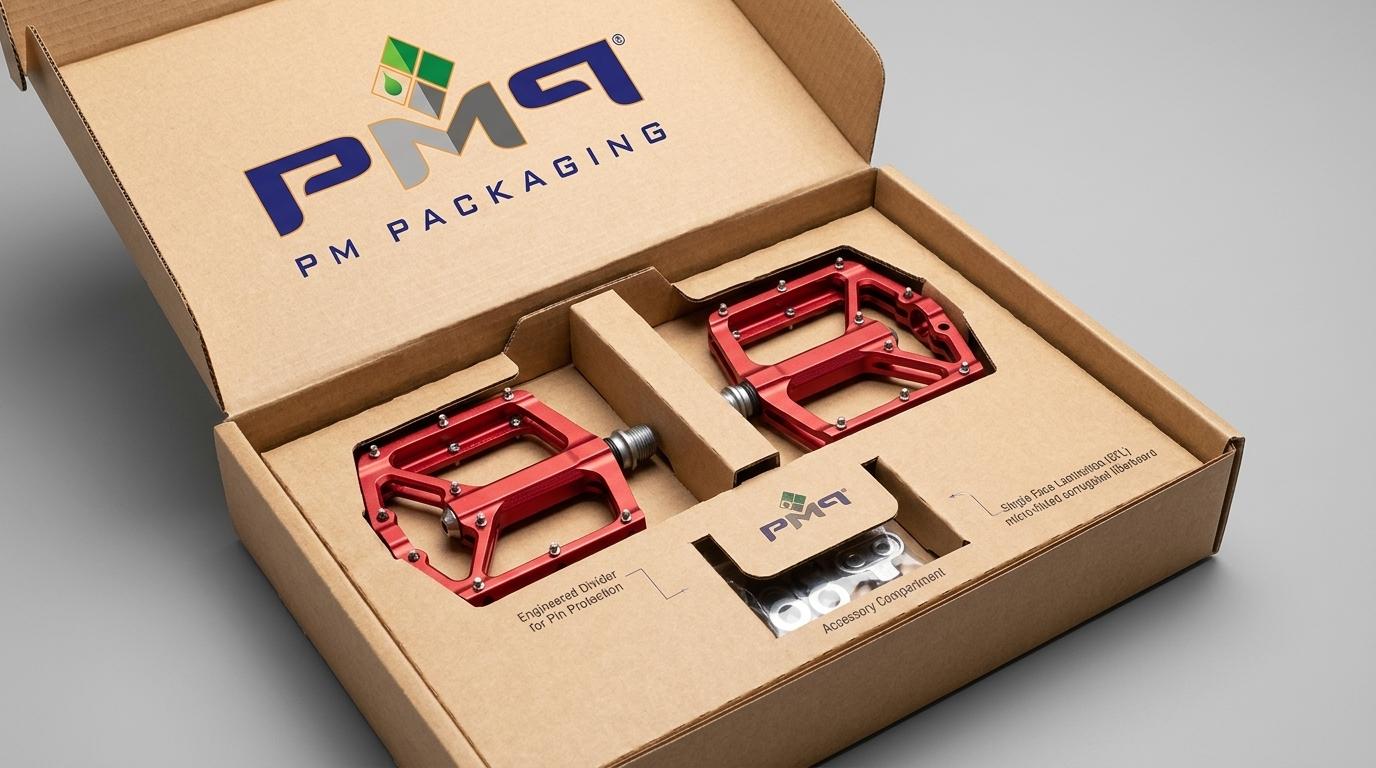
Protect Paired & Multi-Component Cycling Products
Bicycle pedals and hardware kits introduce metal-on-metal abrasion risks. Alloy pedal bodies equipped with steel traction pins can gouge each other's anodized finish during shipping if unconstrained.
Custom die-cut paperboard partition inserts isolate left and right pedal bodies in mirrored positions, while recessed sub-compartments hold washers and cleat bolts securely under retention flaps.
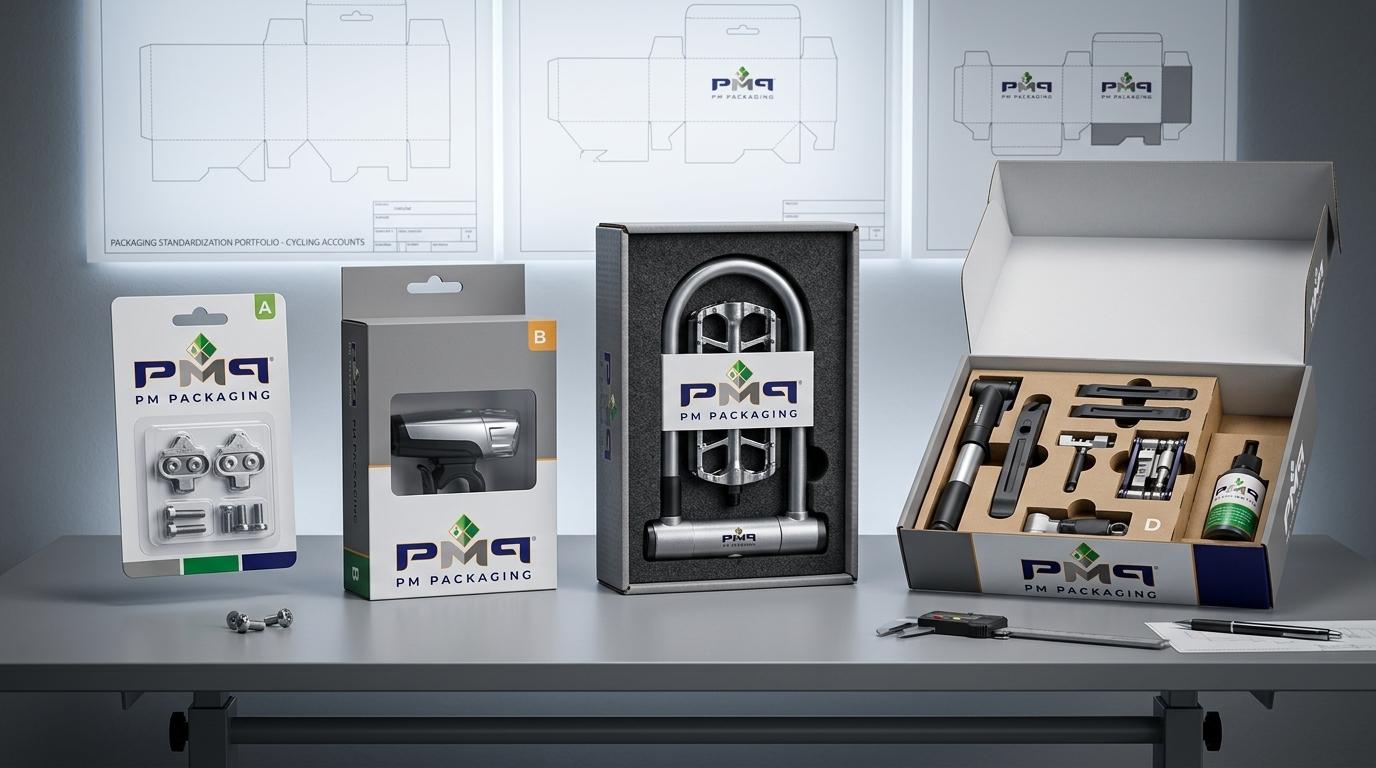
Standardize Packaging into Four Cycling Platform Families
High-volume cycling programs consolidate expansive catalogs across four modular structural platform families:
Platform A: Small Peg-Hung Replacement Components
Uniform blister cards and hang-tab cards for brake pads, cleats, cables, and valves.
Platform B: Medium Folding-Carton Accessories
Auto-lock bottom cartons with Euro-hang tabs for lights, mini-pumps, grips, and multi-tools.
Platform C: Heavy & Dense Hardware
Rigid Single Face Lamination (SFL) micro-fluted boxes for U-locks, alloy pedals, and tools.
Platform D: Multi-Component Assembly Kits
Common master carton footprints with modular die-cut inserts for bleed kits and tool assemblies.
Balance Retail Peg Footprint Against Technical Copy
Retail space in bike shops is tightly budgeted. An oversized package reduces dealer facings per peg, directly capping sales throughput.
Structural designers engineer compact front panels for primary fitment data, routing secondary specifications and regulatory copy to side panels to preserve retail density.
Control Compatibility & Artwork Revisions
Bicycle interface standards evolve steadily—such as disc brake mounts shifting from post to flat mount, or cassettes moving to 12-speed. Programs must manage running changes smoothly.
Prepress asset workflows isolate variable fitment copy, lock brand assets, and link barcodes directly to ERP bills of materials.
Plan Production Capacity Around SKU Demand & Retail Resets
Demand curves across cycling lines vary widely: core tubes and commuter lights experience steady replenishment, while niche parts form long-tail volume.
Packaging production aligns with retailer reset calendars, promotional feature windows, and regional riding season forecasts.
What to Provide for a Cycling Packaging Review
Compile these twelve technical criteria when preparing a structural packaging review or RFQ:
| Program Specification | Technical Importance | Engineering Impact |
|---|---|---|
| Product Category | Identifies accessory vs part rules. | Guides graphic layout and substrate choice. |
| Dimensions (L x W x D) | Dictates package volume and peg depth. | Controls carton footprint and shelf fit. |
| Weight & Center of Gravity | Determines folding carton vs SFL need. | Prevents hang-hole tearing and drop crushing. |
| Component Count & Pairing | Flags paired pedals or multi-piece kits. | Drives partition and insert engineering. |
| Critical Compatibility Data | Defines clamp, valve, and speed specs. | Structures front-panel typography. |
| Catalog SKU Count | Establishes assortment breadth. | Enables platform consolidation. |
| Annual Volume by SKU Tier | Segments core items from long tail. | Optimizes press runs and inventory. |
| Retail Channel & Fixtures | Identifies peg hooks vs shelf displays. | Sets Euro-slot geometry and balance. |
| Existing Packaging Sizes | Reviews current planograms. | Identifies tooling consolidation. |
| Retailer Reset Calendar | Identifies supply milestones. | Coordinates converter production windows. |
| Pack-Out Assembly Method | Manual vs automated packing lines. | Determines auto-lock bottom construction. |
| Master Shipper Specifications | Coordinates secondary pack counts. | Maximizes pallet cube efficiency. |
Frequently Asked Questions
How do you prevent peg-hook tear-out for heavy cycling accessories?
Align board grain vertically, use reinforced Euro-hang tabs, and transition items over two pounds to Single Face Lamination (SFL) micro-fluted corrugate.
When should a cycling brand choose blister cards over folding cartons?
Blister cards excel for small replacement parts like cleats, brake pads, and valve adapters where visual inspection of shape and threads confirms fitment before purchase.
How should bicycle component fitment information be organized?
Use a strict hierarchy: brand anchor first, followed by primary interface specs (clamp diameter, thread pitch, valve type), OEM part numbers, and speed compatibility.
What flute type is best for heavy steel bike locks and pedal sets?
Heavy steel locks and pedals generally require E-flute or B-flute SFL corrugate paired with custom die-cut dividers to provide crush strength and prevent scuffing.
How can cycling brands protect paired components from scratching in transit?
Custom die-cut paperboard divider inserts physically isolate mirrored pedal bodies and secure small hardware in dedicated sub-compartments.
Can multiple cycling SKUs share the same packaging dieline?
Yes. Brands group expansive catalogs into 3 to 4 modular platform footprints (hanging cards, accessory cartons, heavy SFL boxes, and kit cartons), lowering tooling expenses.
How do cycling brands manage frequent compatibility revisions?
Converters deploy digital prepress controls with locked part-number zones, dynamic barcode verification, and running revision flags when component standards change.
What technical inputs are needed to begin a cycling packaging review?
Provide product dimensions, weights, component counts, interface standards, catalog SKU counts, annual volume by velocity tier, retail fixture specs, and retailer reset calendars.
Scale Your Cycling Packaging Program
Whether launching replacement parts or consolidating an accessory catalog across bike dealers and sporting goods chains, PM Packaging delivers high-performance blister-card converting, folding cartons, and SFL engineering.
Coordinate structural dieline engineering, internal retention design, and catalog platform planning with PM Packaging's technical team.