
Choose F-flute when compact dimensions, sharp folds, and a refined carton-like appearance matter most. Choose E-flute when the package needs a balance of clean retail presentation, broader panel rigidity, and moderate cushioning. Choose B-flute when heavier loads, larger panels, pallet stacking, or tougher distribution conditions require more structural depth. The final choice should also account for product weight, panel dimensions, inserts, pallet density, pack-out requirements, and the finished board construction.
In single face litho-laminated (SFL) packaging, choosing between these profiles is an engineering decision balancing retail presentation against supply chain durability.
What Is the Difference Between F-, E-, and B-Flute?
Selecting the right flute profile requires evaluating shelf impact, assembly pack-out speed, and distribution hazards together:
| Decision Factor | F-Flute (~0.8 mm) | E-Flute (~1.6 mm) | B-Flute (~3.2 mm) |
|---|---|---|---|
| Relative Profile | Thinnest microflute | Mid-range versatile profile | Thickest of the three formats |
| Retail Appearance | Most carton-like; minimal exposed flute | Refined, structured presence | Visible fluting at cut board edges |
| Folding Precision | Sharpest fold radii; compact tabs | Clean folding; standard tuck tabs | Requires wider score allowances |
| Panel Rigidity | High flat crush; moderate panel span | High beam stiffness across broad spans | Deep structural beam strength |
| Cushioning & Absorption | Minimal impact absorption | Moderate impact protection | Substantial transit shock absorption |
| Internal Space Consumed | Least wall thickness displacement | Moderate wall thickness | Most internal volume consumed |
| Dieline & Insert Allowances | Minimal clearance adjustments | Moderate score and fold reliefs | Substantial score and slot allowances |
| Pallet Cube Density | Highest carton density per pallet | Balanced shipping cube efficiency | Lower unit count per pallet layer |
| Typical Applications | Cosmetics, luxury tech, counter displays | Small appliances, multipacks, PDQs | Power tools, heavy kits, parcel shippers |
| Best Choice When... | Presentation and compactness dominate | Presentation and structure both matter | Product load and transit stress dominate |
Nominal Flute Profile vs. Finished Board Construction
Industry references often cite nominal flute heights: roughly 0.8 mm for F-flute, 1.6 mm for E-flute, and 3.2 mm for B-flute (or FEFCO standard arch heights of 0.5–0.8 mm, 1.2 mm, and 2.4 mm). However, nominal flute or arch height is not the same as finished board caliper. These nominal figures describe formed medium arches alone, excluding the outer paperboard top sheet, inner liner, and adhesive layers.
Finished SFL thickness depends on the printed top sheet (such as 12pt to 24pt SBS), inner liner, corrugating medium basis weight (such as 26# to 33# kraft), adhesive application, compression during lamination, and converter production specifications. As noted on our SFL solutions page, packaging dielines and internal cavity clearances should always be engineered around actual finished board rather than assumed nominal flute heights.
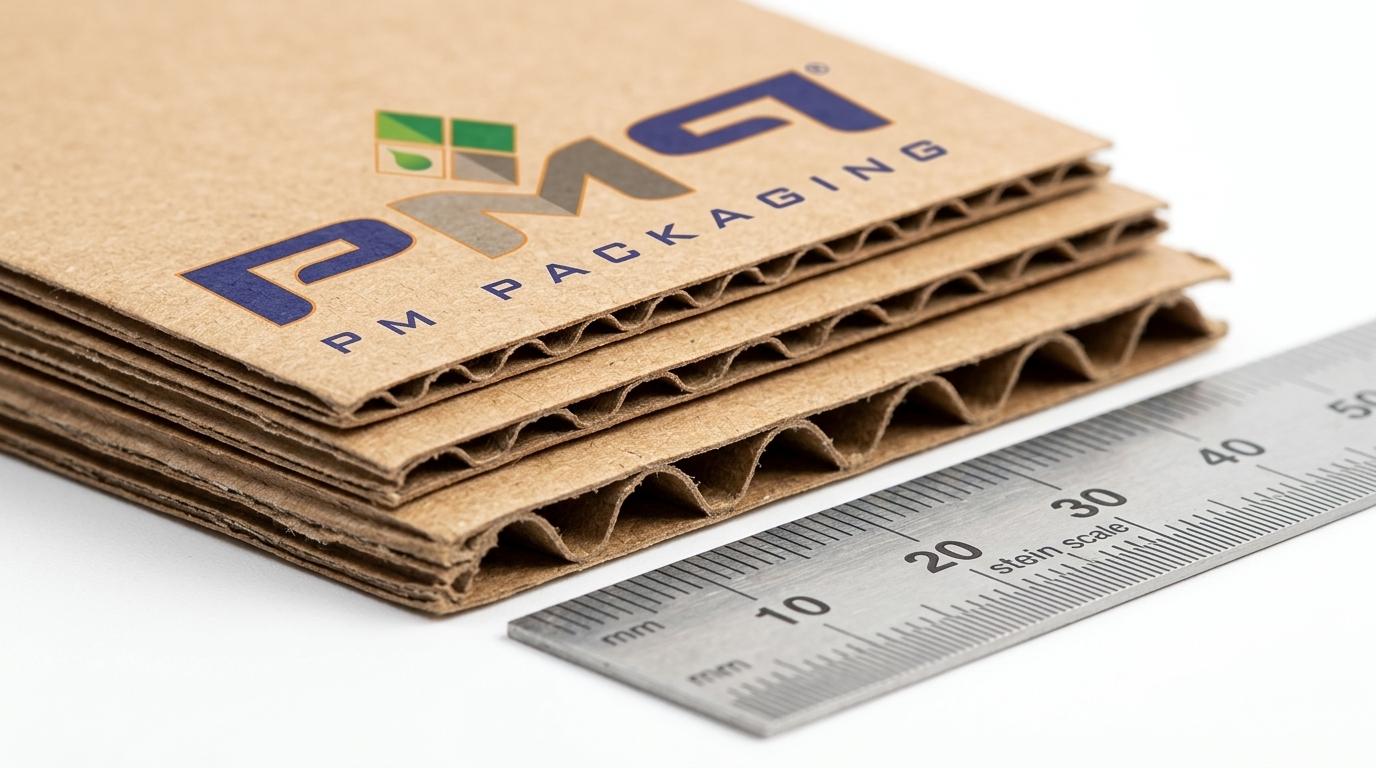
Detailed Profiles: F-Flute, E-Flute, and B-Flute
F-Flute: When Compact, Refined Presentation Dominates
With roughly 125 flutes per linear foot, F-flute provides a tight arch pitch that helps minimize visible flute telegraphing. It supports tighter folding radii than deeper flute profiles, enabling crisp corners, neat friction tucks, and compact hanging tabs. It is an ideal choice for cosmetics, software, tech accessories, and compact counter POP displays when compact dimensions matter and the product geometry does not require deeper fluting or heavy cushioning.
E-Flute: The Versatile Retail Balance
Featuring roughly 90 flutes per linear foot, E-flute is often selected as the balanced option for branded retail packaging. It provides broader-panel stiffness to resist bowing across medium-to-large panels, clean folding characteristics for tuck-top and auto-bottom cartons, and moderate cushioning. It is a common choice for small appliances, club multipacks, footwear, and shelf-ready retail display trays (PDQs).
B-Flute: Structural Depth for Heavier Loads and Logistics Stress
With approximately 47 to 50 flutes per linear foot, B-flute features taller arches that add structural wall thickness and impact cushioning. It is well suited for heavier hardware, power equipment, automotive parts, larger structural spans, and packages exposed to single-parcel shipping or palletized distribution. While cut edges show more visible fluting, litho-laminated top sheets maintain high-impact retail branding across sturdy protective panels.
Flute Profile Is Only One Part of SFL Strength
Flute caliper is not a standalone strength rating; B-flute is not automatically stronger than E-flute. Overall structural performance depends on multiple engineering factors:
Paper Basis Weights
As an illustrative principle, an E-flute box configured with a heavyweight 24pt SBS sheet and 33# medium can deliver higher stacking compression than a B-flute box using lightweight 12pt paperboard and 26# medium.
Flute Orientation
Flutes must run vertically relative to pallet loads. Running flutes horizontally severely reduces compression resistance regardless of caliper.
Crease Matrix & Scoring
Accurate crease scoring prevents liner rupture during folding, allowing corners to bear stacking loads without buckling.
Partitions & Environment
Die-cut internal dividers bear vertical load and stabilize walls, while humidity softens fiber compression strength.
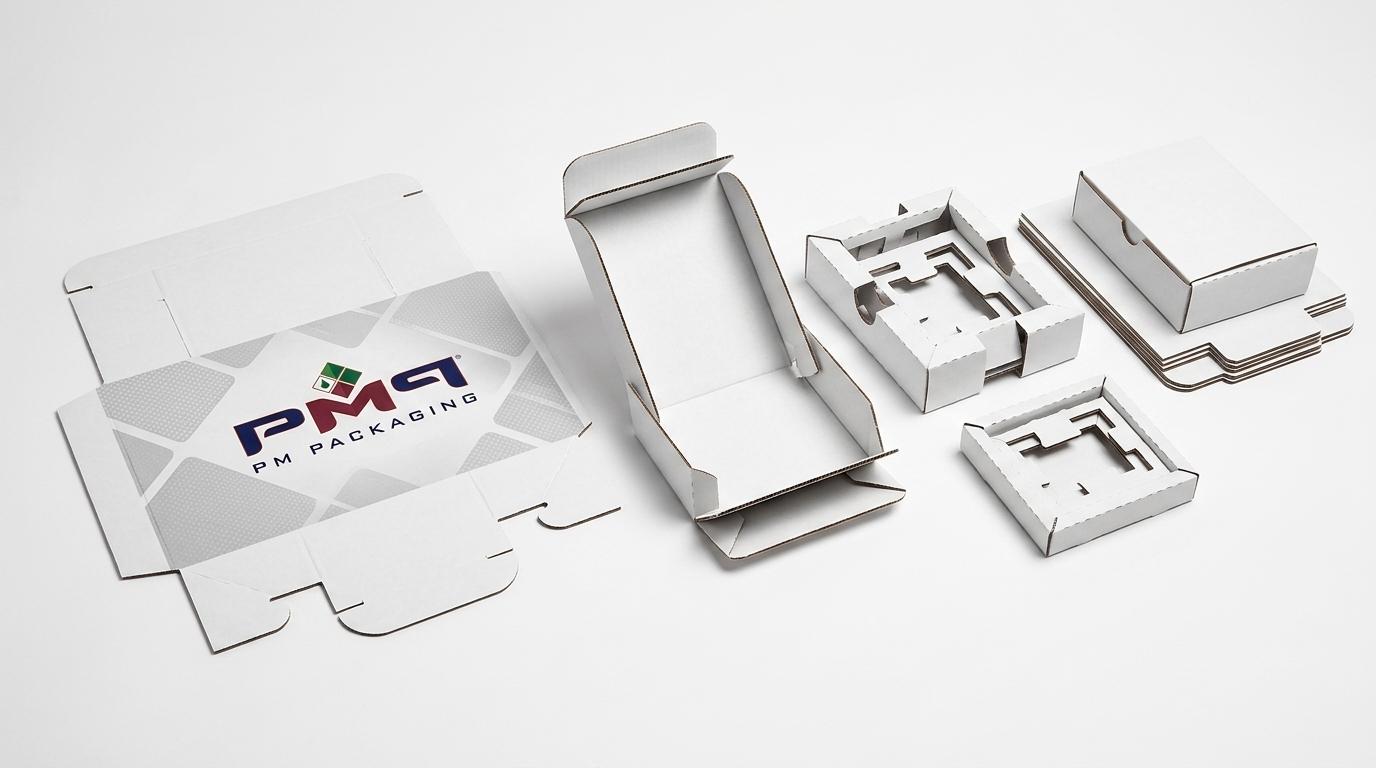
How Flute Thickness Changes the Dieline and Internal Fit
Changing flute specifications requires adjusting structural CAD geometry:
- Internal Clearance: Stepping from F-flute to B-flute can reduce internal clearance by several millimeters across width and depth, potentially pinching internal items or requiring insert redesign.
- Tuck Flaps & Scores: Thicker flutes demand wider score allowances and deeper relief notches; unadjusted dielines buckle and fail to lock.
- Custom Product Inserts: Thermoformed trays or die-cut paperboard cavities engineered for F-flute bind or misalign in cartons with thicker walls.
- Die-Cut Windows: Product alignment shifts relative to cutouts as wall thickness increases, requiring window repositioning.
Large Panels and Carton Dimensions Affect the Flute Decision
Panel dimensions must be evaluated alongside product weight. Large unsupported panels may require a deeper flute even when the product itself is relatively light, because expansive faces can bow inward on retail shelves without adequate beam stiffness. Stepping up to E-flute provides the panel rigidity needed to keep broad display faces planar.
Conversely, a denser item in a compact carton may perform reliably in F-flute because short structural spans resist deflection naturally. Matching flute profile to panel geometry prevents over-engineering while maintaining shelf presentation.
When F-, E-, or B-Flute May Be the Wrong Choice
Understanding when not to use a flute profile protects program quality:
When F-Flute Is Not Enough
Avoid F-flute when large unsupported panels cause face bowing, when heavy product weight causes base sag, or when retail packs ship directly through single-parcel mail without protective master shippers.
When E-Flute Is Unnecessary
Avoid E-flute for compact luxury items (cosmetics, small vials) where wall thickness displaces volume, adds bulk, and complicates delicate folding-carton tuck closures.
When B-Flute Is Excessive
Avoid B-flute when clean cut-edge aesthetics are critical for luxury presentation, or where high retail shelf density demands maximum unit facings in restricted planogram space.
How Flute Selection Affects Shipping and Palletization
Board caliper differences compound across master cases. Even modest increases in finished wall thickness expand outer carton dimensions, influencing master shipper cube and warehouse storage density.
Depending on specific carton dimensions and pallet patterns, selecting F-flute or E-flute over B-flute can allow more cartons per pallet tier (TI) and additional tiers per pallet height (HI). For high-volume programs, evaluating pallet density alongside structural needs helps optimize freight efficiency while maintaining necessary stacking safety margins.
Prototype Before Finalizing Your Flute Specification
PM Packaging also manufactures specialized N-flute (~0.5 mm) for applications requiring an ultra-thin microflute mimicking solid paperboard. However, F-, E-, and B-flute represent the three core workhorses for branded retail and shipping structures.
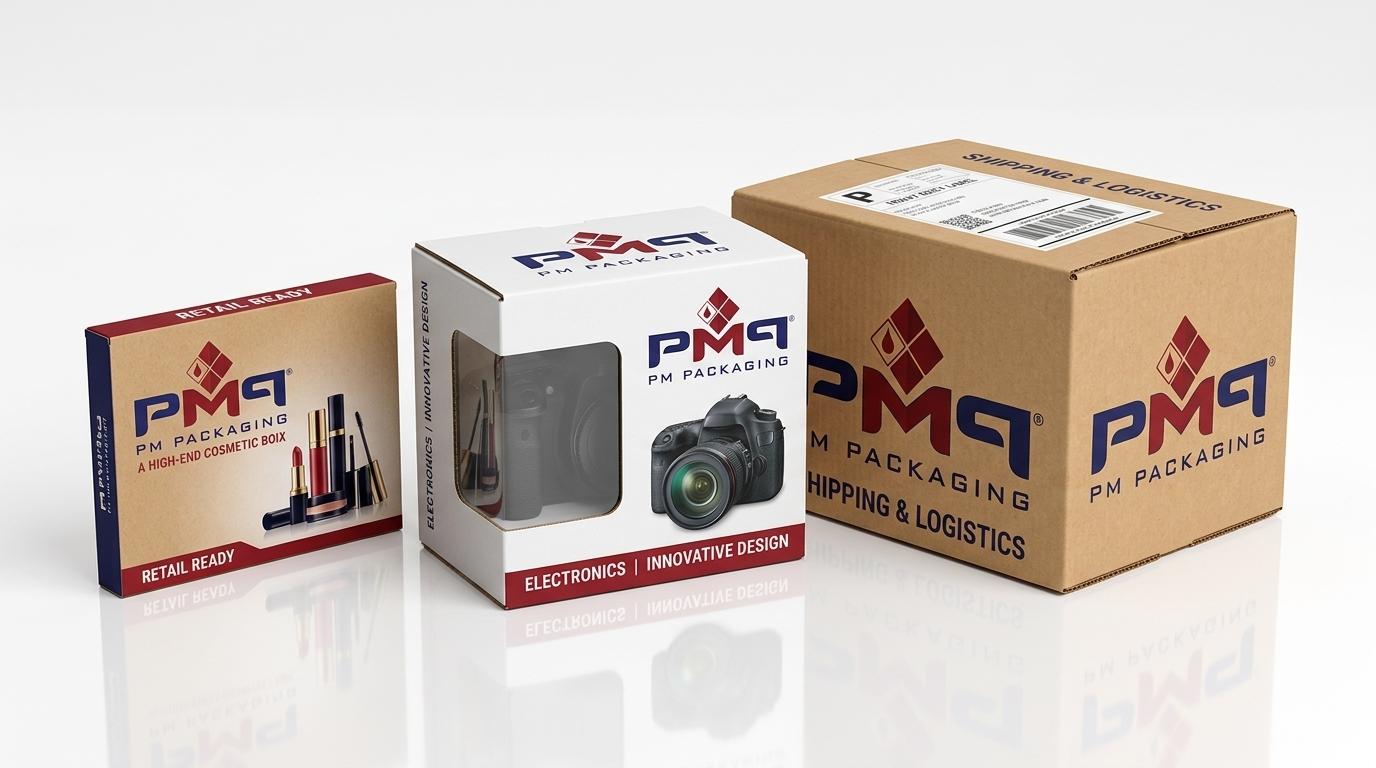
Because paper combinations, score depths, and pack-out ergonomics interact, flute selection should be verified on physical cutting-table samples before ordering production tooling. Physical prototypes and appropriate distribution testing can be used to validate the final specification—evaluating product fit, tuck closure resistance, panel stiffness, insert compatibility, and loaded package performance.
Frequently Asked Questions
Is F-flute stronger than folding carton paperboard?
F-flute generally provides greater beam stiffness and crush resistance than comparable solid paperboard constructions, but actual performance depends on materials and package geometry. While solid paperboard relies solely on sheet caliper, F-flute incorporates internal corrugating arches that increase rigidity across wider spans.
Is B-flute always stronger than E-flute?
Not necessarily. Overall strength depends on liner and medium weights, carton geometry, and flute direction. An E-flute box built with heavy 24pt board and reinforced medium can deliver higher stacking compression than a lightweight B-flute box.
Which flute profile gives the smoothest printing surface?
F-flute has the tightest flute spacing, which helps produce a smooth, carton-like exterior surface with minimal telegraphing. However, in all SFL packaging, final visual quality also depends heavily on the caliper and coating of the lithographically printed top sheet and the lamination process.
Can I use the same dieline when switching from F-flute to E-flute?
No. Stepping up to a thicker flute requires wider score-bend allowances, deeper relief cuts, and adjusted internal dimensions. Using the same dieline causes panels to bind and tuck tabs to buckle.
Which flute is best for subscription boxes and ecommerce mailers?
E-flute is a common choice because it balances panel rigidity, cushioning, and clean folding characteristics. However, F-flute or B-flute may be more appropriate depending on carton dimensions, product weight, internal inserts, and distribution exposure.
Does flute thickness reduce the interior dimensions of the box?
Yes. If the outside dimensions remain fixed, switching from F-flute to B-flute reduces interior clearance by several millimeters across all axes, which can compress delicate products or internal inserts.
Does PM Packaging manufacture F-, E-, and B-flute SFL packaging in-house?
Yes. PM Packaging manufactures custom SFL packaging across N-, F-, E-, and B-flute profiles, coordinating structural design, lamination, die-cutting, and prototyping under one roof.
Select the Right Flute With Physical Samples
Determining the ideal flute profile requires evaluating product weight, carton geometry, and distribution channels together. PM Packaging provides physical SFL board samples and CAD cutting-table prototypes to help you validate structural performance before committing to high-volume production tooling.
Evaluating Flute Profiles for an Upcoming Packaging Program?
When requesting a sample or quote, sharing your product dimensions, product weight, outer box dimensions, retail presentation standards, distribution method, pallet configuration, and insert requirements helps our structural engineering team recommend the optimal board combination.