
For national consumer brands supplying major retailers—such as Walmart, Target, Costco, Sam’s Club, The Home Depot, Sephora, and Ulta—secondary packaging is the ultimate frontline ambassador for brand identity.
Scaling commercial automotive packaging requires targeted engineering: Automotive replacement parts require rigorous corrosion protection, high structural crush resistance for dense cast iron components, and strict barcode readability for automated distribution centers. PM Packaging partners with high-volume brands to ensure G7 color consistency, structural durability, and predictable replenishment.
As enterprise brands expand cross-border manufacturing and packaging networks to boost supply chain resilience, maintaining visual harmony across multi-plant operations has become a top priority. Brand directors, packaging engineers, and procurement executives regularly conduct cross-border print consistency audits to safeguard brand equity, prevent retailer chargebacks, and ensure seamless shelf presentation across North American retail channels.
The True Cost of Cross-Border Print Inconsistency
Rather than treating automotive packaging as generic paperboard, engineering teams must account for product geometry, hanging shelf wear, moisture barriers, and high-speed automated cartoning line tolerances.
Erosion of Consumer Trust
When side-by-side packages show mismatched brand colors or faded logos, consumers often perceive the off-color item as counterfeit, aged, or compromised. In premium beauty, consumer electronics, and over-the-counter wellness categories, visual uniformity directly drives purchase confidence and protects premium retail pricing.
Retailer Compliance and Planogram Integrity
Leading mass merchants and club stores hold suppliers to rigorous visual merchandising standards. Noticeable color shifting across store shipments can lead to rejected lots, delayed planogram resets, and vendor scorecard penalties that endanger vendor standing.
Multi-Format Brand Dilution
Enterprise brands rarely rely on a single packaging format. A product line often spans custom folding cartons on standard retail shelves, reinforced laminated microflute packaging for heavy club store multipacks, and printed paperboard blister cards for pegboard displays. If color calibration drifts between production plants, this multi-format portfolio quickly looks fragmented on shelf.
Core Pillars of a Cross-Border Print Consistency Audit
PM Packaging manufactures engineered automotive parts packaging, line-side kits, and retail aftermarket cartons with certified Delta-E color consistency and high-speed box converting. High-speed gang printing and shared dielines reduce per-unit tooling costs while clear technical graphics guide buyers directly to the correct model.
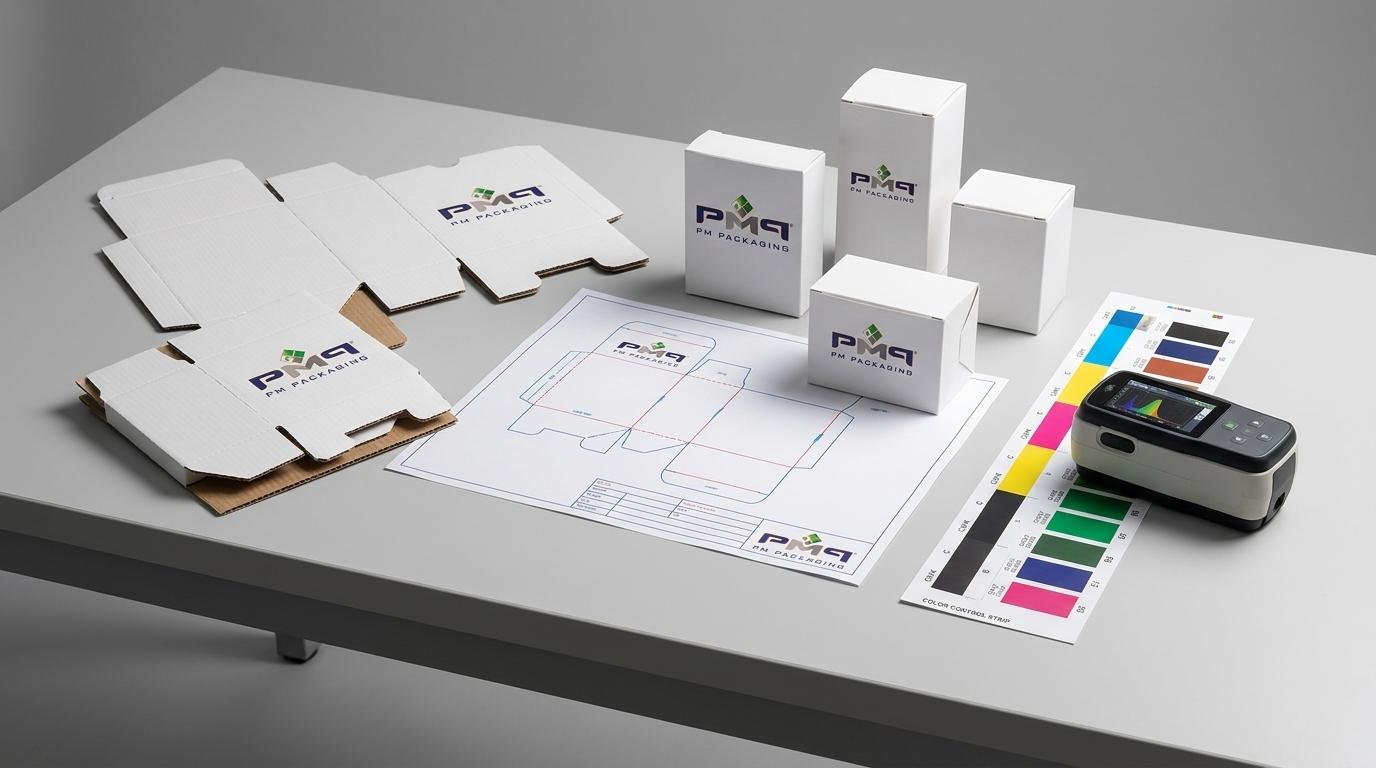
1. G7 Master Certified Color Management
Auditing teams verify that converting facilities share unified color calibration standards. G7 Master certification establishes standard grayscale curves and spectral color targets across offset lithographic printing presses. By aligning press calibration across facilities in San Diego, Tijuana, and Mexicali, brands achieve exact visual matches on every production run regardless of which pressroom runs the job.
2. Paperboard Substrate Standardization
Color appearance depends heavily on the underlying substrate. Premium virgin paperboard delivers high brightness and ink holdout, eco-friendly kraft provides a warm natural aesthetic, and recycled board offers sustainable retail appeal with a crisp print surface. A thorough packaging audit confirms that sister plants utilize harmonized paperboard grades so ink absorption and surface reflectivity remain identical across borders.
3. Centralized Pre-Press and Master Asset Governance
Print discrepancies frequently originate in unaligned digital artwork files. Best-in-class packaging programs eliminate local pre-press modifications by centralizing structural design, dielines, and pre-press file preparation within a single engineering hub. Housing approved digital assets centrally ensures that all facilities produce plates from the exact same master color profile and dieline geometry.
4. Harmonized Coatings and Premium Finishes
The final visual impact of retail packaging relies on protective coatings and decorative enhancements. Auditing teams inspect inline UV gloss, soft-touch matte textures, metallic foil stamping, and embossed detailing to guarantee that tactile feel and surface sheen match perfectly across all manufacturing locations.
Sourcing Model Comparison: Managing Cross-Border Print Quality
Choosing the right manufacturing infrastructure directly impacts visual consistency, lead times, and administrative oversight:
Multi-Plant Packaging Sourcing Comparison
| Strategic Metric | Decentralized Regional Converters | Overseas + Domestic Split Sourcing | Unified Nearshore Ecosystem (PM Packaging) |
|---|---|---|---|
| Color & Visual Uniformity | Low (Independent pressrooms cause batch drift) | Very Low (Noticeable variance between ocean and domestic runs) | Superior (G7 Master certified calibration across all plants) |
| Pre-Press File Governance | Fragmented across multiple local vendors | Inconsistent file interpretations & language barriers | Centralized engineering and master digital assets |
| Audit & Quality Overhead | High (Managing separate plant audits and QC protocols) | Very High (Costly international press checks and slow resolution) | Streamlined (Single-source accountability and standardized QC) |
| Transit Lead Times | 2 to 5 days domestic ground | 6 to 12 weeks ocean freight | 1 to 3 days ground (West Coast/Southwest) |
| Tariff & Customs Exposure | Low domestic risk | High (Subject to tariffs and port congestion) | Zero (100% Tariff-Free USMCA Compliance) |
The Nearshore Advantage: Cross-Border Consistency with PM Packaging
With over 45 years of packaging expertise, PM Packaging helps enterprise brands eliminate color drift and supply chain complexity through a fully integrated nearshore manufacturing network.
Headquartered with structural engineering and pre-press teams in San Diego, California, and operating twin high-capacity converting plants in Baja California (Tijuana and Mexicali), PM Packaging delivers an agile packaging ecosystem:
Mirrored Production Capabilities
Twin converting facilities in Tijuana and Mexicali operate under standardized quality controls, providing seamless multi-plant redundancy and capacity scaling for national retail programs.
Full Packaging Portfolio
Single-source manufacturing across custom folding cartons, laminated microflute packaging, luxury rigid setup boxes, POP displays, and printed paperboard blister cards—including our qikCombo™ program offering 10-day turnaround on shared production runs.
Rapid Ground Delivery
Finished packaging reaches West Coast and Southwest distribution hubs in just 1 to 3 days (3 to 5 days nationwide), supporting lean inventory models and eliminating ocean shipping delays.
100% Tariff-Free USMCA Compliance
Full North American trade compliance protects packaging budgets from overseas import duties, demurrage fees, and customs disruptions.
Elevate Your Retail Presence Across North America
Auditing print consistency across U.S. and Mexico packaging operations safeguards brand integrity, accelerates retail velocity, and ensures flawless shelf presence in every market. Partnering with a dedicated nearshore converter that bridges centralized U.S. engineering with high-capacity border manufacturing provides the ultimate blend of quality control, speed, and scale.
Ready to standardize print quality and strengthen your packaging supply chain? Connect with the packaging specialists at PM Packaging to schedule your structural packaging audit and explore our nearshore manufacturing solutions today.
Schedule Your Structural Packaging Audit
- Multi-Plant Spectral Verification: Assess color harmonization across folding cartons, litho microflute, and blister cards.
- Rapid Pre-Press Prototyping: Access 24-to-48 hour physical and digital proof turnarounds engineered in San Diego.
- Nearshore Capacity Assessment: Scale high-volume retail programs through twin Baja California manufacturing facilities.