
Specialty tool manufacturers—producing precision woodworking equipment, automotive diagnostics, laser measurement devices, and professional-grade power accessories—frequently launch within industrial supply channels or direct-to-consumer fulfillment.
In these early stages, utilitarian brown corrugated shippers with monochrome printing or shipping labels are sufficient. However, brand expansion brings new commercial opportunities. Securing placement in national home improvement centers, professional dealer showrooms, automotive aftermarket chains, and club store pallet programs transforms packaging requirements. On physical retail shelves, packaging serves as a frontline silent salesperson.
For brand directors, packaging engineers, and procurement managers, transitioning from basic fluted shippers to high-graphic single-face lamination provides the ideal balance of retail shelf appeal and industrial strength.
Key Commercial Drivers for Upgrading Packaging
Knowing when to upgrade packaging architecture is vital for managing unit economics and operational flow. Four commercial milestones signal that your tool brand is ready for high-graphic single-face lamination:
Expanding into National Retail and Pro Hardware Showrooms
When competing on shelves at Home Depot, Lowe's, AutoZone, Northern Tool, or Ace Hardware, your product sits beside major tier-one tool brands.
Standard corrugated shippers with direct flexographic print suffer from muted colors and visible fluting lines (washboarding). In contrast, single-face lamination mounts a high-resolution, offset-printed paperboard sheet directly onto a sturdy fluted backing. This enables razor-sharp product photography, detailed internal component illustrations, and clear feature callouts. Specialty finishes—including spot UV gloss, soft-touch matte, and metallic foil accents—elevate perceived value and justify premium pricing.
Supporting Heavy Hardware and Multi-Piece Tool Sets
Specialty tools carry concentrated weight. A single kit often includes cast-iron housings, heavy-gauge steel fixtures, rechargeable battery packs, or sensitive digital sensors.
Standard paperboard folding cartons lack the rigidity to support heavy tool assemblies without bowing, creasing, or tearing during transit. Single-face lamination combines the refined surface of a folding carton with the vertical compression strength of an internal fluted core. This prevents corner crushing, protects sensitive calibration mechanisms against drop impacts, and ensures stable stacking on retail shelves and club store pallets.
Eliminating Costly Multi-Piece “Double Packaging”
To protect heavy tools while maintaining retail aesthetics, some growing brands use multi-component workarounds: placing a printed paperboard carton inside a brown corrugated master carton, or wrapping a plain box in a printed paper sleeve.
While this hybrid approach offers temporary protection, it introduces severe supply chain inefficiencies:
- Duplicated Material Costs: Purchasing multiple packaging components increases cost-per-unit.
- Slower Pack-Out Speeds: Assembling nested boxes and sleeves doubles manual labor on the packaging line.
- Inflated Freight Expenses: Bulky dimensions reduce units per pallet, driving up warehouse and shipping costs.
Single-face lamination consolidates structural integrity and full-color graphics into a single retail-ready carton that ships flat and sets up quickly.
Delivering an Unforgettable Professional Unboxing Experience
Tradespeople, contractors, and technicians value tools that reflect quality from the first touch. Opening a rough brown shipping box creates an industrial catalog impression that diminishes brand prestige.
Single-face lamination delivers clean die-cut edges, tight closures, and smooth tactile surfaces. Furthermore, brands can use full-color interior printing to display quick-start calibration guides, component diagrams, and warranty registration QR codes directly inside the lid—streamlining onboarding and reducing customer service calls.
Packaging Format Comparison for Tool Brands
A comparative evaluation of primary packaging formats across graphic quality, structural resilience, retail compliance, and fulfillment economics:
| Strategic Consideration | Basic Fluted Shippers | Standard Folding Cartons | High-Graphic Single-Face Lamination |
|---|---|---|---|
| Graphic Fidelity & Visual Impact | Basic flexo print; muted colors and visible flute ridges | Crisp offset print, but prone to scuffing under heavy contents | Photographic offset printing with vivid color and premium coatings |
| Structural Rigidity & Weight Support | High durability, but lacks refined retail appearance | Limited vertical load capacity; prone to sagging under heavy tools | Built-in fluted core delivers exceptional stacking strength |
| Retail & Pro Merchandising Compliance | Often rejected by retail buyers for primary shelf display | Requires secondary master cartons for distribution | Fully compliant with primary retail and club store pallet standards |
| Pack-Out Speed & Supply Chain Simplicity | Simple, but requires extra labeling or sleeves for retail appeal | Fast folding, but requires extra outer protection for heavy items | Single-wall retail-ready carton; ships flat and accelerates pack-out |
| Unboxing Experience & Brand Perception | Utilitarian and industrial appearance | Clean look, but transit damage undermines customer trust | Premium unboxing experience with crisp edges and inside lid print |
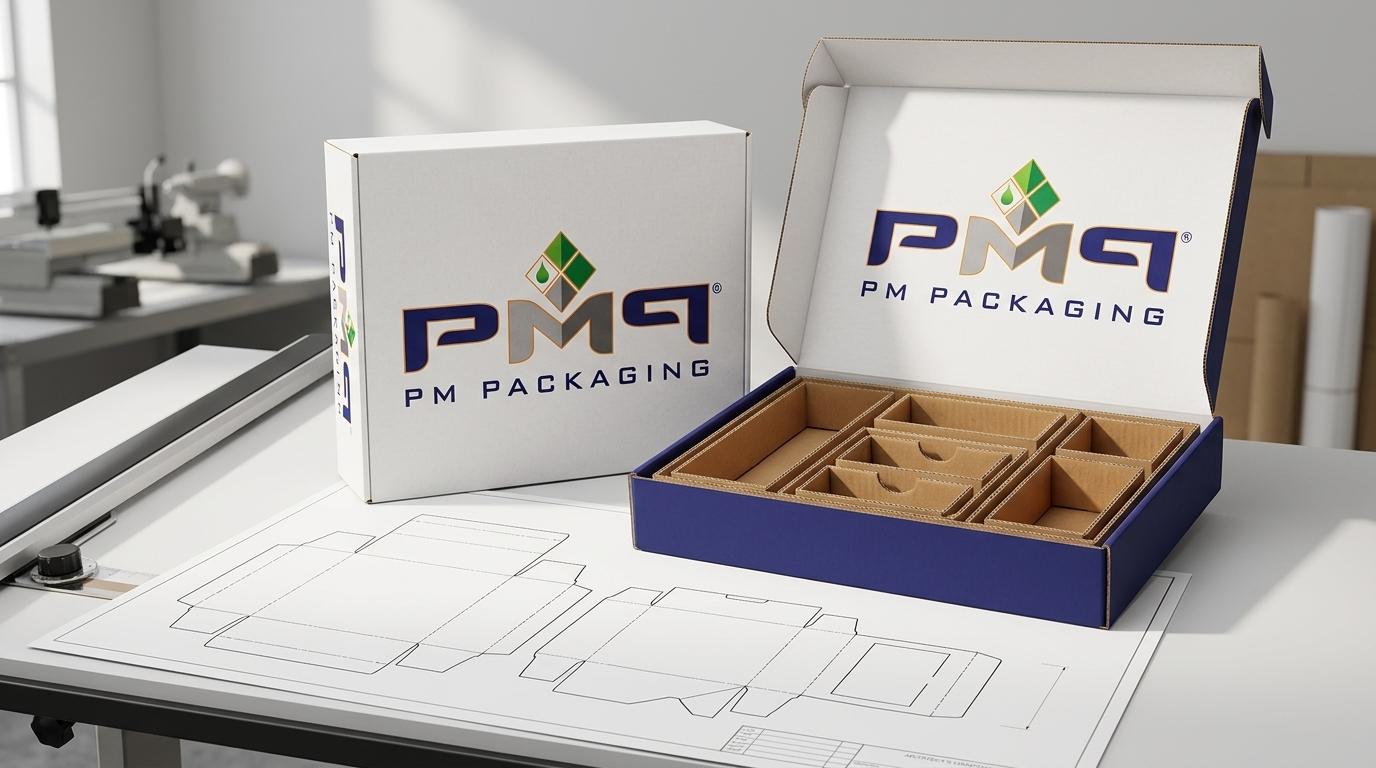
The PM Packaging Nearshore Advantage
Transitioning to single-face lamination requires a manufacturing partner capable of combining structural engineering with high-volume production agility. Sourcing bulky cartons from overseas introduces volatile shipping rates, long lead times, and inventory risks during peak retail cycles.
With 45+ years of packaging excellence, PM Packaging provides an agile nearshore production model:
Tailored dielines and custom paperboard inserts designed to immobilize heavy tools without single-use plastics.
Uniform color consistency across all SKU variations, packaging formats, and retail displays.
Advanced converting facilities in Baja California (Tijuana and Mexicali) paired with San Diego engineering and support.
1 to 3-day transit to West Coast and Southwest hubs (3 to 5 days nationwide), compared to 6 to 12 weeks for overseas ocean freight.
Certified Sustainable Quality
All packaging is manufactured under ISO 9001 quality management using sustainably sourced, FSC- and SFI-certified paperboard substrates, ensuring full environmental compliance with major national retailers.
Elevate Your Specialty Tool Packaging
Transitioning from plain fluted shippers to high-graphic single-face lamination enables specialty tool brands to protect heavy hardware, satisfy retail buyer requirements, and command attention on retail shelves.
Whether preparing for an upcoming national retail rollout or streamlining an existing multi-SKU portfolio, PM Packaging provides the structural strength, print precision, and supply chain speed to help your brand scale.
Ready to Upgrade Your Specialty Tool Packaging?
Upgrade from plain shipping boxes to premium single-face laminated microflute packaging engineered for heavy-duty structural durability and standout retail impact.
Contact PM Packaging today to consult with our structural design team and request custom prototypes.