
Premium tabletop kitchen appliances—such as espresso machines, precision induction burners, high-performance blenders, stand mixers, and countertop pizza ovens—occupy a distinctive retail tier. These high-ticket culinary tools feature heavy-duty motors, die-cast housings, heating elements, and digital touchscreens. For consumers, purchasing one represents a major lifestyle investment.
During initial direct-to-consumer (DTC) launches, brand teams often rely on folding cartons. High-grade virgin paperboard delivers crisp offset print fidelity, refined foil accents, and an elegant unboxing presentation. However, as product lines expand into national retail channels—including Williams-Sonoma, Sur La Table, Target, Best Buy, and Costco—the physical limitations of folding cartons quickly become apparent.
When unit weight, retail handling, and pallet stacking pressures exceed what standard paperboard can support, brands face carton bowing, corner crush, and transit damage. Transitioning to single-face laminated (SFL) microflute packaging allows tabletop appliance brands to combine luxury retail graphics with structural fluted strength.
Strategic Signs Your Appliance Brand Has Outgrown Folding Cartons
For packaging engineers, brand directors, and procurement managers, four operational milestones signal that it is time to upgrade from folding cartons to SFL microflute:
Concentrated Component Weight Exceeds Paperboard Thresholds
Tabletop appliances rarely feature uniform weight distribution. An espresso machine concentrates substantial weight in its boiler, pump, and steel chassis. Precision blenders house heavy copper-wound motors and glass pitchers.
In standard folding cartons, these dense components shift during transit. Concentrated weight presses against side panels, causing carton bulging, warped score lines, and compromised closure flaps. Single-face laminated microflute incorporates a rigid fluted core that resists localized side-wall pressure, keeping carton panels flat and pristine throughout retail distribution.
Retail Stacking and Club Store Pallet Pressures
Securing distribution in mass retail and wholesale club stores introduces strict secondary packaging demands. In club store environments, cartons are merchandised directly on multi-tier pallet displays without master shippers. Lower-tier cartons must bear the full overhead weight of stacked inventory.
Standard folding cartons lack the vertical rigidity needed for multi-tier stacking. Under warehouse humidity and vertical loads, paperboard cartons are vulnerable to compression failure and corner collapse. SFL microflute provides the vertical load support necessary to maintain perfect structural geometry, preventing retail chargebacks and damaged inventory.
Eliminating the Costly “Double Packaging” Compromise
To protect heavy appliances while maintaining retail graphics, some brands adopt a temporary workaround: packing the product into a plain corrugated carton and sliding it into a printed sleeve, or placing a printed carton inside an outer shipping box.
While this prevents damage, it introduces supply chain friction:
- Higher Unit Material Costs: Sourcing two separate packaging components increases unit production expenses.
- Slower Assembly Speeds: Packing two separate boxes doubles manual labor and slows fulfillment.
- Inflated Freight Volume: Bulky double-boxing increases package dimensions, reducing pallet density and raising shipping costs.
SFL microflute consolidates structural fluted protection and photo-quality retail printing into a single unified carton that ships flat, sets up quickly, and optimizes pallet density.
Protecting Delicate Touchscreens and Finish Aesthetics
Modern tabletop appliances feature brushed stainless steel, matte coatings, and digital interfaces. When standard folding cartons flex during transit, internal movement causes scuffing, micro-abrasions, and impact transfer to sensitive displays.
SFL microflute creates a rigid protective perimeter that absorbs transit shock and vibration. Paired with custom die-cut paperboard inserts, the appliance remains securely anchored, ensuring consumers enjoy a flawless unboxing experience.
Packaging Format Comparison for Tabletop Appliances
Choosing the right structural architecture balances unit economics, protection, and retail appeal:
| Strategic Factor | Standard Folding Cartons | Traditional Corrugated Boxes | Single-Face Laminated (SFL) Microflute |
|---|---|---|---|
| Print Fidelity & Surface Finish | Excellent lithographic print; prone to panel bulging under weight | Basic flexographic print; visible fluting ridges degrade graphics | High-resolution offset lithography on smooth paperboard with zero flute show-through |
| Structural & Stacking Strength | Limited vertical strength; vulnerable to multi-tier pallet crush | Strong structural integrity, but lacks luxury retail presentation | Superior vertical and side-wall rigidity engineered for heavy tabletop units |
| Mass Retail & Club Compliance | Often fails club store and mass merchant stacking requirements | Meets durability specs but fails premium retail merchandising standards | Fully compliant with Costco, Target, and department store visual and load guidelines |
| Pack-Out & Fulfillment Efficiency | Often requires secondary outer shippers or complex inner padding | Requires separate printed sleeves or labels to look retail-ready | Single-box retail-ready solution; streamlines fulfillment and reduces labor costs |
| Customer Unboxing Experience | Elegant opening if undamaged, but easily scuffed or creased in transit | Utilitarian and industrial feel that diminishes premium appliance value | Luxury unboxing feel with sharp edges, clean interior liners, and specialty coatings |
The Nearshore Advantage with PM Packaging
Upgrading your appliance packaging to SFL microflute requires a manufacturing partner with advanced converting capabilities, precision color control, and agile logistics. Relying on overseas converters introduces long ocean transit times, volatile freight rates, and inventory risks ahead of peak holiday seasons.
With 45+ years of packaging expertise, PM Packaging provides appliance brands with a proven nearshore model:
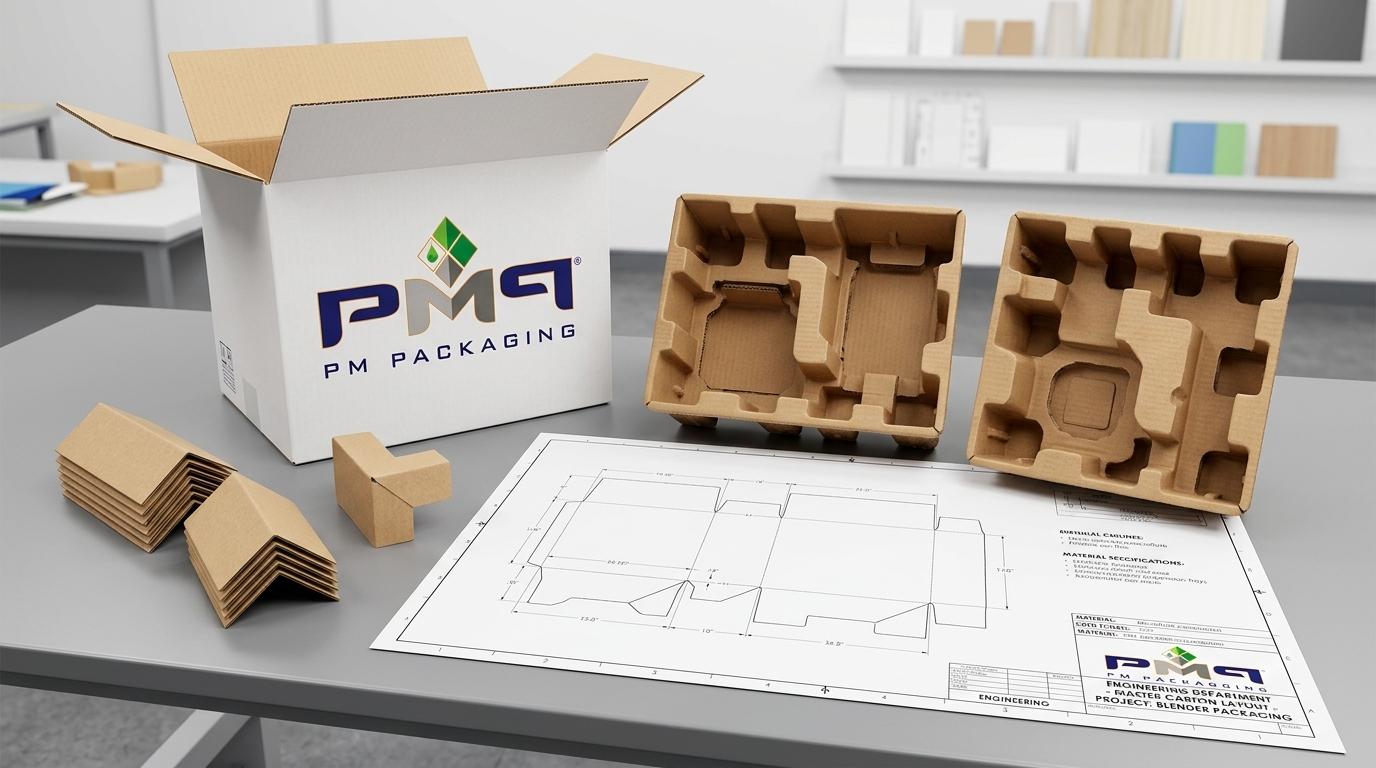
Custom dielines and paperboard insert trays tailored to protect heavy motors, heating elements, and delicate controls.
Flawless, repeatable color reproduction across multi-SKU product lines and seasonal retail updates.
Manufacturing facilities in Baja California (Tijuana and Mexicali) eliminate import tariffs and transpacific port delays.
1- to 3-day ground transit to West Coast and Southwest distribution hubs (3 to 5 days nationwide), supporting just-in-time replenishment.
Certified under ISO 9001 quality management systems with sustainable FSC- and SFI-certified paperboard sourcing for 100% curbside recyclable packaging.
Upgrade Your Appliance Packaging Strategy
Transitioning from folding cartons to single-face laminated microflute is a pivotal step for tabletop appliance brands expanding their retail footprint. SFL microflute delivers the structural integrity required to survive demanding distribution channels while presenting your brand with photographic brilliance on the retail shelf.
Whether launching a flagship countertop appliance or re-engineering packaging for national club store distribution, PM Packaging delivers the structural design, certified quality, and nearshore agility needed to scale efficiently.
Ready to Elevate Your Tabletop Appliance Packaging?
Connect with the packaging specialists at PM Packaging to request a structural review, receive sample materials, and develop a custom prototype dieline today.
Ready to elevate your tabletop appliance packaging? Connect with the packaging specialists at PM Packaging to request a structural review and custom prototype dieline today.