
In premium consumer electronics, packaging is the physical handshake between your brand and the consumer. Whether launching an audiophile headset, a connected smart home device, or wearable tech, hardware brands rely on custom rigid setup boxes to signal build quality and justify premium price points.
During initial development, crowdfunding campaigns, or boutique direct-to-consumer (D2C) launches, hand-wrapped rigid boxes provide great agility. Skilled teams manually assemble each box, accommodating short production runs without machinery setup.
However, as demand accelerates toward national retail distribution—securing shelf space at Best Buy, Target, or Apple specialty retailers—hand-wrapping hits capacity ceilings. Manual processes create fulfillment bottlenecks, drive up per-unit costs, and introduce cosmetic variances.
Knowing when to transition to automated rigid box lines is a pivotal decision for packaging buyers, procurement executives, and brand directors. Here is how leading consumer tech brands identify the tipping point to scale volume while elevating packaging precision.
Hand-Wrapped vs. Automated Rigid Boxes: Key Differences
Understanding the operational distinctions between manual and automated fabrication helps packaging teams evaluate the right method for their product stage:
Hand-Wrapped Rigid Boxes
Sturdy rigid board is cut and scored, then manually wrapped with printed paper or textured wraps using gluing tables. This requires minimal upfront tooling, making it cost-effective for prototype runs under 2,000 to 3,000 units.
Automated Rigid Box Production
Converting machinery automatically scores board, applies adhesive across printed wraps with pinpoint registration, turns edges cleanly, and forms crisp 90-degree corners at high speeds. This produces thousands of identical rigid boxes per hour with microscopic consistency.
4 Strategic Triggers to Transition to Automated Rigid Box Production
Transitioning to automated rigid packaging protects profit margins, eliminates fulfillment risk, and preserves brand prestige. Look for these four operational milestones:
Scaling Beyond 5,000 Units per Production Run
The primary commercial driver is production economics. Hand-wrapped boxes carry a flat cost curve because manual labor represents the largest share of production cost. As run sizes increase, labor costs remain steady on a per-unit basis.
In contrast, automated rigid box production involves initial machine setup and precision tooling, but per-unit labor costs drop dramatically. Between 3,000 and 5,000 units, cost curves cross. Beyond 5,000 units, automated production delivers compelling economies of scale, lowering unit packaging costs by 30% to 50% compared to manual fabrication.
Eliminating Unboxing Inconsistencies and Cosmetic Variances
Premium consumer electronics customers scrutinize every detail of unboxing. Minor visual flaws that pass in low-volume specialty channels become liabilities in mass retail:
- Hand wrapping can introduce slight adhesive bubbling, subtle wrap misalignment, or uneven corner tucks.
- Automated lines use guided alignment and mechanical folding arms to apply uniform adhesive pressure across every surface. Corners are razor-sharp, edges are perfectly aligned, and lid-to-base tolerances maintain that coveted, smooth air-cushioned slide during opening.
Meeting Tight Retail Launch Deadlines and Q4 Surges
Manual assembly teams are constrained by physical labor capacity. If a national retailer expands an order from 10,000 to 50,000 units ahead of the holiday shopping season, hand-wrapping operations face severe delivery delays or require weeks of overtime.
Automated rigid box lines produce high-volume orders in days rather than months. This rapid throughput ensures packaging supply keeps pace with high-speed pack-out lines and strict retail distribution center delivery appointments.
Harmonizing Multi-Piece Packaging and Modular Trays
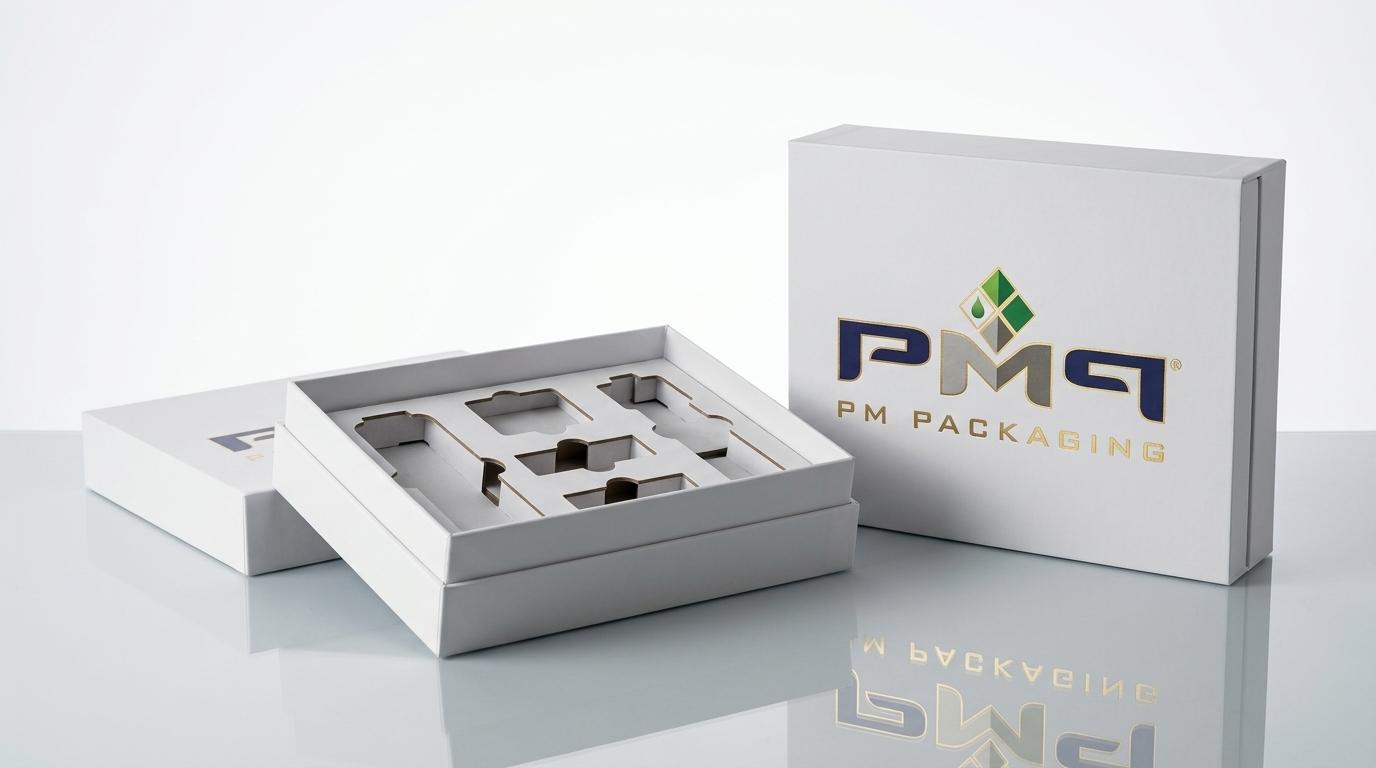
Flagship consumer tech products often require sophisticated structural ecosystems: magnetic-closure book-style boxes, three-piece shoulder neck configurations, and multi-tiered interior cavities for accessories.
While assembling multi-piece sets by hand is labor-heavy and prone to variance, automated lines integrate hidden magnetic closures, precision hinges, and custom paperboard insert trays seamlessly, maintaining uniform tolerances across large production volumes.
Strategic Comparison: Hand-Wrapped vs. Automated Production
The table below outlines key trade-offs between manual wrapping and automated rigid box manufacturing:
| Decision Factor | Hand-Wrapped Rigid Boxes | Automated Rigid Box Production | Strategic Business Impact |
|---|---|---|---|
| Optimal Run Volume | 500 to 3,000 units | 5,000 to 100,000+ units | Matches production method to product stage |
| Cost-per-Unit Dynamics | High, fixed labor costs per unit | Low per-unit cost at scale | Unlocks 30%–50% margin improvement on retail runs |
| Cosmetic Tolerance | Dependent on artisan skill | Machine-calibrated tolerances | Guarantees consistent luxury unboxing across every SKU |
| Production Scalability | Hundreds of units per shift | Thousands of units per hour | Eliminates packaging bottlenecks during retail rollouts |
| Complex Feature Integration | High labor time for magnets and trays | Precision inline application | Streamlines multi-piece smart device packaging |
The Nearshore Advantage with PM Packaging
For years, consumer electronics brands believed high-volume automated rigid boxes could only be sourced overseas. However, transpacific ocean freight introduces 6 to 12-week lead times, port congestion, and tariff risks.
With 45+ years of packaging expertise, PM Packaging combines headquarters and engineering in San Diego, California with high-capacity converting facilities in Baja California (Tijuana and Mexicali). This nearshore model delivers distinct commercial advantages:
- 100% Tariff-Free Trade: USMCA-compliant manufacturing eliminates unpredictable import duties and customs delays.
- 1 to 3-Day Ground Transit: Finished rigid packaging reaches West Coast and Southwest distribution hubs in days, allowing brands to respond swiftly to retail replenishment spikes.
- Master-Level Print & Finishing: G7 Master certified color consistency ensures vibrant brand matching across high-resolution litho wraps, enhanced with luxury soft-touch coatings, spot UV, and metallic foil.
- Turnkey Structural Design: Experienced engineers prototype custom rigid boxes and precision interior paperboard trays designed for rapid pack-out and zero transit damage.
Scale Your Electronics Packaging with PM Packaging
Transitioning from hand-wrapped to automated rigid box production allows consumer tech innovators to preserve their luxury unboxing experience while capturing the speed, cost efficiency, and structural reliability needed for national retail success.
Whether preparing for a nationwide retail rollout or optimizing an existing flagship packaging line, PM Packaging provides the technical leadership, certified quality, and nearshore speed to bring your vision to life.
Ready to evaluate your packaging program for automated production? Connect with the packaging specialists at PM Packaging to request a structural consultation and automated production feasibility review.