
The connected fitness sector has rapidly evolved from early-stage direct-to-consumer (DTC) novelties into a multi-billion-dollar wellness hardware industry.
Whether developing smart fitness wearables, connected recovery tools, sensor-equipped strength systems, or interactive cardio equipment, brand leaders face fierce retail competition. During early DTC phases, brands often rely on utilitarian corrugated mailers or basic folding cartons to minimize upfront packaging costs. However, as connected fitness brands expand into national retail channels—such as Best Buy, Target, Dick's Sporting Goods, and specialty fitness retailers—packaging requirements shift dramatically.
At brick-and-mortar retail, packaging serves as your brand's primary physical ambassador. For connected fitness brands balancing premium hardware price points with recurring digital subscriptions, transitioning to custom rigid setup boxes is often the most effective strategy to validate hardware value, elevate unboxing, and accelerate digital onboarding.
Why Connected Fitness Packaging Requires a Strategic Shift
Connected fitness products are unique: they combine physical hardware with a digital subscription experience. If a customer encounters a frustrating or disorganized unboxing experience, that initial friction directly harms app pairing, device activation, and ongoing subscription retention.
Transitioning from standard cartons to custom rigid setup boxes addresses three critical commercial priorities:
Price-to-Value Justification
When consumers invest $150 to $500 or more in a connected sensor, recovery device, or wearable, lightweight packaging triggers buyer's remorse. A sturdy, heavyweight rigid box immediately signals premium build quality and engineering precision.
Flawless Multi-Component Presentation
Connected fitness kits rarely contain just one item. They typically include the primary device, magnetic charging docks, cables, replacement bands, and pairing guides. Rigid setup boxes accommodate tiered presentation trays that organize accessories intuitively.
Commanding Retail Shelf Presence
On crowded consumer electronics and sporting goods shelves, rigid boxes command visual authority. Their crisp 90-degree edges, substantial hand-feel, and luxurious surface finishes draw shopper attention away from competing products.
Key Triggers for Transitioning to Custom Rigid Setup Boxes
Determining the ideal moment to transition your packaging architecture depends on your retail expansion roadmap, hardware price points, and customer retention goals:
1. Expanding from DTC into National Retail Chains
DTC fulfillment allows brands to control the customer narrative through digital ads and web landing pages. In physical retail aisles, your package must do all the selling on its own. Premium rigid boxes—featuring magnetic closures, two-piece lift-off lids, or book-style openings—provide the structural heft and aesthetic polish required to compete alongside top-tier consumer tech brands.
When merchandised on shelves at national consumer electronics retailers, rigid setup boxes maintain their rigid 90-degree geometry under handling, resisting bowing, corner crushing, and display fatigue.
2. Streamlining Device Onboarding to Reduce Return Rates
In connected fitness, the first ten minutes determine whether a customer becomes an active subscriber or returns the device. Custom rigid boxes with tailored paperboard or high-density insert trays guide users through a seamless sequence:
The main device is prominently presented upon lifting the lid, immediately validating the consumer's purchase decision.
An integrated card or inner lid graphic prompts the user to download the companion mobile app and scan the pairing QR code.
Cables, charging cradles, and sizing accessories are neatly arranged underneath in dedicated compartments.
This organized presentation prevents lost accessories, eliminates customer confusion, and slashes product returns during the critical initial setup window.
3. Protecting Delicate Sensors & Displays
Connected fitness devices feature delicate optical heart-rate monitors, touchscreens, Bluetooth transmitters, and precision-machined aluminum casings. Unlike lightweight folding cartons that can crush under retail handling, thick rigid setup boxes provide robust structural protection against impact, stacking pressure, and transit vibration.
4. Maximizing Brand Prestige with High-End Finishing
Rigid setup boxes serve as an exceptional canvas for premium embellishments. Wrapping a dense structural board core with specialty embossed papers, soft-touch matte lamination, spot UV gloss, and metallic foil stamping transforms your packaging into a keepsake container that users proudly keep on display.
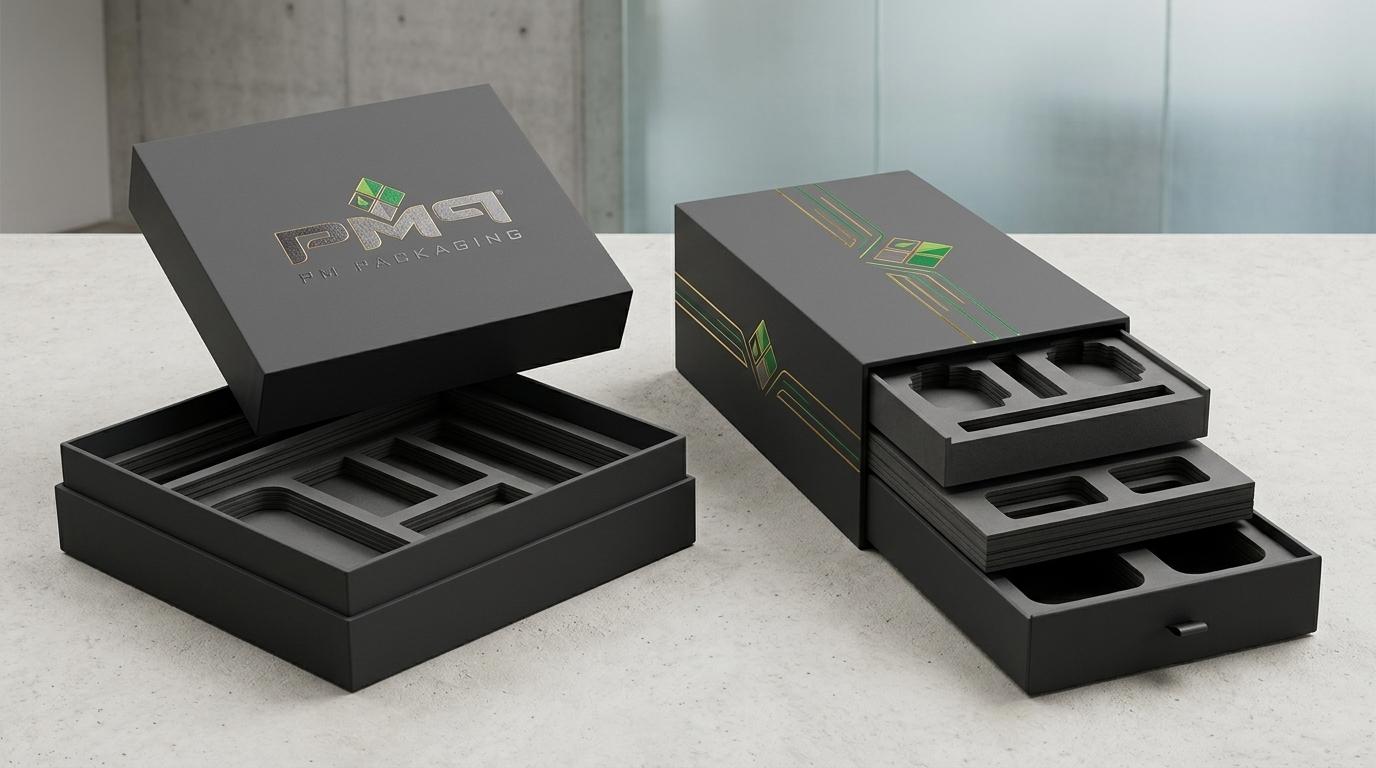
Packaging Format Comparison: Folding Cartons vs. Custom Rigid Setup Boxes
Evaluating key trade-offs helps brand directors, product managers, and procurement teams choose the right packaging structure for their connected fitness product tier:
| Strategic Metric | Standard Folding Cartons | Custom Rigid Setup Boxes | Business Advantage of Rigid Boxes |
|---|---|---|---|
| Perceived Value & Prestige | Standard retail impression | Luxury, keepsake-quality presentation | Validates premium hardware pricing and monthly SaaS fees |
| Component Architecture | Single-cavity or simple inserts | Multi-tier, precision-fitted trays | Streamlines device pairing and reduces product returns |
| Structural Rigidity | Flexible; susceptible to corner crush | Sturdy, non-collapsible solid core | Superior physical protection for delicate sensors and glass |
| Retail Shelf Presence | Prone to shelf wear and bowing | Perfectly square corners; upright stability | Maximizes visual impact in electronics and sporting goods aisles |
| Unboxing Interaction | Standard tuck flap opening | Smooth pneumatic lid drop or magnetic snap | Creates shareable social media unboxing moments |
The Nearshore Speed Advantage with PM Packaging
For high-growth fitness brands, timing a packaging redesign around retail planogram resets or holiday sales surges is critical. Relying on overseas suppliers introduces severe supply chain risks, including 6 to 12-week ocean shipping delays, container port congestion, and tariff uncertainties.
With 45+ years of packaging expertise, PM Packaging provides a seamless nearshore manufacturing model that pairs creative engineering in San Diego, California with advanced automated converting facilities in Baja California (Tijuana and Mexicali):
100% Tariff-Free USMCA Production
Protect your operating margins from transpacific trade volatility, Section 301 tariffs, and unexpected customs import duties.
Rapid 1 to 3-Day Ground Transit
Finished rigid setup boxes ship directly to West Coast distribution centers in 1 to 3 days and nationwide in 3 to 5 days.
Agile Prototyping & Insert Engineering
Our structural design team crafts custom dielines and sample mockups in days, accelerating retail buyer approvals and pilot line pack-outs.
G7 Master Certified Color Consistency
Ensure your brand colors remain flawlessly uniform across rigid boxes, retail displays, folding cartons, and companion product collateral.
Elevate Your Connected Fitness Brand with PM Packaging
Transitioning to custom rigid setup boxes is a proven strategy to strengthen brand loyalty, increase retail sell-through, and deliver an unforgettable customer unboxing experience that sparks instant product engagement.
Whether you are preparing for a nationwide rollout at Best Buy, launching a next-generation wearable, or refreshing your flagship wellness line, PM Packaging has the engineering capability and nearshore capacity to scale your vision seamlessly from prototype to mass production.
Ready to Transform Your Retail Packaging?
Connect with the packaging specialists at PM Packaging today to schedule a structural packaging audit, request custom dielines, or evaluate sample prototypes for your upcoming retail launch.
San Diego Engineering • Baja California Production • 1–3 Day West Coast Delivery