
When consumer brands scale to enterprise volume, folding carton procurement transitions from a routine purchasing task into a high-stakes operational driver.
At multi-million unit scale across national retail giants like Walmart, Target, Costco, Sam's Club, Sephora, Ulta, and The Home Depot, secondary packaging directly influences gross margins, manufacturing efficiency, and brand equity.
A common pitfall in high-volume packaging requests for proposals (RFPs) is evaluating suppliers strictly on unit purchase price. While fractional cent differences appear compelling on spreadsheets, choosing a converter based solely on piece price often introduces severe hidden costs—including line jams on automated cartoning equipment, multi-retailer color drift, port delays, and inventory carrying bloat.
To protect supply chain stability and brand reputation, procurement executives and packaging buyers must conduct a holistic audit across five operational pillars before awarding multi-million unit contracts.
5 Critical Audit Pillars for High-Volume Carton Contracts
1. Machine Redundancy and Surge Capacity
High-volume consumer goods experience demand surges during seasonal promotions, retail resets, and holiday quarters. If a supplier relies on a single high-speed printing press or die-cutter, an unexpected mechanical failure can shut down your entire retail fulfillment pipeline.
Procurement teams must audit a converter's physical asset redundancy and footprint:
- Equipment Depth: Multiple large-format offset printing presses, die-cutters, and high-speed folding-gluing lines.
- Multi-Facility Redundancy: Dual-plant operations that allow seamless job balancing and provide true disaster recovery without missing delivery dates.
- Raw Material Access: Established mill allocations for premium virgin paperboard, eco-friendly kraft, and recycled board to insulate against raw material shortages.
2. Structural Precision for Automated Cartoning Lines
On high-speed automated packaging lines packing hundreds of units per minute, mechanical repeatability is essential. Minor board warping, stiff score lines, or excessive glue application can trigger continuous machine jams, reducing overall equipment effectiveness (OEE) and driving up co-packer labor costs.
Ensure your packaging partner demonstrates proven engineering capabilities in:
- Score Line Pre-Breaking: Pre-folding major creases during converting to reduce opening force on automated vacuum feeds.
- Dust-Free Die-Cutting: Dynamic stripping that eliminates paperboard dust and prevents sensor interference on cartoning machinery.
- Accurate Glue Seams: Electronic sensor verification to ensure carton sleeves open cleanly without interior glue bleed.
3. G7 Certified Color Consistency Across Multi-SKU Assortments
Brand recognition on retail shelves depends on unyielding visual uniformity. If cartons printed in March appear noticeably different from cartons printed in October, brand equity suffers and retail buyers take notice.
Enterprise procurement should mandate certified quality management systems:
- G7 Master Qualification: Verifying spectral color management and inline press controls to ensure identical brand colors across multi-SKU lines and recurring runs.
- ISO 9001 Certification: Structured quality controls across pre-press, printing, die-cutting, and final pack-out.
- Certified Sourcing: Sustainable paperboard sourcing backed by FSC and SFI certifications to meet corporate sustainability goals.
4. Total Landed Cost (TLC) and Supply Chain Agility
Evaluating packaging costs solely at the factory gate ignores freight rates, customs exposure, and warehouse carrying costs. Transpacific ocean sourcing carries 6 to 12 week lead times, leaving brands vulnerable to retail demand shifts, ocean freight spikes, and port congestion.
In contrast, a nearshore manufacturing strategy delivers decisive supply chain advantages:
- 100% Tariff-Free USMCA Compliance: Zero import duties or unexpected tariff penalties across North American trade corridors.
- Rapid Ground Delivery: 1 to 3 day transit to West Coast and Southwest distribution hubs (3 to 5 days nationwide).
- Working Capital Optimization: Smaller, frequent delivery batches via Vendor-Managed Inventory (VMI) or Kanban replenishment programs, reducing warehouse holding costs.
5. Tooling Ownership and CAD Prototyping Support
Managing multi-million unit contracts requires clear legal and operational boundaries around tooling and engineering assets. Procurement leaders must confirm that all steel cutting dies, stripping tools, and embossing plates remain the proprietary property of the brand. Furthermore, converters must offer responsive in-house CAD structural engineering to produce rapid physical prototypes for packaging line qualification and retail drop testing.
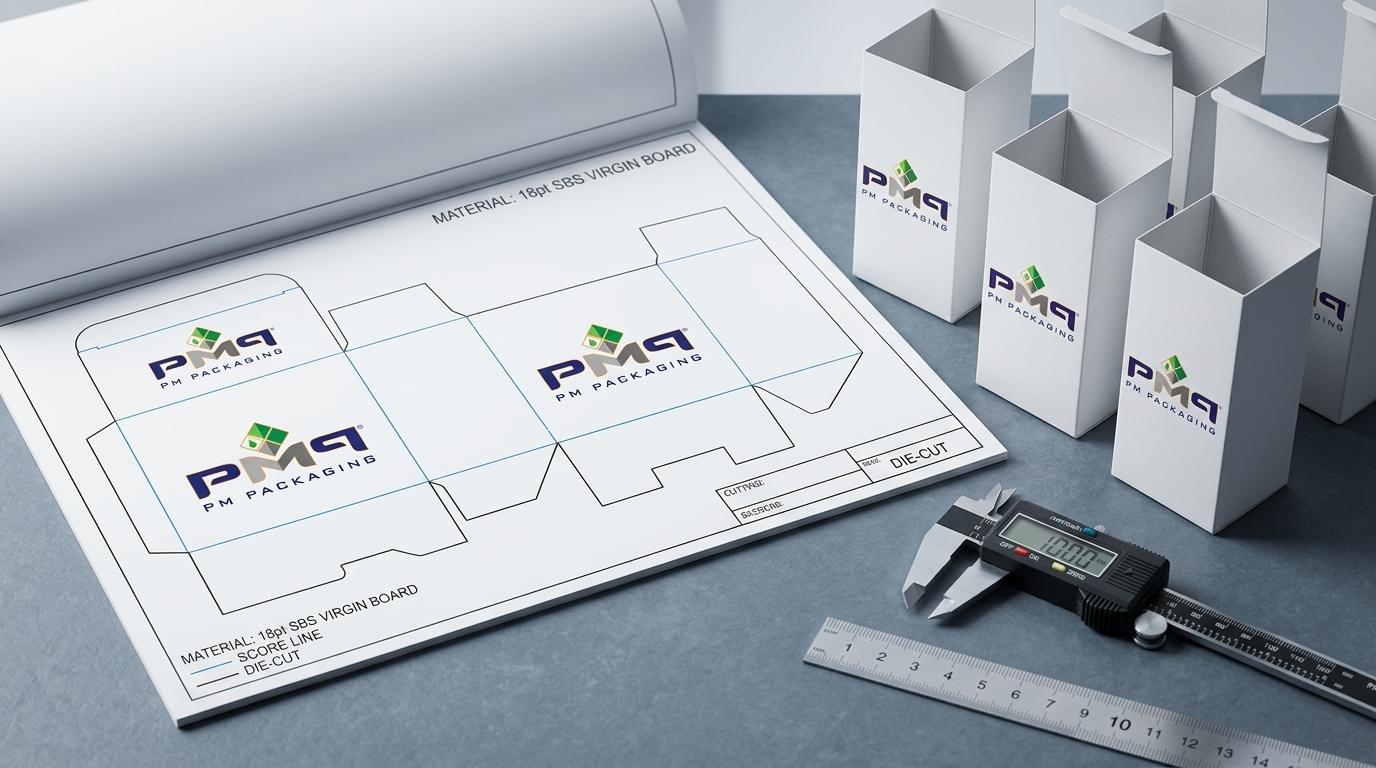
Evaluating Folding Carton Supplier Models
Comparing supplier models clarifies why enterprise brands balance scale, geographic proximity, and converting sophistication:
Supplier Model Evaluation Matrix
| Evaluation Dimension | Overseas Ocean Converters | Regional Domestic Job-Shops | Integrated Nearshore Partner (PM Packaging) |
|---|---|---|---|
| Lead Times & Restock Speed | 6–12 weeks via ocean transit | 3–6 weeks domestic production | 1–3 day rapid ground replenishment |
| Tariff & Customs Risk | High tariff volatility and customs holds | Zero international customs | 100% Tariff-Free under USMCA |
| Production Scale & Redundancy | High scale, but single-point shipping risk | Limited press capacity and single-plant risk | High-capacity dual-plant redundancy |
| Automated Line Precision | Variable score quality and humidity warping | Good machine compatibility | Engineered specifically for high-speed cartoning |
| Color & Quality Assurance | Inconsistent remote verification | Standard commercial quality | G7 Master certified & ISO 9001 registered |
| Working Capital Impact | High (Requires massive safety stock) | Moderate (Standard batch ordering) | Low (Agile JIT and VMI delivery models) |
The PM Packaging Advantage: High-Volume Packaging Built for Scale
For over 45 years, PM Packaging has partnered with leading consumer goods brands, retail suppliers, and contract packagers to deliver high-impact custom packaging programs. With corporate headquarters and structural design teams in San Diego, California, and high-capacity manufacturing facilities in Baja California (Tijuana and Mexicali), PM Packaging combines domestic engineering excellence with high-efficiency nearshore converting.
- Comprehensive Packaging Formats: Custom folding cartons, high-graphic laminated microflute packaging, luxury rigid setup boxes, POP displays, and blister card packaging backed by our specialized qikCombo™ program.
- Uncompromising Quality: ISO 9001 registered facilities, G7 Master certified color consistency, and FSC/SFI certified paperboard options.
- USMCA Nearshore Speed: 100% tariff-free manufacturing with rapid 1 to 3 day ground transit to West Coast hubs, eliminating ocean freight risks.
Secure Your High-Volume Packaging Supply Chain
Awarding a multi-million unit folding carton contract requires a partner capable of delivering structural precision, visual perfection, and agile supply chain support at scale. By auditing machine redundancy, automated line compatibility, and total landed cost, procurement leaders secure reliable retail execution.
Ready to elevate your folding carton procurement strategy? Contact the packaging specialists at PM Packaging to review your upcoming RFP, request qualification samples, or schedule a comprehensive facility audit today.