
Enterprise electronics brands face a complex packaging challenge. As commercial hardware ecosystems expand—spanning IoT gateways, sensor nodes, network controllers, enterprise audio hubs, and modular expansion units—product portfolios rapidly multiply.
Historically, hardware product teams engineered bespoke, one-off rigid packaging for every individual SKU. While each device received a tailor-made enclosure, procurement teams and operations managers inherited severe supply chain friction: skyrocketing tooling expenditures, fragmented warehouse inventory, mismatched master shippers, and sluggish pack-out assembly lines.
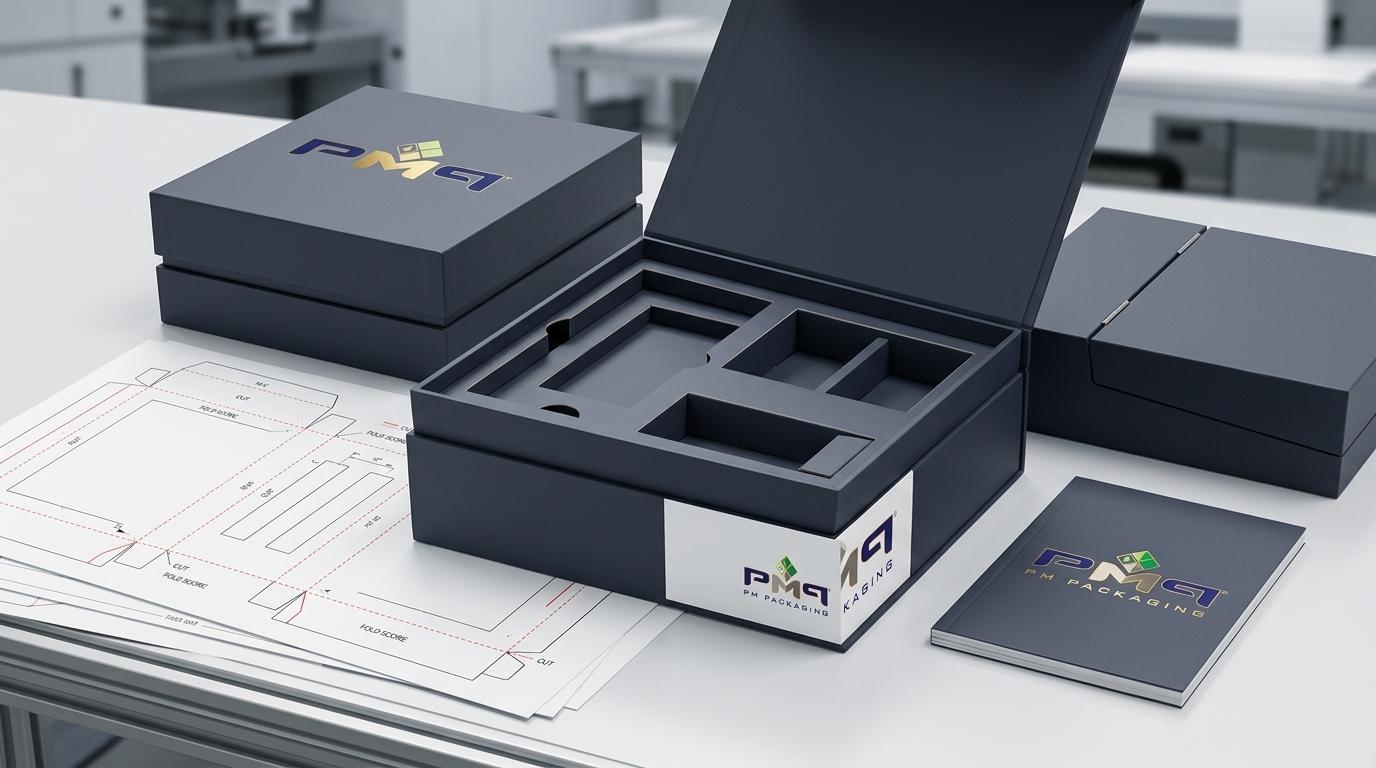
To solve this operational drag without compromising brand prestige, forward-thinking enterprise tech brands are transitioning to standardized rigid setup box footprints. By establishing a unified family of outer box dimensions and leveraging modular interior inserts, brands achieve significant economies of scale, faster product launches, and an unmistakably cohesive enterprise unboxing experience.
Strategic Advantages of Standardized Rigid Box Ecosystems
Implementing a modular rigid setup box strategy delivers transformative benefits across product development, manufacturing, and supply chain operations:
1. Amortizing Tooling and Setup Costs Across Product Lines
Developing custom tooling and automated setup parameters for dozens of distinct box sizes drains capital budgets. Every unique rigid box format requires dedicated die sets, corner-stay tooling, and custom wrapping forms.
Standardizing around two or three core outer box footprints—such as Compact, Mid-Tier, and Base Station dimensions—enables brands to amortize rigid setup tooling across multiple SKUs and product generations. This structural consistency allows high-volume production efficiencies even when individual SKU demand fluctuates.
2. Modular Insert Architecture for Rapid SKU Expansion
Standardizing the exterior dimensions does not mean sacrificing internal precision. The key to successful footprint standardization lies in modular interior insert design.
While the exterior base and lid remain constant, custom-engineered paperboard insert trays and precision cavities are tailored to cradle specific circuit boards, antennas, power supplies, or cable bundles. When engineering teams release a revised PCB layout or a new sensor variant, only the interior tray dieline is updated. This agility slashes packaging development timelines from months to days.
3. Maximizing Pallet Density and Master Shipper Efficiency
Non-standardized packaging creates chaotic logistics. Irregular box dimensions lead to inefficient pallet configurations, overhang risks, and wasted airspace in ocean containers and freight trailers.
A standardized rigid footprint system aligns perfectly with modular master shipping cartons and standard 48x40 distribution pallets. Eliminating dimensional variance optimizes pallet cube utilization, prevents transit shifting, and substantially reduces per-unit freight and warehousing costs.
4. Accelerating Fulfillment and Assembly Line Velocity
On high-volume electronics pack-out lines, operator efficiency directly impacts manufacturing margins. Managing dozens of disparate packaging formats introduces assembly confusion, increases training time, and raises the risk of packaging errors.
When pack-out teams work with consistent rigid box formats, assembly motions become second nature. Outer boxes set up smoothly, insert trays drop into place effortlessly, and cable management channels follow intuitive layouts. This streamlined workflow dramatically accelerates packing velocity during critical new product introductions.
5. Delivering a Unified, Professional Unboxing Experience
Enterprise IT directors, systems integrators, and commercial installers unpack hundreds of hardware devices during corporate rollouts. When packaging formats vary wildly across a single vendor's ecosystem, brand perception suffers.
Standardized rigid setup boxes establish a polished, uniform visual architecture on customer staging benches. Whether unboxing a core controller or an auxiliary expansion module, enterprise buyers experience identical tactile finishes, magnetic-closure snap, and organized accessory presentation, reinforcing your brand's reputation for enterprise-grade engineering.
Strategic Packaging Comparison: Bespoke vs. Standardized Footprints
Evaluating the structural and financial contrast between legacy bespoke packaging and standardized modular ecosystems reveals significant operational advantages:
| Strategic Metric | Bespoke One-Off Rigid Boxes | Standardized Modular Rigid Footprints |
|---|---|---|
| Tooling & Setup Investment | High initial tooling costs per individual SKU | Tooling amortized across multiple SKUs and generations |
| New SKU Time-to-Market | 8–12 weeks for full structural tooling & proofs | 2–3 weeks by adapting interior modular insert trays |
| Master Shipper Sizing | Fragmented carton catalog with loose void fill | Standardized master shippers with zero wasted volume |
| Pallet Cube Utilization | Suboptimal stacking; irregular freight pallet patterns | Maximum pallet density with uniform interlocking layers |
| Pack-Out Assembly Speed | Slower line velocity; varied folding and packing steps | Rapid, repeatable pack-out with standardized handling |
| Brand Perception | Inconsistent box sizes and unboxing presentation | Cohesive, high-end ecosystem aesthetic across all lines |
The PM Packaging Nearshore Advantage
Transitioning enterprise hardware to standardized rigid setup packaging requires a manufacturing partner with deep structural engineering expertise, high-volume converting capacity, and supply chain agility.
With 45+ years of packaging manufacturing excellence, PM Packaging provides end-to-end support for enterprise technology leaders:
- Custom Insert Engineering: Precision-engineered, 100% recyclable paperboard insert trays and cushioned cavities designed to protect sensitive electronics without relying on single-use plastic foams.
- Flawless Finish Consistency: G7 Master certified color reproduction, premium soft-touch matte lamination, precision foil stamping, and spot UV accents that elevate enterprise hardware presentation.
- 100% Tariff-Free USMCA Nearshoring: San Diego headquarters and structural design labs paired with high-volume manufacturing facilities in Baja California (Tijuana and Mexicali).
- Rapid Ground Replenishment: 1 to 3-day ground transit to West Coast and Southwest hubs (3 to 5 days nationwide), bypassing overseas port congestion and lengthy transpacific ocean shipping.
- Certified Quality Standards: Production under rigorous ISO 9001 quality management systems using sustainable, FSC- and SFI-certified paperboard materials.
Standardize Your Enterprise Hardware Packaging
Eliminate packaging complexity and elevate your brand's customer unboxing experience. Standardizing rigid setup box footprints empowers enterprise electronics manufacturers to protect hardware margins, streamline fulfillment operations, and scale product portfolios with confidence.
Ready to optimize your enterprise packaging ecosystem? Contact PM Packaging today to consult with our structural engineering team and request custom prototypes.
Ready to Standardize Your Packaging Architecture?
Partner with PM Packaging for modular rigid setup box footprints, custom die-cut paperboard inserts, and tariff-free nearshore manufacturing that scales seamlessly with your enterprise electronics roadmap.
Leverage 45+ years of packaging engineering excellence, dual Baja California production facilities, and rapid 1 to 3-day ground transit across the Western United States.