
As retail brands expand into national mass merchants—such as Walmart, Target, The Home Depot, AutoZone, and Sephora—packaging operations undergo a pivotal shift. Manual packing and semi-automated shuttle sealers transition to high-speed automated rotary and inline packaging lines running tens of thousands of units per shift.
At high-volume automated scale, packaging functions as a precision mechanical component. One of the most common causes of line slowdowns, unplanned downtime, and retail rejects is inconsistent heat-seal coating across printed paperboard blister cards. When coating chemistries or drying profiles vary between batches, automated machinery must be repeatedly recalibrated, hurting throughput.
For procurement executives and operations directors, standardizing heat-seal coatings across the card portfolio is a proven strategy to protect margins and secure flawless shelf presentation.
The Hidden Cost of Inconsistent Heat-Seal Coatings
Purchasing blister cards across fragmented supplier networks or unstandardized print runs creates subtle coating variations that cause serious operational friction:
1. Packaging Line Bottlenecks
When coatings demand excessive heat or prolonged dwell times to activate, operators must slow line speeds, reducing daily output.
2. High Scrap and Reject Rates
Inconsistent bonds cause blister flange separation in transit, while excess heat scorches printed graphics and warps board.
3. Feeder Jams and Blocking
Cards with inconsistent drying profiles can adhere to one another (“blocking”) inside automated feeder magazines, triggering machine stops.
4. Contract Packager Inefficiency
Co-packers managing multi-SKU lines spend excessive time adjusting sealing recipes between production lots, driving up packing fees.
Strategic Pillars of Heat-Seal Coating Standardization
Standardizing blister card coatings establishes predictable operating baselines across internal packaging lines and contract packaging partners:
1. Broad Sealing Operating Windows
An engineered heat-seal coating offers a wide operating window, achieving a reliable fiber-tearing bond across varying temperature and dwell-time thresholds. This broad tolerance prevents seal failures even during normal thermal fluctuations on continuous-motion sealing platens.
2. Reliable Anti-Blocking and Smooth De-Nesting
High-speed automated card feeders require effortless separation from stacked magazines. Precision-formulated heat-seal coatings prevent cards from sticking together under pallet compression or warehouse humidity, ensuring jam-free dispensing at full line speeds.
3. Substrate and Polymer Harmony
Whether sealing to standard virgin thermoforms or eco-friendly recycled plastics, the coating must bond firmly without sinking into paperboard fibers. Standardizing a high-solids formulation across premium virgin paperboard and recycled board grades ensures consistent seal integrity across all product lines.
Heat-Seal Performance Across Blister Card Formats
Different retail product lines require distinct packaging architectures, each optimized through standardized coatings:
Face-Seal Blister Cards
Commonly used for hardware, personal care, and sundries, face-seal cards bond directly to the thermoform flange. Standardized high-tack coatings deliver rapid bond activation, allowing automated rotary sealers to run at peak speeds without flange lift.
Fold-Over Blister Cards
For heavy items such as automotive components, brass plumbing fittings, and multi-piece tools, fold-over cards encase the flange between two paperboard panels. Standardizing cohesive paperboard-to-paperboard heat-seal coatings creates reinforced hanging strength, eliminating peg hook tear-out.
Trapped Blister Cards
For high-security electronics and premium retail accessories, trapped blister cards lock the thermoform flange between two sealed paperboard layers with zero exposed plastic edges. Uniform heat-seal activation ensures seamless edge-to-edge bonding and tamper-evident security.
Operational Comparison: Coating Standardization Strategies
| Operational Metric | Inconsistent Batch Coatings | Generic Commodity Coatings | Standardized Engineered Coatings |
|---|---|---|---|
| Packaging Line Speed | Throttled for worst-case bonding | Moderate with manual tuning | Maximized at full machine rating |
| Operating Temperature Window | Narrow; risks scorching graphics | Moderate; sensitive to cycling | Wide; forgiving operating latitude |
| Feeder Magazine De-Nesting | Frequent blocking and feeder jams | Occasional feed misfeeds | Smooth, uninterrupted feeding |
| Line Changeover Time | 30–60 minutes per SKU batch | 15–30 minutes of trial seals | Under 5 minutes (standard drop-in) |
| Fiber-Tearing Bond Reliability | Variable across production lots | Marginal under transit vibration | 100% consistent across all SKUs |
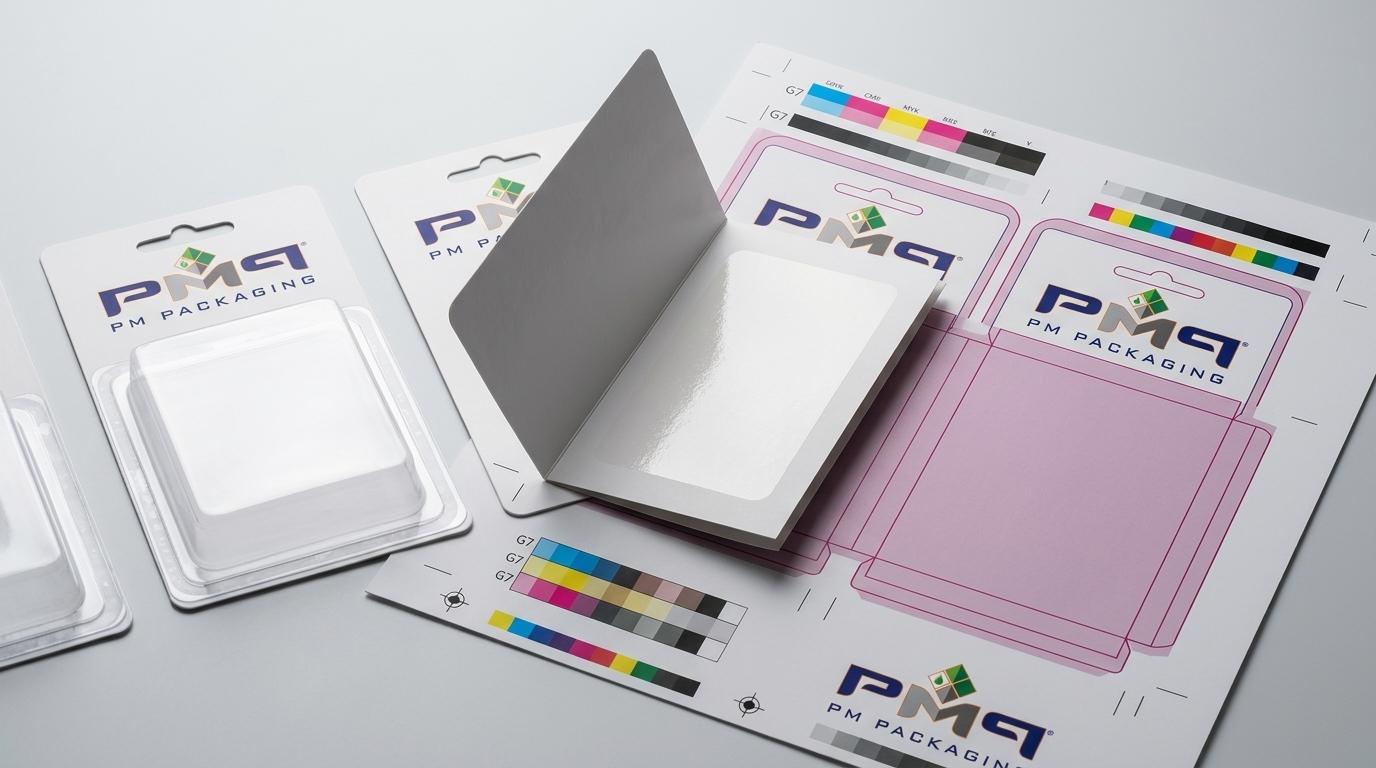
Streamlining Multi-SKU Portfolios with qikCombo™
Maintaining identical heat-seal coating performance across large product catalogs is difficult when ordering separate short-run print batches. Traditional converters treat each SKU independently, resulting in coating inconsistencies between runs.
PM Packaging eliminates this challenge with its proprietary qikCombo™ manufacturing program. By ganging standardized blister cards across multiple SKUs onto shared high-volume production sheets, qikCombo™ provides brands with:
- Identical Coating and Board Consistency: Every SKU receives the exact same certified heat-seal coating and premium paperboard substrate.
- Low MOQs for Multi-SKU Catalogs: Order as few as 5,000 units per SKU without setup penalties, matching inventory directly to retail demand.
- Rapid 10-Day Turnaround: Responsive 10-business-day production cycles keep automated lines stocked without excess safety inventory.
Nearshore Agility and Supply Chain Resilience
National retail programs require dependable, fast-turnaround packaging partners. Overseas sourcing introduces 8 to 12-week ocean lead times, container shipping risks, and unpredictable lot-to-lot coating variations.
Backed by over 45 years of commercial packaging expertise, PM Packaging provides enterprise brands with an agile nearshore manufacturing infrastructure. Headquartered with structural engineering in San Diego, California, and operating high-capacity converting facilities in Baja California (Tijuana and Mexicali), PM Packaging delivers:
Rapid Ground Delivery
1 to 3-day transit to West Coast and Southwest hubs, and 3 to 5 days nationwide.
100% Tariff-Free USMCA Integration
Fully compliant North American trade terms that eliminate tariff uncertainty and customs delays.
Certified Quality Management
ISO 9001 certified manufacturing, G7 Master color consistency, and FSC/SFI certified sustainable paperboard sourcing.
Optimize Your High-Speed Packaging Operations with PM Packaging
Standardizing blister card heat-seal coatings transforms packaging lines into predictable, high-yield production assets. By eliminating line stoppages, reducing scrap, and accelerating SKU changeovers, retail brands safeguard profit margins while ensuring commanding shelf appeal.
Ready to eliminate packaging line downtime and standardize your blister cards? Connect with the packaging engineering team at PM Packaging to schedule a technical line audit and request custom sample cards today.