
Commercial induction cooktops, countertop fryers, high-speed blenders, and precision warming equipment are redefining modern commercial kitchens.
Combining heavy stainless steel chassis, high-torque electromagnetic coils, digital control interfaces, and impact-sensitive glass-ceramic surfaces, these high-performance units represent major capital investments for restaurateurs, catering operations, and institutional kitchens.
Whether sold through commercial foodservice dealer networks, cash-and-carry restaurant supply stores, or direct-to-venue fulfillment, commercial kitchen equipment packaging faces a dual challenge: it must withstand the rigors of heavy freight handling while commanding authority on the showroom floor.
To solve this, leading equipment manufacturers are shifting away from utilitarian brown boxes and fragile packaging sleeves in favor of single-face lamination (SFL)—also known as litho-laminated microflute packaging. By combining high-definition offset lithography with a reinforced fluted core, single-face lamination provides the perfect blend of structural integrity, surface protection, and premium brand presentation.
Strategic Packaging Demands for Countertop Commercial Equipment
Rather than treating automotive packaging as generic paperboard, engineering teams must account for product geometry, hanging shelf wear, moisture barriers, and high-speed automated cartoning line tolerances.
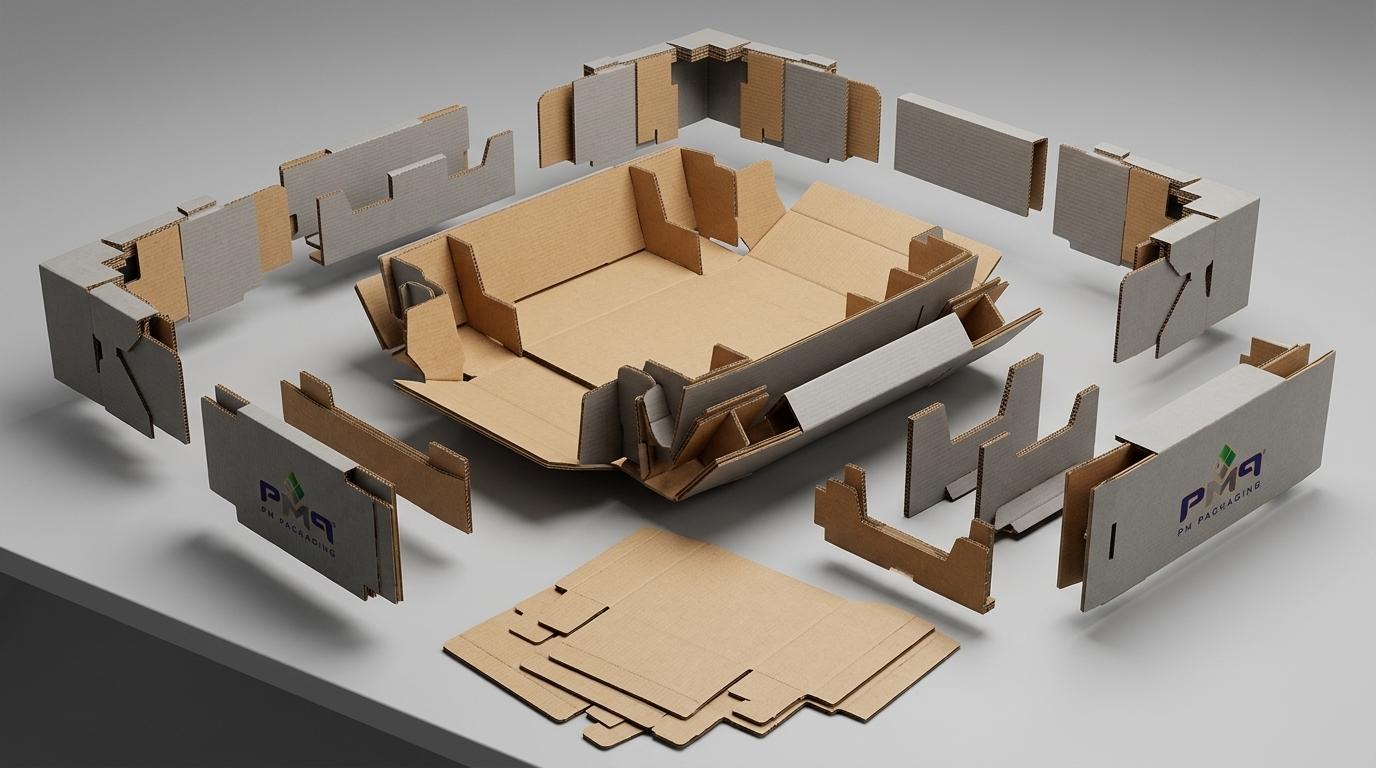
Commercial induction units concentrate considerable weight inside a compact footprint due to heavy copper induction coils, internal cooling fans, and solid stainless steel housings. Simultaneously, the top surface features a specialized glass-ceramic cooking plate vulnerable to impact cracking and surface scratching. Single-face lamination incorporates a dense, reinforced fluted core that delivers superior stacking strength and perimeter stiffness. When paired with custom-engineered internal paperboard corner posts and floating top-cushion trays, the packaging suspends the fragile ceramic surface away from external impact while firmly anchoring the heavy base.
Traditional direct-print corrugated packaging suffers from "washboarding"—a wavy surface texture where internal flutes show through the outer liner, degrading print fidelity. For high-ticket commercial cooking appliances, washed-out flexographic graphics undermine perceived build quality and commercial prestige. Single-face lamination overcomes this by printing high-resolution graphics directly onto a smooth, premium paperboard sheet via multi-color offset lithography before bonding it to the fluted base. This creates a smooth, ridge-free canvas that displays crisp food photography, multi-lingual interface schematics, energy efficiency ratings, and mandatory safety certifications (such as NSF, UL, and CE) with razor-sharp clarity.
Countertop restaurant equipment navigates tough B2B distribution environments, cross-dock logistics, and back-of-house storage areas prone to ambient moisture and temperature fluctuations. Untreated cartons can quickly scuff, soften, or absorb moisture, risking product presentation upon delivery. Advanced single-face lamination supports inline protective coatings, such as high-gloss UV, soft-touch matte, and moisture-resistant barrier finishes. These coatings protect the carton against warehouse scuffs, handling abrasions, and humidity, ensuring equipment arrives in showroom condition.
Many commercial appliance manufacturers still rely on thick expanded polystyrene (EPS) foam blocks. However, foam creates notable operational bottlenecks including excessive storage space requirements, slower packaging line assembly speeds, and messy jobsite disposal headaches for busy culinary operations. Precision die-cut single-face laminated cartons paired with foldable paperboard inserts ship flat, assemble rapidly on pack-out lines, and provide 100% recyclable curb-side disposal for busy restaurant operators.
Operational Bottlenecks of Traditional Foam Packaging
- Excessive Storage Demands: Rigid EPS foam blocks occupy substantial warehouse footprint prior to assembly, raising holding costs.
- Slower Line Assembly: Packaging crews spend valuable labor time piecing together multi-part foam endcaps around stainless cords and controls.
- Jobsite Disposal Headaches: Commercial kitchen operators increasingly reject static-prone foam debris that clutters prep areas and fills local waste streams.
Strategic Comparison: Traditional Corrugated Packaging vs. Single-Face Lamination
PM Packaging manufactures engineered automotive parts packaging, line-side kits, and retail aftermarket cartons with certified Delta-E color consistency and high-speed box converting. High-speed gang printing and shared dielines reduce per-unit tooling costs while clear technical graphics guide buyers directly to the correct model.
| Strategic Factor | Traditional Corrugated Packaging | Single-Face Lamination (SFL) | Commercial Impact for Equipment Brands |
|---|---|---|---|
| Print Quality & Graphic Fidelity | Basic flexographic print; prone to visible flute washboarding | High-resolution offset lithography with vibrant photo clarity | Elevates perceived appliance quality in dealer showrooms and wholesale catalogs |
| Structural Protection & Rigidity | Prone to panel deflection and bottom sagging under heavy coils | Fluted core engineered for high vertical compression and puncture resistance | Protects sensitive glass-ceramic cooktops and heavy chassis during pallet transit |
| Protective Coatings & Finishes | Limited to basic water-based varnishes | Inline UV, scuff-resistant gloss, soft-touch matte, and foil accents | Resists moisture, warehouse scuffs, and handling wear across distribution hubs |
| Pack-Out & Line Efficiency | Often requires separate printed sleeves or multi-piece outer boxes | Integrated single-piece carton that ships flat and sets up quickly | Speeds assembly, reduces packaging SKU counts, and cuts warehouse storage costs |
| Showroom & Channel Versatility | Restricted to back-room storage or utilitarian utility shelving | Fully compatible with retail club store displays and dealer showrooms | Secures prime placement with commercial foodservice distributors and retail buyers |
The Nearshore Manufacturing Advantage with PM Packaging
Scaling a high-volume packaging program for commercial foodservice equipment demands reliable manufacturing capacity, certified print consistency, and responsive supply chain agility. Sourcing bulky laminated packaging from overseas suppliers exposes brands to 6-to-12-week ocean lead times, container shipping volatility, and import tariff risks.
With over 45 years of packaging expertise, PM Packaging provides a seamless nearshore manufacturing alternative. With corporate headquarters and structural engineering in San Diego, California, combined with state-of-the-art converting facilities in Baja California (Tijuana and Mexicali), PM Packaging delivers:
The PM Packaging Commercial Advantage
Elevate Your Commercial Kitchen Equipment Packaging
Upgrading your commercial induction cooktops and countertop restaurant equipment to single-face lamination is an impactful strategic move that enhances brand reputation, eliminates in-transit damage, and speeds retail velocity.
Whether launching a new flagship induction line or standardizing packaging across an entire commercial foodservice equipment portfolio, PM Packaging provides the structural innovation, certified print quality, and nearshore reliability your business needs.
Ready to modernize your restaurant equipment packaging? Connect with the packaging specialists at PM Packaging today to schedule a structural consultation and request a custom prototype.
Engineering Heavy-Duty Foodservice Equipment Packaging
Transform commercial induction cooktops, countertop warmers, and heavy restaurant electronics into a consolidated, high-efficiency retail packaging program engineered for wholesale distributors, dealer showrooms, and retail club pallets.
Optimize CAD dielines, engineer high-burst single-face lamination cartons with reinforced carry handles, eliminate glass-ceramic scratches with precision die-cut paperboard partition inserts, and leverage nearshore US-Mexico manufacturing to protect gross margins and eliminate ocean freight delays.
Connect with PM Packaging's structural engineering and procurement team today to audit your dielines, review single-face lamination flute options, and receive a comprehensive prototype proposal.