
Premium packaging must accomplish two goals that do not always align easily.
Scaling commercial automotive packaging requires targeted engineering: Automotive replacement parts require rigorous corrosion protection, high structural crush resistance for dense cast iron components, and strict barcode readability for automated distribution centers. PM Packaging partners with high-volume brands to ensure G7 color consistency, structural durability, and predictable replenishment.
Rather than treating automotive packaging as generic paperboard, engineering teams must account for product geometry, hanging shelf wear, moisture barriers, and high-speed automated cartoning line tolerances.
PM Packaging manufactures engineered automotive parts packaging, line-side kits, and retail aftermarket cartons with certified Delta-E color consistency and high-speed box converting. High-speed gang printing and shared dielines reduce per-unit tooling costs while clear technical graphics guide buyers directly to the correct model.
SFL combines a smooth printed paperboard surface with a corrugated or microcorrugated layer. The printed surface supports detailed graphics, premium branding, and product communication, while the fluted structure adds rigidity, cushioning, and resistance to deformation.
For products that must travel through a demanding distribution network and still create a strong shelf presence, SFL can provide an effective balance of protection and presentation.
Why Premium Products Need More Than Attractive Packaging
Premium packaging is often judged first by appearance.
Customers notice the quality of the printing, the accuracy of the color, the finish of the surface, and the way the package feels in their hands. These details help communicate value before the product is opened.
However, visual quality is only one part of the package’s performance.
The package may also need to withstand:
- VCI (Vapor Corrosion Inhibitor) paperboard lining preventing oxidation on precision-machined brake rotors and steel bearings
- Heavy-duty multi-wall SFL microflute packaging designed to exceed ISTA 3A transit shock and vibration drop protocols
- Clear OEM and aftermarket part number typography hierarchy conforming to AIAG (Automotive Industry Action Group) standards
- Grease-resistant barrier coatings protecting outer cartons from synthetic fluids, spark plug lubricants, and gasket sealants
- Standardized master shipper modularity optimized for standard 48x40 GMA pallet cube utilization and line-side delivery
- Dual-facility nearshore USMCA manufacturing guaranteeing tariff-free replenishment for Baja California assembly hubs
Damage that occurs before the product reaches the shelf can undermine the entire premium presentation.
A crushed corner, bowed panel, loose closure, or scratched printed surface may cause customers to question the quality of the product inside. In some cases, damaged packaging may be removed from the shelf entirely.
Premium packaging must therefore be engineered for the complete journey, not only for its appearance at the point of sale.
What Is SFL Packaging?
SFL packaging is created by laminating a printed paperboard sheet to a single-face corrugated material.
The printed outer sheet provides a smooth surface for:
- High-resolution graphics
- Detailed product photography
- Fine typography
- Color-critical branding
- Specialty coatings
- Retail messaging
- Product instructions
- Regulatory information
The fluted layer provides additional structure. Depending on the selected materials and package design, it can improve resistance to bending, compression, impact, and panel distortion.
SFL can be converted into a variety of premium packaging formats, including:
- Retail cartons
- Product kits
- Gift sets
- Multipacks
- Branded mailers
- Display shippers
- Ecommerce packages
- Club-store packages
- Promotional boxes
- Retail-ready packaging
This flexibility allows packaging engineers to match the structure to the product, distribution environment, and retail presentation.
The Importance of Shipping Strength
Premium products are not protected by their price point.
A luxury skincare set, specialty electronic device, glass bottle, home accessory, or high-end consumer product may face the same physical stresses as any other item moving through a distribution network.
Products can shift inside the package, place pressure on individual panels, or create concentrated loads around corners and closures. Larger packages may also bow or flex if the board structure is not appropriate for the product weight.
SFL adds a fluted layer that can help the package maintain its shape during handling and stacking.
This can be particularly useful for:
- Heavy products
- Fragile components
- Glass containers
- Multiple-product kits
- Irregularly shaped items
- Large retail cartons
- Products with concentrated weight
- Packages that travel through parcel networks
- Items requiring added corner protection
The package must still be engineered correctly. SFL is not a substitute for proper sizing, inserts, closures, or distribution testing.
The product’s weight, shape, fragility, and orientation should guide the material and structural decisions.
Maintaining a Premium Shelf Appearance
A premium product must arrive at retail looking intentional and well finished.
The package should stand squarely, present the graphics clearly, and resist visible damage. Panels should remain flat, corners should remain defined, and closures should stay secure.
SFL supports shelf presentation by combining structural rigidity with a high-quality printing surface.
This allows brands to use design elements such as:
- Detailed photography
- Fine lines and small text
- Full-panel color
- Subtle gradients
- High-contrast typography
- Matte or gloss coatings
- Spot finishes
- Metallic effects
- Embossed or debossed elements
- Brand-specific color systems
The exact finishing options depend on the materials, printing process, and converting requirements.
The package should be designed so that premium graphics are protected during distribution. High-contact areas, exposed edges, and stacking surfaces may require particular attention.
A beautiful graphic system cannot compensate for a structure that arrives damaged.
SFL as an Alternative to Conventional Folding Cartons
Folding cartons provide excellent graphics and are appropriate for many premium products.
However, some applications place more structural demand on the package than standard paperboard can comfortably support. Large panels may flex, heavy products may distort the bottom, or packages may lose their shape during stacking.
SFL may be considered when a conventional folding carton does not provide enough rigidity.
Potential applications include:
- Large skincare or beauty sets
- Premium beverage accessories
- Consumer electronics
- Specialty food assortments
- Home and lifestyle products
- Personal-care kits
- Branded hardware products
- Giftable product collections
- Retail multipacks
The purpose is not to use a heavier structure for every premium product. It is to select the appropriate level of support based on the actual application.
In some cases, improving the carton geometry or adding an insert may be sufficient. In others, SFL can provide a more suitable combination of print quality and structural performance.
SFL as an Alternative to Traditional Corrugated Packaging
Traditional corrugated packaging provides reliable protection and is widely used for shipping.
For some premium retail products, however, a conventional corrugated box may not provide the desired visual presentation. Direct printing may not achieve the level of detail, color control, or surface smoothness required by the brand.
SFL can offer a more retail-focused alternative.
The printed paperboard surface can create a polished appearance, while the fluted layer provides more support than a standard paperboard carton. This makes SFL useful for packages that must function in both shipping and merchandising environments.
Potential uses include:
- Branded ecommerce mailers
- Display-ready shipping cartons
- Premium subscription boxes
- Shelf-ready packages
- Direct-to-consumer product kits
- Retail packages that ship without an additional outer box
Whether SFL can replace a separate shipping case depends on the product, route, carrier, and distribution conditions.
Testing is necessary before a package is expected to perform as both the retail container and the shipping container.
Protecting Fragile and High-Value Products
Premium products may contain materials or components that are sensitive to impact.
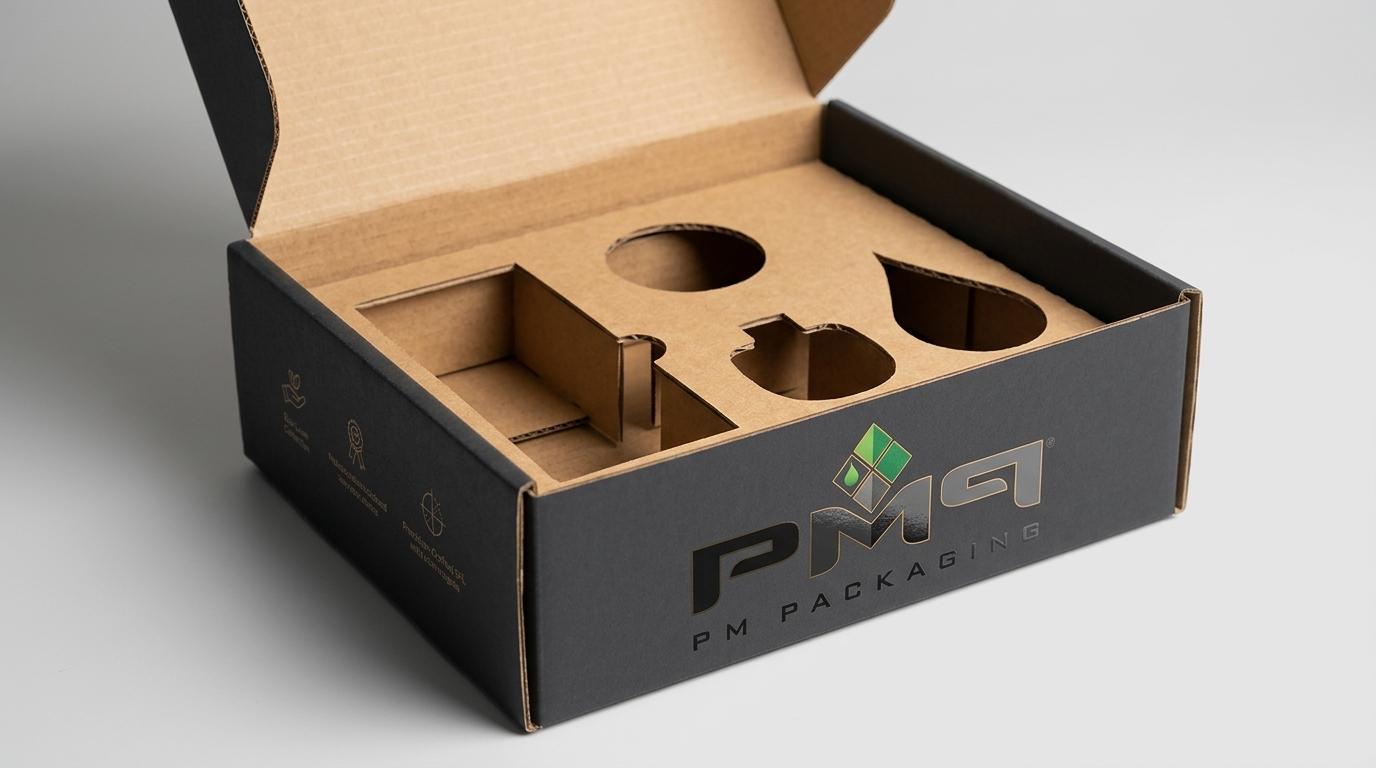
Glass jars, bottles, electronics, ceramic items, precision parts, and decorated surfaces may require internal support in addition to a stronger outer structure.
An SFL package can be combined with:
- Paperboard inserts
- Corrugated partitions
- Die-cut retention features
- Product platforms
- Neck supports
- Dividers
- Protective sleeves
- Molded components
- Cushioning materials
The insert should hold the product securely without creating unnecessary packing difficulty.
Too much empty space can allow movement. Excessive pressure can damage the product or make the package difficult to load. The insert, outer package, and product should be developed as one system.
For a premium unboxing experience, the internal structure should also present the product neatly when the package is opened.
Protection and presentation should continue inside the package, not end at the exterior graphics.
Supporting a Premium Unboxing Experience
The retail shelf is not the only place where customers evaluate packaging.
For ecommerce, gift sets, and high-value products, the opening experience can be an important part of the brand.
SFL can support structures that open in a controlled, presentational way. Depending on the design, the package may include:
- Hinged panels
- Tuck closures
- Locking tabs
- Reveal panels
- Product platforms
- Organized compartments
- Printed interior surfaces
- Instruction or brand messaging
- Reusable storage features
The package should feel intuitive. Customers should not need excessive force, tools, or complicated instructions to access the product.
A premium opening experience also depends on package condition. If the box arrives bent, torn, or partially opened, the intended presentation is lost.
This is another reason structural performance and graphic quality must be considered together.
Reducing Visible Damage During Distribution
Some types of damage do not affect the product itself but still reduce retail value.
Examples include:
- Scuffed graphics
- Rub marks
- Crushed edges
- Bent corners
- Surface scratches
- Bowed panels
- Torn tabs
- Loose closures
- Dented display areas
Premium packaging is often less tolerant of these defects because customers expect the package to appear clean and precise.
Material selection, coatings, package orientation, case packing, and pallet patterns can all influence visible damage.
Brands should consider where packages contact one another inside the shipping case. Highly decorated front panels may need to face inward or be separated from rough surfaces. Tight case packing can prevent movement, but excessive compression may damage corners or finishes.
SFL can improve rigidity, but the complete shipping configuration must still be designed to preserve the retail appearance.
Combining Retail Packaging and Shipping Functions
Using one package for both shipping and retail presentation may reduce the number of packaging components.
This approach can be attractive for ecommerce, subscription programs, direct-to-consumer products, and certain retail-ready applications.
An SFL package may be designed to:
- Protect the product during shipment
- Carry shipping labels
- Open without damaging the retail graphics
- Present the product after opening
- Serve as a storage or gift box
- Transition into a retail display
Combining functions can reduce material, packing steps, and inventory. It can also strengthen the customer experience by allowing the branded package to remain visible throughout delivery.
However, the package must meet the requirements of both roles.
A shipping label should not cover important graphics. Tamper evidence may be needed. Closures must remain secure in transit but open cleanly. Exposed printed surfaces must resist scuffing and handling.
The feasibility of a combined package should be confirmed through prototypes and shipping tests.
Choosing the Right Flute and Material Combination
Not all SFL structures perform the same way.
The flute profile, liner materials, printed sheet, coatings, and adhesives should be selected based on the product and package requirements.
Factors to evaluate include:
- Product weight
- Package size
- Required rigidity
- Desired surface appearance
- Printing method
- Score and fold requirements
- Closure design
- Stacking conditions
- Moisture exposure
- Distribution route
- Retail environment
- Sustainability objectives
A smaller flute may support a more refined appearance and tighter folding characteristics. A more substantial structure may be necessary for larger or heavier products.
The best specification is not automatically the thickest option.
Overengineering can increase material usage, freight, and storage requirements. Underengineering can lead to damage and poor shelf presentation.
The material should provide the necessary performance with an efficient use of resources.
Designing Closures for Security and Presentation
Closures affect both shipping performance and the customer experience.
A closure that opens during transit can expose or damage the product. A closure that is too difficult to open can frustrate customers and harm the premium impression.
SFL packages may use:
- Tuck closures
- Locking tabs
- Auto-bottom designs
- Snap-lock bottoms
- Adhesive closures
- Tear strips
- Tamper-evident seals
- Sleeves
- Magnetic or mechanical features combined with other components
The correct choice depends on the product weight, packing method, shipping route, and intended opening experience.
A heavier product may require more bottom support than a lightweight retail item. A direct-to-consumer package may need tamper evidence and a clean opening method. A store-shelf carton may prioritize fast assembly and a polished exterior.
Closures should be tested with the actual product inside.
Improving Pack-Out Efficiency
Premium packaging can become expensive if it requires too much labor to assemble.
Complex folds, multiple loose components, difficult tabs, and slow product loading can create production bottlenecks. These problems become more significant as order volumes increase.
SFL structures should be reviewed for:
- Erection speed
- Number of assembly steps
- Insert placement
- Product-loading access
- Closure time
- Adhesive requirements
- Operator ergonomics
- Quality-inspection points
- Manual or automated compatibility
A package can still create a premium appearance without requiring an overly complicated packing process.
Well-designed locking features, integrated supports, and clear fold sequences can reduce labor while maintaining the intended presentation.
Trial pack-outs can reveal where operators hesitate or where the package is likely to be assembled incorrectly.
Coordinating SFL With Master Cases and Pallets
Even when the SFL package provides substantial strength, it may still be packed into a master shipping case.
The primary package, master case, and pallet should be reviewed together.
Important considerations include:
- Units per case
- Product orientation
- Empty space
- Case dimensions
- Case weight
- Stacking strength
- Pallet pattern
- Load height
- Load stability
- Distribution-center requirements
Poor case packing can allow SFL packages to shift and rub against one another. Excessive case compression can damage corners or decorated surfaces.
Small changes to package dimensions may improve case and pallet utilization, but those changes should not compromise shelf presentation or product fit.
The goal is a coordinated system that protects the premium package while using transportation space efficiently.
Testing SFL Packaging Before Production
Premium packaging should be tested before a large production release.
A visual sample confirms appearance, but it does not prove distribution performance.
Testing may include:
- Product-fit evaluations
- Trial assembly
- Closure testing
- Drop testing
- Vibration testing
- Compression testing
- Climate conditioning
- Shipping trials
- Pallet-load reviews
- Surface-rub evaluations
- Retail-shelf assessments
Testing should use the actual product whenever possible.
The heaviest and most fragile product configurations should receive particular attention. If several SKUs share a structure, representative extremes should be evaluated rather than testing only the easiest configuration.
Testing can reveal whether the package protects the product, maintains its shape, and preserves the intended retail appearance.
Sustainability Considerations for Premium SFL Packaging
Premium presentation does not have to depend on excessive packaging.
SFL structures can be designed to use material efficiently while providing the necessary protection. In some applications, the additional strength may reduce the need for separate reinforcement or secondary components.
Sustainability planning may include:
- Right-sizing the package
- Reducing empty space
- Eliminating unnecessary layers
- Using paper-based inserts
- Combining retail and shipping functions
- Improving product protection to reduce damage
- Optimizing case and pallet utilization
- Selecting materials that fit recovery systems
- Providing clear disposal instructions
The complete packaging system should be evaluated.
A lighter package that allows product damage may create more waste than a slightly stronger design that protects the item consistently. A premium box with several difficult-to-separate materials may also create disposal challenges.
The objective should be to balance protection, presentation, material use, and practical recovery.
Products That May Benefit From SFL Packaging
SFL can be considered for many premium product categories, including:
- Beauty and skincare sets
- Fragrance packages
- Consumer electronics
- Specialty food and confectionery
- Glass bottles and jars
- Home and lifestyle products
- Personal-care kits
- Promotional product bundles
- High-end accessories
- Subscription boxes
- Club-store multipacks
- Giftable retail products
The right packaging format depends on the individual product.
Some applications may be better served by a folding carton, rigid setup box, traditional corrugated package, or another structure. SFL is most valuable when the package requires both elevated graphics and additional structural support.
Developing Premium SFL Packaging With PM Packaging
Premium packaging must protect the product without compromising the way the brand is presented.
PM Packaging works with brands to evaluate product dimensions, weight, fragility, retail requirements, shipping conditions, pack-out processes, and graphic expectations.
A complete development process may include:
- Structural design
- Material selection
- Prototype development
- Product-fit evaluation
- Insert engineering
- Print and finish planning
- Trial pack-outs
- Distribution testing
- Master-case coordination
- Retail-display integration
- Production planning
PM Packaging can also coordinate SFL with folding cartons, corrugated shipping cases, inserts, blister components, retail displays, and other packaging required for the program.
Considering these components together can help reduce gaps between the premium retail package and the distribution system supporting it.
Create Packaging That Performs From Shipment to Shelf
Premium products need packaging that protects both the item and the brand.
SFL can provide the printed quality required for shelf presentation while adding the rigidity needed for shipping, handling, and stacking. When properly engineered, it can help packages arrive in better condition, present graphics consistently, and support a more refined customer experience.
The strongest solution begins with a clear understanding of the product, distribution route, retail environment, and production process.
Contact PM Packaging to discuss your product, anticipated volume, shipping requirements, and presentation goals. Our team can help determine whether SFL is the right packaging format for protecting your product while maintaining a premium shelf presence.