
For corporate packaging buyers, brand directors, and procurement leaders managing national retail portfolios, paperboard raw material volatility represents a constant threat to operating margins.
Over recent market cycles, global pulp price shifts, energy fluctuations, and supply disruptions have triggered sharp price swings across folding cartons and retail packaging. When supplying high-velocity retailers—including Walmart, Target, Costco, Sam's Club, and Home Depot—absorbing these cost spikes quickly erodes profitability. At the same time, passing packaging price increases along to retail buyers risks straining merchant partnerships and losing hard-won shelf placement.
Protecting gross margins in an unpredictable market requires more than aggressive vendor negotiations. Leading consumer brands take a proactive, structural approach to packaging procurement: harmonizing dielines, qualifying versatile substrates, securing nearshore mill allocations, and leveraging flexible inventory programs.
Standardizing parent sheet sizes and consolidating carton depths across SKU families to unlock high-volume mill purchasing tiers.
Pre-qualifying virgin SBS, coated recycled board (CRB), and SFL microflute to pivot dynamically as spot prices fluctuate.
Replacing transpacific spot buys with contracted mill allocations, indexed pricing, and 100% USMCA tariff-free trade.
Deploying vendor-managed inventory hubs with 1-to-3 day ground transit to absorb demand spikes without cash strain.
1. Harmonizing Dielines and Standardizing Sheet Footprints
One of the most effective structural levers for controlling paperboard costs is catalog harmonization. As product lines expand, packaging specifications often fragment into dozens of slightly different carton dimensions, forcing converters to order custom sheet sizes in smaller, less economical volumes.
A portfolio-wide dieline audit allows procurement teams to:
- Consolidate Dimensions: Standardize carton depths, widths, and closures across product families so multiple SKUs run on common parent paperboard sheets.
- Maximize Sheet Yield: Optimize carton nesting to minimize trim waste during die-cutting, extracting maximum packaging yield per ton of board.
- Enable Shared Production Runs: Combine multi-SKU orders into shared production runs—such as blister card packaging programs and multi-flavor folding cartons—lowering unit costs and stabilizing purchasing volume.
Strategic Procurement Principle: Standardizing sheet footprints transforms fragmented carton buying into predictable, high-volume purchasing that commands prioritized mill pricing and protects production schedules during tight allocations.
2. Strategic Substrate Flexibility and Multi-Grade Qualification
Brands that lock dielines into a single paperboard grade face severe supply risks when regional mill allocations tighten. Pre-qualifying multiple approved substrates during initial structural design protects production schedules:
- Virgin Bleached Paperboard (SBS): Ideal for premium retail cartons, cosmetics, and wellness items where an ultra-smooth white surface ensures vibrant G7 Master certified print fidelity and superior stiffness-to-weight ratios.
- Recycled Paperboard with Coated Surfaces (CRB / CCNB): A sustainable, high-value option for high-volume retail dry goods, hardware, and consumer goods that delivers crisp print contrast, reliable stiffness, and circular economy compliance.
- Lightweight Microflute Packaging (Single Face Laminate): For heavier goods, beverage multipacks, and club store packs, fluted microflute provides exceptional vertical stacking strength while reducing overall material weight and freight costs.
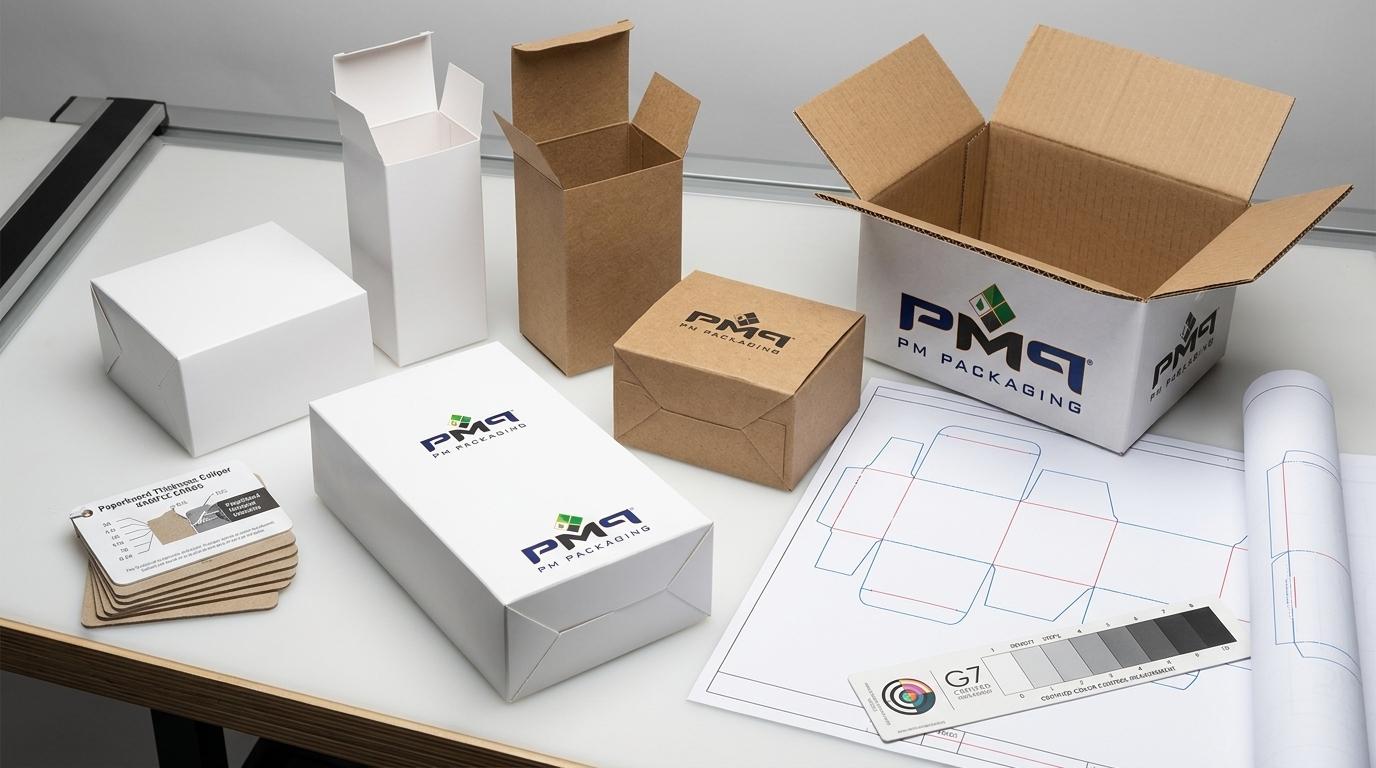
By pre-qualifying both virgin and recycled paperboard options, procurement teams can dynamically pivot between board grades based on mill availability and pricing trends without sacrificing structural performance or retail appearance.
3. Moving from Overseas Spot Buys to Nearshore Partnerships
Relying on overseas spot-market packaging introduces severe hidden costs. Ocean shipping takes 6 to 12 weeks, exposing brands to demand swings, container rate spikes, and port bottlenecks without guaranteed mill allocation.
Partnering with an established nearshore converter delivers reliable price stability:
High-volume nearshore manufacturers maintain direct allocation agreements with leading North American paper mills, securing reliable board supply during market crunches and preventing line downtime.
Rather than absorbing erratic monthly spot price jumps, enterprise brands establish transparent, index-linked contracts that smooth out price curves and make operating budgets predictable.
Eliminates unpredictable import duties, Section 301 tariffs, customs delays, and transpacific logistics overhead by manufacturing under duty-free North American trade agreements.
Packaging Sourcing Models: Strategic Comparison
The table below highlights how different commercial sourcing approaches compare across price stability, agility, working capital exposure, and supply security:
| Sourcing Strategy | Price Stability | Lead Time & Agility | Working Capital Exposure | Retail Surge Readiness |
|---|---|---|---|---|
| Overseas Spot Sourcing | Low (freight & currency risks) | 8 to 14 weeks | High (bulk container commitments) | Poor (vulnerable to stockouts) |
| Fragmented Domestic Sourcing | Moderate (subject to local surcharges) | 4 to 8 weeks | Moderate (inflexible batch minimums) | Moderate (limited buffer capacity) |
| Integrated Nearshore Partnership | High (contracted mill allocations) | 2 to 4 weeks (1–3 day ground transit) | Low (demand-driven releases) | Excellent (border-adjacent replenishment) |
4. Mitigating Volatility with Vendor-Managed Inventory (VMI)
Price spikes are often compounded by panic buying during sudden retail demand surges. Establishing a Vendor-Managed Inventory (VMI) or Kanban replenishment model near major logistics corridors provides a vital operational buffer:
- Strategic Safety Stock: Pre-converted folding cartons, blister cards, and microflute packaging are staged in climate-controlled border hubs for rapid dispatch.
- Demand-Driven Releases: Brands draw packaging as retail orders materialize, keeping cash flow agile and avoiding excess warehouse overhead.
- Rapid Ground Replenishment: Transit times of 1 to 3 days to West Coast and Southwest logistics centers (3 to 5 days nationwide) keep store shelves full without costly air freight.
The PM Packaging Advantage: 45+ Years of Sourcing Resilience
Managing raw material volatility requires a manufacturing partner with deep mill relationships, extensive converting capacity, and supply chain agility. With over 45 years of packaging expertise, PM Packaging provides national brands with the scale and stability needed to safeguard margins.
Headquartered with engineering and design in San Diego, California, and supported by high-capacity converting facilities in Baja California (Tijuana and Mexicali), PM Packaging delivers proven strategic value:
Direct North American Paper Alliances
Established mill relationships guarantee reliable access to virgin paperboard, recycled board, and microflute packaging.
G7 Master Certified Color Quality
Advanced multi-color lithographic printing and inline UV coatings ensure brand color consistency across all product lines.
Dual-Plant Redundancy
Multi-facility converting capacity eliminates single-source risk and guarantees uninterrupted retail fulfillment.
Safeguard Your Margins with a Packaging Sourcing Audit
Mitigating paperboard raw material volatility is not about reacting to price hikes—it is about engineering resilience directly into your packaging dielines and supply chain.
Whether you need to harmonize dielines across a multi-SKU portfolio, transition to lightweight microflute packaging, or secure dependable nearshore replenishment for national retail rollouts, PM Packaging has the manufacturing scale and technical expertise to support your growth.
Ready to de-risk your packaging supply chain and optimize raw material costs? Connect with the team at PM Packaging to schedule a comprehensive packaging and procurement audit today.
Request a Paperboard Sourcing & Dieline Audit
Speak with PM Packaging structural designers and procurement strategists to review your folding carton dielines, evaluate substrate alternatives, and establish index-linked pricing agreements.
Procurement Consultation & Technical Inquiries
San Diego CAD Design • Tijuana & Mexicali Converting Facilities • Folding Cartons • Litho-Laminated SFL Microflute • Blister Cards • G7 Master Color Control • ISO 9001:2015 • USMCA Duty-Free