
Material planning becomes increasingly important as packaging quantities grow.
A smaller packaging order may be produced from readily available paperboard, corrugated material, coatings, or specialty stock. If a material is unavailable, the team may be able to substitute another option or adjust the production schedule without significantly affecting the overall program.
High-volume orders provide less room for that flexibility.
Large commercial packaging programs may require substantial quantities of paperboard, corrugated sheets, liners, adhesives, coatings, foil, window film, and insert materials. These components must be available at the correct time, meet the approved specifications, and perform consistently across the entire production run.
A material shortage can delay printing and converting. An inconsistent paperboard lot can affect color, scoring, folding, and automated pack-out. A specialty finish that works on a prototype may become difficult to source or reproduce across hundreds of thousands of packages.
Effective material planning begins before the packaging order enters production. The objective is not simply to purchase enough material. It is to create a supply plan that supports consistent packaging quality, efficient production, and reliable repeat orders.
Select Paperboard According to Performance
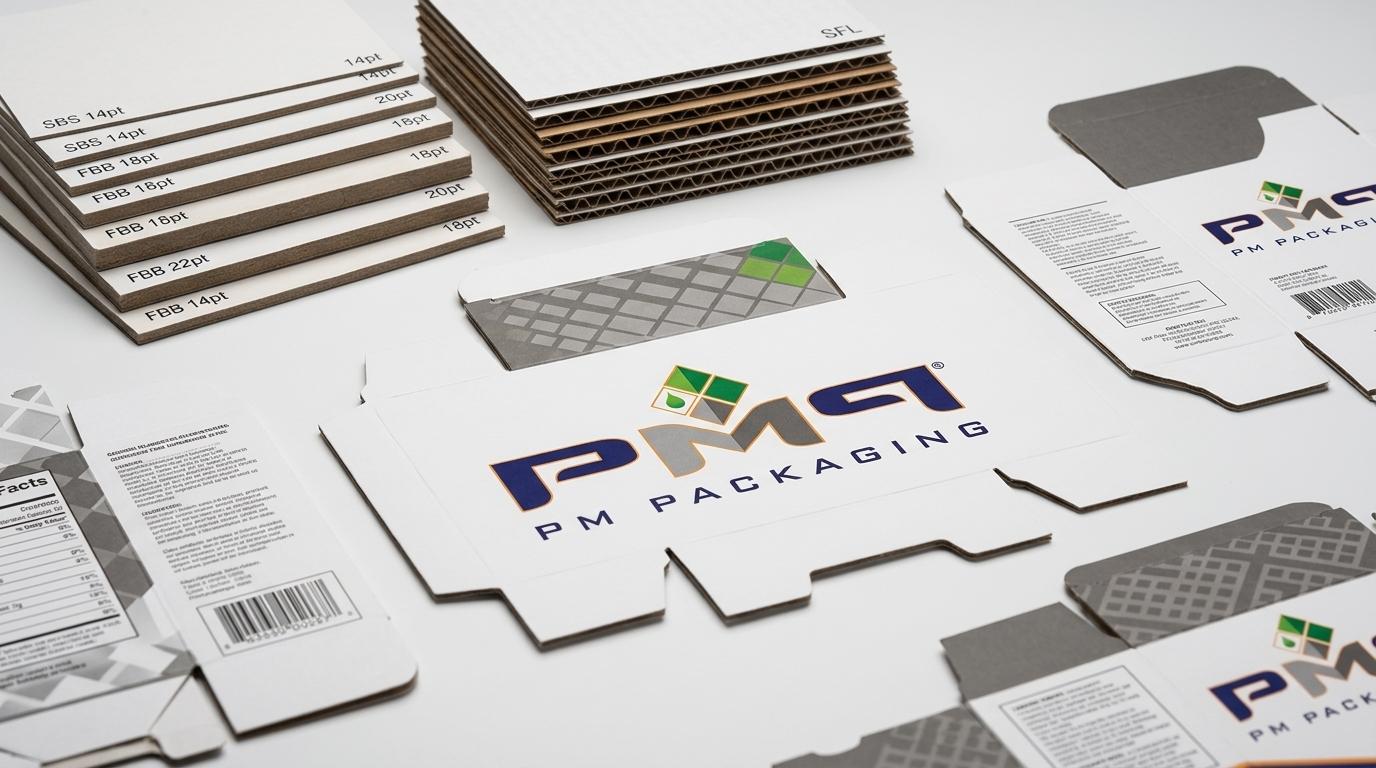
Folding cartons can be produced from several types and grades of paperboard. The correct material depends on the package’s structural, printing, finishing, and distribution requirements.
Important considerations include:
- Product weight
- Carton dimensions
- Panel size
- Required stiffness
- Folding performance
- Print surface
- Coating requirements
- Product contact
- Retail environment
- Distribution conditions
- Packing equipment
A heavier board is not automatically the best option. Excessive caliper may create difficult folds, require different scoring, add package weight, and increase material cost. A board that is too light may bow, tear, or fail to support the product.
Evaluate Sheet Yield Before Finalizing Dimensions
Sheet yield has a direct effect on material usage and unit cost.
The packaging supplier should determine how many carton blanks or components can be produced from each sheet. Blank orientation, nesting, grain direction, press size, and finishing requirements can all influence the layout.
A small dimensional adjustment may improve the number of units per sheet. Across a high-volume order, this can reduce paperboard consumption substantially.
Material efficiency should be evaluated during structural development rather than after the design is already approved.
Planning High-Volume Packaging Materials With PM Packaging
Material planning is a critical part of preparing a commercial packaging program.
PM Packaging works with brands and product manufacturers on packaging formats that may include:
- Folding cartons
- Single-face laminated packaging
- Luxury boxes
- Blister cards
- Product inserts
- Retail displays
- Inner packs
- Corrugated shipping components
Reviewing these elements together can help reduce material shortages, excess purchasing, inconsistent quality, and launch delays.
Build the Material Plan Before the Production Schedule Is at Risk
High-volume packaging requires more than an approved design and a finished purchase order.
The necessary paperboard, corrugated material, coatings, adhesives, inserts, and specialty finishes must be available in sufficient quantities and capable of performing consistently across the full production run.
The strongest programs confirm the package structure, calculate realistic material requirements, reserve critical materials, approve alternatives, and plan future replenishment before production begins.
Contact PM Packaging to discuss your package structure, projected quantities, SKU count, material requirements, production schedule, and replenishment plans. The PM Packaging team can help develop a material strategy designed to support reliable high-volume packaging production.