
Packaging inventory can determine whether a cross-border production line continues operating or comes to an unexpected stop.
A company may have every product component ready at its Mexican manufacturing plant but still be unable to complete production because folding cartons, blister cards, inserts, labels, or shipping cases have not arrived. At the other extreme, ordering too much packaging can fill valuable warehouse space and create substantial obsolete inventory when artwork, product claims, regulations, or demand forecasts change.
Managing packaging for a U.S.–Mexico supply chain therefore requires a deliberate inventory strategy.
Brands and manufacturers must decide how much packaging to produce, where to store it, when to release it, and how to protect production from demand changes or transportation disruptions. These decisions become more complex when a program involves multiple SKUs, several pack-out locations, retailer-specific versions, and packaging that crosses the border at different stages.
The strongest approach does not rely entirely on large inventories or just-in-time delivery. It establishes the right balance between economical production quantities, responsive replenishment, practical safety stock, and controlled packaging releases.
Why Packaging Inventory Requires Its Own Strategy
Packaging is sometimes treated as a secondary purchasing category. It may be ordered after product components, raw materials, and production schedules have already been established.
In practice, packaging is a critical production input.
A missing carton can stop a packing line as effectively as a missing product component. The difference is that printed packaging may be highly specific to a particular SKU, retailer, language, or regulatory version.
Cross-border programs can require inventory of:
- Folding cartons
- Blister cards
- Single-face laminated packages
- Rigid boxes
- Product inserts
- Dividers
- Labels
- Sleeves
- Inner packs
- Master shipping cases
- Retail displays
- Pallet components
- Assembly and kitting materials
Each component may have a different production lead time, minimum order quantity, storage requirement, and obsolescence risk.
The inventory plan should account for these differences rather than applying one stocking rule to every packaging item.
Map the Packaging Flow Before Setting Inventory Levels
Before choosing safety-stock quantities or reorder points, the company should document how packaging moves through the supply chain.
The map should identify:
- Where packaging is manufactured
- Where it is stored
- Where products are assembled
- Where final pack-out occurs
- Which packaging components cross the border
- Which party controls transportation
- Where customs clearance takes place
- Which facility owns the inventory
- Where quality inspections occur
- Where finished goods are distributed
For example, products may be assembled and packed in Tijuana using packaging manufactured nearby. Finished goods may then cross into the United States for distribution.
Another program may send products from Mexico to a U.S. contract packer, where retailer-specific packaging is added. In that case, some packaging inventory may need to remain in the United States while bulk products move north from Mexico.
The correct inventory model depends on the actual flow of materials. Stocking packaging at a corporate warehouse does not help a production line if the material is needed at a Mexican pack-out facility.
Place Inventory Close to the Point of Use
Packaging inventory is generally most useful when it is positioned near the facility that consumes it.
Keeping materials close to the pack-out operation can reduce replenishment distance and improve visibility into actual usage. It can also help production teams respond more quickly when schedules change.
For northern Mexico programs, near-border packaging production and storage can provide a practical alternative to materials moving through long overseas routes or distant domestic warehouses.
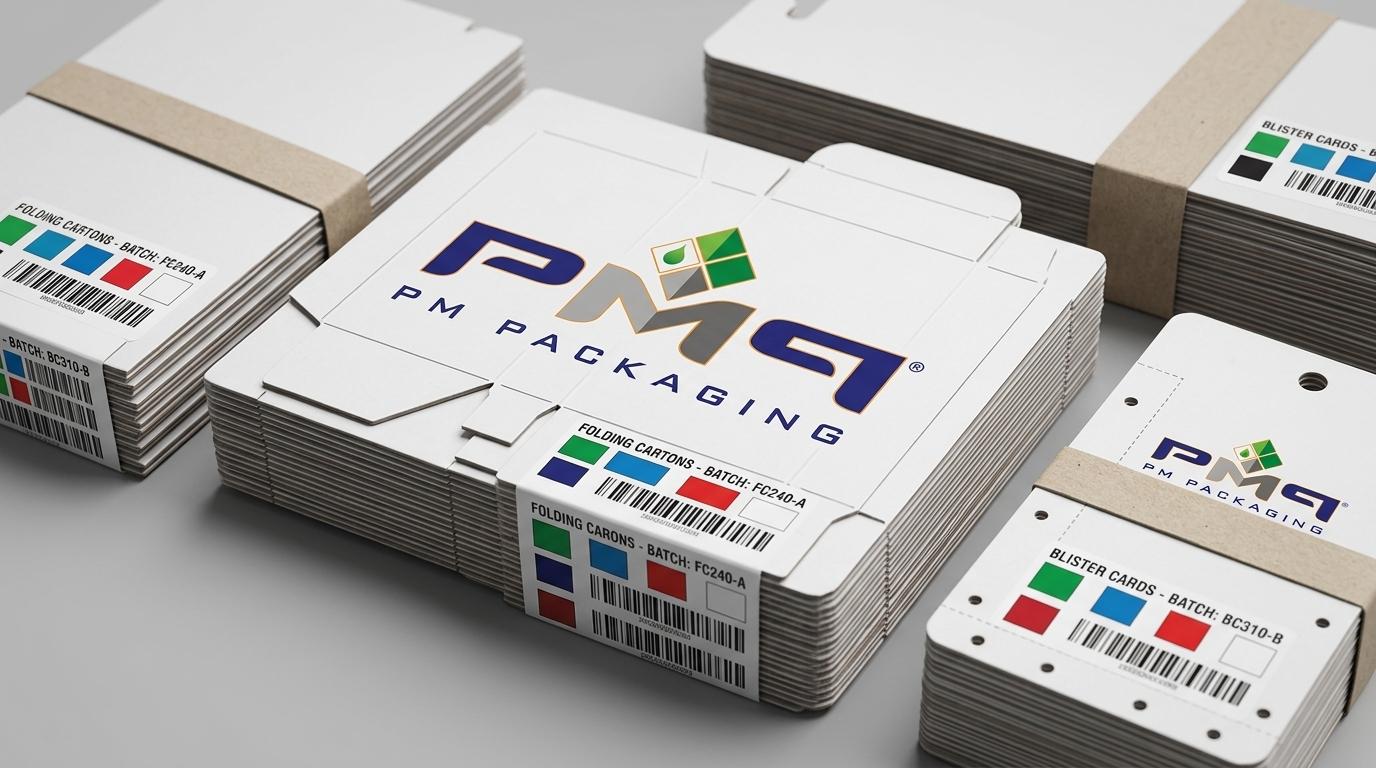
PM Packaging operates its corporate headquarters in San Diego along with folding-carton, blister-card, SFL, rigid-box, and fulfillment operations in Tijuana. It also lists distribution operations in Mexicali and the Mexico City region. This footprint can support packaging programs serving manufacturing and pack-out facilities on both sides of the border.
Inventory may be positioned at:
- The packaging manufacturer
- A Mexican manufacturing plant
- A contract packer
- A border-region warehouse
- A U.S. distribution facility
- A third-party logistics provider
- More than one location
The best location depends on storage capacity, consumption rate, transportation frequency, ownership terms, and the risk associated with a packaging shortage.
Separate Production Quantity From Delivery Quantity
One of the most useful inventory strategies is to separate the amount of packaging manufactured from the amount delivered at one time.
Producing a larger quantity may provide better manufacturing efficiency. Delivering that entire quantity to the product plant, however, may consume too much warehouse space or create unnecessary exposure to artwork changes.
A scheduled-release program can address both concerns.
Under this model, packaging is manufactured in an economical run and then released to the pack-out facility in smaller quantities according to an agreed schedule.
For example, a brand may order 300,000 folding cartons but receive them in monthly releases of 50,000 units. This can provide production efficiency while limiting the quantity stored at the product plant.
Scheduled releases may be based on:
- A fixed calendar
- Production forecasts
- Purchase-order releases
- Minimum and maximum inventory levels
- Consumption reports
- Retailer orders
- Product-launch phases
- Seasonal requirements
PM Packaging describes support for scheduled releases, replenishment programs, blanket orders, reorder points, forecast-based releases, and vendor-managed inventory for qualifying recurring programs.
Use Blanket Orders for Predictable Programs
A blanket purchase order can be useful when a company expects to consume a known quantity over a defined period but does not need all the packaging immediately.
The order may establish:
- Total program quantity
- Unit pricing
- Material specifications
- Artwork versions
- Release quantities
- Delivery locations
- Release dates
- Inventory ownership
- Storage terms
- Completion deadlines
This approach can give the packaging supplier better visibility into expected demand while allowing the customer to schedule deliveries around its production plan.
Blanket orders work best when forecasts are reasonably stable and both parties understand how changes will be handled.
Establish Safety Stock According to Risk
Safety stock protects production from variation.
It may be needed when product demand increases unexpectedly, a release is delayed, material usage is higher than planned, or transportation takes longer than expected.
The correct safety-stock level is not a universal percentage. It should reflect the risk associated with the individual packaging component.
Important factors include:
- Average consumption
- Peak consumption
- Packaging production lead time
- Transportation lead time
- Border-crossing exposure
- Forecast accuracy
- Supplier capacity
- SKU importance
- Artwork-change frequency
- Available storage space
- Cost of a production shutdown
A core carton used every day may justify more safety stock than a package for a limited retailer promotion.
Safety stock should be reviewed periodically rather than established once and left unchanged.
Segment Packaging by SKU Velocity
Not every SKU should use the same inventory policy.
High-Velocity Packaging
Packaging for core products may justify larger production runs, higher safety stock, frequent scheduled releases, defined minimum inventory levels, reserved production capacity, and automatic reorder triggers.
The cost of running out may be greater than the cost of holding additional inventory.
Moderate-Velocity Packaging
These components may use smaller blanket orders, monthly or quarterly releases, moderate safety stock, forecast reviews before each reorder, and shared structures where possible.
Low-Velocity or Specialized Packaging
Lower-volume packaging may require smaller production quantities, tighter inventory limits, order-to-demand planning, limited safety stock, greater use of common components, and careful approval before reprinting.
Applying one large minimum order to every SKU can produce years of excess packaging for slower-moving products.
Standardize Structures Across Product Families
Structural standardization can improve both inventory control and production efficiency.
Several products may be able to share:
- Carton dimensions
- Cutting dies
- Board specifications
- Inserts
- Closure styles
- Shipping cases
- Pallet patterns
- Packing procedures
The graphics may change while the physical structure remains consistent.
This reduces the number of unique materials the company must forecast, inspect, store, and replenish. It may also simplify tooling and operator training.
The objective is to create a manageable family of packaging platforms rather than one universal package.
Connect Packaging Releases to the Production Schedule
Packaging release dates should align with when the plant will actually use the material.
Delivering too early consumes warehouse space. Delivering too late threatens production.
The release process should consider:
- Planned production start
- Expected line rate
- Shift schedule
- Product-component availability
- Packaging receiving time
- Incoming inspection
- Internal material movement
- Holiday schedules
- Transportation frequency
- Border operating schedules
The product manufacturer and packaging supplier should agree on what date represents the true requirement.
Using precise definitions helps prevent misunderstandings.
Plan Inventory for Product Launches Differently
A launch carries greater uncertainty than an established recurring program.
Producing the entire annual packaging forecast before the launch can create significant risk.
A staged launch inventory plan may include:
- Packaging for production trials
- A limited initial release
- Safety stock for launch support
- A second release triggered by early sales
- Ongoing quantities based on confirmed consumption
This allows the program to respond to real demand while still protecting the launch from packaging shortages.
The supplier should understand the potential scale so materials, tooling, and capacity can be planned before the later releases are needed.
How PM Packaging Supports Cross-Border Inventory Programs
PM Packaging supports U.S.–Mexico packaging programs through account coordination in San Diego, manufacturing operations in Tijuana, and distribution locations in Mexicali and the Mexico City region. Its listed capabilities include folding cartons, blister cards, SFL packaging, rigid boxes, fulfillment, retail displays, and related packaging for products manufactured, assembled, packed, or distributed in either country.
For qualifying recurring programs, PM Packaging describes support for:
- Scheduled packaging releases
- Replenishment planning
- Blanket orders
- Forecast-based production
- Warehouse stocking
- Vendor-managed inventory
- Multi-SKU programs
- U.S. and Mexico pack-out operations
The proximity of the San Diego headquarters and Tijuana manufacturing operations can be especially useful for companies with plants or contract packers in Baja California. Packaging can be planned around the actual pack-out location while U.S. brand teams maintain access to account management and project coordination.
Build an Inventory Strategy Around Production Continuity
A reliable U.S.–Mexico packaging program does not depend on one large annual order or constant emergency replenishment.
It combines accurate production mapping, near-point-of-use inventory, scheduled releases, risk-based safety stock, SKU segmentation, structural standardization, controlled artwork versions, rolling forecasts, clear reorder points, and shared inventory visibility.
By treating packaging inventory as part of production planning rather than a separate purchasing activity, companies can reduce line interruptions, warehouse congestion, emergency transportation, and obsolete materials.
Contact PM Packaging to discuss your U.S. and Mexico production locations, packaging formats, SKU count, consumption forecasts, storage capacity, and replenishment requirements. The PM Packaging team can help evaluate an inventory and release strategy designed around ongoing cross-border production.