
Reducing the cost of a large folding carton program requires more than negotiating a lower price per box.
For brands producing hundreds of thousands or millions of cartons across multiple SKUs, much of the total cost is created by decisions made before the cartons ever reach production. Carton dimensions affect paperboard usage. Structural complexity affects folding and gluing. Specialty finishes influence setup and production speed.
A carton that costs slightly less to manufacture can ultimately cost more if it creates additional labor, packaging waste, warehouse inventory, or transportation requirements.
The strongest cost-reduction strategies evaluate the complete folding carton program.
By standardizing compatible structures, improving material utilization, simplifying pack-out, controlling inventory, and designing around commercial production requirements, brands can often reduce cost while maintaining or even improving packaging performance.
Start With Total Program Cost, Not Carton Price
Unit price is important, but it represents only one part of the packaging program.
A large folding carton program may create costs through:
- Paperboard material
- Lithographic printing
- Specialty coatings and finishes
- Cutting die tooling
- Die-cutting setups
- Folding and gluing labor
- Product inserts
- Packaging freight
- Warehouse storage
- Pack-out assembly labor
- Equipment setups
- Quality inspection
- Packaging scrap
- Master shipping cases
- Palletization
- Finished-goods freight
- Obsolete inventory write-offs
Optimizing one of these costs while ignoring the others can move expense rather than eliminate it. The program should be evaluated as one operating system.
Optimize Carton Dimensions for Material Yield
A small dimensional change can have a significant effect at high volume. Folding cartons are generally produced several at a time on a larger sheet. The number of carton blanks that fit on each sheet influences material consumption.
Reducing one panel slightly may allow an additional blank to fit on a production sheet. Across a large order, improved sheet utilization can reduce paperboard consumption considerably.
Material yield should be considered during structural development rather than only after artwork and tooling have already been approved.
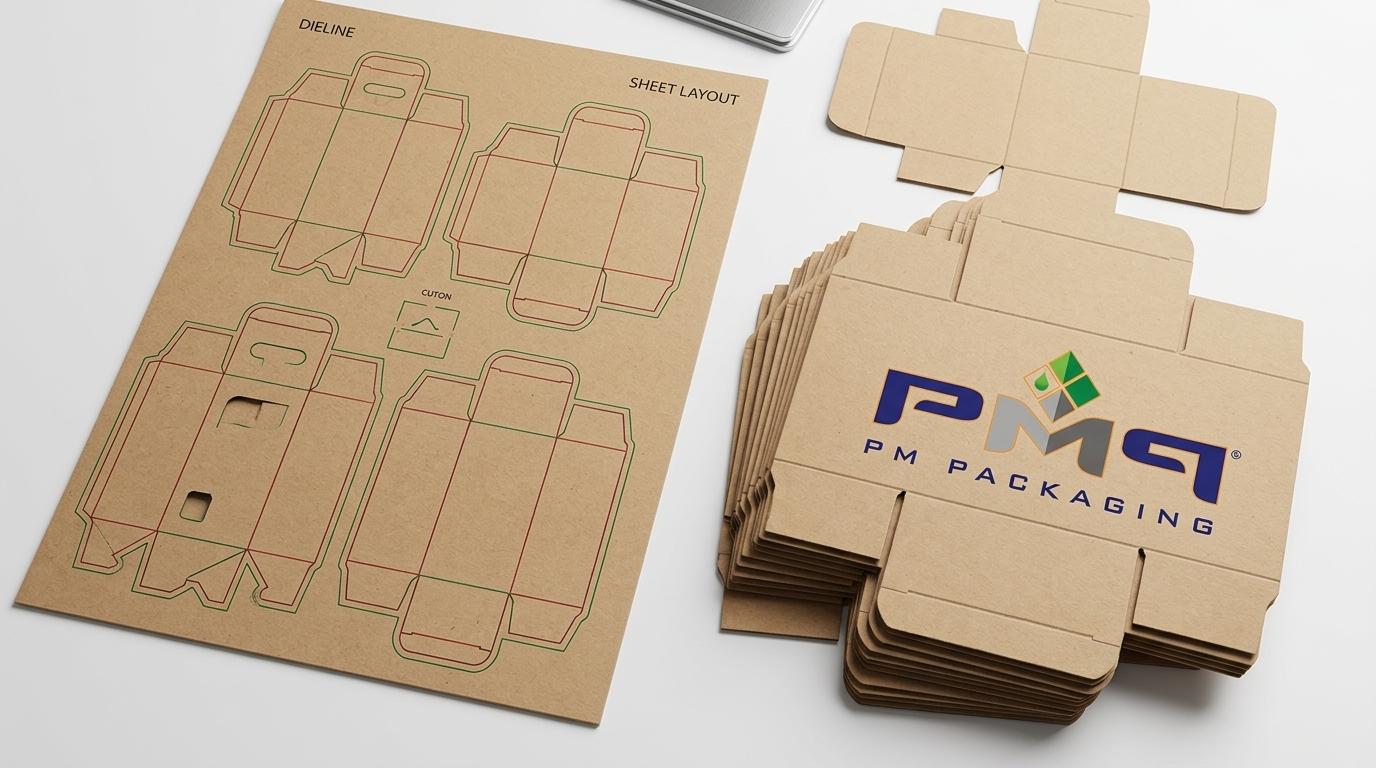
How PM Packaging Can Help Reduce Folding Carton Program Costs
Large folding carton programs provide more opportunities for optimization because small improvements can be multiplied across substantial quantities.
Areas of evaluation may include:
- Structural standardization
- Carton-size optimization
- Paperboard selection
- Sheet utilization
- Tooling consolidation
- Insert development
- Printing and finishing
- Pack-out efficiency
- Multi-SKU planning
- Master-case coordination
- Inventory and replenishment planning
- Retail-display integration
Rather than evaluating the folding carton only as an individual printed component, the complete program can be reviewed for opportunities to reduce material, labor, complexity, and distribution requirements.
Reduce Cost by Simplifying the Packaging System
The largest folding carton savings are not always found in negotiating another fraction of a cent from the carton price.
They may come from using fewer structures, improving sheet yield, reducing board where appropriate, eliminating a component, shortening pack-out time, consolidating tooling, reducing obsolete inventory, or fitting more products onto each pallet.
By reviewing folding cartons as part of the complete manufacturing and distribution system, brands can lower total program cost without compromising product protection, production reliability, or retail presentation.
Contact PM Packaging to discuss your folding carton portfolio, annual volumes, SKU count, current structures, pack-out process, and cost-reduction goals. The PM Packaging team can help evaluate opportunities to simplify and optimize a large folding carton program for commercial-scale production.