
Moving a package from an approved concept into a large commercial production run is a major transition.
During development, the team may work with a small number of prototypes, hand-assembled samples, digital renderings, and preliminary artwork. These tools are useful for evaluating the concept, but they do not prove that the package can be manufactured, packed, shipped, and presented consistently at commercial scale.
A package that looks correct as a prototype may still create problems when tens or hundreds of thousands of units enter production.
Score lines may not fold as expected. Specialty finishes may vary across a long print run. Inserts may take too long to assemble. Cartons may not open consistently on packing equipment. Product tolerances may create fit problems that were not visible in the original sample.
Preparing for commercial production requires every part of the packaging system to be reviewed before the full order is released.
The structure, materials, graphics, tooling, pack-out process, quality standards, shipping configuration, inventory plan, and production schedule must work together. The objective is not simply to produce a large number of packages. It is to produce them consistently without creating delays, excessive scrap, product damage, or costly rework.
Why Large Production Runs Require More Preparation
Small packaging quantities often allow more manual adjustment. An operator can reshape a carton, reposition an insert, correct an alignment problem, or spend additional time making each package look right. Those adjustments may not be practical during a high-volume operation.
At commercial scale, the package may need to move through:
- High-speed printing and converting
- Automated folding and gluing
- Carton-erecting equipment
- Manual or automated product loading
- Multiple packing shifts
- Several production facilities
- Case-packing operations
- Palletization
- Distribution centers
- National retail networks
Adding three seconds to the assembly process across 300,000 packages represents many additional labor hours. Commercial packaging preparation should focus on repeatability rather than evaluating only the appearance of one ideal sample.
Conduct a Trial Pack-Out
A trial pack-out is one of the most important steps before commercial production.
The trial should use:
- Production-representative products
- Intended packaging materials
- Final or near-final structures
- Actual inserts
- Normal operators
- Intended equipment
- Expected assembly methods
- Final shipping cases
Operators should be encouraged to explain where they hesitate or experience difficulty. A package may technically assemble correctly but still be unsuitable for a large run if it requires too many movements or frequent manual adjustment.
Confirm Compatibility With Automated Equipment
Packaging intended for automated lines must meet the equipment’s operating requirements.
Important factors may include:
- Blank dimensions
- Score placement
- Board stiffness
- Carton opening force
- Fold memory
- Glue-seam strength
- Flap alignment
- Surface friction
- Product orientation
- Machine tolerances
A carton that opens easily by hand may not open consistently through an automated erector. Material that is too flexible may not feed correctly. A line trial should use production-representative blanks, not only handmade prototypes.
Determine the Commercial Order Strategy
The full annual forecast does not always need to be produced in one order.
One Complete Production Run
Appropriate when demand is confirmed, artwork is stable, storage is available, and the quantity provides meaningful manufacturing efficiency.
Staged Production Runs
The program begins with an initial launch quantity followed by additional releases based on confirmed demand, reducing initial inventory exposure.
Blanket Order With Scheduled Releases
A larger quantity is committed while deliveries occur in smaller scheduled releases, combining manufacturing efficiency with reduced plant-level storage.
Preparing Commercial Packaging With PM Packaging
Preparing for a large commercial production run requires coordination across design, engineering, materials, graphics, manufacturing, pack-out, and distribution.
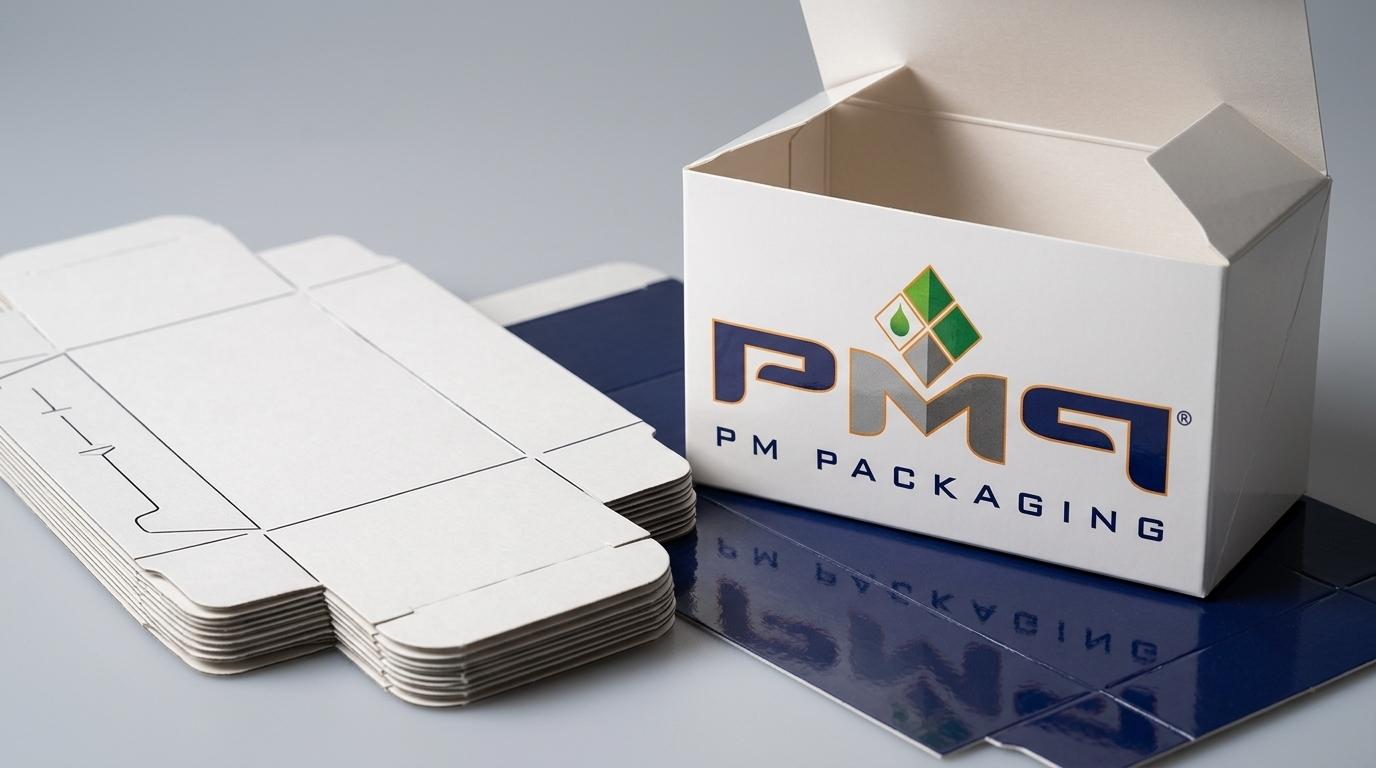
PM Packaging works with brands and product manufacturers on packaging formats such as:
- Folding cartons
- Single-face laminated packaging
- Luxury boxes
- Blister cards
- Product inserts
- Retail displays
- Inner packs
- Shipping components
Evaluating these requirements before the full order is released can reduce production interruptions, packaging scrap, product damage, and launch delays.
Move From Prototype to Production With Confidence
A package is ready for commercial production when it can be repeated consistently.
It must fit the product, use available materials, reproduce the approved graphics, run efficiently through pack-out, survive distribution, and meet the brand’s quality expectations across the entire order.
By stabilizing the product, approving production-representative samples, conducting pack-out trials, documenting quality standards, coordinating shipping components, and planning inventory carefully, brands can enter a large production run with fewer surprises.
Contact PM Packaging to discuss your product specifications, packaging format, projected quantity, artwork requirements, pack-out process, and distribution environment. The PM Packaging team can help prepare a packaging program for reliable commercial-scale production.