
Managing packaging for one product can require coordination between design, engineering, purchasing, production, quality, and logistics.
Managing packaging across dozens of SKUs introduces an entirely different level of complexity. Each product may have its own dimensions, graphics, regulatory information, barcode, sales forecast, retailer requirements, and pack-out process.
Without a coordinated packaging strategy, every new SKU can create another carton structure, cutting die, insert, artwork file, shipping case, inventory location, and production procedure. Over time, the company may find itself managing hundreds of packaging components for a product line that contains only a few dozen items.
The solution is not to force every product into identical packaging. It is to develop a structured packaging system that clearly separates what should remain consistent from what must vary.
By standardizing structures, organizing artwork, grouping similar products, controlling inventory, and planning replenishment according to actual demand, brands can manage large SKU portfolios without allowing packaging complexity to control the program.
Why Packaging Complexity Grows So Quickly
A new SKU rarely adds only one new packaging item.
A single product variation may require:
- A new folding carton
- A different insert
- A unique label
- A revised instruction sheet
- A new master shipping case
- A retailer-specific barcode
- Updated pallet labels
- New artwork approvals
- Separate warehouse locations
- Different packing instructions
Managing these risks requires avoiding common failure points such as:
- Incorrect packaging reaching the line
- Products packed into wrong cartons
- Outdated artwork being used
- Excess inventory for slow SKUs
- Shortages for high-volume products
- Duplicate tooling expenses
- Inconsistent brand presentation
- Inefficient packing procedures
- Increased warehouse requirements
- Longer product-launch timelines
Managing these risks requires a program-level approach rather than treating each SKU as an unrelated packaging project.
Group Products Into Packaging Families
A large SKU portfolio becomes easier to manage when products are grouped into logical packaging families.
Products may be grouped according to:
- Dimensions & Weight
- Shape & Form Factor
- Product Category
- Retail Channel
- Fragility Level
- Packing Method
- Required Protection
- Display Orientation
- Insert Configuration
For example, a skincare line containing 30 SKUs may be organized into several packaging platforms: small cartons for droppers, medium cartons for jars, tall cartons for pumps, larger kits for bundled products, and reinforced packages for glass containers.
The objective is to create the smallest reasonable number of packaging families that still provide an appropriate fit for every product.
Standardize Structural Designs Where Possible
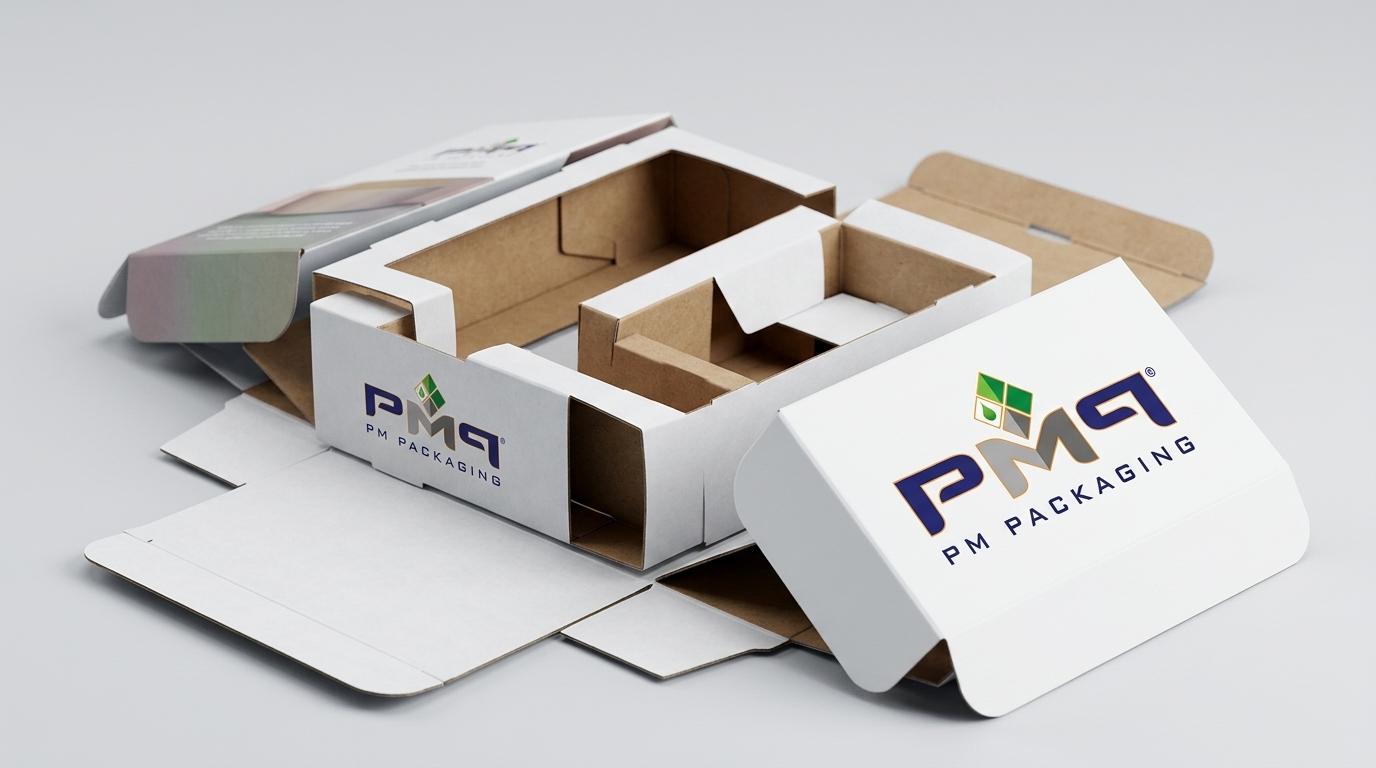
Structural standardization is one of the most effective ways to reduce multi-SKU packaging complexity.
Several products may be able to share:
- Carton dimensions
- Cutting dies
- Board specifications
- Closure styles
- Inserts
- Dividers
- Master shipping cases
- Pallet patterns
Shared structures reduce tooling costs, setup requirements, supplier complexity, warehouse locations, quality-control procedures, operator training, and replenishment planning.
A product does not need to be identical to another product to use the same outer structure. Small dimensional differences may be managed through product orientation, adjustable inserts, dividers, or controlled empty space.
Strengthen Artwork Version Control
Artwork management becomes one of the greatest risks in a large packaging program.
A controlled artwork process should record:
- Product SKU
- Packaging component number
- Dieline revision
- Artwork revision
- Approval date
- Approver
- Production status
- Replacement version
- Obsolescence instructions
Only approved files should be available for production. Drafts, proofs, and retired artwork should be clearly separated from active production files.
When an artwork revision is approved, the team should determine how current inventory will be handled. Existing packaging may be consumed, relabeled when appropriate, placed on hold, or destroyed.
Managing Multi-SKU Packaging With PM Packaging
Managing packaging across dozens of SKUs requires more than producing individual boxes. It requires a coordinated system for structural design, graphics, inventory, production, pack-out, shipping, and replenishment.
PM Packaging works with brands and product manufacturers to evaluate complete packaging programs across:
- Folding cartons
- SFL packaging
- Luxury boxes
- Blister cards
- Inserts
- Retail displays
- Inner packs
- Shipping cases
- Multi-SKU pack-out requirements
A program-level review helps consolidate structures, standardize materials, create modular inserts, improve SKU differentiation, simplify packing procedures, and reduce obsolete inventory.
Build a Packaging System That Supports Product-Line Growth
Packaging complexity does not have to increase at the same rate as the product line.
Brands can manage dozens of SKUs more effectively by creating packaging families, standardizing compatible structures, controlling artwork versions, segmenting inventory, and designing repeatable pack-out procedures.
The most successful systems preserve meaningful product and retail differences while simplifying everything the customer does not need to see.
Contact PM Packaging to discuss your product portfolio, SKU count, packaging formats, production volumes, retail channels, and pack-out requirements. The PM Packaging team can help evaluate a coordinated packaging system designed to support both existing products and future line expansion.