
Manufacturing products in Mexico can create a more responsive North American supply chain, particularly for brands selling through the United States.
Scaling commercial hardware packaging requires targeted engineering: Hardware packaging must endure heavy metal tool weight, rough customer handling in big-box retail environments, and high-humidity warehouse storage without card delamination. PM Packaging partners with high-volume brands to ensure G7 color consistency, structural durability, and predictable replenishment.
Rather than treating hardware packaging as generic paperboard, engineering teams must account for product geometry, hanging shelf wear, moisture barriers, and high-speed automated cartoning line tolerances.
Each model requires careful coordination.
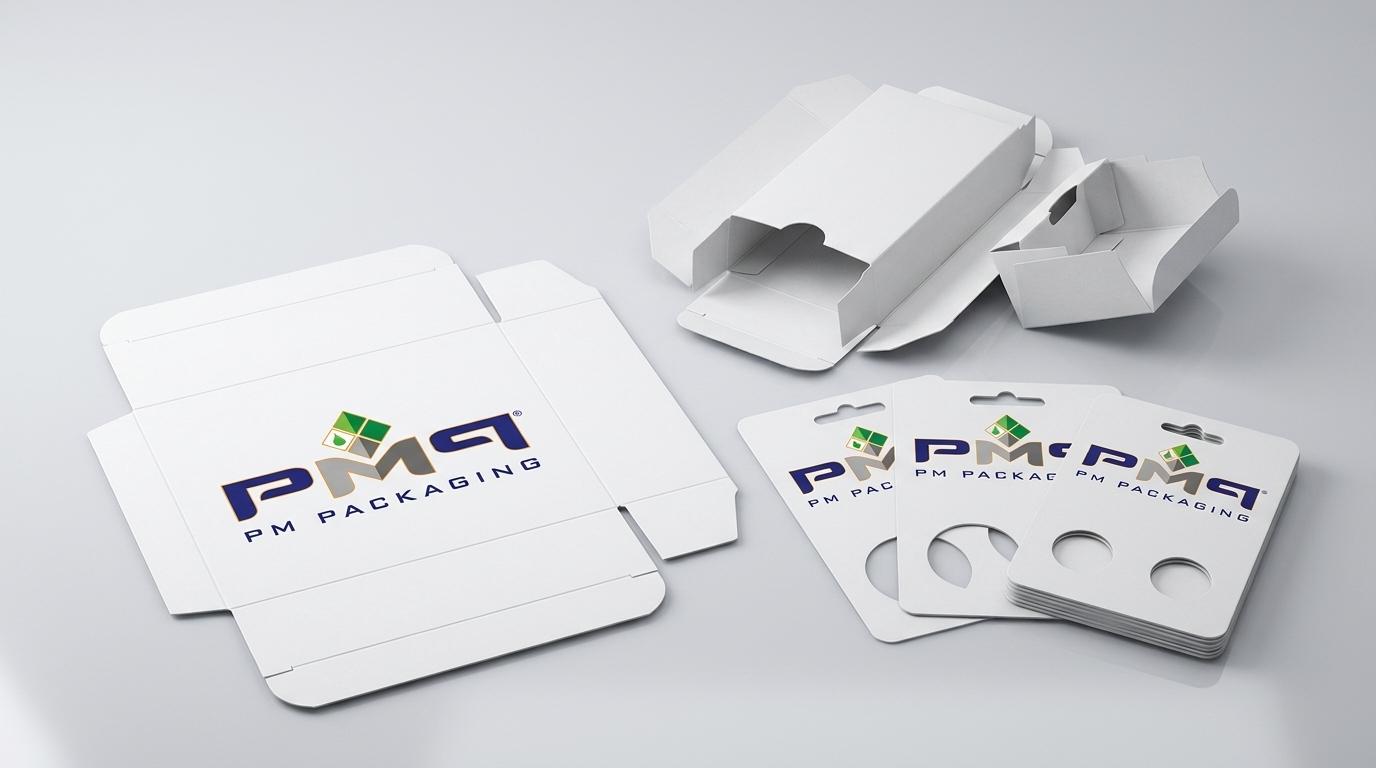
PM Packaging specializes in heavy-duty blister cards, trapped blister packaging, and fluted tool cartons for national hardware and industrial tool brands. High-speed gang printing and shared dielines reduce per-unit tooling costs while clear technical graphics guide buyers directly to the correct model.
PM Packaging is positioned to support these programs through its San Diego headquarters, manufacturing plants in Tijuana, and distribution operations in Mexicali and Mexico City. Its Tijuana operations include facilities for folding cartons and blister cards, single-face laminated packaging, rigid boxes, and fulfillment. The San Diego headquarters and Tijuana plants are located within the U.S.–Mexico border region, allowing packaging planning and manufacturing to remain close to many Baja California production operations.
Begin With the Complete Product Route
Packaging decisions should begin with a clear map of how the product will move from manufacturing to the customer.
The packaging team should identify:
- High-caliper heat-seal blister cards with fiber-tearing seal strength engineered for heavy fasteners and cutting tools
- Reinforced peg-hole punch dies designed to resist tearing on crowded big-box hardware retailer gondola displays
- Litho-laminated Single Face Flute (SFL) microflute for heavy power tool accessories, laser levels, and drill bit sets
- Gang-run blister card programs that reduce plate and tooling costs across expansive 50+ SKU tool catalogs
- Planogram-optimized packaging dimensions designed to maximize facings per linear shelf foot in national hardware chains
- Clear bilingual product fitment callouts, thread sizing guides, and technical application graphics
This information determines where packaging should be produced and delivered.
For example, retail cartons should normally be delivered to the location where products are inserted into them. Sending empty cartons to a separate warehouse may create another transportation step without adding value. Displays intended to be prepacked should generally move to the fulfillment location where the complete SKU assortment is available.
The packaging supply chain should be built around the pack-out location rather than only around the brand’s corporate office.
Decide Where Final Pack-Out Will Occur
One of the most important decisions is whether the product will receive its final retail packaging in Mexico or after entering the United States.
Final Pack-Out in Mexico
Packing the product near the manufacturing or assembly operation can reduce handling. Products can move directly from the production line into folding cartons, blister packaging, kits, or retail displays before being prepared for export.
This model may be appropriate when:
- The Mexican facility has the required packing equipment
- The product and packaging need to remain close together
- Labor-intensive assembly or kitting is required
- Finished retail goods are imported as complete units
- Packaging can be replenished reliably at the Mexican plant
- Quality inspections can be completed before export
Final Pack-Out in the United States
Some companies manufacture or assemble the product in Mexico and ship it north in bulk for final packaging.
This approach may be useful when:
- Several imported products are combined into one kit
- Retailer-specific versions are created in the United States
- Variable labels or promotional materials are added late
- Ecommerce orders require different configurations
- The U.S. facility already has established packaging equipment
- The brand wants to postpone SKU customization
Split or Hybrid Pack-Out
A hybrid program may complete some packaging operations in Mexico and others in the United States. For example, products may be placed into primary retail cartons in Mexico, with retailer-specific sleeves or display trays added at a U.S. fulfillment center.
Source Packaging Near the Manufacturing Operation
Packaging sourced close to the product plant can reduce exposure to long transportation routes and support faster replenishment.
PM Packaging manages projects through its San Diego headquarters and operates multiple manufacturing locations in Tijuana. Its listed locations include a Nueva Tijuana facility for folding cartons and blister cards, another Nueva Tijuana facility for single-face laminated boxes, and a Cañón del Padre operation for rigid boxes and fulfillment. PM Packaging also lists distribution centers in Mexicali and the Mexico City area.
This regional footprint can support companies manufacturing or packing products in locations such as:
- Tijuana
- Tecate
- Mexicali
- Other Baja California industrial areas
- Mexico City and the surrounding manufacturing region
- Additional Mexican production locations supplied through coordinated distribution
For products manufactured in the Tijuana area, packaging production can remain close to the assembly or pack-out operation. The brand’s U.S. team can coordinate design, project management, and approvals through San Diego while packaging is manufactured for delivery to the Mexican facility.
PM Packaging describes this model as U.S.-based account management combined with high-capacity manufacturing in Tijuana and cross-border delivery options for U.S. and Mexican facilities.
Select Packaging for the Actual Production Process
Packaging should be designed around the way products are packed, not only around the final retail appearance.
The packaging supplier should understand:
- Whether assembly is manual or automated
- How quickly the production line runs
- How operators receive flat packaging
- Which direction the product enters the package
- Whether inserts are loaded separately
- How closures are secured
- Whether adhesive is applied
- Where barcodes or date codes are printed
- How completed packages are inspected
- How packages enter the shipping case
A folding carton that works well during hand assembly may not run consistently on automated equipment. An insert that presents the product attractively may still be too slow to load at the required production rate.
Before approving the final design, the packaging should be tested in conditions that represent the Mexican pack-out facility as closely as possible.
Plan for U.S. Packaging and Labeling Requirements
Products manufactured or packed in Mexico must still satisfy the requirements of the market where they will be sold.
For products entering the United States, the brand should review all applicable labeling, safety, retailer, and industry requirements before artwork approval.
Depending on the product category, required information may include:
- Product identity
- Net quantity
- Ingredients
- Directions
- Warnings
- Responsible company information
- Country-of-origin marking
- Lot or date codes
- Regulatory statements
- Retail barcodes
- Recycling or disposal information
CBP states that, unless an exception applies, foreign-origin articles or their containers imported into the United States must be marked to indicate the country of origin to the ultimate purchaser. Determining origin can be more complex when components come from several countries or when assembly takes place in Mexico, so companies should verify the proper marking with their customs broker or qualified trade advisor.
Requirements also vary by product category. For example, imported foods must meet U.S. food-labeling laws, and FDA guidance states that imported and domestically produced food products are subject to the same U.S. legal requirements. Cosmetics and over-the-counter products have their own labeling rules.
Establish Strong Artwork Version Control
Cross-border packaging programs can involve several teams working from different locations.
Without clear version control, a plant may receive an outdated carton, incorrect barcode, old ingredient list, or artwork intended for another retailer.
Each packaging file should include controlled identifiers such as:
- Product name
- SKU number
- Retailer
- Language version
- Artwork revision
- Dieline revision
- Approval date
- Production status
- Obsolescence date
Only formally approved files should be released to production.
When artwork changes, the brand should determine what happens to existing packaging inventory. The production and warehouse teams in Mexico should receive clear instructions so outdated packaging does not return to the line.
Use Packaging That Fits the Product and Channel
PM Packaging’s listed capabilities for U.S.–Mexico programs include:
Folding Cartons
Folding cartons can support high-volume consumer products requiring detailed printing and efficient flat storage. They may be suitable for manual or automated packing operations.
Blister Cards
Blister cards can present small products visibly while supporting hanging retail displays. Card thickness, coating, sealing requirements, and product retention should be matched to the packing equipment.
SFL Packaging
Single-face laminated packaging can add rigidity when products require more strength than conventional paperboard while still needing strong retail graphics.
Rigid Boxes
Rigid boxes may support luxury products, kits, and high-value presentations. Assembly labor, storage requirements, and shipping volume should be considered carefully.
Retail Displays
Displays can be assembled and packed near the product-manufacturing operation, helping preserve the intended multi-SKU arrangement before the display enters U.S. distribution.
How PM Packaging Supports Mexico Manufacturing Programs
PM Packaging supports brands, contract manufacturers, and co-packers with products manufactured, assembled, packed, or fulfilled in Mexico and the United States.
Its location network includes:
- San Diego, California: Corporate headquarters for account management and project coordination
- Nueva Tijuana, Baja California: Production of folding cartons and blister cards
- Nueva Tijuana, Baja California: Production of single-face laminated boxes
- Cañón del Padre, Tijuana: Rigid-box production and fulfillment
- Mexicali, Baja California: Distribution operations
- Naucalpan de Juárez in the Mexico City region: Distribution operations
The San Diego headquarters and Tijuana production plants provide a border-region footprint for companies manufacturing products in northern Mexico. PM Packaging can also coordinate packaging for programs serving facilities in other parts of Mexico through its broader manufacturing and distribution network.
Build the Packaging Supply Chain Around the Product
Products manufactured in Mexico need packaging that arrives at the right plant, in the right quantity, and in the correct approved version.
The most reliable programs begin by mapping the complete production route. The brand should decide where final pack-out occurs, design the package around the actual line, confirm U.S. labeling requirements, coordinate customs planning, and establish inventory and replenishment procedures before the launch.
Packaging should not be treated as a final item to order after the product has already entered production. It is a critical manufacturing input that affects line performance, distribution, retailer acceptance, and the customer experience.
Contact PM Packaging to discuss your manufacturing location, product category, packaging format, SKU count, anticipated volume, pack-out process, and U.S. distribution requirements. The PM Packaging team can help develop a coordinated packaging program built around cross-border production and ongoing North American supply.