
Specialty finishes can make packaging feel premium, distinctive, and more valuable at retail.
Foil stamping can draw attention to a logo. Embossing can add tactile depth. Matte or soft-touch coatings can create a refined surface. Spot gloss can highlight selected graphics. Metallic inks can help a package stand apart within a crowded category.
The challenge is maintaining those effects when packaging moves into a large commercial order.
A finish that looks excellent on a handful of samples may become more difficult to reproduce across 100,000, 500,000, or more packages. Material variation, tooling wear, registration, coating application, production speed, and handling can all influence the final result.
For large brands, the goal should not be to eliminate specialty finishes simply because production volume is high. The goal is to make those finishes measurable and repeatable.
Why Specialty Finishes Become More Difficult at Scale
Large production orders require decorative processes to remain stable over long periods.
Potential variation can come from:
- Paperboard material lots
- Ink density shifts
- Coating application thickness
- Foil stamping temperature
- Foil stamping pressure
- Die registration
- Embossing pressure
- Equipment production speed
- Tooling wear
- Environmental humidity
- In-line material handling
That is why specialty finishes should be treated as controlled production specifications rather than decorative instructions.
Create a Finish Specification Sheet
Every specialty finish should have a controlled specification.
The record may identify:
- Foil manufacturer and reference code
- Foil color and sheen target
- Finish type and coating brand
- Embossing die tool ID
- Spot gloss percentage target
- Substrate paperboard caliper
- Artwork layer reference
- Approved physical master sample ID
This prevents future production from depending on informal descriptions such as "the same gold as last time."
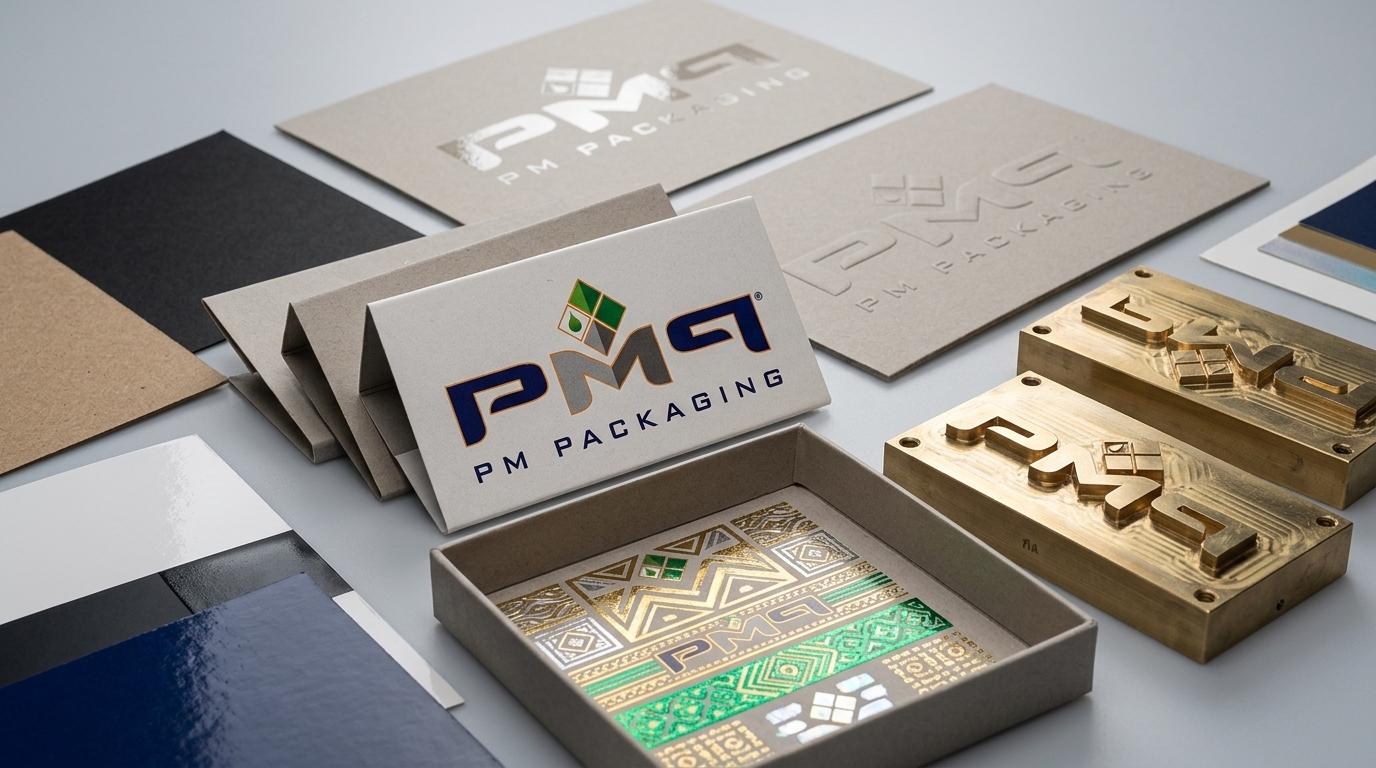
Specialty Finish Control With PM Packaging
Large commercial packaging programs require specialty finishes to remain consistent from prototype through repeat production.
PM Packaging works with brands and product manufacturers on packaging programs involving:
- Folding cartons
- Single-face laminated packaging
- Luxury boxes
- Product inserts
- Retail displays
- Multi-SKU packaging programs
Reviewing decorative features together with structural engineering helps ensure that specialty finishes support the package without creating avoidable manufacturing problems.
Premium Finishes Need Production Discipline
Specialty finishes can remain part of large-scale packaging programs when they are designed and managed for commercial production.
Materials should be controlled. Foils and coatings should be specified. Embossing should have measurable standards. Tooling should be maintained. Production samples should be approved.
Focused foil, controlled embossing, appropriate coatings, and standardized finishing systems can provide a premium appearance without making the package unnecessarily difficult to manufacture.
Contact PM Packaging to discuss your packaging structure, production quantities, materials, specialty finishes, SKU count, and quality requirements. The PM Packaging team can help evaluate folding cartons, SFL, luxury packaging, and related components for specialty-finish programs designed for commercial-scale production.