
For growing consumer packaged goods (CPG) brands operating across multiple manufacturing plants, regional co-packers, and contract packaging networks, operational agility depends on packaging interchangeability.
When regional facilities or external packagers use slightly different dielines for the same retail SKU, packaging inventories become siloed, changeovers drag on, and machine jams multiply. High-speed automated cartoning lines—running food, personal care, wellness, or consumer goods—thrive on physical consistency.
Standardizing folding carton dielines across your manufacturing footprint eliminates line stoppages, simplifies corporate procurement, and guarantees uniform retail presentation on shelves at national retailers like Walmart, Target, Costco, Sam's Club, Sephora, and Ulta.
The Hidden Costs of Dieline Fragmentation
Dieline fragmentation typically develops organically as brands scale. When onboarding regional co-packers or integrating acquired product lines, local plant teams often tweak carton dimensions, flap angles, or glue tabs for specific machines.
Over time, this creates serious operational friction across the enterprise supply chain:
Trapped Regional Inventory
When carton inventory is tied to a single facility's unique machine setup, stock cannot be transferred between plants during regional demand surges, increasing stockouts and inventory write-downs.
Extended Line Changeovers
Inconsistent carton geometries force operators to spend hours recalibrating vacuum cups, guide rails, tuck plows, and glue heads between production runs.
Frequent Machine Stoppages
Subtle variations in score resistance, tuck flap angles, or glue tab placement cause cartons to skew or fail to erect at full speeds, reducing overall equipment effectiveness (OEE).
Redundant Tooling Expenses
Maintaining dozens of proprietary cutting dies and printing plates for minor dieline variations inflates capital costs and complicates version control.
Key Pillars of a Unified Master Dieline Architecture
To unlock cross-facility agility and protect high-speed cartoning performance, enterprise procurement and packaging engineering teams should establish a centralized master dieline program built on four strategic pillars:
1. Centralized Master CAD Architecture
Establishing a single, version-controlled CAD master dieline for each primary carton format creates a universal standard across all converting and packaging facilities. Harmonizing key exterior dimensions ensures carton blanks run interchangeably across both continuous-motion and intermittent automated cartoning equipment.
2. Universal Flap and Closure Geometry
Automated cartoners rely on mechanical plows to fold and tuck flaps at high velocities. Standardizing tuck flap chamfers, dust flap clearance radiuses, and locking tab angles ensures cartons fold cleanly without panel collisions across end-load, top-load, and wrap-around cartoning systems.
3. Controlled Score Pre-Breaking and Crease Mechanics
Carton blanks must open effortlessly from flat sleeves into crisp rectangular structures. A standardized specification mandates that converting partners perform inline score pre-breaking during folding and gluing. Pre-breaking major crease lines relieves board tension, lowering the opening force required by machine vacuum cups and eliminating carton collapse.
4. Precision Substrate and Dimensional Tolerances
Whether running premium virgin paperboard for pristine retail graphics or eco-friendly recycled board for sustainability mandates, multi-plant operations require strict substrate consistency. Working with converters who enforce rigorous dimensional micro-tolerances ensures carton thickness, fiber direction, and board stiffness remain identical across every production batch.
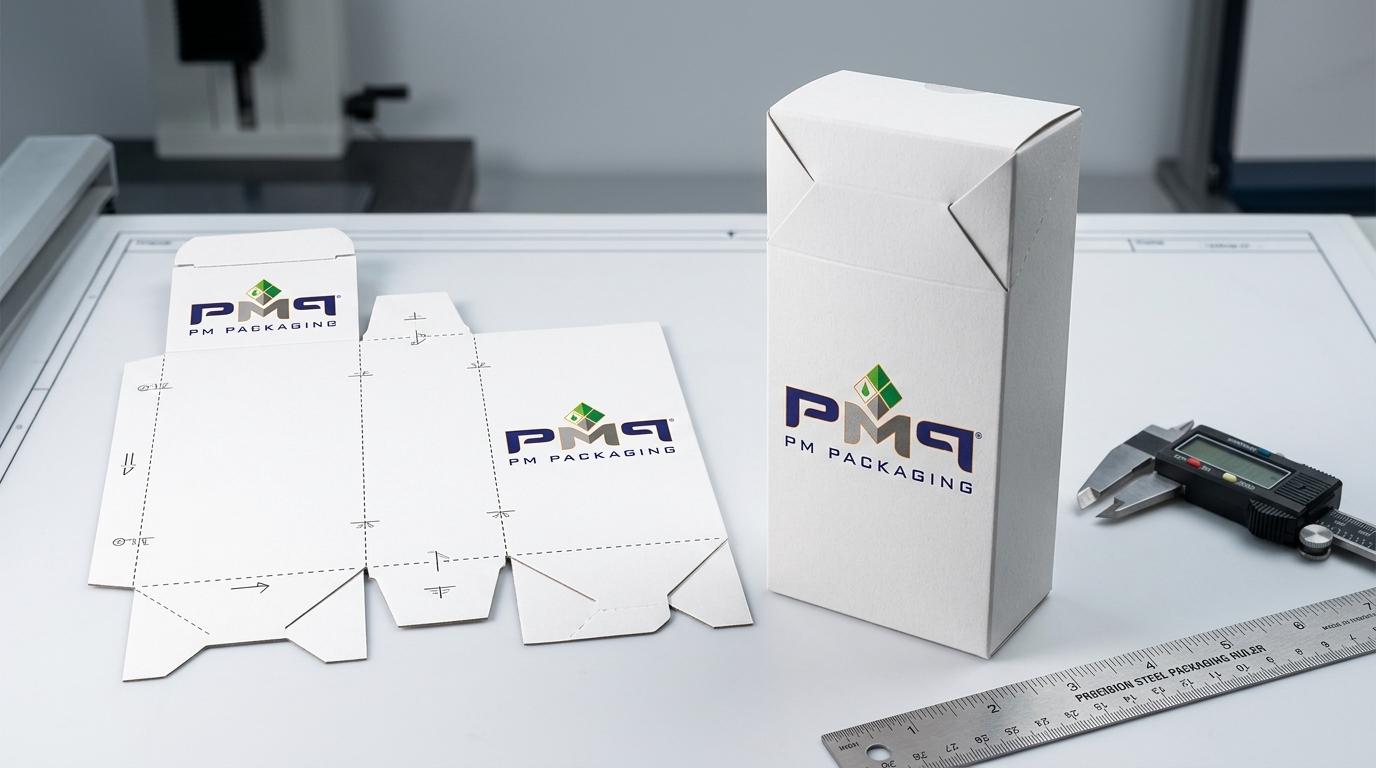
Fragmented Dielines vs. Standardized Master Dieline Program
Comparing a fragmented packaging supply chain to a unified master dieline architecture highlights substantial operational advantages:
Operational Comparison Matrix
| Operational Parameter | Fragmented Plant-Specific Dielines | Standardized Master Dieline Program |
|---|---|---|
| Inventory Flexibility | Siloed by plant; high risk of regional stockouts | 100% interchangeable across all production facilities |
| Line Changeover Time | Lengthy manual adjustments and machine tuning | Fast, repeatable changeovers with standard machine recipes |
| Cartoner Jam Risk | High; inconsistent opening force and panel drift | Minimal; uniform score pre-breaking and flap geometry |
| Procurement Scale | Split across small, fragmented production batches | Consolidated high-volume runs for maximum cost efficiency |
| Tooling & Die Costs | Redundant tooling expenses across regional converters | Streamlined master tooling with centralized digital assets |
| Retail Shelf Uniformity | Subtle variations in carton shape and finish | Flawless brand consistency across national distribution |
Supply Chain Resilience: The Nearshore Converting Advantage
Standardizing folding carton dielines across a multi-facility enterprise requires a converting partner with the agility to support seamless cross-border logistics. Sourcing cartons from overseas suppliers introduces lead times of 6 to 12 weeks, making physical dieline testing, pilot runs, and rapid tooling adjustments painfully slow.
Partnering with an integrated nearshore packaging converter provides immediate operational resilience. With centralized structural engineering teams collaborating directly alongside your brand packaging engineers, dieline prototypes and pre-production machine qualification samples can be rapidly produced and tested on your packaging lines before full-scale manufacturing.
Furthermore, dual-plant nearshore capacity ensures built-in production redundancy. If one facility experiences sudden demand spikes, carton production shifts seamlessly without requiring new tooling or dieline redesigns.
The PM Packaging Advantage: Engineered for Enterprise Scale
With over 45 years of packaging expertise, PM Packaging helps national CPG brands harmonize folding carton dielines and optimize high-speed automated packaging lines. Headquartered with structural design and CAD engineering in San Diego, California, PM Packaging operates high-capacity converting facilities in Baja California (Tijuana and Mexicali).
- Automated Line Optimization: High-speed printing, precision die-cutting, multi-stage folding-gluing with score pre-breaking, and electronic glue verification ensure flawless cartoner performance.
- Comprehensive Packaging Portfolio: Custom folding cartons, high-impact laminated microflute packaging, luxury rigid setup boxes, POP displays, and high-efficiency printed blister card packaging.
- Certified Quality Standards: G7 Master certified color consistency and ISO 9001 quality management guarantee visual brand uniformity and structural precision across every run.
- 100% Tariff-Free USMCA Supply Chain: Nearshore manufacturing eliminates overseas port delays and import tariffs, providing reliable 1 to 3 day ground shipping to West Coast and Southwest hubs (3 to 5 days nationwide).
Streamline Your Packaging Operations with PM Packaging
Standardizing folding carton dielines is one of the most effective strategies for multi-facility CPG brands to increase packaging line throughput, reduce tooling costs, and eliminate inventory bottlenecks. By partnering with an experienced converting specialist, brand leaders ensure every carton runs smoothly on automated lines and stands out on retail shelves.
Ready to standardize your folding carton program across your manufacturing network? Connect with the packaging engineering team at PM Packaging to schedule a structural packaging audit and request machine qualification samples today.