
For retail brand directors, procurement executives, and supply chain managers supplying major North American retailers, the West Coast logistics corridor—spanning Southern California’s Inland Empire, the Central Valley, Phoenix, and the Pacific Northwest—serves as the critical gateway for high-velocity distribution.
Every week, thousands of truckloads carrying consumer packaged goods, consumer electronics, hardware, personal care products, and specialty beverages arrive at distribution centers (DCs) operated by retail powerhouses such as Walmart, Target, Costco, Sam’s Club, and Home Depot.
In this high-volume environment, one of the most persistent margin drains is surprisingly simple: shipping excess air. When secondary cartons and primary packages are not structurally optimized for standard pallet footprints, brands pay to transport empty space across highways and store air in expensive fulfillment centers.
Optimizing pallet cube utilization is no longer just a warehouse management metric—it is a vital competitive strategy that protects product margins, ensures strict retail compliance, and accelerates speed to shelf across demanding retail networks.
The Strategic Cost of Shipping Air in Retail Supply Chains
Retail distribution networks operate under rigorous logistics standards designed to maximize freight density and dock throughput. When products arrive on standard 48-by-40-inch pallets with improper stacking patterns, excessive carton headspace, or unstable load profiles, the financial and operational penalties mount quickly across the entire distribution lifecycle:
1. Inflated Freight and Storage Costs
Unused vertical space and inefficient carton nesting directly reduce the number of sellable units per truckload. This drives up freight costs per unit across both full-truckload (FTL) and less-than-truckload (LTL) shipments while wasting expensive racking and floor space at fulfillment centers.
2. Strict Retail Vendor Compliance & OTIF Chargebacks
National retailers and club stores enforce strict rules regarding pallet overhang, load height, weight distribution, and pallet stability. Non-compliant pallets risk costly vendor chargebacks, dock rejections, receiving delays, or mandatory re-palletization penalty fees.
3. Transit Damage, Crushing, and Inventory Shrinkage
Cartons with excess internal void space or weak structural support are highly vulnerable to crushing, corner fatigue, and shifting during cross-country transit, resulting in damaged merchandise, compromised retail presentation, and unsellable inventory.
By engineering primary packaging and secondary shippers to work harmoniously with standard pallet dimensions, enterprise brands unlock significant freight savings while improving on-shelf presentation and structural integrity.
Structural Engineering Strategies That Maximize Pallet Density
Achieving optimal pallet density requires a holistic approach that bridges primary carton design, secondary master packaging, and retail merchandising formats. Leading retail suppliers implement three core structural engineering disciplines:
1. Right-Sizing Primary Folding Cartons
Many legacy packages carry excess internal headspace that serves no functional purpose. By re-engineering custom folding cartons—whether utilizing crisp virgin solid bleached sulfate (SBS) paperboard or high-performance recycled paperboard (CRB/CCNB)—structural designers can eliminate wasted volume while maintaining premium brand aesthetics. Tightening carton dimensions by even fractions of an inch can dramatically increase the number of units that fit into each master shipper tier and standard pallet footprint.
2. Upgrading to Laminated Microflute Packaging
For heavier items, multipacks, or hardware tools, traditional corrugated boxes often add unnecessary bulk and tare weight. Laminated microflute packaging (E-flute, F-flute, and N-flute single face lamination) provides exceptional structural stiffness, vertical compression strength, and transit durability with a much slimmer profile. This compact format allows brands to pack more layers per pallet while showcasing vibrant, photographic lithographic print on retail shelves.
3. Modular Retail-Ready Packaging and PDQ Trays
Retail-ready packaging (RRP) and PDQ display trays must balance rapid retail deployment with tight logistics footprints. Designing modular trays that fit cleanly into standard 48x40 pallet footprints without gaps or overhang ensures maximum pallet cube utilization. This modularity speeds up manual and automated pack-out while delivering seamless dock-to-floor execution at club stores and mass merchants.
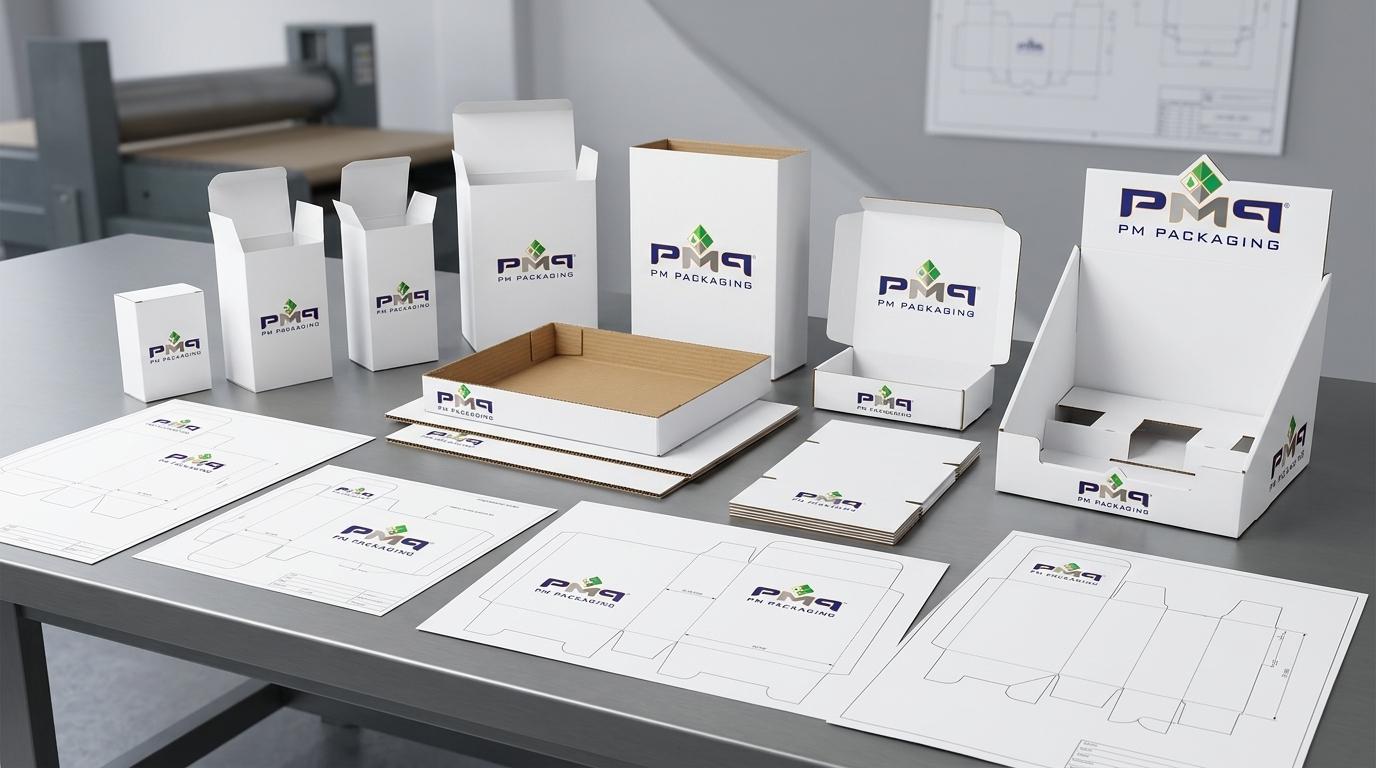
Pallet Optimization: Packaging Format Comparison
The following technical comparison highlights how different commercial packaging formats balance pallet density, structural protection, and retail merchandising impact across high-volume distribution networks:
Packaging Format Performance & Pallet Efficiency
| Packaging Format | Pallet Cube Efficiency | Structural Durability | Retail Merchandising Fit | Best Application |
|---|---|---|---|---|
| Standard Oversized Cartons | Low (High air volume) | Moderate | Basic retail shelf | Low-velocity legacy SKUs |
| Right-Sized Custom Folding Cartons | High (Maximized units/layer) | Excellent for lightweight goods | High-impact retail graphics & finishes | Cosmetics, OTC wellness, specialty food |
| Laminated Microflute Packaging | Very High (Slim, rigid profile) | Superior crush & stacking resistance | Photographic retail display & club presentation | Consumer electronics, hardware, beverage multipacks |
| Integrated Modular PDQ Display Trays | High (Optimized modular footprint) | Heavy-duty pallet stability | Fast dock-to-floor club store deployment | Club stores (Costco, Sam’s Club), mass retail endcaps |
The Nearshore Advantage for West Coast Distribution
Maximizing pallet efficiency is only half the equation; brand agility and replenishment speed complete the operational strategy. Brands relying on overseas suppliers in Asia face 10-to-16-week lead times, making iterative structural redesigns slow, costly, and risky when retail buyers request immediate packaging adjustments.
With over 45 years of packaging expertise, PM Packaging offers an agile, nearshore manufacturing model headquartered in San Diego, California, with high-capacity converting facilities across Baja California (Tijuana and Mexicali). This strategic location delivers distinct operational advantages for enterprise brands:
1 to 3-Day Ground Transit
Finished folding cartons, microflute packaging, and retail displays reach Southern California distribution hubs and Western regional logistics centers in days rather than months.
100% Tariff-Free USMCA
Eliminates transpacific ocean shipping disruptions, volatile port container demurrage, and unpredictable Section 301 import tariffs with fully certified USMCA compliance.
Rapid Prototyping & Testing
PM Packaging’s structural engineering team works directly with brand procurement and packaging engineers to rapidly test dielines, optimize pallet patterns, and ensure compliance.
Maximize Your Packaging Efficiency with PM Packaging
Optimizing pallet cube utilization is one of the most effective ways for high-volume retail suppliers to reduce freight spend, eliminate transit damage, and satisfy demanding retail buyers.
Whether you are launching a national club store rollout, redesigning a multi-SKU retail portfolio, or transitioning to high-efficiency laminated microflute packaging, PM Packaging provides the structural design, G7 Master certified print quality, and nearshore speed needed to scale your business.
Ready to Optimize Your Pallet Footprint & Streamline Distribution?
Connect with the packaging specialists at PM Packaging to request a comprehensive structural packaging audit, pallet pattern analysis, and custom dieline evaluation today.