
For national consumer brands supplying high-volume retail and club store giants—such as Walmart, Target, Costco, Sam's Club, The Home Depot, Sephora, Ulta, and AutoZone—secondary packaging is the frontline engine of retail revenue.
When folding cartons run smoothly on automated pack-out lines and arrive pristine on store shelves, brand momentum flows uninterrupted. However, mass retail programs operate under strict On-Time In-Full (OTIF) delivery windows and firm planogram deadlines.
A sudden equipment breakdown, seasonal surge, or facility bottleneck can stall packing operations, triggering retailer chargebacks and lost shelf space. Historically, procurement teams relied on single-plant contracts or slow-moving transpacific supply chains.
Today, leading procurement executives and brand directors audit folding carton tooling portability and print redundancy across USMCA converting facilities to ensure unbreakable supply chain resilience.
Why Single-Plant Sourcing Threatens Retail Scalability
Concentrating high-volume folding carton production within a single facility creates critical operational vulnerabilities that can jeopardize national product launches:
Tooling Lock-In & Transfer Delays
When cutting dies and stripping forms are customized solely for one plant's machinery, emergency job transfers require costly re-tooling and weeks of delay.
Unplanned Facility Downtime
Mechanical breakdowns, scheduled cylinder overhauls, or local utility outages halt production with no internal facility backup, causing immediate fulfillment stockouts.
Peak Season Congestion
During fourth-quarter retail pushes and holiday promotional events, single-plant capacity saturates, extending lead times and jeopardizing critical product introductions.
Overseas Supply Chain Fragility
Transpacific sourcing introduces 6 to 12 weeks of ocean transit, port congestion, and tariff risks, making rapid replenishment and agile inventory management impossible.
Core Pillars of a Folding Carton Tooling and Print Redundancy Audit
Auditing cross-border USMCA converting facilities requires evaluating four essential operational areas to ensure seamless manufacturing interchangeability:
1. Tooling Portability & Standard CAD Dielines
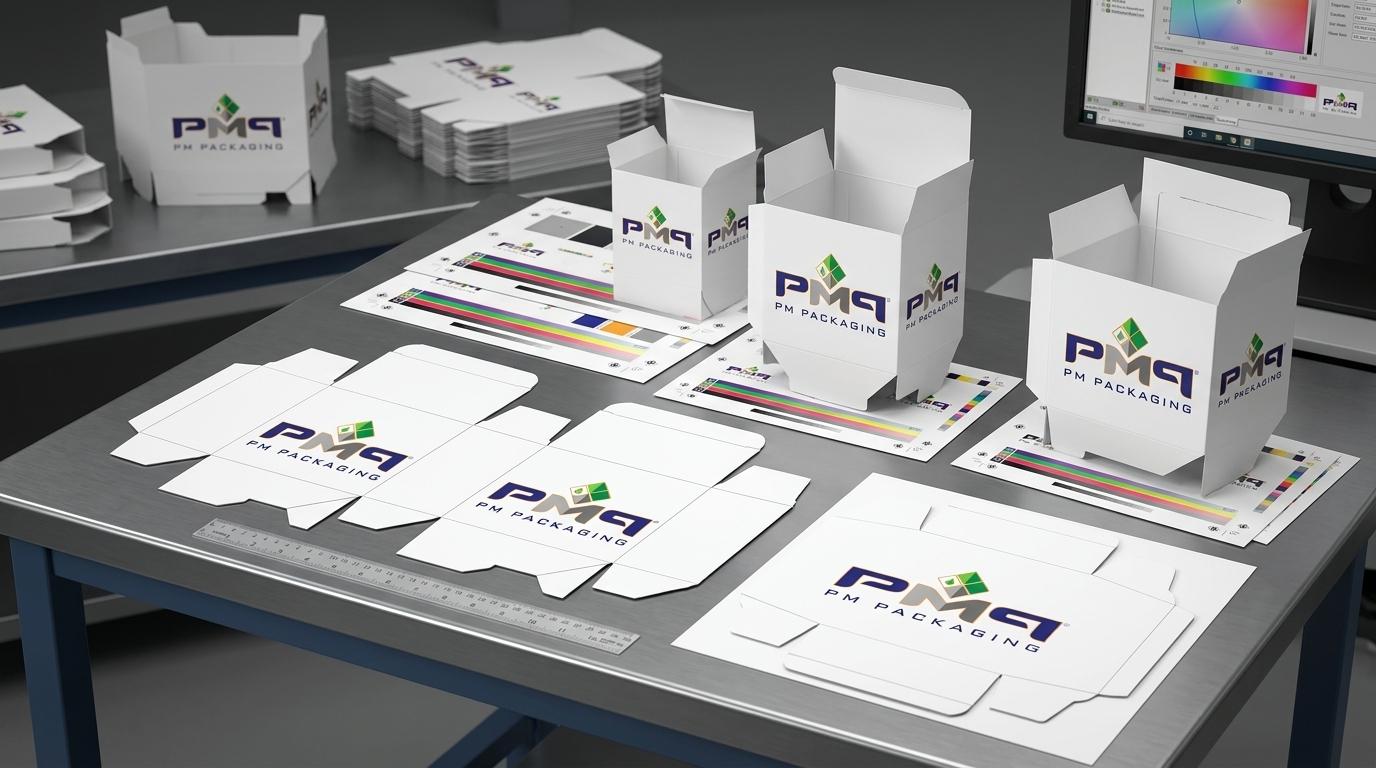
True manufacturing redundancy requires interchangeable tooling. Auditors verify that cutting dies, embossing plates, and stripping tooling move seamlessly between sister plants without dieline re-engineering. With centralized design—such as PM Packaging's San Diego engineering hub—master CAD dielines, fold parameters, and glue flap geometry remain unified, ensuring cartons feed perfectly on high-speed automated cartoning lines.
2. G7 Master Certified Print Alignment
Retail shelf presentation demands flawless color harmony. Auditors confirm that twin converting plants share G7 Master certified color management. Spectrophotometric press calibration ensures that brand colors, tonal curves, and ink densities match exactly across offset lithographic presses in multiple plants, preventing off-shade packages on retail shelves.
3. Harmonized Paperboard Substrates
Substrate consistency drives both print vibrancy and real-world transit durability. Audit teams verify that sister facilities source identical paperboard grades—including premium virgin paperboard for vivid color pop, eco-friendly kraft for natural brand appeal, and recycled board with a crisp print surface. Shared FSC/SFI certified sustainable sourcing guarantees identical ink attraction and finish quality.
4. Active-Active Capacity & Load Balancing
An active-active network distributes live production across twin facilities. Auditors review scheduling protocols to ensure that jobs route fluidly across both plants. When promotional surges occur, capacity balances instantly, preventing lead time bloat without onboarding friction.
Sourcing & Redundancy Model Comparison
When auditing converting capabilities, corporate packaging procurement teams compare single-plant domestic converters, split overseas models, and synchronized twin-plant nearshore networks across critical operating criteria:
Folding Carton Sourcing & Redundancy Matrix
| Strategic Consideration | Single-Plant Domestic Converter | Overseas + Domestic Split Sourcing | Synchronized USMCA Twin-Plant Model (PM Packaging) |
|---|---|---|---|
| Disaster Recovery & Redundancy | Low (Single point of failure) | Very Low (Severe ocean transit risks) | High (Active twin converting plants in Tijuana & Mexicali) |
| Tooling Portability | Converter-locked tooling | Incompatible regional tooling | Standardized tooling engineered for immediate transfer |
| Brand Color Uniformity | Consistent only within one plant | Noticeable color variance between runs | G7 Master certified uniformity across all presses |
| Transit Lead Times | 2 to 5 days domestic ground | 6 to 12 weeks transpacific ocean | 1 to 3 days ground (West Coast/Southwest), 3 to 5 nationwide |
| Tariff & Trade Exposure | None | High (Subject to tariffs and port delays) | Zero (100% Tariff-Free USMCA Compliance) |
| Multi-Format Integration | Limited to standard cartons | Fragmented across unaligned vendors | Comprehensive (Cartons, microflute, rigid boxes, blister cards) |
The PM Packaging Advantage: Nearshore Redundancy and Scale
With over 45 years of packaging expertise, PM Packaging provides corporate retail suppliers with an integrated, dual-plant nearshore manufacturing ecosystem designed for flawless execution.
Headquartered with centralized structural engineering and pre-press preparation in San Diego, California, PM Packaging operates twin converting facilities in Baja California (Tijuana and Mexicali):
Dual-Plant Resilience
Standardized tooling, shared pre-press assets, and synchronized workflows across Tijuana and Mexicali deliver reliable business continuity and surge capacity.
Comprehensive Format Capabilities
Single-source manufacturing across custom folding cartons, laminated microflute packaging for heavy items, luxury rigid setup boxes, POP displays, and printed paperboard blister cards—including our qikCombo™ program with 10-day turnaround on shared runs.
Premium Finishes & Certified Quality
G7 Master certified color consistency, inline UV coatings, soft-touch matte textures, metallic foil stamping, ISO 9001 quality management, and FSC/SFI certified board sourcing.
Rapid Ground Replenishment
Finished packaging arrives at West Coast and Southwest distribution hubs within 1 to 3 days (3 to 5 days nationwide), supporting lean, just-in-time assembly.
100% Tariff-Free USMCA Compliance
Full North American trade compliance removes import duty uncertainty and protects product margins.
Protect Your Retail Programs with Proven Redundancy
Auditing folding carton tooling portability and print redundancy across USMCA converting plants safeguards your retail partnerships, prevents costly stockouts, and ensures unified brand presentation across every shelf. Partnering with a dedicated nearshore converter that marries centralized U.S. engineering with twin high-capacity border facilities gives brands the ultimate combination of scale, speed, and supply chain security.
Ready to audit your packaging tooling and strengthen your supply chain resilience? Connect with the packaging engineers at PM Packaging to schedule your structural packaging audit and explore our dual-plant nearshore solutions today.
Ready to Audit Your Folding Carton Redundancy?
Connect with the packaging specialists at PM Packaging to schedule a comprehensive tooling portability and print redundancy audit across our twin USMCA facilities.
PM Packaging Dual-Plant Converting Ecosystem
Gain complete supply chain peace of mind with centralized CAD engineering in San Diego and active twin-plant manufacturing across Baja California.
- Engineering Hub: San Diego, California
- Twin Converting Plants: Tijuana & Mexicali, Baja California
- Core Packaging Formats: Custom Folding Cartons, Single-Face Flute (SFL), Blister Cards, Counter PDQs, and Rigid Setup Boxes.