
As consumer brands expand across national retail channels, Mexico has established itself as a premier nearshore hub for high-volume product assembly and contract manufacturing.
Producing in regional manufacturing hubs such as Tijuana, Mexicali, Monterrey, and Ciudad Juárez allows brands to capture substantial labor efficiencies, compress lead times, and respond rapidly to fluctuating retail demand.
However, contract manufacturing operations depend fundamentally on a reliable, synchronized secondary packaging supply chain. When brand procurement teams leave secondary packaging sourcing to individual contract manufacturers or rely on transactional, ad-hoc purchase orders, severe operational friction quickly emerges.
Co-packers and assembly plants face costly line stoppages from carton delivery delays, noticeable color variance appears across retail shelves, and uncoordinated freight creates customs bottlenecks along border crossings.
To establish predictable landed costs, safeguard brand equity, and guarantee continuous assembly throughput, enterprise brands execute structured Master Service Agreements (MSAs) directly with dedicated nearshore packaging converters. Below is an in-depth breakdown of how brand directors and procurement executives structure nearshore packaging MSAs to maximize Mexico-based contract manufacturing operations.
Centralized Brand Governance vs. Fragmented Sourcing
Allowing third-party contract manufacturers or co-packers to procure secondary packaging independently often leads to inconsistent print quality, unverified board substrates, and forfeited volume leverage across product lines.
A strategic packaging MSA centralizes procurement under the brand's direct commercial relationship with a high-capacity nearshore converter, unlocking three vital operational benefits:
Unified Brand Equity
Centralized dielines, standardized CAD geometries, and certified color management ensure that packaging across multiple co-packers and assembly plants maintains identical shelf appeal for national retailers like Target, Walmart, and Costco.
Volume Aggregation
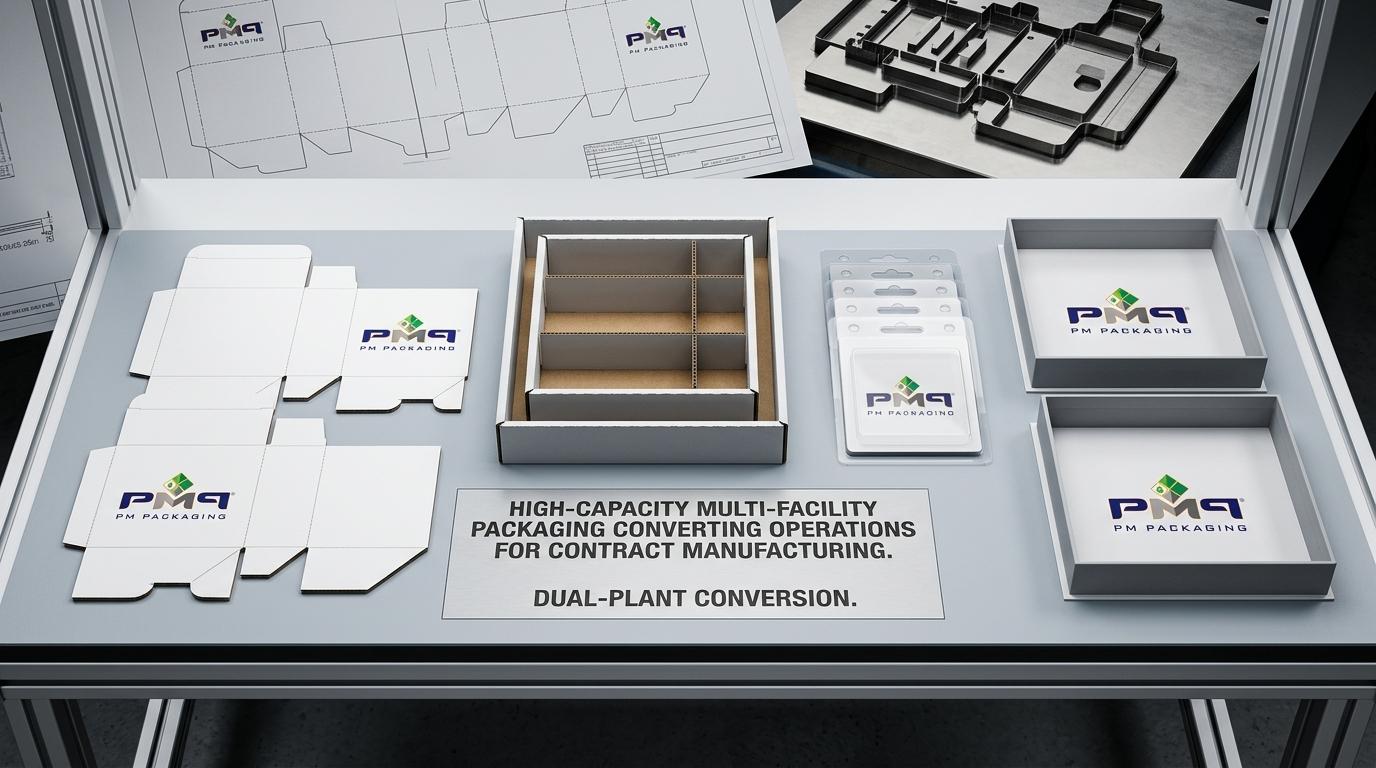
Consolidating custom folding cartons, single-face laminated (SFL) microflute shippers, blister cards, and rigid setup boxes into a single multi-year MSA unlocks aggressive tiered volume pricing rather than paying fragmented, high-margin job-shop rates at each disparate manufacturing plant.
Direct Regional Delivery
The converter manufactures finished packaging in dedicated nearshore facilities and delivers directly to contract manufacturing facilities across Mexico or stages safety stock in border logistics hubs, keeping automated assembly lines fully supplied without ocean freight delays.
Essential Pillars of a Nearshore Packaging Master Service Agreement
An enterprise nearshore packaging MSA establishes clear, binding operational terms that insulate brands from supply disruptions, eliminate unexpected cost escalations, and streamline daily production schedules.
Dedicated Capacity Reservation and Peak Scalability
In high-velocity consumer goods, packaging shortages immediately halt factory assembly. An effective MSA establishes formal capacity reservation protocols:
- Guaranteed Machine Hours: The converter commits dedicated monthly offset press time, high-speed die-cutting hours, and folding-gluing capacity to support the brand's rolling demand forecast.
- Peak Surge Flexibility: Predefined surge capacity allowances ahead of major retail events—such as Q4 holiday merchandising or club store resets—prevent co-packer downtime during peak revenue windows.
Transparent Raw Material Cost Indexing
Paperboard substrates represent a significant share of total secondary packaging costs. Rather than accepting opaque supplier markups, enterprise MSAs incorporate formulaic pricing models:
- Benchmark-Tied Adjustments: Packaging prices adjust quarterly based on verified paperboard industry market indexes (such as RISI / Fastmarkets benchmarks).
- Corridor Protections: Built-in pricing deadbands prevent minor monthly raw material movements from triggering administrative overhead, ensuring multi-year budget predictability.
Rigorous Quality Standards and Machine Runnability
Packaging defects on high-speed automated lines cause costly factory downtime and trigger severe retail chargebacks. MSAs establish binding quality service levels:
- Color Consistency: Strict adherence to G7 Master print standards ensures neutral gray balance and exact brand color matching across virgin paperboard, recycled board, and fluted packaging.
- Automated Line Runnability: Structural parameters—such as precise scoreline flexibility, opening force, and carton squareness—ensure cartons feed smoothly on automated cartoning equipment without jamming.
- Clear SLAs: Established defect thresholds (AQL levels) and guaranteed replacement timelines ensure immediate resolution if non-conforming packaging reaches the plant floor.
Tooling Capitalization and Unencumbered Ownership
Custom steel rule cutting dies, stripping jigs, and specialty embossing tooling represent long-term strategic brand assets:
- 100% Client Ownership: The MSA explicitly confirms that all structural dielines, print plates, and custom cutting tools remain exclusive brand property.
- Converter Maintenance: The packaging converter assumes full responsibility for regular tool maintenance, re-knifing, and climate-controlled vault storage to extend tool life across millions of impressions.
Strategic Packaging Sourcing Models Compared
Structuring a direct nearshore packaging Master Service Agreement provides clear commercial and operational advantages over fragmented co-packer purchasing or domestic shipping models:
Packaging Sourcing Strategy Evaluation Matrix
| Sourcing Model | Pricing & Volume Leverage | Logistics & Customs Risk | Brand & Color Consistency | Replenishment Lead Time |
|---|---|---|---|---|
| Fragmented Co-Packer Buying | Low; split across separate transactional purchase orders | High; uncoordinated cross-border freight & customs delays | High risk of color and substrate variance across suppliers | Unpredictable (3–6 weeks) |
| Domestic US Packaging Shipped In | Moderate; brand-negotiated but high US outbound freight | Moderate; packaging crosses border southward into Mexico | High consistency; slow emergency replenishment | 5–10 days transit from domestic US facilities |
| Direct Nearshore MSA (PM Packaging) | Maximum; indexed multi-SKU volume pricing | Lowest; 100% tariff-free USMCA local delivery in Mexico | Guaranteed G7 Master color uniformity across all lines | 1–3 days local delivery to Mexico assembly plants |
Streamlined USMCA Trade and In-Country Logistics
Nearshore packaging manufacturing across the US-Mexico corridor eliminates unnecessary logistics complexity, reducing landed costs and cycle times:
- 100% Tariff-Free Trade: Under the United States-Mexico-Canada Agreement (USMCA), qualifying paperboard and corrugated packaging moves duty-free, completely eliminating overseas tariff exposure and customs brokerage surcharges.
- Local Delivery Efficiency: Finished packaging ships directly from nearshore converting plants to Mexico assembly facilities, preventing the costly waste and administrative overhead of shipping empty packaging back and forth across international borders.
- Rapid Ground Replenishment: Staging strategic buffer stock in regional border logistics hubs allows brands to operate with lean inventory, pulling finished packaging on-demand via KanBan replenishment to maintain high factory uptime.
The PM Packaging Advantage
For more than 45 years, PM Packaging has served as the trusted packaging converter and strategic partner for leading North American consumer brands, retail suppliers, and contract manufacturing networks.
By pairing responsive structural engineering at our San Diego headquarters with advanced converting facilities in Baja California (Tijuana and Mexicali), we deliver an agile nearshore manufacturing solution:
Comprehensive Packaging Formats
Custom folding cartons, vibrant litho-laminated microflute packaging, luxury rigid setup boxes, retail POP displays, and fast-turnaround blister card programs including our high-efficiency qikCombo™ shared runs.
Certified Manufacturing Excellence
G7 Master certified color consistency, ISO 9001 quality systems, and certified sustainable paperboard sourcing (FSC and SFI certified) engineered to withstand high-speed automated cartoning lines.
Nearshore Speed & Proximity
100% tariff-free USMCA compliance and 1 to 3-day ground transit to Mexico contract manufacturing hubs and West Coast distribution centers, eliminating port congestion and overseas expedites.
Integrated Tooling & VMI Programs
Full brand ownership of cutting dies, climate-controlled tooling storage, and vendor-managed inventory (VMI) staging to ensure instant production scalability during retail volume spikes.
Elevate Your Nearshore Packaging Strategy
Structuring a comprehensive Master Service Agreement for secondary packaging gives high-volume brands the control, cost certainty, and speed needed to maximize their contract manufacturing investments in Mexico.
Ready to align your packaging supply chain with your nearshore manufacturing goals? Contact the structural engineers and procurement specialists at PM Packaging today to review your packaging portfolio and design an enterprise Master Service Agreement tailored to your brand.
Ready to Structure a Nearshore Packaging MSA?
Connect with the packaging specialists at PM Packaging to schedule a portfolio audit and explore how our nearshore converting capacity supports your contract manufacturing operations in Mexico.
Integrated Cross-Border Packaging Capabilities
Partner with PM Packaging to secure domestic structural design, standardized interchangeable tooling, and high-volume converting capacity across North America.
- Engineering Headquarters: San Diego, California
- Converting Facilities: Tijuana & Mexicali, Baja California
- Core Formats: Custom Folding Cartons, Litho-Laminated Microflute (SFL), Blister Cards, Counter PDQs, and Luxury Rigid Boxes.