
The fourth quarter is the definitive revenue window for consumer brands, retail suppliers, and enterprise procurement leaders. From Black Friday and Cyber Week promotions to high-velocity club store pallet programs across Walmart, Target, Costco, Sam’s Club, Best Buy, and Sephora, retail demand surges dramatically.
Capturing peak holiday sales requires secondary packaging to arrive on time, fully compliant, and structurally pristine. Whether a product line uses custom folding cartons, reinforced laminated microflute boxes, luxury rigid setup boxes, POP displays, or printed paperboard blister cards, a converter bottleneck stalls pack-out lines, triggers retailer on-time, in-full (OTIF) penalties, and leaves retail shelves empty.
To protect holiday revenue, enterprise procurement teams are shifting away from vulnerable transpacific shipping and turning to nearshore manufacturing in Mexico. However, peak season success requires auditing your nearshore converter well before orders drop.
Why Fourth-Quarter Surges Strain Packaging Converters
Fourth-quarter packaging demand brings compressed delivery windows and unforgiving retail deadlines. When volume surges 200% to 500% above baseline, rigid converters face severe operational hurdles:
Converting Bottlenecks
Converters with limited finishing equipment suffer backlogs at die-cutting and folding-gluing lines, creating weeks of unexpected delay.
Raw Material Stockouts
Converters without pre-staged paperboard inventory or secured mill allocations struggle to source premium virgin paperboard, recycled board, or fluted liner stock when demand peaks.
Lost Mid-Season Replenishment
When a holiday SKU outperforms sales forecasts in November, overseas supply chains taking 6 to 12 weeks cannot restock packaging in time, leaving critical revenue on the table.
Key Pillars of a Nearshore Packaging Capacity Audit
A rigorous procurement audit evaluates whether a nearshore converter has the machine throughput, structural design support, material pipeline, and logistics agility to absorb peak holiday volume spikes seamlessly.
1. Equipment Throughput and Multi-Plant Redundancy
Enterprise buyers must evaluate end-to-end converting capacity. High-speed offset lithography presses must be backed by matching automated die-cutters, laminators, and folder-gluers.
Auditing teams should also verify multi-plant redundancy. When a converter operates twin converting plants—such as facilities in Tijuana and Mexicali—production schedules balance seamlessly. If one plant encounters maintenance or sudden volume surges, jobs shift immediately to the sister facility without jeopardizing delivery dates.
2. Raw Material Staging and Mill Supply Security
Securing paperboard stock ahead of peak season is vital. Procurement teams should audit raw material management and North American mill allocations.
Leading nearshore converters pre-stage high-demand substrates—including premium virgin bleached paperboard (SBS), eco-friendly kraft (CUK/SUS), smooth-surface recycled board (CCNB/CRB), and fluted packaging stock. Verifying FSC- and SFI-certified sourcing ensures sustainability mandates remain intact throughout peak runs.
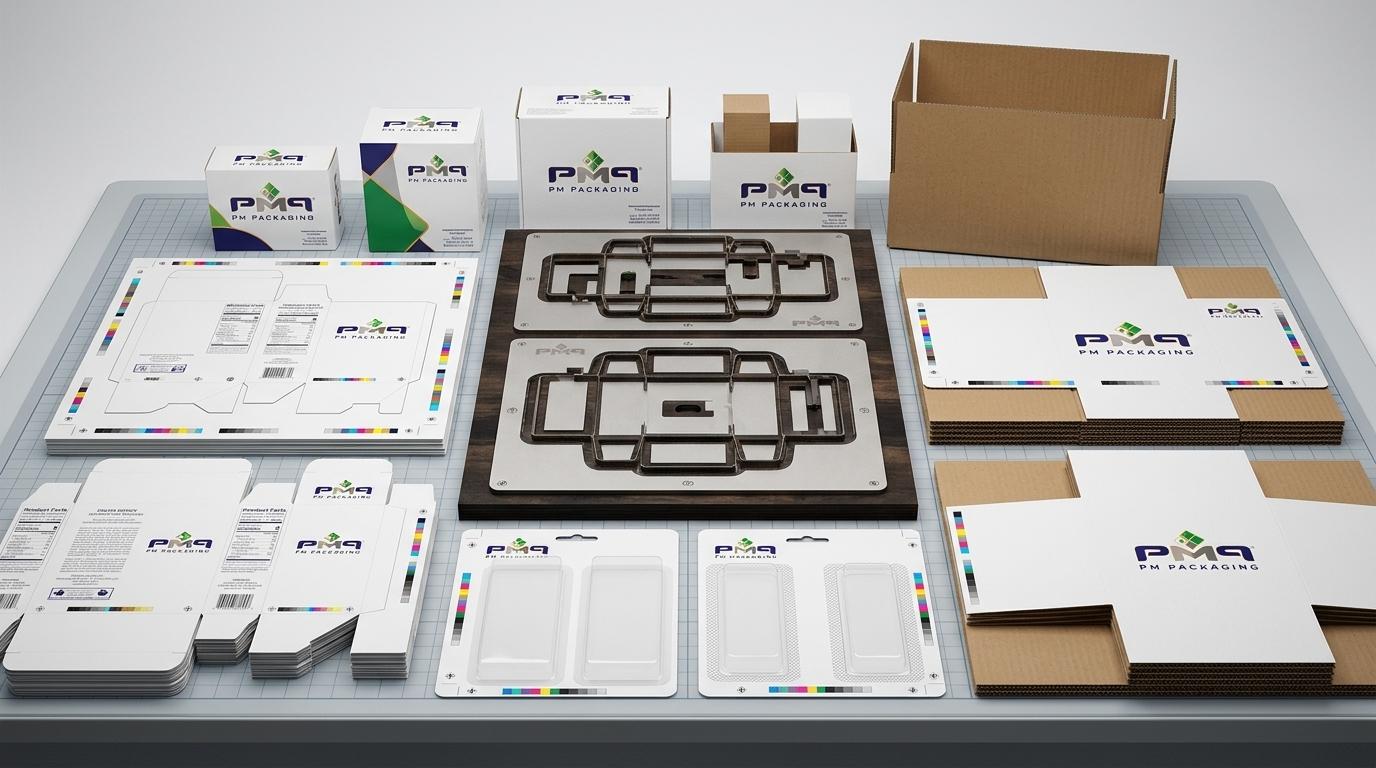
3. Pre-Press Speed and Structural Engineering Bandwidth
Holiday campaigns frequently involve seasonal artwork, multi-SKU gift packaging, and promotional displays. These programs demand rapid dieline development and fast pre-press turnaround.
Auditing teams should confirm that the converter maintains centralized structural engineering. A dedicated U.S. engineering hub—such as PM Packaging’s San Diego headquarters—allows brands to develop custom dielines, produce physical prototypes, and achieve G7 Master certified color consistency before plate-making begins.
4. Shift Scalability and Workforce Flexibility
Converting peak packaging volumes requires flexible labor schedules. An enterprise audit evaluates the converter’s track record of ramping to 24/7 converting schedules during the peak August-to-November manufacturing window. A stable workforce ensures high-speed converting and gluing maintain strict ISO 9001 quality standards during peak volume runs.
5. Ground Logistics Agility and Rush Replenishment
Proximity to North American distribution hubs is a primary nearshore advantage. Auditing teams should verify direct freight corridors to regional distribution centers.
With 1- to 3-day ground transit to West Coast and Southwest hubs (3 to 5 days nationwide), procurement teams gain a responsive reorder window. When holiday retail demand outpaces forecasts, a nearshore partner can convert and deliver replenishment packaging in days rather than months.
Packaging Converter Sourcing Models for Q4 Peak Spikes
Evaluating the structural capabilities and supply chain risks across primary sourcing models reveals why nearshoring provides the agility and protection necessary for high-stakes retail rollouts:
Strategic Comparison: Q4 Converter Sourcing Frameworks
| Strategic Metric | Overseas Converters | Regional Domestic Converters | Integrated Nearshore Network (PM Packaging) |
|---|---|---|---|
| Peak Lead Times | 8 to 14 weeks (Ocean transit + port clearance) | 4 to 8 weeks (Constrained by local capacity) | 2 to 3 weeks (10-day fast-track programs available) |
| Production Redundancy | Single-site exposure; high disruption risk | Limited backup capacity; single-site bottlenecks | Twin high-capacity plants (Tijuana & Mexicali) + U.S. engineering |
| Raw Material Pipeline | High exposure to global shipping bottlenecks | Constrained warehouse staging space | Pre-staged paperboard inventory & direct mill allocations |
| Mid-Season Reorders | Unfeasible (Misses holiday sales window) | Moderate feasibility; costly expedite fees | Highly agile (1- to 3-day ground delivery to West Coast/Southwest) |
| Tariff & Customs Risk | High tariff exposure and port fees | Zero tariffs; elevated domestic labor costs | 100% Tariff-Free USMCA compliance with rapid border clearance |
The Nearshore Advantage with PM Packaging
With over 45 years of commercial packaging expertise, PM Packaging provides enterprise procurement teams with the capacity, quality control, and agility needed to master fourth-quarter demand:
- Comprehensive Packaging Portfolio: Full-scale manufacturing across custom folding cartons, laminated microflute packaging, luxury rigid setup boxes, POP displays, and printed paperboard blister cards—including our qikCombo™ program offering 10-day turnaround on shared production runs.
- Twin-Plant Converting Scale: High-capacity facilities in Baja California (Tijuana and Mexicali) deliver high-volume throughput and built-in manufacturing redundancy.
- Centralized U.S. Engineering: San Diego design and pre-press hub provides rapid prototyping, custom dielines, and seamless program execution.
- G7 Master Print Consistency & ISO 9001 Quality: Uncompromising color fidelity across holiday retail lines with sustainable FSC/SFI certified paper sourcing.
- 100% Tariff-Free USMCA Logistics: Direct ground transport eliminates ocean port congestion and protects holiday margins.
Secure Your Fourth-Quarter Capacity Today
Auditing converter capacity well ahead of peak season protects fourth-quarter revenue, satisfies demanding retail partners, and preserves holiday margins. Partnering with an integrated nearshore converter that combines U.S. engineering with high-capacity border manufacturing gives enterprise procurement teams the resilience to scale with confidence.
Partner with PM Packaging for Peak Season Success
Ready to audit your packaging capacity and prepare for peak season demand? Connect with the packaging specialists at PM Packaging to schedule a capacity review and structural consultation today.
Schedule a Fourth-Quarter Capacity Audit
Insulate your Q4 retail launches with guaranteed machine capacity, universal tooling, pre-staged board stock, and rapid ground distribution across North America.
- U.S. Engineering Headquarters: San Diego, CA
- Dual Manufacturing Hubs: Tijuana & Mexicali, Baja California
- Core Packaging Formats: Folding Cartons, SFL Microflute Shippers, Blister Cards (qikCombo™), Retail Displays & Rigid Boxes.