
In high-velocity consumer goods, personal care, over-the-counter wellness, and specialty hardware manufacturing, automated packaging lines are the engines of operational profitability.
When high-speed cartoning equipment runs at peak performance—erecting, loading, and sealing hundreds of folding cartons per minute—line efficiency hinges entirely on the physical consistency of carton blanks fed into the magazine. A single out-of-square carton, rigid score line, or warped panel can trigger an instant machine jam, halting production and creating costly downtime.
For enterprise procurement leaders supplying major retailers like Walmart, Target, Costco, Sam's Club, Sephora, Ulta, and The Home Depot, auditing folding carton structural integrity is a critical risk mitigation strategy. Protecting overall equipment effectiveness (OEE) requires looking beyond unit pricing to ensure converters engineer cartons specifically for automated machine handling.
Why High-Speed Automation Demands Elevated Carton Precision
Manual pack-out is inherently forgiving: human operators naturally compensate for subtle board stiffness or dimensional variance. Automated cartoners, however, operate with uncompromising mechanical repeatability.
Within milliseconds, automated equipment executes four rapid stages:
Vacuum Extraction
High-speed rotary suction cups pull a flat carton blank from the feed hopper magazine.
Mechanical Erection
Rotary arms and vacuum heads snap the sleeve open against squaring guides at 90-degree angles.
Product Insertion
Automated barrel cam pushers slide primary goods cleanly into the open carton cavity at high velocity.
Flap Closure
High-speed mechanical tuckers fold dust flaps and tuck panels or apply hot-melt adhesive for final seal.
If carton blanks exhibit excessive opening resistance, bow under vacuum suction, or feature inconsistent score lines, machines misfeed or skew. This causes emergency stops, damaged packaging, and expensive line recovery delays.
Key Structural Audit Checkpoints for Automated Cartoning Readiness
To prevent machine jams and sustain high line speeds, procurement teams should audit converters against five structural benchmarks:
1. Score Line Uniformity and Controlled Pre-Breaking
Carton blanks must open effortlessly from flat sleeves into crisp, 90-degree rectangular structures. Advanced converters use multi-stage folding-gluing lines with dedicated pre-breaking stations. Pre-folding major score lines relieves board tension, reducing the opening force required by cartoner vacuum cups and preventing sleeve collapse during rapid erection.
2. Board Flatness and Grain Direction Alignment
Carton blanks must feed flat without curl. Converters must align paperboard grain direction parallel to main carton creases, ensuring predictable bending behavior and high vertical stacking strength. Facilities must also maintain strict environmental humidity controls so paperboard resists warping before reaching the packaging line.
3. Precision Die-Cutting and Clean Edge Stripping
Automated guide rails demand strict dimensional tolerances across every blank. Clean cutting dies and dynamic stripping eliminate ragged edges, hanging paper chads, and paperboard dust. Loose fibers can foul optical sensors, clog vacuum cups, and create machine buildup.
4. Flap Geometry and Smooth Guide Clearance
Flaps closing at high velocity require thoughtful geometry. Chamfered tuck flaps, locking slits, and properly radiused dust flaps prevent panel collisions during automated plows. Expert structural designers refine flap contours during CAD prototyping to ensure friction-free clearance.
5. Accurate Side-Seam Adhesive Application
The manufacturer's glue seam holds the carton sleeve together. Adhesive must be applied with pinpoint accuracy—never spilling onto score lines (which causes cartons to stick shut internally) or running dry (risking seam blowout during high-speed product insertion). Inline electronic sensors verify bond integrity on every blank.
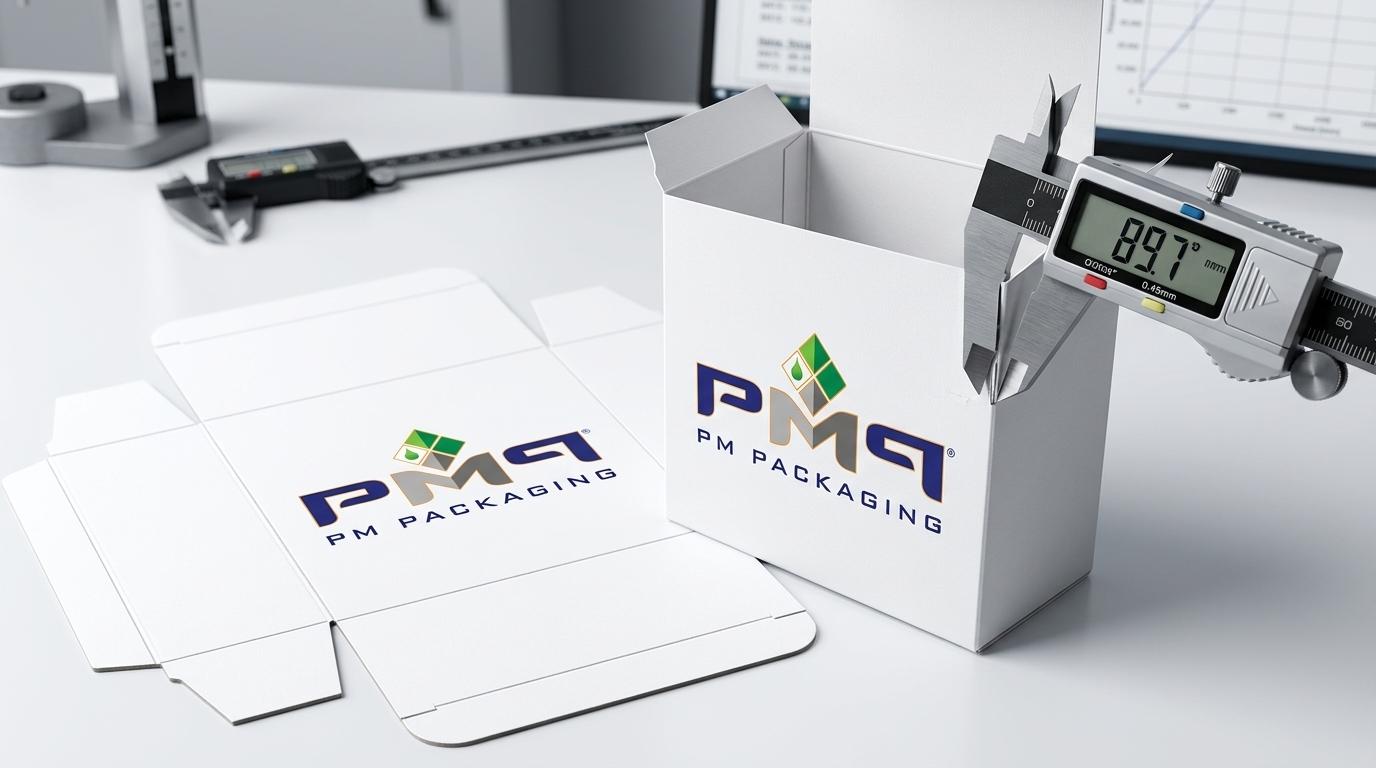
Manual Pack-Out vs. High-Speed Automation: Packaging Requirements
Comparing manual assembly to automated cartoning illustrates why structural precision is essential:
Packaging Requirements Comparison
| Operational Parameter | Manual Assembly / Pack-Out | Semi-Automated Lines | High-Speed Automated Cartoning |
|---|---|---|---|
| Dimensional Tolerance | Moderate tolerance acceptable | Tight dimensional control | Strict micro-tolerances across every production batch |
| Score Pre-Breaking | Optional (Hand-formed by operator) | Recommended for consistent forming | Essential for instantaneous mechanical erection |
| Board Flatness Sensitivity | Low (Minor curl handled manually) | Moderate (Hopper adjustments possible) | High (Zero-tolerance for panel curl or warping) |
| Edge & Dust Control | Standard stripping | Clean cuts required | Dust-free die-cutting to protect optical sensors |
| Downtime Impact | Minimal financial impact | Moderate productivity loss | Severe line stoppage costs and missed delivery windows |
| Ideal Paperboard Grade | Virgin, kraft, or recycled paperboard | Uniform virgin or recycled board | High-stiffness virgin board or premium recycled board |
The Supply Chain Advantage: Nearshore Agility and Structural Engineering
Auditing structural integrity succeeds best when procurement teams collaborate directly with packaging engineers. Sourcing cartons from distant overseas suppliers introduces operational vulnerability. If overseas cartons arrive with stiff scores or dimensional drift, resolving tooling issues takes weeks of ocean transit, forcing costly manual rework.
Partnering with an integrated nearshore packaging converter delivers immediate agility. Structural CAD engineers can rapidly produce physical prototypes and pilot run samples for on-machine qualification, validating carton performance on your specific packaging line before full-scale manufacturing.
The PM Packaging Advantage: Engineered for Automation
With over 45 years of packaging expertise, PM Packaging designs and manufactures custom folding cartons engineered specifically for enterprise automated packaging lines. Headquartered with structural design and engineering teams in San Diego, California, PM Packaging operates modern converting facilities in Baja California (Tijuana and Mexicali).
- Precision Converting Capabilities: High-speed printing, precision die-cutting, multi-station folding-gluing with dedicated score pre-breaking, and electronic glue verification ensure seamless cartoner compatibility.
- Versatile Board Formats: Expert converting across premium virgin bleached paperboard, eco-friendly kraft, recycled board, laminated microflute packaging, rigid setup boxes, and printed blister card packaging.
- Certified Quality Standards: ISO 9001 quality management and G7 Master certified color consistency guarantee structural accuracy and visual brand fidelity across every run.
- 100% Tariff-Free USMCA Supply Chain: Nearshore production eliminates transpacific freight delays and tariffs, delivering rapid 1 to 3 day ground shipping to West Coast and Southwest hubs (3 to 5 days nationwide).
Optimize Your Packaging Line Efficiency with PM Packaging
Maximizing production throughput and protecting profit margins on automated cartoning lines begins with structural packaging precision. By conducting rigorous carton audits and partnering with an experienced converting specialist, enterprise brands eliminate line jams, minimize waste, and maintain reliable retail distribution.
Ready to optimize your packaging line efficiency? Connect with the packaging specialists at PM Packaging to schedule a structural carton audit and request production qualification samples today.