
Across retail aisles in home improvement, consumer electronics, personal care, and automotive aftermarket, enterprise consumer packaged goods (CPG) brands are accelerating their departure from rigid plastic clamshells. Sustainability mandates from major retailers like Walmart, Target, and The Home Depot, paired with consumer frustration over opening sealed plastic packaging, have made clamshells a commercial liability.
Printed paperboard heat-seal blister cards have emerged as the leading alternative. They provide full-color billboard space for brand storytelling, reduce plastic volume by up to 80%, increase pallet packing density, and deliver a clean, frustration-free unboxing experience.
However, for enterprise brands managing catalogs with dozens or hundreds of SKUs, converting from clamshells to blister card packaging requires careful coordination. Moving too fast risks co-packer sealing bottlenecks, packaging scrap, and stockouts during national retail planogram resets. Moving too slowly leaves brands vulnerable to compliance fees and lost shelf placements.
Executing a seamless packaging conversion requires a structured transition timeline that aligns procurement, structural engineering, contract packagers (co-packers), and retail reset calendars.
The 4-Phase Transition Roadmap
Leading CPG brands typically execute a comprehensive clamshell-to-blister card conversion over a 16-to-20-week timeline divided into four strategic phases:
Catalog Audit & Dieline Harmonization (Weeks 1–4)
The conversion begins with catalog rationalization. Rather than engineering a unique blister card for every legacy clamshell, enterprise packaging teams establish standardized card footprints across the entire catalog.
- Footprint Consolidation: Grouping hundreds of SKUs into two to four universal card sizes optimizes retail pegboard alignment and eliminates unnecessary tooling costs.
- Card Format Selection: Brands select the ideal structure for each product family—single face-seal blister cards for high-speed automated lines, fold-over blister cards for dual-sided graphics and perimeter strength, or trapped blister cards for enhanced theft deterrence.
- Hang-Hole Standardization: Centering sombrero hang holes across all card sizes ensures clean, uniform presentation across national retail planograms.
Sealing Chemistry & Co-Packer Qualification (Weeks 5–8)
A blister card is only as reliable as its heat-seal bond. During this phase, procurement and packaging teams validate sealing performance with contract packagers.
- Substrate & Coating Compatibility: PM Packaging applies specialized inline heat-seal coatings to premium virgin paperboard and recycled board grades, engineered to produce a complete fiber-tearing bond under standard sealing cycles.
- Tooling & Jigs: Co-packers receive prototype sealing fixtures to dial in optimal heat-seal temperatures, dwell times, and pressure without sacrificing line speed.
- Transit Validation: Pre-production packages undergo real-world drop and vibration testing to ensure structural integrity from distribution center pallets to store shelves.
Retailer Sign-Off & Pilot Production (Weeks 9–12)
Before full-scale converting begins, brands validate new blister card formats with national retail buyers and merchandising teams.
- Planogram Verification: Retail partners like Target, Walmart, and Home Depot verify pegboard clearance, barcode scannability, and overall shelf presence.
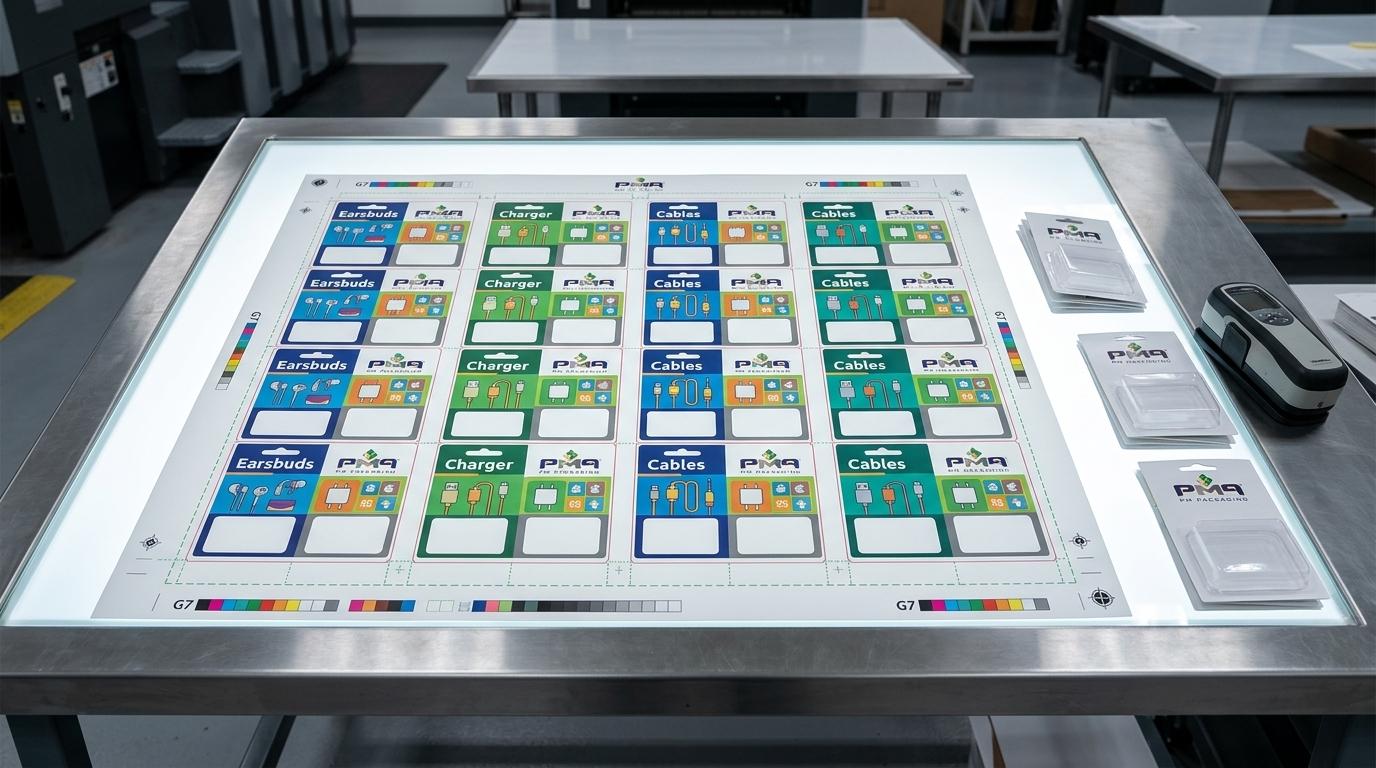
- Pilot Shared Runs via qikCombo™: Utilizing PM Packaging's qikCombo™ program, brands gang multiple SKU cards onto shared production sheets. This allows procurement teams to run low-risk pilot quantities across an entire product family in as little as 10 days, avoiding high minimum order quantities.
- Color Consistency: G7 Master certified color management ensures brand palettes, imagery, and foil finishes remain perfectly matched across all SKUs.
Phased Rollout & Inventory Burn-Down (Weeks 13–20)
The final stage balances the ramp-up of new blister cards with the depletion of legacy clamshell stock.
- Inventory Run-Out Scheduling: Production runs are synchronized to consume existing clamshell inventory without creating retail stockouts.
- Channel Cutover: Brands often phase conversions by retail channel, launching new blister cards with flagship retail partners first before rolling out to regional distribution.
- Supply Chain Stabilization: Nearshore supply agreements guarantee short reorder cycles, protecting on-time, in-full (OTIF) fulfillment rates.
Strategic Comparison: Transition Approaches
The table below contrasts an ad-hoc packaging replacement against a structured enterprise transition program:
| Strategic Metric | Ad-Hoc SKU Conversion | Structured Blister Card Program | Enterprise Advantage |
|---|---|---|---|
| Retail Shelf Impact | Mismatched card heights and misaligned peg holes | Harmonized footprints with uniform hang alignment | Cohesive brand billboard on retail pegboards |
| Inventory Scrap Risk | High write-offs of obsolete clamshell inventory | Synchronized burn-down with phased cutover | Protects working capital and minimizes scrap |
| Co-Packer Efficiency | Frequent machine adjustments and line downtime | Standardized sealing fixtures across product lines | Protects line speed and lowers packaging labor costs |
| Multi-SKU Agility | Isolated print runs with long lead times | Shared-run production via qikCombo™ program | 10-day turnaround for pilot runs and new launches |
| Retail Compliance | Vulnerability to retail plastic reduction fees | Up to 80% plastic reduction with certified paperboard | Full alignment with retail ESG scorecards |
The Nearshore Advantage for Packaging Conversions
Executing a multi-SKU packaging transition with overseas suppliers introduces serious lead-time risks. Ocean transit times of 6 to 12 weeks make it difficult to coordinate precise inventory run-out schedules, risking line shutdowns or costly packaging write-offs.
PM Packaging provides a responsive nearshore manufacturing model that de-risks conversions:
Strategic Manufacturing Footprint
San Diego corporate headquarters and engineering paired with high-capacity converting facilities in Baja California (Tijuana and Mexicali).
1 to 3-Day Ground Transit
Finished heat-seal blister cards reach West Coast and Southwest distribution centers in 1 to 3 days (3 to 5 days nationwide), enabling agile inventory management.
100% Tariff-Free USMCA Compliance
North American production protects packaging budgets from overseas tariffs and unpredictable freight spikes.
Rapid Shared Runs
The qikCombo™ shared-run program delivers fast 10-day production cycles for multi-SKU product lines.
Partner With PM Packaging for Your Retail Conversion
Transitioning from plastic clamshells to heat-seal blister cards enhances brand perception, satisfies retail sustainability goals, and lowers packaging costs. With a structured transition roadmap and an experienced converting partner, enterprise CPG brands can execute this conversion smoothly and profitably.
With over 45 years of commercial packaging expertise, PM Packaging provides the structural design support, certified print quality, and high-volume converting capacity needed for national retail rollouts.
Planning a clamshell-to-blister card transition? Connect with the packaging experts at PM Packaging today to request samples and learn more about our qikCombo™ shared-run programs.