
Securing a national retail rollout across major chains—such as Walmart, Target, Costco, Sam’s Club, Sephora, Ulta, Home Depot, or AutoZone—represents a transformative milestone for any consumer brand.
Yet for Vice Presidents of Supply Chain, Directors of Procurement, Brand Directors, and Senior Packaging Engineers, winning retail distribution is only the opening challenge. The true operational test lies in orchestrating the production, secondary packaging, kitting, and on-time distribution of hundreds of thousands—or millions—of packaged units across a distributed network of Contract Packagers (Co-Packers) and Contract Manufacturers (Co-Mans).
When launching a high-velocity retail program, consumer brands rarely package all finished goods within a single proprietary facility. To scale rapidly without massive capital expenditures in automated cartoning machinery, brands contract specialized co-packers across North America. However, distributing production across third-party facilities introduces severe systemic risks: fragmented paperboard procurement, inconsistent dieline geometries that jam automated cartoners, color drift across retail shelves, catastrophic freight damage in club stores, and punitive On-Time In-Full (OTIF) vendor chargebacks.
Distributed Co-Packer Network Architecture
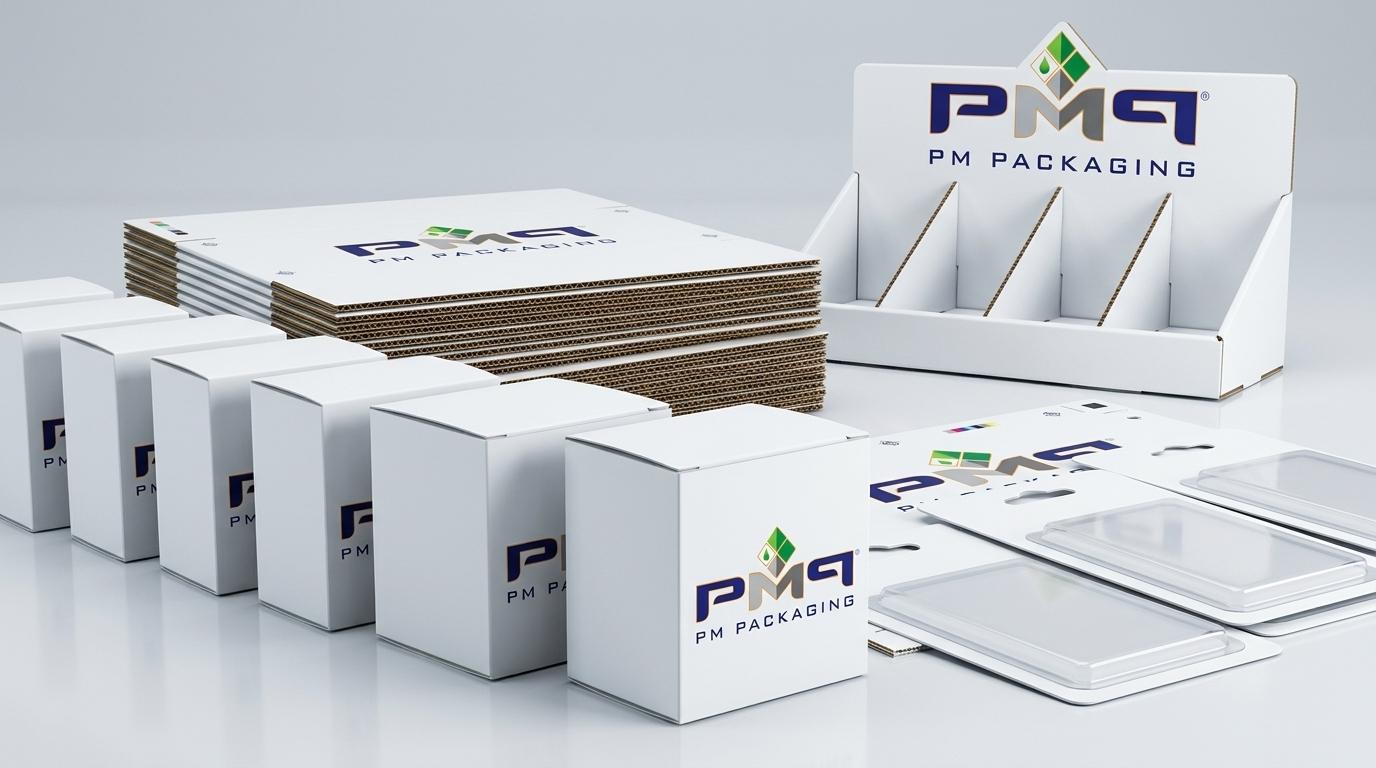
With over 45 years of specialized packaging engineering and large-format converting expertise, PM Packaging operates dual-border facilities in San Diego, California, and Baja California (Tijuana and Mexicali). We partner with enterprise procurement teams and packaging engineers to eliminate multi-vendor friction, delivering precision-engineered folding cartons, single-face laminate (SFL) microflute packaging, blister cards, and retail Point-of-Purchase (PDQ) displays synchronized directly with contract packaging operations.
This strategic guide provides corporate supply chain executives, procurement directors, and packaging engineers with the structural, commercial, quality, and logistical blueprints required to coordinate secondary packaging across co-packer networks for zero-defect national retail rollouts.
1. Commercial Architecture: Brand-Directed Tolling vs. Co-Packer Turnkey Sourcing
The fundamental commercial decision facing a brand entering national retail is whether to allow co-packers to source secondary packaging independently (Turnkey Sourcing) or to centralize packaging procurement directly with a primary converter (Brand-Directed / Tolled Model).
Co-Packer Turnkey Sourcing
- × Co-packers buy cartons independently from local jobbers.
- × 15% to 30% hidden co-packer administrative markups.
- × Fragmented dielines and duplicative NRE tooling charges.
- × Substrate variation (virgin SBS vs recycled CCNB mix).
- × Severe visible brand color drift on retail shelves (ΔE > 3.0).
- × Finger-pointing between co-packer and jobber on line jams.
Brand-Directed Tolling (PM Packaging)
- ✓ Brand contracts a single master enterprise converter directly.
- ✓ Aggregated volume buying power across 1M+ total units.
- ✓ 100% price transparency with zero intermediary markups.
- ✓ Standardized master CAD dielines across all co-packer lines.
- ✓ Idealliance G7 Master spectral color control (ΔE < 1.5).
- ✓ Unified JIT / VMI safety stock buffers and 24-48 hr replenishment.
The Financial & Operational Trap of Turnkey Sourcing
In a turnkey agreement, the brand contracts the co-packer to deliver a finished, packaged product at a fixed unit rate, delegating the procurement of folding cartons, corrugated master shippers, blister cards, and retail display trays to the co-packer’s internal purchasing team. While this seems to simplify project management, it introduces severe commercial penalties during a national retail rollout:
1. Compounded Margin Markups (15% to 30%)
Co-packers are contract packagers, not paperboard converters. When they purchase secondary packaging from local jobbers or distributors, they add administrative handling fees and margin markups ranging from 15% to 30% on top of the converter’s price. When multiplied across an initial 500,000 to 2,000,000 unit national rollout, this markup inflates Cost of Goods Sold (COGS) by hundreds of thousands of dollars.
2. Forfeiture of Enterprise Scale
If a brand splits a 1.5-million-unit retail order across three regional co-packers (e.g., West Coast, Midwest, and Mexico), each co-packer tenders an independent 500,000-unit packaging order. The brand forfeits the substantial volume discounts, mill-direct paperboard pricing, and gang-run efficiencies available when tendering the entire 1.5-million-unit order to a single converter.
3. Duplicative Non-Recurring Engineering (NRE) Tooling
Each co-packer works with a different local converter, requiring separate tooling charges—die boards, stripping dies, embossing dies, and printing plates—for the same SKU. The brand pays multiple tooling invoices for identical package formats.
4. Severe Shelf Color Drift
When different regional converters print the brand’s primary trade dress using varied ink sets, press curves, and substrate coatings, noticeable color shifts occur. When products from Co-Packer A (packaged on recycled board) sit next to products from Co-Packer B (packaged on virgin SBS) on a Target or Sephora retail shelf, brand equity suffers, often triggering retail compliance penalties (e.g., Walmart GMI or Target color audits).
The Brand-Directed / Tolled Procurement Model
In the Brand-Directed (or Tolled) procurement model, the brand’s procurement team negotiates pricing, substrate specifications, structural engineering, and Master Service Agreements (MSAs) directly with an enterprise-scale converting partner like PM Packaging.
PM Packaging engineers a single master tooling suite, prints all secondary packaging under certified Idealliance G7 Master conditions, and delivers standardized cartons and displays directly to each co-packer on a Just-In-Time (JIT) or Vendor-Managed Inventory (VMI) schedule.
Strategic Procurement Comparison: National Retail Scale
| Commercial & Operational Vector | Turnkey Co-Packer Sourcing | Brand-Directed Model (PM Packaging) |
|---|---|---|
| Unit Cost & Price Transparency | Segmented volumes; opaque 15–30% co-packer markups; inflated unit costs. | Consolidated mill-direct pricing; 100% price transparency; volume scale discounts. |
| Tooling & Asset Ownership | Multiple tooling invoices; brand does not own proprietary CAD files or plates. | Single master CAD suite; brand-owned master digital plates and CNC-machined steel rule dies. |
| Print & Visual Consistency | High spectral variance (ΔE > 3.0); multi-vendor color clash on shelf. | Idealliance G7 Master certified; spectral closed-loop control; Delta-E guaranteed < 1.5. |
| Machinability & Scrap Rates | Inconsistent crease scores; high co-packer scrap rates (3% to 7%). | Standardized 180° pre-break; strict Taber stiffness; scrap rates minimized (< 0.5%). |
| Lead-Time & Agility | Uncoordinated lead times; reliance on regional jobbers or ocean freight. | 1–3 day ground freight to West/SW hubs; integrated VMI buffers; 24-48 hr emergency runs. |
| Regulatory & Tariff Compliance | Uncontrolled cross-border supply; risk of 16% Mexican IVA tax hurdles. | 100% USMCA certified North American origin; seamless IMMEX virtual pedimento (V1/V5) flow. |
2. Structural Dieline Engineering & Co-Packer Machinability
One of the most frequent points of failure during a national retail rollout occurs when secondary packaging designed in a creative design agency fails to run efficiently on a co-packer’s high-speed packaging machinery.
Co-packers utilize diverse mechanical platforms: high-speed continuous-motion horizontal cartoners, intermittent-motion vertical cartoners, semi-automated case packers, or manual pack-out stations. If dielines and substrate properties are not engineered to satisfy the mechanical constraints of automated cartoners while maintaining rapid manual pack-out efficiency for kitting lines, packaging lines will experience jams, downtime, and massive labor overruns.
High-Speed Automated Continuous Cartoner vs. Auto-Bottom Kinematics
- 1. Rotary Vacuum Pick & Erection: Requires opening force < 40 gf/cm; 180° mechanical pre-break on creases #1 & #3.
- 2. Barrel Cam Infeed (350 cpm): Calibrated Taber stiffness prevents panel bowing; beveled leading dust flaps eliminate dog-earing.
- 3. Continuous Tuck / Hot-Melt: Friction-fit tuck clearance (±0.015"); knockout zones prevent glue-on-varnish failure.
- 1. Flat-Folded Blank Infeed: Pre-glued crash-lock bottom geometry; operator applies opposing diagonal pressure.
- 2. Instantaneous Base Erection: Interlocking base snaps into square in < 1.0 second; 70% labor reduction vs 1-2-3 base.
- 3. Pack-Out & Top Flap Closure: Integrated partitions support primary containers; friction tuck top closes securely for shelf.
Critical Engineering Parameters for Multi-Plant Machinability
To guarantee zero downtime across varied co-packer machinery, PM Packaging designs and converts folding cartons and SFL packaging according to strict mechanical tolerances:
1. 180° Crease Pre-Breaking on Folders-Gluers
High-speed automated cartoners (e.g., Bosch/Syntegon, Kliklok, Bradman Lake, Jones, Douglas, Marchesini, Rovema) use rotary vacuum cups to snatch flat carton blanks from a feed magazine and erect them into continuous conveyor flights at speeds up to 350+ cartons per minute (cpm). If score lines #1 and #3 are not mechanically pre-broken to a full 180° during high-speed folder-gluer conversion, the board’s internal elastic memory resists opening, causing vacuum cup slippage and line stops costing $2,000 to $5,000 per hour. PM Packaging utilizes multi-stage Bobst folder-gluers equipped with high-precision mechanical pre-breaking swords, reducing opening resistance to under 40 gf/cm.
2. Fiber Grain Direction & Panel Bowing Control
Paperboard grain must run strictly parallel to the carton’s primary working scores. Running grain perpendicular generates erratic bending resistance, severe panel bowing under vacuum suction, and tuck-flap jamming during continuous-motion infeed. Standardizing virgin substrates like Solid Bleached Sulfate (SBS), Coated Unbleached Kraft (CUK), and Folding Boxboard (FBB) with strict caliper control (14pt to 28pt) ensures vacuum cups and feed gates do not misfeed.
3. Glue Knockout Windows for High-Speed Adhesive Bonding
When cartons or display trays are sealed using automated hot-melt or cold-glue applicators (e.g., Nordson systems), applying aqueous coating, UV varnish, or foil over glue flap areas creates weak surface bonding, resulting in cartons popping open in transit. PM Packaging engineers dedicated knockout zones on printing plates and coating blankets, leaving raw, unvarnished paperboard fibers on glue tabs to guarantee instantaneous, fiber-tearing adhesive bonds at high line speeds.
Dieline Style Selection & Co-Packer Machinability
| Dieline Style | Ideal Co-Packer Line | Pack-Out Speed | Tooling / Unit Cost | Best Retail Application |
|---|---|---|---|---|
| Straight Tuck End (STE) | Continuous-Motion Horizontal Cartoner | 150 – 400+ cpm (Automated) | Low unit cost; standard rotary cutting die. | High-velocity OTC healthcare, cosmetics, food cartons. |
| Reverse Tuck End (RTE) | Intermittent-Motion Vertical Cartoner | 60 – 180 cpm (Semi/Auto) | Low unit cost; efficient nested sheet layout. | Moderate-speed retail goods, hardware, electronics tubes. |
| Auto-Bottom Crash Lock | Manual Kitting / Semi-Auto Stations | 1.0 – 2.0 sec/unit (Manual) | Moderate unit cost (in-line crash-lock gluing). | Multi-component kitting, promotional retail sets, gift sets. |
| 1-2-3 Snap Lock Bottom | Manual Pack Station (Heavy Goods) | 3.5 – 6.0 sec/unit (Manual) | Low-to-moderate; simple die; no base gluing. | Medium-to-heavy items, hardware kits, consumer tech. |
| Single-Face Laminate (SFL) | Semi-Automated Tray Erector / Wraparound | 20 – 60 packs/min | Moderate-high; matched steel rule dies. | Heavy multipacks (4/6/12-pk), club store master packs. |
3. Substrate Matrix & Structural Integrity: Preventing Retail Freight Damage
In a national retail rollout, secondary packaging must perform two critical functions: capture consumer attention with flawless retail graphics and protect the primary product through harsh multi-echelon distribution networks.
Mass retail distribution channels present vastly different structural challenges:
- Mass Merchandisers (Walmart, Target): Require high-impact folding cartons and shelf-ready packaging (SRP) that maintain rigid vertical geometry on narrow shelves without crushing or sagging.
- Club Stores (Costco, Sam’s Club): Mandate heavy-duty single-face laminate (SFL) microflute cartons, reinforced multipacks, and full-pallet display trays engineered to withstand 3-high static pallet stacking in warehouse environments.
- Specialty & Prestige (Sephora, Ulta): Require high-caliper Solid Bleached Sulfate (SBS) or rigid setup boxes with soft-touch coatings and metallic foil stamping that resist finger oils and transit scuffing.
- Hardware & Automotive (Home Depot, AutoZone): Require heavy-caliper CUK or blister cards with heat-seal coatings capable of supporting high hanging shear weights without delamination.
Club Store Pallet Compression Dynamics (BCT vs. ECT)
Primary Packaging Substrate Comparison Matrix
| Substrate Classification | Caliper / Flute | Print Quality & Surface | Structural Rigidity | Primary Retail Application |
|---|---|---|---|---|
| Solid Bleached Sulfate (SBS) | 12pt to 28pt (0.012" – 0.028") | Premium (175–200 LPI); brilliant white 90+ GE. | High stiffness; clean die-cutting; excellent score folding. | Mass retail, cosmetics, OTC pharma, premium food. Continuous cartoners. |
| Coated Unbleached Kraft (CUK / SUS) | 14pt to 30pt (0.014" – 0.030") | Good; clay-coated top liner over kraft backing. | Exceptional tear & puncture resistance under moisture. | Heavy hardware, automotive, wet-pack beverage multipacks. |
| Clay Coated Newsback (CCNB / CRB) | 16pt to 32pt (0.016" – 0.032") | Moderate; 100% recycled board; grey back liner. | Moderate stiffness; lower tear strength than virgin SBS. | Cost-sensitive dry goods, mass hardware cartons. |
| Single Face Laminate (SFL) Microflute | E-Flute (1/16"), F-Flute (1/32"), B-Flute (1/8") | Exceptional; G7 litho-laminated top sheet (SBS). | Superior Box Compression (BCT) & Edge Crush (ECT) values. | Club store multipacks (4/6/12-pk), countertop PDQs, electronics. |
| Rigid Greyboard / Setup Chipboard | 40pt to 120pt (0.040" – 0.120") | Wrapped in litho-printed art paper or specialty wrap. | Maximum structural rigidity; zero panel deflection. | Prestige cosmetics, luxury gift, luxury consumer electronics. |
| Blister Board (SBS with Varnish) | 18pt to 26pt (0.018" – 0.026") | High; specialized heat-seal water-based varnish. | High internal bond; fiber-tearing seal to PET/PVC blister. | Hardware, personal care, retail hang-tab items on heat-seal carousels. |
4. Multi-SKU Retail Display & Kitting Coordination (PDQs, Sidekicks, Club Pallets)
National retail rollouts frequently require co-packers to assemble complex secondary packaging formats beyond standard individual unit cartons: Counter PDQ Display Trays, Sidekicks / Power Wings, Endcaps, Free-Standing Display Units (FSDUs), and Full-Pallet Club Store Displays.
When a brand rolls out 10 to 30 distinct SKUs packed into pre-assembled retail displays, coordinating the packaging bill of materials (BOM) across co-packers becomes a logistical nightmare if managed through multiple vendors.
Structural Display Design & Tooling
PM Packaging CAD engineers design 2-piece transit-to-display PDQ trays with quick-tear perforations. High-strength SFL E-flute or B-flute microflute provides structural integrity during pallet transit without needing secondary shippers.
Consolidated Print & Die-Cutting
Large-format 6-to-8 color litho presses print display headers, base trays, and individual cartons simultaneously. Matched G7 color curves guarantee identical brand hues across cartons, trays, and headers.
Kitted Packaging Shipment to Co-Packer
PM Packaging bundles complete display kits (1 Tray + 1 Header + Internal Dividers + 24 Cartons) shipped flat-packed in sequential bundles directly to the Co-Packer’s kitting line.
Rapid Co-Packer Pack-Out & Palletization
Pre-glued auto-bottom display trays pop open in < 3 seconds. Primary goods are inserted into pre-divided slots and retail-ready pallets are dispatched to retailer DCs with zero OTIF delay.
The qikCombo™ Program for Multi-SKU Assortments & Blister Cards
For consumer brands rolling out multi-SKU retail lines (e.g., cosmetic assortments, hardware accessories, consumer electronics, or personal care products requiring 5 to 25 distinct SKUs), purchasing custom packaging independently for each SKU triggers massive setup fees, high minimum order quantities (MOQs), and warehouse overstock. PM Packaging solves this challenge through our proprietary qikCombo™ shared-production program: multiple related SKUs and blister cards are grouped onto standardized large-format press sheets, enabling brands to run 5,000 to 100,000 units per SKU with 10-day turnaround times and synchronized co-packer delivery.
5. Color Governance & Quality Certifications Across Distributed Facilities
In mass retail, visual consistency on the shelf is non-negotiable. When a consumer walks down a retail aisle at Target, Walmart, or Ulta, multiple products from the same brand must exhibit flawless color harmony. A visible color mismatch between two cartons—or between an individual folding carton and its surrounding PDQ display tray—destroys shelf presence and can lead to retail chargebacks or rejection during retailer quality audits.
Closed-Loop G7 Spectral Color Governance
Certified Quality Standards
PM Packaging enforces rigorous quality management systems across all manufacturing operations:
- Idealliance Certified G7 Master Printer: Utilizing spectrophotometric closed-loop color controls (evaluating L*a*b* coordinates) to maintain a strict spectral color variance of ΔE < 1.5 across all press runs.
- GMI Certified (Graphic Measures International): Certified compliant with strict Walmart, Target, Lowe’s, and Home Depot print and packaging quality standards.
- ISO 9001:2015 Registered: Formal quality control systems governing raw material inspection, die-cutting precision, folding-gluing accuracy, and packaging integrity.
- SQF & FDA Food Contact Compliant: Certified food-safe converting environments for direct and secondary food contact packaging.
- FSC & SFI Chain of Custody Certified: Guaranteeing sustainable, ethically harvested virgin and recycled paperboard fiber for corporate ESG compliance.
6. Nearshore Logistics & Cross-Border IMMEX Synchronization
When coordinating packaging for national retail rollouts, supply chain agility is the ultimate competitive advantage. Retail purchase orders often fluctuate wildly between initial sales forecasts and final EDI purchase orders from major retailers.
Brands relying on transpacific ocean packaging suppliers in Asia face a 10-to-14 week lead-time freeze (4–6 weeks production + 4–5 weeks ocean transit + 2–3 weeks port clearance and drayage). If retail demand spikes, offshore converters cannot respond, causing missed delivery windows, severe retailer OTIF fines (up to 3% of invoice value at Walmart), and lost shelf space. Conversely, if demand softens, the brand is stuck with millions of obsolete cartons floating on the ocean.
Lead-Time & Supply Chain Agility Comparison
The Nearshore Advantage: Dual-Border Operations in San Diego & Baja California
PM Packaging bridges North American corporate headquarters with advanced nearshore converting power:
- Headquarters & Structural Engineering: San Diego, CA (Rapid CAD prototyping, structural design, G7 color proofing, and project management).
- Advanced Manufacturing & Converting: Baja California (Tijuana and Mexicali)—world-class high-speed offset printing, precision die-cutting, automated folding-gluing, and microflute single-face lamination.
- 1 to 3 Day JIT Ground Delivery: Direct ground transit to West Coast, Southwest, and Southern California co-packers within 24 to 48 hours; 3 to 5 days nationwide to Midwest and East Coast contract packaging hubs.
- 100% USMCA / T-MEC Tariff-Free Compliance: All raw materials and finished secondary packaging meet strict North American Rules of Origin, completely bypassing Section 301 China tariffs and transpacific import duties.
- IMMEX Virtual Transfers (V1 / V5 Pedimentos): For consumer brands utilizing contract manufacturing and packaging facilities within Mexico (e.g., Tijuana, Mexicali, Juarez, Monterrey), PM Packaging executes seamless in-country IMMEX virtual transfers. This legal mechanism avoids unnecessary cross-border customs declarations, eliminates the 16% Mexican Value-Added Tax (IVA), and reduces intra-facility transit times to just hours.
- C-TPAT & OEA Certified: Fast-track, trusted-trader border clearance ensuring zero customs inspection delays at commercial ports of entry.
7. Master Execution Timeline: Coordinating Secondary Packaging with Co-Packers
Executing a successful national retail rollout across distributed co-packer facilities requires strict phase-gate project governance. Below is the standard 24-week critical path roadmap utilized by enterprise packaging procurement teams and PM Packaging:
Master Execution Timeline: 24-Week Retail Rollout Roadmap
| Timeline Phase | Key Milestones, Deliverables & Co-Packer Coordination Checkpoints |
|---|---|
| Phase 1: Wk 1–4 Dieline & Co-Pack Machine Audit | • Finalize retail merchant commitment & SKU distribution matrix (Walmart/Target/Costco). • Collect packaging machinery specifications from all participating Co-Packers. • PM Packaging structural CAD team issues standardized master dielines (STE/RTE/Auto-Bottom/SFL). • Co-packer engineering teams sign off on dieline scores, pre-breaks, and glue knockout zones. |
| Phase 2: Wk 5–8 Tooling & Press Proof Approval | • Brand releases final high-resolution packaging artwork and structural embellishment layers. • PM Packaging fabricates CNC laser-cut steel rule cutting dies, stripping dies, and plates. • Conduct calibrated G7 physical press match proofs on actual production substrates. • Finalize retailer compliance submissions (e.g., GMI scorecard approval, ISTA drop test specs). |
| Phase 3: Wk 9–12 Factory Acceptance Testing (FAT) | • PM Packaging produces pilot trial production runs (2,500 – 5,000 units per format). • Ship pilot blanks to Co-Packer facilities for Factory Acceptance Testing (FAT) on live lines. • Validate automated line speeds (300+ cpm), vacuum pick reliability, and flap tuck clearances. • Execute minor mechanical die adjustments if required prior to commercial mass production. |
| Phase 4: Wk 13–18 Commercial Mass Converting Run | • PM Packaging initiates full-scale commercial manufacturing run (500k – 2M+ units). • Simultaneous production of unit cartons, multi-pack sleeves, PDQ trays, and display headers. • Comprehensive in-line QA audits: Barcode readability (Grade A/B), Delta-E color checks (< 1.5). • Establish converter-managed VMI buffers and staged safety stock in San Diego warehouse. |
| Phase 5: Wk 19–22 JIT Delivery & Co-Pack Assembly | • Synchronized JIT freight shipments dispatched to Co-Packer network according to pack schedules. • Co-Packers execute high-velocity primary filling, automated cartoning, and display kitting. • PM Packaging field technical service engineers available for on-site co-packer support. • Completed retail master shippers and club pallets stretch-wrapped and staged for DC delivery. |
| Phase 6: Wk 23–24 Retail DC Delivery & Live Floor Set | • Finished goods delivered to national retailer Distribution Centers meeting 100% OTIF windows. • National retail shelf set / club store floor placement goes live on schedule. • Post-launch review: evaluate pack-out scrap rates, replenish VMI safety stock for re-orders. |
8. Strategic Partnership: How PM Packaging Powers Seamless Co-Packer Execution
Successfully executing a national retail rollout requires more than a commodity box vendor; it requires an integrated packaging converting partner with the engineering depth, press capacity, and logistical sophistication to operate as a seamless extension of your supply chain.
Dual-Border Operational Scale
- 45+ Years Leadership: Four decades of structural innovation and volume converting.
- Dual-Border Footprint: San Diego HQ + Advanced Baja Converting Plants (Tijuana & Mexicali).
- High-Speed Finishing: Bobst automated die-cutting & 180° pre-break folder-gluers.
- Large-Format Litho: 6-to-8 color offset presses with inline UV/Aqueous coatings.
Supply Chain Agility & Governance
- 1 to 3 Days Transit: Direct local ground delivery to West Coast & Southwest hubs.
- IMMEX Virtual (V1/V5): 100% tax-free in-country material transfers for Mexico co-packers.
- USMCA Certified: 100% North American origin, zero Section 301 tariffs.
- Quality Governance: Idealliance G7 Master, GMI Certified, ISO 9001:2015, SQF, and C-TPAT.
Consult With PM Packaging’s Engineering & Procurement Team
Whether you are preparing for an upcoming national retail launch at Walmart, Target, or Costco, expanding an existing product line into multi-SKU retail display trays, or seeking to eliminate co-packer downtime and margin markups through a brand-directed packaging program, PM Packaging delivers the structural precision, quality assurance, and nearshore velocity your brand requires.
Contact PM Packaging today to speak with our senior packaging engineers, review structural dieline options, or request a comprehensive total landed cost and machinability audit for your contract packaging network.
Executive Summary & Actionable Takeaways
| Strategic Vector | Actionable Procurement & Engineering Recommendation |
|---|---|
| Commercial Architecture | Shift from turnkey co-packer sourcing to a centralized Brand-Directed Tolling model to eliminate 15–30% markups and achieve enterprise volume scale discounts. |
| Dieline Standardization | Standardize dielines with 180° crease pre-breaking, strict grain orientation, and calibrated Taber stiffness to guarantee zero downtime on automated lines (300+ cpm). |
| Substrate Selection & Rigidity | Utilize virgin SBS for high-speed retail cartons, CUK for heavy hardware/wet-pack goods, and SFL microflute (B/E-flute) for club store compression durability (BCT). |
| Quality & Color Parity | Enforce Idealliance G7 Master spectral color control (Delta-E < 1.5) to eliminate visual brand drift across distributed co-packer packaging runs on retail shelves. |
| Nearshore Supply Chain Velocity | Leverage PM Packaging’s dual-border San Diego / Baja California manufacturing to achieve 1–3 day JIT ground delivery, 100% USMCA origin, and IMMEX transfers. |
Ready to Coordinate Your Co-Packer Packaging Program?
Optimize your contract packaging velocity, eliminate multi-vendor friction, and capture 15% to 30% net COGS savings across your retail rollout.
Whether your program requires high-speed folding cartons running at 350+ CPM, heavy-duty litho-laminated SFL club store display trays, or multi-SKU blister card runs via qikCombo™, PM Packaging delivers the structural precision, color uniformity, and logistics agility your national launch demands.
Contact PM Packaging today to schedule a comprehensive co-packer packaging line audit, request sample pilot trial blanks, or consult with our dual-border structural engineering specialists.