
A straight tuck end carton can appear to be one of the simpler folding carton structures.
The top and bottom tuck flaps close in the same direction, providing clean front and rear display panels. However, when thousands of cartons move through an automated cartoner every hour, small differences in paperboard stiffness, score depth, glue seam placement, or tuck geometry affect the entire operation.
A carton that works perfectly when erected by hand may hesitate in an automated cartoner.
Slightly bowed blanks create feeding problems, while excessive opening force causes missed feeds or line stops. For commercial production, straight tuck end (STE) cartons must be engineered around both the product and the equipment that will pack it.
The objective is to produce a carton that can be fed, opened, loaded, closed, inspected, case packed, and replenished repeatedly at commercial production speeds.
Why Straight Tuck End Cartons Can Work Well With Automation
Straight tuck end cartons have a predictable rectangular structure. When properly engineered, they support automated packaging steps including:
- Magazine feeding
- Suction cup erection
- Product loading and insertion
- Leaflet / insert placement
- Laser / inkjet coding
- Automated tuck closing
- Vision inspection
- Case packing
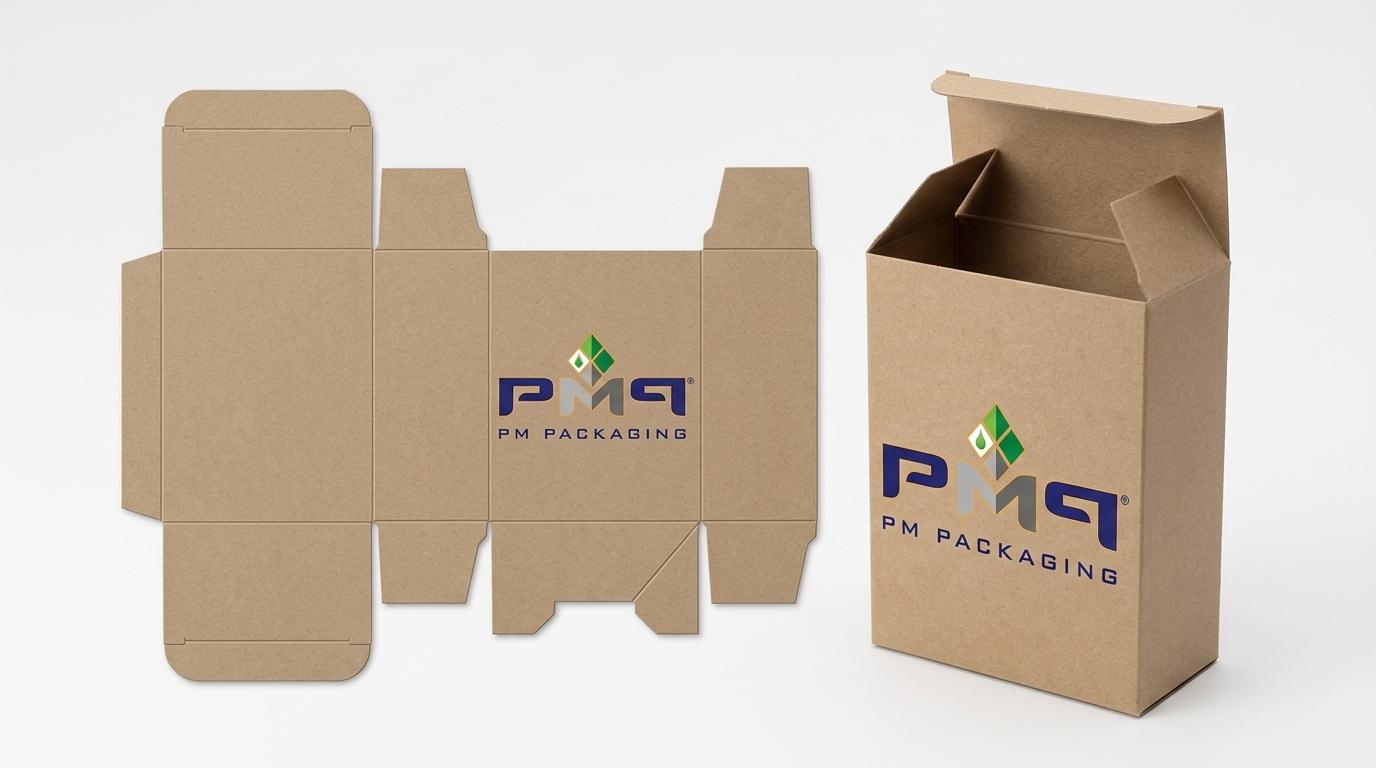
High-Volume Straight Tuck End Cartons With PM Packaging
High-volume straight tuck end cartons require coordination between carton manufacturing and the automated equipment that will use them.
PM Packaging works with brands and product manufacturers on folding carton programs involving:
- Commercial folding cartons
- Automated cartoning dielines
- Score depth calibration
- Paperboard caliper selection
- Multi-SKU carton platforms
- High-speed pack-out trials
For automated programs, the carton should be developed around consistent dimensions, material behavior, scores, folds, glue seams, and closures.
Design the Carton for the Line, Not Just the Shelf
Straight tuck end cartons provide an effective high-volume packaging structure when product, carton, and automation requirements are considered together.
It must feed consistently, open cleanly, allow interference-free product loading, and close reliably—repeatable across hundreds of thousands or millions of units.
By controlling paperboard caliper, grain direction, scoring, glue seams, and quality standards, brands can build straight tuck end carton programs that support both strong retail packaging and efficient automated pack-out.
Contact PM Packaging to discuss your straight tuck end carton dimensions, annual production quantities, SKU count, paperboard requirements, packing equipment, expected line speeds, and quality requirements. The PM Packaging team can help develop high-volume folding carton programs designed around repeat commercial production and automated packing operations.