
Automotive aftermarket packaging programs can become complicated long before the total production volume becomes unusually large.
The challenge is often the number of individual part numbers. A manufacturer may sell hundreds or thousands of replacement parts covering different vehicle makes, models, model years, engine configurations, dimensions, and applications. Several products may look almost identical while having completely different fitment requirements.
The objective is to create a standardized packaging architecture that can support a large number of part numbers while preserving accurate product identification, fitment information, and retail presentation.
Depending on the product, that system may include blister cards, folding cartons, single-face laminated (SFL) packaging, inserts, labels, and retail displays.
PM Packaging works with automotive aftermarket brands to consolidate dielines, streamline part-number fitment graphics, and build scalable high-volume packaging systems.
Standardize What Customers Do Not Need to Be Different
The objective is not to make every automotive part appear identical. It is to standardize the parts of the packaging system that do not need to vary.
Shared structural elements can include:
- Blister card dimensions
- Paperboard caliper and grade
- Hang-hole position and geometry
- Folding carton dielines
- SFL flute specifications
- Graphic typography rules
- Barcode location
- Fitment information panel location
- Master-case shipping box footprints
- Pallet layer configurations
Variable elements are limited to part numbers, product images, vehicle fitments, dimensions, UPCs, and color coding—creating controlled variation rather than packaging chaos.
Consider SFL for Larger or Heavier Automotive Parts
Some automotive aftermarket products exceed the practical structural range of conventional paperboard folding cartons. Heavy components, brake assemblies, repair kits, and dense metal hardware require greater support during national distribution.
Single-face laminated packaging (SFL) combines a high-impact printed paperboard top sheet with a fluted corrugated structural layer.
PM Packaging specializes in SFL, making the format particularly relevant for automotive aftermarket products that need both strong retail graphics and heavy-duty structural performance.
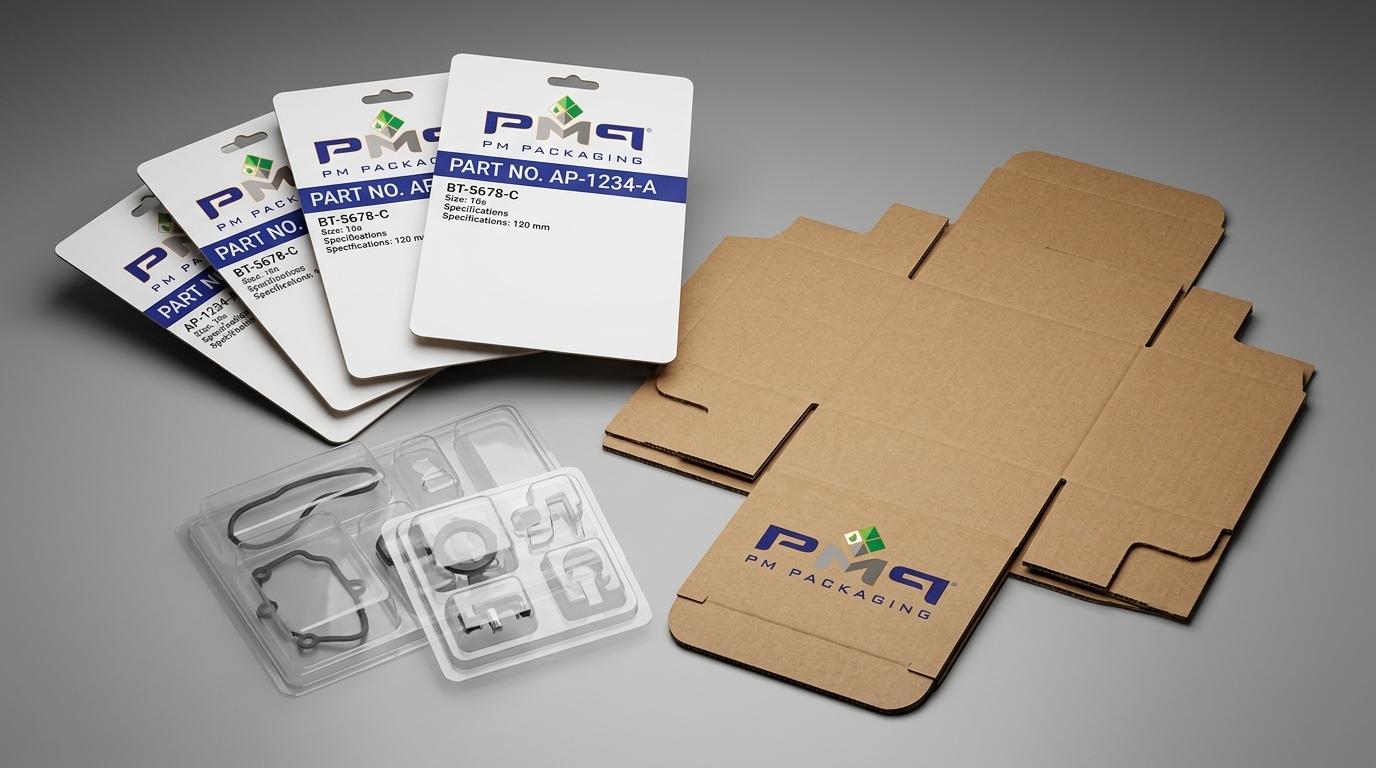
High-Volume Automotive Aftermarket Packaging With PM Packaging
Automotive aftermarket programs require packaging that can support high production volume without losing control of individual part numbers.
PM Packaging works with brands and product manufacturers on packaging programs involving:
- Blister cards
- Folding cartons
- Single-face laminated (SFL) packaging
- Product inserts
- Retail displays
- Multi-SKU packaging systems
PM Packaging's SFL capabilities are particularly relevant for larger or heavier automotive aftermarket products requiring greater structural strength while maintaining high-end retail graphics.
Build a Packaging System That Can Support Thousands of Part Numbers
Automotive aftermarket packaging is ultimately a systems problem. The challenge is maintaining a large portfolio of part numbers without allowing every new product or vehicle application to create another completely independent packaging program.
Small visible components use blister cards. Enclosed products use folding cartons. Heavy components move into SFL structures. Common materials, templates, inserts, and master cases connect those formats into one manageable system.
Part numbers and fitment information remain specific while the underlying packaging architecture becomes repeatable.
Contact PM Packaging to discuss your automotive aftermarket product portfolio, part-number count, annual packaging volumes, product weights, retail channels, current packaging formats, and replenishment requirements. PM Packaging can help evaluate blister cards, folding cartons, SFL packaging, inserts, and retail displays for a high-volume part-number program designed around long-term commercial production.