
The single-serve coffee and beverage capsule sector is one of the highest-velocity, most technically demanding categories in consumer packaged goods (CPG).
From Keurig K-Cup® compatible pods and Nespresso® OriginalLine and VertuoLine aluminum capsules to functional botanical tea pods, cold brew concentrates, and hot chocolate capsules, the format has evolved into a multi-billion-dollar global market dominated by third-wave specialty roasters, enterprise beverage conglomerates, and private-label retail programs. Merchandised across mass grocery aisles, warehouse club stores, direct-to-consumer (DTC) subscription platforms, and hospitality amenity programs, single-serve capsules demand secondary and tertiary packaging engineered for filling-line Overall Equipment Effectiveness (OEE), retail shelf share of voice, damage-free pallet stacking, and organoleptic food safety.
Core Challenges in Commercial Coffee Pod Packaging Programs
1. Multi-Channel Commercial Distribution Ecosystem for Pods & Capsules
Coffee pods and beverage capsules navigate four distinct commercial channels, each imposing distinct mechanical, visual, and dimensional requirements on the primary carton, multipack shipper, and retail display:
Standard retail gondolas feature 12-inch to 16-inch shelf depths. Dielines must maximize frontal Primary Display Panel (PDP) brand facings while ensuring carton depth nests cleanly. For 18ct, 24ct, and 30ct cartons, consumers demand counter-ready dispensing. Cartons must feature precision-engineered micro-perforations that allow a clean, fiber-tear-free dispenser chute to be opened without destroying the structural rigidity of the carton walls. Fine-screen 175 to 200 LPI lithography reproduces rich crema tones, roasted bean oil lusters, and precise roast intensity indicators.
Bulk formats (72ct to 120ct) require packaging that can securely contain 2.5 to 5.0 lbs of concentrated, shifting capsule weight. Club pallets are stacked three tiers high in unconditioned warehouse spaces; base cartons must withstand continuous static and dynamic top-load forces exceeding 1,200 to 1,500 lbs without corner buckling. Cartons require multi-ply reinforced carry handles rated for 35+ lbs of dynamic pull force, packed into one-touch corrugated Point-of-Purchase Display (PDQ) trays that tear cleanly on the retail floor.
Ships in Product Packaging (SIPP) eliminates secondary outer shipping boxes, reducing dimensional weight surcharges and packaging waste. During parcel transit, loose capsules tumble violently; dielines and internal paperboard liners must cushion delicate aluminum foil pod lids to prevent punctures, loss of nitrogen flush, and coffee staling. Multi-roast sampler boxes utilize tiered paperboard cavity trays or divided sleeves that create a curated tasting journey, lowering return rates and driving customer lifetime value (LTV).
High-end espresso capsule systems (e.g., Nespresso-compatible formats) often utilize rigid setup boxes or precision-folded 10-count sleeve tubes. Slim 10-pod tubes arranged in multi-sleeve master cartons (e.g., 5-tube 50ct master packs) are engineered for commercial dispensing racks. Soft-touch matte coatings, multi-level blind embossing, and inline cold foil stamping communicate artisanal roasting heritage and premium bean sourcing.
2. Substrate Engineering & Material Performance Matrix
Selecting the proper substrate for coffee capsule packaging requires balancing structural rigidity, automated line machinability, graphic reproduction, and food safety standards.
| Substrate Type | Caliper / Flute | Taber Stiffness / ECT | Print Resolution | Primary Coffee Application |
|---|---|---|---|---|
| Premium SBS (C1S) | 14pt – 16pt | 140–210 g-cm | 175–200 LPI Litho | 10ct Nespresso Sleeves & Slim Tubes |
| Standard SBS (C1S) | 18pt – 20pt | 280–420 g-cm | 175–200 LPI Litho | 12ct & 18ct Retail Grocery Cartons |
| Heavy-Duty SBS | 22pt – 24pt | 490–680 g-cm | 175–200 LPI Litho | 24ct–30ct Gravity Dispenser Boxes |
| CUK / SUS Kraft | 20pt – 24pt | 450–650 g-cm | 150–175 LPI Litho | 32ct–36ct Heavy Retail Dispensers |
| CCNB / CRB Recycled | 20pt – 24pt | 220–350 g-cm | 133–150 LPI Litho | Economy Pod Lines & Master Packs |
| N-Flute SFL (1/64") | ~28pt Total | 600+ g-cm Equiv. | 175–200 LPI Litho | 36ct–48ct Premium Counter Dispensers |
| F-Flute SFL (1/32") | ~38pt Total | 32–40 ECT Rating | 175–200 LPI Litho | 60ct–80ct E-Commerce & Sampler Packs |
| E-Flute SFL (1/16") | ~58pt Total | 44–55+ ECT Rating | 175–200 LPI Litho | 72ct–120ct Club Store Multipacks |
| B-Flute SFL (1/8") | ~120pt Total | 55–65+ ECT Rating | 150–175 LPI Litho | Full-Pallet Trays & Heavy Shippers |
3. High-Speed Automated Cartoning Line Mechanics & Runnability
In commercial coffee pod operations, packaging runnability on automated cartoning equipment directly dictates operational margins. Co-packers and high-volume roasteries operate advanced cartoning systems (such as Syntegon/Bosch, Schubert, Cama, Bradman Lake, R.A Jones, Econocorp, and Mpac Langen) running at line speeds from 150 to over 350 cartons per minute.
At these velocities, a microscopic variance in substrate stiffness, scoreline resistance, or coating friction causes carton misfeeds, vacuum cup drops, structural jamming, and catastrophic line downtime.
4. Structural Dieline Architectures for Coffee Pods & Capsules
The structural dieline dictates packing-line labor efficiency, carton squaring speed, structural load distribution, and retail consumer experience:
Straight Tuck End (STE) & RTE Cartons
For automated horizontal packing lines running at 250+ CPM. Straight Tuck End folds both closure flaps toward the rear, preserving a seamless, raw-edge-free Primary Display Panel (PDP) on grocery shelves.
Reverse Tuck End (RTE) maximizes sheet yield for high-volume value lines, reducing unit paperboard consumption by 3–6%.
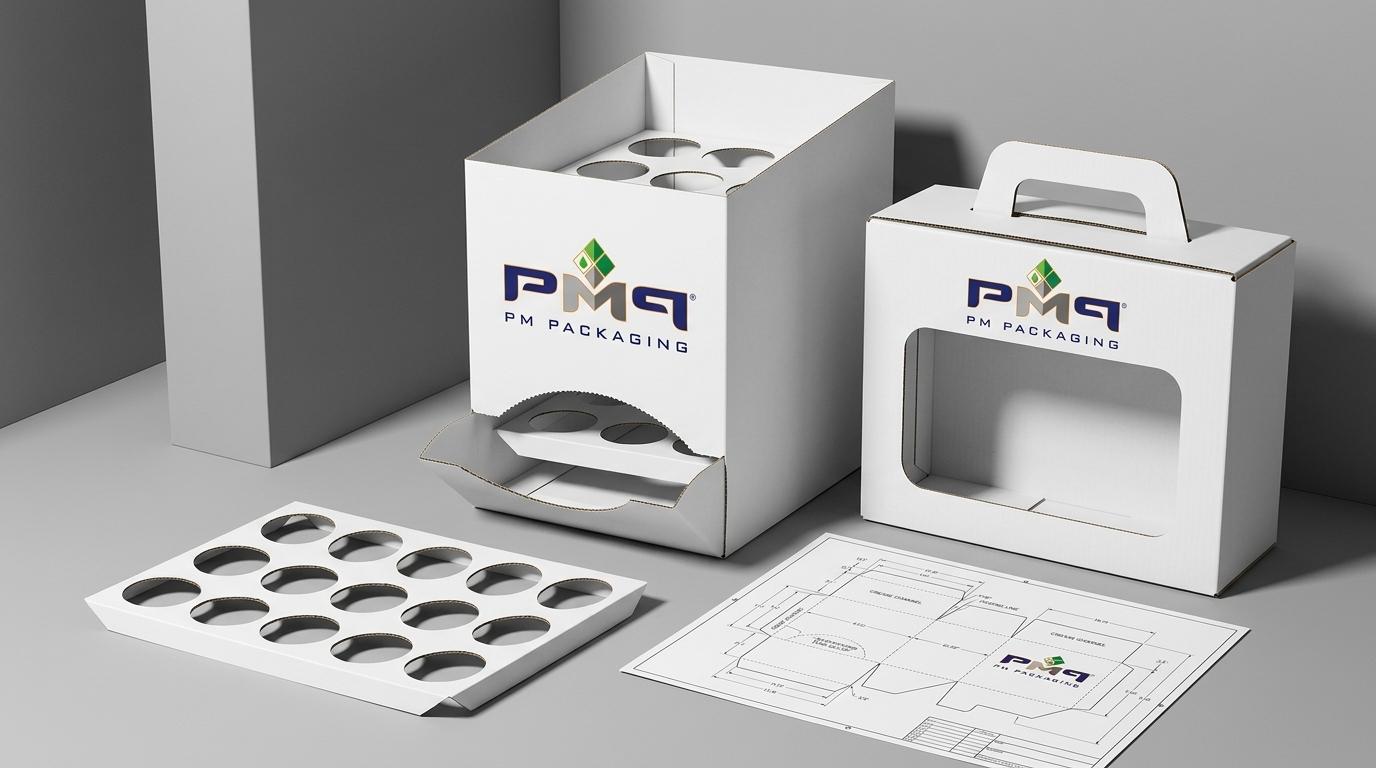
Gravity-Feed Countertop Dispenser Cartons
Features a calibrated tear-out arc perforation (1.5mm cut / 1.0mm tie) that opens cleanly without top-sheet fiber tearing or sidewall structural collapse.
Integrated lower retention lip prevents pods from spilling onto countertops while allowing smooth, one-at-a-time dispensing as inventory gravity-drops.
Auto-Bottom (Crash-Lock / 1-2-3 Snap) Cartons
Delivered flat with pre-glued base flaps that automatically interlock in under 1.0 second upon opening, boosting manual/semi-auto line throughput by 300%.
Distributes downward pod mass across all four vertical corners, securely supporting heavy 24ct–36ct arrangements.
Heavy-Duty SFL Briefcase Multipacks
Engineered with an integrated heavy-duty polypropylene strap handle or multi-ply folded SBS plate rated for 45+ lbs of dynamic vertical pull force.
Triple-ply interlocking base and E-Flute fluting eliminate bottom sag and resist severe 3-high pallet compressive loads.
5. Food Safety, Barrier Chemistry & Organoleptic Integrity
While folding cartons and SFL multipacks serve as secondary packaging for single-serve pods, the permeable nature of filter membranes, micro-perforated pod foils, and compostable bio-polymers makes organoleptic purity a non-negotiable procurement standard.
Freshly ground coffee contains hundreds of highly volatile aromatic compounds (terpenes, pyrazines, aldehydes) that give specialty roasts their distinctive tasting notes. Residual solvents, unreacted monomers from UV coatings, or off-gassing from low-grade adhesives can migrate into the coffee grounds, imparting a chemical off-flavor.
| Scale Value | Sensory Perception Description | Commercial Suitability for Specialty Coffee |
|---|---|---|
| Grade 0 | No perceptible odor or flavor alteration | Optimal standard for specialty single-origin pods |
| Grade 1 | Flavor alteration just perceptible (marginal) | Fully acceptable commercial production threshold |
| Grade 2 | Moderate flavor alteration perceptible | Unacceptable: High risk of consumer complaints |
| Grade 3 | Strong flavor alteration perceptible | Critical Failure: Immediate lot rejection |
| Grade 4 | Severe taint / chemical contamination | Dangerous non-compliance / Product recall |
PM Packaging guarantees a Robinson sensory rating of Grade ≤ 1.0 (DIN 10955 / EN 1230) by utilizing 100% low-migration vegetable-oil-based offset inks, water-based aqueous OPV coatings, and specialized MOSH/MOAH mineral oil hydrocarbon migration barriers under certified SQF Level 2/3 and FDA 21 CFR 176.170/180 food-contact manufacturing standards.
6. Multi-SKU Color Management & Visual Brand Consistency (G7 / GMI)
Specialty coffee brands routinely market catalogs spanning 20 to 50+ individual SKUs (Light Roast Ethiopian Yirgacheffe, Medium Roast Colombian Supremo, Dark French Roast, Hazelnut Vanilla, Swiss Water Decaf, and seasonal drops). When merchandised side-by-side on grocery shelves, even minor color deviations between cartons erode brand authority.
Idealliance G7 Master & GMI
Closed-loop spectrophotometric press controls enforce strict spectral color tolerances of ΔE00 ≤ 1.5 for brand corporate colors and ΔE00 ≤ 2.0 for process graphics under ISO 13655 M1 lighting.
CxF/X-4 Digital Spectral Masters
Embeds full spectral reflectance curves (380nm–730nm) into prepress workflows, ensuring spot colors reproduce identically across 16pt SBS cartons, E-Flute club boxes, and corrugated PDQ displays.
Inline Cold Foil & Soft-Touch
Applies brilliant metallic bronze, gold, or copper foil inline at full press speed for tasting notes and Fair Trade badges, paired with soft-touch matte coatings and spot gloss UV for roasted bean textures.
7. Club Store Engineering, Stacking BCT & PDQ Display Optimization
Wholesale club stores (Costco, Sam's Club, BJ's Wholesale) are massive volume drivers for coffee capsule brands, but impose extreme structural demands on packaging.
| Parameter | Retail Standard Requirement | PM Packaging Engineered Solution |
|---|---|---|
| Pallet Footprint | 48" x 40" GMA 4-Way Hardwood | 100% Area Utilization, Exactly Zero Overhang |
| Maximum Stacking Height | 52" to 58" Total Height | 3-to-4 Tier Optimized Multipack Layering |
| Pallet Skirt Surround | Full-Perimeter Litho Skirt | Heavy-Duty B-Flute SFL Skirt with G7 Master Print |
| Display Tray (PDQ) | One-Touch Clean-Tear Opening | High-ECT E-Flute PDQ with Clean-Tear Perfs (<10s Restock) |
| Edge & Corner Protection | V-Board Corner Edge Posts | High-Caliper Solid Fibre Corner Posts + Pallet Cap |
8. Omnichannel & Direct-to-Consumer (DTC) Transit Protocols (ISTA 6-Amazon)
Direct-to-consumer subscription shipments expose coffee pod packaging to automated conveyor drops, sortation chutes, and high-frequency vehicle vibrations. Qualifying for ISTA 6-Amazon.com SIPP (Ships in Product Packaging) eliminates secondary outer shippers while defending fragile capsule foils:
ISTA 6-Amazon SIPP Compliance Testing Protocol (Coffee Pods):
9. Supply Chain Agility: Nearshore US-Mexico Manufacturing vs. Transpacific Sourcing
For Supply Chain Executives and Procurement Directors managing high-volume coffee capsule programs, sourcing decisions have shifted decisively from nominal unit cost to comprehensive Total Cost of Ownership (TCO), inventory velocity, and supply chain resilience.
| Cost & Risk Factor | Transpacific Asian Converter | PM Packaging Nearshore Manufacturing |
|---|---|---|
| Production & Freight Lead Time | 10 to 12 Weeks (Ocean Freight) | 1 to 3 Days (Direct Ground Freight) |
| USMCA Tariff Status | Subject to 7.5%–25% Section 301 Tariffs | 100% Duty-Free & Tariff-Free (USMCA Rules of Origin) |
| Working Capital Carrying Cost | High (60–90 Days Trapped Cash) | Minimal (JIT Delivery & VMI Safety Stock) |
| Ocean Port Demurrage Risk | High Exposure to Port Drayage Delays | Zero Ocean Port Congestion / Demurrage Surcharges |
| Engineering Prototype Speed | 3 to 4 Weeks Round-Trip | 24 to 48 Hours Rapid Prototyping (San Diego Lab) |
| Multi-SKU Seasonal Agility | Rigid (High Minimum Order Quantities) | Highly Agile (qikCombo™ Multi-SKU Shared Runs) |
| Border Clearance Security | Variable Customs Clearance | C-TPAT & OEA Fast-Track Dedicated FAST Lanes |
10. Packaging Engineering & Procurement Implementation Blueprint
To successfully execute a high-volume coffee pod or beverage capsule packaging transition, procurement directors and packaging engineers should follow a structured five-phase qualification roadmap:
Authoritative Technical References
- • DIN 10955 / EN 1230-1/2: Sensory Analysis of Paper and Board Intended for Food Contact (Robinson Taint Test).
- • FDA 21 CFR 176.170 / 176.180: Components of Paper and Paperboard in Contact with Aqueous, Fatty, and Dry Foods.
- • ASTM D1894: Standard Test Method for Static and Kinetic Coefficients of Friction of Plastic Film and Paperboard.
- • ISTA Standard 6-Amazon.com-SIPP: Ships in Product Packaging Omnichannel Drop and Vibration Protocols.
- • TAPPI T 811 / McKee Formula: Edgewise Compressive Strength (ECT) and Box Compression Test (BCT) Stacking Modeling.
- • Idealliance G7 Master & GMI: Calibrated Spectral Color Tolerances (CIEDE2000 ΔE00 ≤ 1.5) for Multi-Plant Packaging Programs.
11. Partnering with PM Packaging for Enterprise Scale
For more than 45 years, PM Packaging has engineered, printed, and converted high-performance packaging systems for North America's leading coffee roasters, beverage conglomerates, and co-packers:
- • Structural CAD & Rapid Dieline Prototyping (24–48 Hours)
- • ASTM D1894 CoF & Score Bend Ratio (SBR) Analysis
- • Pre-Press Idealliance G7 Color Management & CxF Spectral Proofing
- • Enterprise Account Management & VMI Buffer Warehousing
- • Large-Format 6-to-8 Color Offset Litho Presses (up to 81")
- • High-Speed Single Face Laminate (SFL) Corrugating Lines
- • Certified SQF Level 2/3 Cleanroom Food-Contact Production
- • C-TPAT & OEA Fast-Track Expedited Commercial Border Transit
Ready to Optimize Your Single-Serve Coffee Packaging Program?
Scale retail grocery cartons, club store SFL briefcase multipacks, and automated dispenser packaging with high-speed cartoning runnability, G7 Master chromatic harmony across 50+ SKUs, and SQF food-grade organoleptic purity.
Eliminate 10–12 week transpacific ocean risks with 1–3 day nearshore ground replenishment from PM Packaging's dual-border manufacturing corridor.
Connect with PM Packaging's structural engineering and procurement team today to request a comprehensive Cartoner Runnability Audit, CAD Dieline Prototype, or Nearshore TCO Analysis.