
When companies compare North American packaging with overseas packaging, the conversation often begins and ends with unit price.
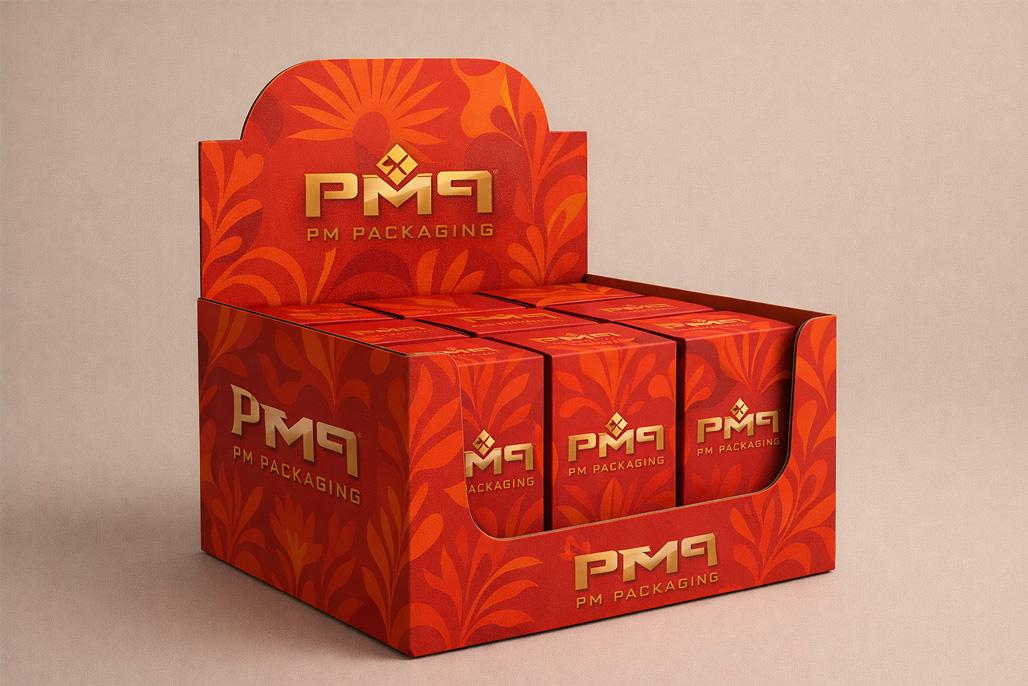
A folding carton, corrugated case, blister card, insert, or retail display may appear less expensive when quoted by an overseas supplier. For stable, high-volume programs with long planning horizons, that pricing can be attractive. However, the price on a quote does not represent the complete cost of the program.
Freight, inventory, lead times, warehousing, engineering revisions, quality issues, communication, obsolete packaging, and supply interruptions can materially change the economics. Sourcing decisions should compare the complete program rather than evaluating the package as an isolated item.
Start With Total Landed Cost and Freight
Unit price measures what the supplier charges to manufacture each package. Total landed cost measures what it takes to place usable packaging at the facility where it will be formed, filled, sealed, or assembled. This includes production, tooling, international freight, customs, brokerage, port handling, duties, warehousing, and logistics coordination.
Packaging is lightweight but volumetric. Flat-shipped cartons, formed plastic blisters, and assembled displays occupy substantial shipping container and truck space. Overseas shipping involves multiple loading, port, and customs stages. North American packaging comparison should map actual shipping lanes and pallet densities rather than relying on broad general assumptions.
Account for Inventory Carrying and Obsolescence Costs
Long supply chains require companies to commit to orders months in advance, locking up working capital in warehouses, safety stock, and materials in transit. Holding this inventory creates costs for space, handling, insurance, and counting.
Furthermore, printed packaging becomes obsolete when a company changes branding, dimensions, regulatory text, barcodes, languages, or retailer requirements. Discarding unusable materials is costly. Regional sourcing lets businesses balance run economics with smaller releases or shorter digital runs, mitigating obsolescence risk.
Compare Lead Times and Sourcing Flexibility
Complete lead times encompass structural development, prototyping, proofing, tooling, scheduling, customs, and final freight. Overseas sourcing increases the time between order placement and usable inventory, requiring highly accurate long-range forecasts.
When actual sales differ from forecasts, companies encounter lost production, delayed orders, or excess stock. Regional sourcing offers the flexibility to adjust releases among SKUs, which is invaluable for product launches, seasonal campaigns, and multi-SKU product families.
Consider Engineering Revisions and Time Zones
Packaging structural elements often require adjustments for clearances, inserts, or closures. Recreating overseas tooling and shipping proof samples long distances can slow this process down. A nearby supplier can inspect pack-out lines, modify dielines, and test physical prototypes more directly.
Regional communication also avoids the 12-hour delays associated with time-zone differences. Issues involving design, color, or scheduling can be resolved in real-time meetings with engineering, procurement, and operations teams present.
"A lower quoted unit price is irrelevant if assembly labor bottlenecks, product transit damage, or obsolete warehouse storage cancels out the initial discount."
Balancing Global and Regional Sourcing
Sourcing location alone does not dictate quality, but containment and replacement transit are much faster when a supplier is regional. The overall evaluation should include minimum order quantities, cash terms, and supply chain continuity plans.
Overseas packaging makes sense for stable, high-volume programs with long planning horizons and minimal changes. North American packaging provides superior value when products evolve, safety stocks must be minimized, time-to-market is tight, or production occurs locally in the U.S. or Mexico.
Evaluating Sourcing Strategy
Sourcing decisions should compare the total cost of ownership—packaging, freight, duties, warehousing, obsolescence, labor, change turnaround, and risk.
PM Packaging helps manufacturers evaluate global and regional programs, supplying folding cartons, SFL cartons, blister cards, master cases, inserts, and retail displays. Contact our sourcing team.