
Automotive packaging is a specialized category of industrial packaging designed to protect, organize, transport, and present parts and components used in the automotive industry. Unlike general retail packaging, automotive packaging is built around supply chain performance.
It has to support everything from manufacturing efficiency and part protection to warehouse handling, export shipping, and inventory control.
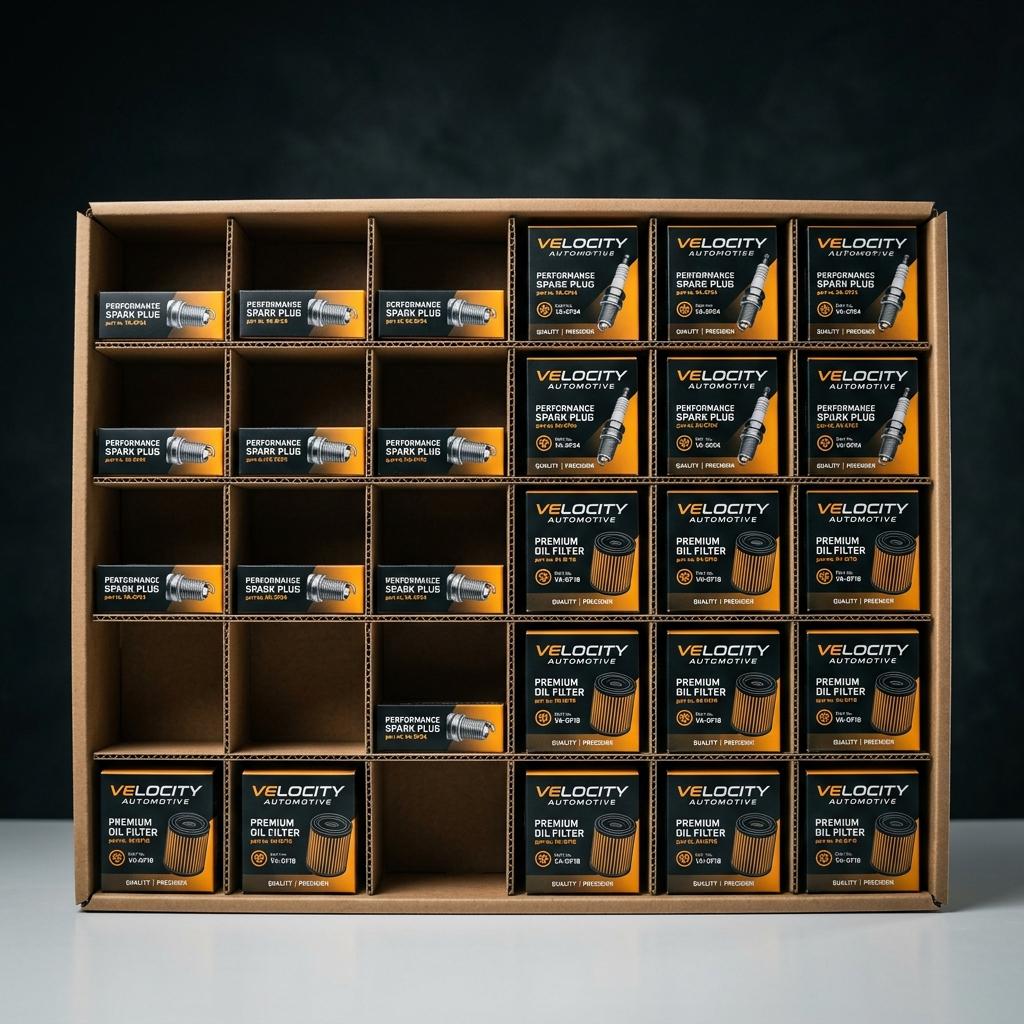
So, what is automotive packaging? In simple terms, automotive packaging includes the boxes, inserts, trays, dividers, protective components, and shipping structures used to move automotive parts safely through the supply chain. It is used for items such as metal parts, plastic components, electronics, fasteners, service parts, assemblies, and aftermarket products.
The right packaging helps prevent damage, reduce handling issues, improve organization, and make parts easier to store, transport, and identify.
For manufacturers, suppliers, distributors, and aftermarket brands, automotive packaging is not just a box. It is part of the operational system that keeps products protected and production moving.
Why Automotive Packaging Matters
The automotive industry depends on precision. Parts must arrive in the right quantity, in the right condition, and at the right time. If packaging fails, the impact can go far beyond a damaged product. It can create delays, confusion, added labor, inventory issues, and even production interruptions.
That is why automotive packaging matters so much. It helps support:
- Part protection during transit and storage
- Organized packing and picking
- Efficient movement through supply chains
- Better use of warehouse space
- Clear product identification
- Reduced risk of scratches, dents, or contamination
In many automotive environments, packaging needs to do more than survive shipping. It also needs to fit into a larger logistics and production process. That includes palletization, line-side delivery, export transport, service parts distribution, and retail aftermarket presentation.
What Types of Products Use Automotive Packaging?
Automotive packaging is used across a wide range of products, from large industrial components to small service parts. The specific packaging solution depends on the size, weight, fragility, finish, and movement of the product.
Common automotive items that require packaging include:
- Metal brackets and stamped parts
- Plastic molded components
- Sensors and electronic parts
- Fasteners and hardware kits
- Filters and brake components
- Engine and wiring components
- Service and replacement parts
- Aftermarket accessories and trim pieces
Each of these product categories can create very different packaging demands. A heavy metal part may need strong corrugated support and internal separation. A scratch-sensitive finished component may need protective inserts or dividers. A retail aftermarket product may need packaging that supports branding as well as protection.
The Main Goals of Automotive Packaging
Automotive packaging is designed around performance. While appearance can matter in some applications, especially in aftermarket and branded packaging, the primary focus is usually on function and efficiency.
Product Protection
Protecting parts vulnerable to impact, abrasion, scratching, bending, moisture, or contamination throughout transit.
Part Organization
Grouping parts by SKU, assembly, or production count to make them easier to count, pick, and feed into assembly lines.
Logistics Efficiency
Fitting seamlessly into warehousing, palletization, and transit systems to reduce wasted space and cut transport costs.
Identification & Traceability
Carrying vital labels, part numbers, barcodes, and handling tags to ensure total inventory and picking accuracy.
Additionally, for retail and aftermarket parts, the packaging must play a branding role—looking professional on retail auto parts shelves while maintaining structural durability.
Automotive Packaging Is Different From Standard Packaging
Automotive packaging is more specialized than standard consumer packaging because the products and supply chains involved are more demanding. In many industries, packaging mainly needs to protect the product during shipping. In automotive, it often has to integrate with manufacturing, distribution, and inventory systems as well.
That means automotive packaging design must account for:
- Heavy or irregularly shaped parts
- Repetitive industrial handling forces
- Tight tolerances for product finish
- Returnable and reusable loops
- Line-side assembly feed criteria
- Export and international transport environments
This is why automotive packaging is often engineered around the application rather than selected as a simple stock solution.
Common Types of Automotive Packaging
There is no single format for automotive packaging. Different products and supply chain stages require different structures and materials:
Corrugated Boxes
Widely used for shipping, part storage, internal handling, and aftermarket retail packaging because of their outstanding durability and structural flexibility.
Inserts & Dividers
Engineered partitions that organize products internally, preventing metal parts or electronics from shifting, colliding, or scratching.
Trays & Compartments
Orient parts in precise patterns for automated picking or line-side production worker access, minimizing retrieval time and packing errors.
Aftermarket Cartons
Vibrantly printed retail boxes that prioritize high-end shelf presence, branding graphics, and product communication.
Key Considerations in Automotive Packaging Design
A strong automotive packaging solution has to be built around the real conditions the part will face. That means looking at more than just size. Important considerations include:
Product Weight: Heavier cast iron or steel parts need reinforced fluting and double-wall corrugated structures to prevent carton blowout.
Surface Sensitivity: Painted trim pieces and polished mirrors need soft contact inserts or protective wraps to eliminate scuff marks.
Handling Conditions: High-stacking heights in freight containers require exceptional top-to-bottom compression strength.
OEM vs. Aftermarket Packaging Applications
Automotive packaging is not all used the same way. The style of design shifts dramatically depending on the final destination:
OEM & Supplier Packaging
Focuses strictly on shipping density, stack durability, picking speed, and line-side container efficiency. Branding is secondary to raw performance.
Aftermarket Packaging
Prioritizes visual impact, customer brand experience, clean retail graphics, and clear product information for display shelves.
Why This Matters for PM Packaging
At PM Packaging, automotive packaging is about building solutions that support both performance and practicality. Automotive parts need packaging that protects them, organizes them, and helps them move efficiently through the supply chain.
By producing right-sized corrugated structures, custom-fit internal partitions, and high-impact aftermarket retail cartons, PM Packaging helps businesses choose solutions that do more than contain parts—they keep the entire process moving.
Final Thoughts
"Automotive packaging matters because the automotive industry depends on accuracy, efficiency, and flawless product condition."
So, what is automotive packaging? It is the specialized packaging used to protect, organize, transport, and present automotive parts throughout manufacturing, distribution, and aftermarket channels.
For PM Packaging, this represents an important category where packaging has to work hard. When designed well, automotive packaging does more than carry a component. It helps keep the entire production supply chain moving smoothly.