
Choosing the right folding carton style can have a major impact on packaging performance, packing speed, product protection, and overall efficiency.
Two common options businesses often compare are auto bottom boxes and standard folding cartons. While both fall under the broader category of folding carton packaging, they are designed for different priorities and can serve very different packaging needs.
For brands evaluating packaging for retail products, industrial items, food, personal care, or other packaged goods, understanding the difference between these two carton styles is important. The right choice depends on factors such as product weight, assembly speed, production efficiency, shelf presentation, and how the package will be packed and handled.
At PM Packaging, folding carton structure is not just about appearance. It is also about function. A box style should support the product, the packing process, and the overall customer experience. That is why comparing auto bottom boxes vs. standard folding cartons is a useful step when selecting the right packaging solution.
"Structure determines function. Selecting the correct bottom lock style can save hundreds of assembly hours and ensure your products stay secure from the packing line to the retail shelf."
What Is an Auto Bottom Box?
An auto bottom box is a folding carton with a pre-glued bottom that automatically locks into place when the carton is opened. Instead of manually folding and securing the bottom flaps during setup, the bottom structure forms itself as the carton is erected.
This design makes auto bottom boxes especially useful in situations where packing speed matters or where the product being packed needs a stronger, more supportive base.
Auto bottom boxes are often used for:
- Heavier retail products
- Bottles and jars
- Cosmetics and personal care products
- Food and beverage items
- Pharmaceutical or healthcare products
- Products packed by hand at higher speed
- Items that need extra support at the base
Because the bottom locks automatically, the carton can be filled more quickly and with less manual effort than some other folding carton styles.
What Is a Standard Folding Carton?
A standard folding carton is a broad category that typically refers to paperboard cartons that are printed, die cut, folded, and glued into shape, then shipped flat until needed. Within that category, the term is often used more casually to describe common carton structures such as reverse tuck end or straight tuck end cartons.
Unlike an auto bottom box, a standard tuck-style folding carton usually requires the bottom flaps to be manually folded and tucked into place during setup. These cartons are widely used because they are versatile, cost-effective, and suitable for many lightweight to moderately weighted products.
Standard folding cartons are commonly used for:
- Cosmetics
- Personal care items
- Pharmaceuticals
- Food products
- Electronics accessories
- Consumer packaged goods
- Retail products with lighter weight requirements
They remain one of the most widely used packaging formats because they balance branding, functionality, and production efficiency.
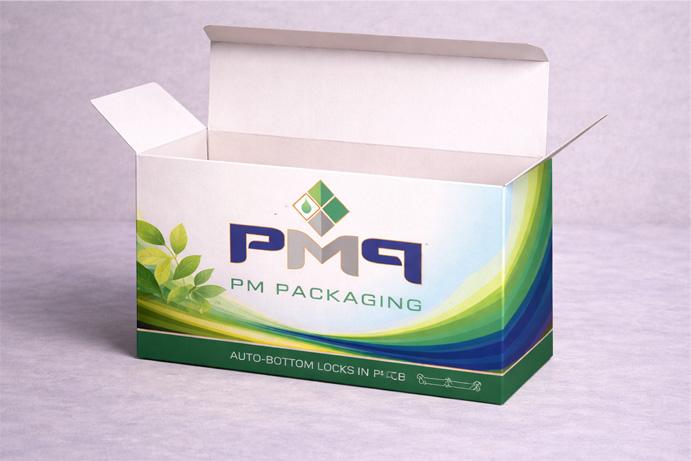
The Core Difference Between the Two
The main difference between an auto bottom box and a standard folding carton comes down to bottom construction and setup speed.
An auto bottom box has a bottom that is pre-glued and designed to lock automatically when the box is opened. A standard folding carton usually requires the packer to fold and close the bottom manually before filling.
That structural difference affects several practical considerations:
- Packing speed
- Labor required during setup
- Bottom strength
- Suitability for heavier products
- Packaging cost
- Efficiency in hand-packing operations
While both styles can look polished and retail-ready, the choice between them often comes down to performance needs rather than appearance alone.
Why Businesses Choose Auto Bottom Boxes
Auto bottom boxes are often selected when speed and structural support are high priorities.
Faster Assembly
One of the biggest advantages of auto bottom boxes is setup speed. Because the bottom locks automatically, packers can erect the carton quickly and move straight to filling. This can be especially valuable in hand-packing environments where labor efficiency matters.
Better Bottom Support
Auto bottom boxes are also a strong choice for products that are heavier or need more support at the base. Since the bottom structure is designed to lock securely, it generally offers better support than a simple tuck bottom carton. This makes it ideal for glass bottles, jars, heavier cosmetics, multi-component kits, and specialty food products.
Better for Hand Packing
For products packed manually rather than on a fully automated line, auto bottom boxes can help reduce effort and improve workflow. Packers do not need to spend as much time forming the base, which can help streamline operations and reduce frustration during assembly.
Why Businesses Choose Standard Folding Cartons
Standard folding cartons remain popular because they are practical, flexible, and often more cost-efficient for many applications.
Lower Cost
In many cases, standard tuck-style folding cartons are less expensive than auto bottom boxes. They typically use simpler construction and may require less gluing during manufacturing. For lightweight products that do not need additional bottom strength, this can make them the more economical choice.
Versatility
Standard folding cartons work well across a wide range of products. They are available in many styles, sizes, and layouts, making them one of the most adaptable packaging options on the market.
Good for Lightweight Products
Not every product needs the stronger base of an auto bottom box. If the product is relatively light and easy to pack, a standard folding carton may be more than sufficient. In those cases, paying for a more complex bottom structure may not provide enough additional value.
Efficient for Automated Lines
Depending on the carton style and production setup, standard cartons can still be highly effective in well-structured packaging operations. They remain a common choice because they support efficient production while still offering strong branding space and retail presentation.
Which Box Style Is Better for Heavier Products?
When comparing auto bottom boxes vs. standard folding cartons for heavier products, auto bottom boxes often have the advantage.
That is because the bottom structure is designed to provide more support and lock into place securely. This can help reduce the risk of bottom failure during filling, handling, or display.
Heavier products can place more stress on the carton base, especially when:
- The product is dense
- The weight is concentrated in one area
- The package is handled repeatedly
- The item is fragile and needs stable support
In these situations, an auto bottom box is often the stronger option. That does not mean standard cartons cannot be used for moderately weighted products, but when extra support is clearly needed, auto bottom construction is often the better fit.
Which Option Is Better for Faster Packing?
If faster setup is the goal, auto bottom boxes usually win.
The automatic locking base saves time during assembly, particularly in hand-packing environments. That can be especially helpful for businesses that:
- Pack products manually
- Need to improve fulfillment efficiency
- Have high packing volume
- Want to reduce labor steps
- Need easier setup for staff
Standard folding cartons still work well in many applications, but they generally require more manual action to form the bottom before the product can be packed. For companies where packing speed directly affects productivity, this difference can be significant.
How Shelf Presentation Compares
From a visual standpoint, both auto bottom boxes and standard folding cartons can be designed to look highly polished and retail-ready. The difference between them is usually less about appearance and more about functionality.
Both styles can support:
- High-quality printing
- Strong branding
- Product information panels
- Premium finishes
- Retail display requirements
In other words, choosing an auto bottom box does not mean sacrificing appearance, and choosing a standard carton does not mean settling for a less professional look. At PM Packaging, both styles can be developed to support shelf presence and brand goals. The better choice depends more on how the box needs to perform than how it needs to look.
Cost vs. Performance
One of the most important comparisons in auto bottom boxes vs. standard folding cartons is cost versus performance.
Standard Cartons (Value Option)
A standard folding carton may be the better value when:
- The product is lightweight
- Packing speed is not a major issue
- Budget sensitivity is high
- Extra bottom support is not needed
Auto Bottom Boxes (Performance Option)
An auto bottom box may be worth the added cost when:
- The product is heavier
- Hand packing speed matters
- Better bottom support is needed
- The packaging process benefits from easier setup
The right choice is not always the cheapest option. It is the option that best fits the product and the operational need.
Common Use Cases Comparison
Auto Bottom Boxes
- Beverage cartons
- Bottled products
- Premium food items
- Cosmetics in glass containers
- Heavier skincare or wellness products
- Gift sets
- Products requiring secure base support
Standard Folding Cartons
- Lightweight cosmetics
- Personal care products
- Pharmaceutical cartons
- Dry food products
- Consumer packaged goods
- Small electronics accessories
- General retail packaging
How PM Packaging Helps You Choose
At PM Packaging, choosing between an auto bottom box and a standard folding carton starts with understanding the product and the packing process.
Some of the most important questions include:
By evaluating those details, businesses can choose a carton style that supports both operational performance and packaging presentation.
Final Thoughts
"When comparing auto bottom boxes vs. standard folding cartons, there is no universal winner. Each serves a different purpose."
Auto bottom boxes are ideal when speed, bottom strength, and support for heavier products are priorities. Standard folding cartons are often the better choice when versatility, lower cost, and lightweight product packaging are the main goals.
The right packaging structure depends on what the product needs and how the packaging operation works. A box should not only look good. It should also support efficiency, protection, and the overall packaging process.
At PMPackaging.com, this is what this comparison is really about: choosing a folding carton structure that fits the product, the workflow, and the brand. When that choice is made well, packaging becomes more effective from packing line to shelf.