
Sustainability has become a bigger priority across the agricultural supply chain. Growers, packers, distributors, and retailers are all looking more closely at how products are packed, shipped, displayed, and protected. Packaging is a major part of that conversation because it affects material use, shipping efficiency, product protection, and overall supply chain performance.
For agricultural businesses, sustainable packaging is not just about using different materials. It is about choosing packaging that helps reduce waste, supports efficient logistics, protects the product effectively, and aligns with the expectations of modern markets. That is why corrugated packaging built with Single Face Lamination (SFL) is an important solution to consider.
At PM Packaging, corrugated and microcorrugated materials are produced using a 3-layer structure made up of a Liner as the inner layer, a Medium as the fluted layer, and a Top Sheet as the outer layer. The process includes Single Face Lamination, where the Medium is fluted and laminated to the Liner, followed by the application of the Top Sheet. This construction creates packaging that combines strength, efficiency, and high-quality presentation potential.
When applied thoughtfully, corrugated SFL construction can support more sustainable agriculture packaging by helping businesses balance protection, performance, logistics, and material efficiency.
Why Sustainability Matters in Agriculture Packaging
Agriculture depends on packaging that performs well under real-world conditions. Produce and agricultural goods often move through harvesting, packing, palletizing, warehousing, refrigeration, transportation, and retail handling before they reach the final customer. Packaging has to withstand that journey while helping products arrive in good condition.
At the same time, agricultural businesses are under increasing pressure to improve sustainability across operations. This includes looking at packaging choices more carefully. A more sustainable packaging strategy may help support goals such as:
- Reducing unnecessary material use
- Improving logistics efficiency
- Lowering product damage and waste
- Supporting recyclable paper-based packaging formats
- Creating packaging that works across transport and display needs
- Aligning with retailer and market expectations
In agriculture, damaged product can become a major source of waste. That means sustainable packaging is not only about the packaging material itself. It is also about how well the package protects what is inside. A package that uses materials efficiently but fails in transport may create more total waste than a package that performs better.
That is one reason corrugated SFL construction is so relevant. It can support sustainability through both structure and efficiency.
What Is Corrugated SFL Construction?
To understand its sustainability value, it helps to understand the construction itself.
PM Packaging produces corrugated and microcorrugated materials using a three-layer design:
- Liner as the inner layer
- Medium as the fluted middle layer
- Top Sheet as the outer layer
The process starts with Single Face Lamination, where the Medium is first fluted and then laminated to the Liner. After that, the Top Sheet is applied to complete the board.
This structure creates a finished packaging material that combines rigidity, cushioning, and a printable outer surface. Because the board can be produced in both corrugated and microcorrugated formats, it can be adapted to different agricultural applications depending on the required balance of strength, appearance, and handling performance.
How Corrugated SFL Construction Supports Sustainability Goals
Sustainable agriculture packaging should do more than sound environmentally responsible. It needs to perform in ways that support real operational improvement. Corrugated SFL construction can contribute in several important areas.
Efficient Use of Material Through Structured Design
Corrugated packaging is valued in part because its fluted structure helps create strength without relying on solid heavy material throughout. The Medium adds rigidity and support through its shape, helping the finished board perform well while maintaining relative efficiency in the structure.
That matters in sustainable packaging because structural design can help reduce excess material use while still meeting packaging demands. Rather than relying on bulk alone, corrugated construction uses form to deliver performance.
When packaging is engineered properly around the product and application, this can support a more efficient packaging solution overall.
Lightweight Performance for Better Logistics
Weight matters in agricultural packaging. Products often move in large quantities, and packaging that is unnecessarily heavy can add transport inefficiency. Corrugated SFL construction can help provide strength while remaining relatively lightweight.
This can support sustainability goals by improving logistics efficiency in areas such as:
- Transportation
- Handling
- Warehouse movement
- Export shipping
- Retail replenishment
Lighter, well-performing packaging can contribute to more efficient movement across the supply chain, especially when large volumes are involved.
Product Protection Helps Reduce Waste
One of the most overlooked parts of sustainable packaging is product protection. In agriculture, damaged produce or packaged goods can become a major source of waste. If packaging does not adequately protect the product from crushing, bruising, or handling damage, sustainability efforts can be undermined very quickly.
Corrugated SFL construction helps support product protection through its layered structure. The fluted Medium provides cushioning and rigidity, while the completed board helps the package withstand stacking and transport demands.
For agricultural businesses, this means packaging can help reduce:
- Handling damage
- Compression-related issues
- Loss during transport
- Presentation loss at delivery or retail
Protecting the product more effectively can be just as important as reducing packaging waste, because product waste carries its own environmental and economic cost.
Paper-Based Corrugated Formats Align with Market Expectations
Many agricultural businesses are looking for packaging formats that align with growing demand for paper-based packaging solutions. Corrugated construction is well positioned in this conversation because it offers a familiar, widely used paper-based format that supports a range of agricultural packaging needs.
This can be especially valuable for businesses trying to move toward packaging solutions that fit retailer expectations, export market preferences, or brand sustainability goals. Corrugated SFL packaging can support this direction while still delivering practical performance for agriculture applications.
For many companies, the value is not just in changing material categories. It is in choosing a packaging format that can work realistically across logistics, handling, and presentation requirements.
Right-Sized Packaging Can Improve Sustainability
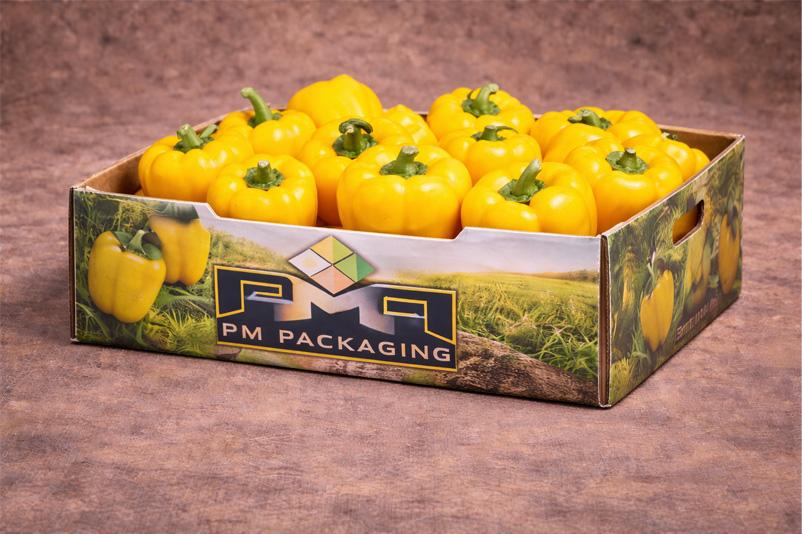
Customization is another way corrugated SFL construction can support sustainability. A package that is properly sized for the product can help reduce wasted material, improve product fit, and support more efficient palletization and transport.
At PM Packaging, SFL-based corrugated and microcorrugated packaging can be developed around the actual needs of the application. That means businesses can work toward packaging that fits their product more precisely rather than relying on oversized or inefficient formats.
Right-sized packaging can help support:
- Better pack efficiency
- Less empty space
- Improved product stability
- Better pallet use
- Reduced unnecessary material use
In agriculture packaging, these small efficiencies can add up quickly across large production volumes.
One Package Can Support Multiple Functions
Another sustainability advantage comes from versatility. Agricultural packaging often has to do more than one job. It may need to function during shipping, at receiving, in retail staging, or even in display-ready environments. Packaging that can support multiple needs more effectively may reduce reliance on additional materials or packaging layers.
Corrugated SFL construction can be used across applications such as:
- Fresh produce cartons
- Agricultural shipping boxes
- Export packaging
- Retail-ready packaging
- Display-friendly agricultural packaging
- Specialty crop packaging
When a package can handle protection and presentation within one well-designed structure, that can help streamline the packaging system overall.
Microcorrugated Options Support a Refined Appearance
Sustainability is not only about shipping cartons in the back of the supply chain. Many agricultural products also need to look market-ready. This is especially true for branded produce, specialty products, and retail-facing packaging.
Microcorrugated SFL construction can help support a more refined appearance while still maintaining structural benefits. That makes it a strong option for businesses that want packaging to look more polished without moving away from corrugated performance.
This matters because more sustainable packaging still has to succeed commercially. If it protects well but looks weak in the market, it may not support the product effectively. Corrugated and microcorrugated SFL construction allow agricultural packaging to balance performance with presentation.
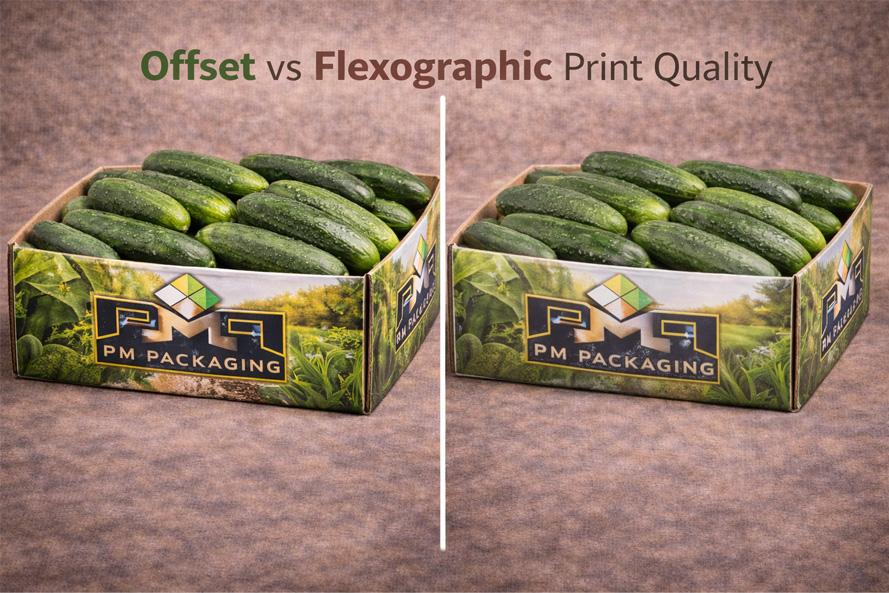
Offset Printing Adds Value Without Sacrificing Structure
At PM Packaging, SFL-based corrugated and microcorrugated packaging can be paired with offset printing instead of flexographic printing. While printing quality is often discussed in terms of branding and appearance, it also has relevance in sustainable packaging strategy.
Why? Because packaging that looks better can sometimes do more work for the brand and the product without needing extra materials or added packaging layers to create a stronger impression. Offset printing provides:
- Sharper graphics
- Better color consistency
- Cleaner text
- More precise branding
- A more polished overall presentation
For agricultural packaging, this can help businesses create stronger visual results using the packaging itself more effectively. That can be especially valuable for retail-ready and branded agricultural programs where presentation matters.
Sustainable Packaging Must Also Be Practical
It is important to be realistic about sustainability in agriculture packaging. The most sustainable solution is not always the lightest or simplest package. It is the one that performs effectively in the real conditions the product faces.
A sustainable agriculture packaging strategy should consider questions such as:
- Does the package protect the product adequately?
- Does it use material efficiently?
- Does it support better logistics?
- Does it reduce product loss?
- Does it align with the intended market?
- Can it be designed around the application rather than overbuilt?
Corrugated SFL construction is valuable because it supports this more practical view of sustainability. It is not only about appearance or language. It is about designing packaging that works smarter across the supply chain.
Applications for Sustainable Agriculture Packaging with SFL
Corrugated SFL construction can support sustainable packaging approaches across many agricultural uses, including:
- Fruit and vegetable packaging
- Produce transport cartons
- Export-ready agricultural packaging
- Branded farm product cartons
- Retail-ready produce packaging
- Shelf-display agricultural packaging
- Specialty crop packaging
Each of these applications has its own demands, but the core advantages remain similar: structural efficiency, product protection, lightweight performance, and flexibility in design and presentation.
Why This Matters for Agricultural Businesses
For growers, exporters, distributors, and agricultural brands, sustainable packaging is increasingly tied to both operational performance and market perception. Packaging decisions affect cost, damage rates, logistics, presentation, and how the business is viewed by customers and partners.
Corrugated SFL construction matters because it helps agricultural businesses work toward packaging that can:
- Support better product protection
- Improve transport efficiency
- Reduce unnecessary material through better design
- Align with paper-based packaging goals
- Provide a professional market-ready appearance
- Adapt to different agricultural applications
That combination makes it a practical solution for businesses that want packaging to be more responsible without compromising performance.
Final Thoughts
Sustainable agriculture packaging with corrugated SFL construction is about more than choosing a paper-based format. It is about using a packaging structure that helps balance durability, efficiency, product protection, and market presentation.
At PM Packaging, Single Face Lamination is used to create corrugated and microcorrugated materials through a 3-layer structure of Liner, fluted Medium, and Top Sheet. This construction supports packaging that performs well in agricultural applications while also giving businesses more flexibility in how packaging is designed, printed, and presented.
For agricultural businesses looking to improve packaging sustainability in a practical way, corrugated SFL construction offers a strong path forward. It can help support packaging strategies that reduce waste through better protection, better material efficiency, and better alignment with the realities of the agricultural supply chain.
"In today’s market, sustainable packaging has to work hard. Corrugated SFL construction helps it do exactly that."